

What to check in survival gear bulk before ordering
Before placing a large order, quality and safety teams need more than a price sheet. They need a working checklist. When evaluating survival gear bulk for emergency preparedness, the real issue is reliability under stress, not just unit cost. A product that looks acceptable in a sample photo may fail during storage, transit, or field deployment.
A structured review helps reduce sourcing risk. It also supports better stock rotation, clearer compliance records, and more dependable response planning. The checkpoints below focus on quality, documentation, packaging, supplier consistency, and practical deployment conditions.
Why a checklist matters before ordering survival gear bulk for emergency preparedness
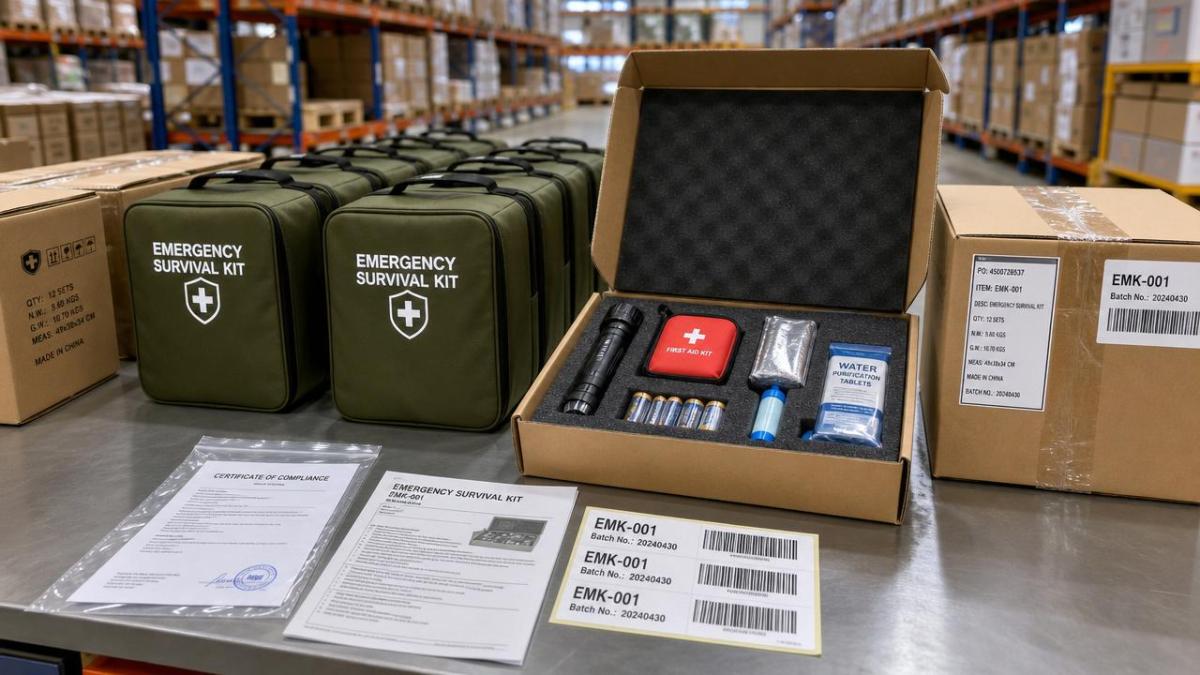
Bulk emergency products are rarely used in ideal conditions. They may sit in storage for months, move across climates, and then be opened quickly during a crisis. That makes pre-order verification essential.
Without a checklist, common failures appear late. Labels may be incomplete. Batteries may expire too soon. Textile items may tear under load. Kits may also arrive in mixed configurations that slow distribution.
For B2B trade and cross-border sourcing, the review process must also cover traceability, customs-ready packaging, and repeat order consistency. These factors directly affect whether survival gear bulk for emergency preparedness performs as expected at scale.
Core checklist: what to verify before confirming the order
- Confirm product specifications against the intended use, including material grade, dimensions, weight, operating temperature, and expected shelf life for every item in the kit.
- Request compliance documents early, such as test reports, MSDS where applicable, food-contact declarations, battery transport paperwork, and destination-market labeling confirmations.
- Inspect durability through sample testing, including seam strength, zipper cycles, water resistance, drop resistance, corrosion behavior, and closure integrity after repeated handling.
- Check batch consistency by comparing multiple samples from different production runs rather than approving only one golden sample with ideal finishing.
- Verify expiration management for food rations, water purification tablets, batteries, medical components, and adhesives included in survival gear bulk for emergency preparedness.
- Review packaging structure, including inner bag sealing, carton strength, moisture protection, pallet stability, barcode readability, and fast identification during warehouse picking.
- Audit kit completeness with a packing matrix that lists quantities, SKU codes, accessory placement, and substitution rules for short-supply components.
- Examine supplier production capacity, backup material sourcing, lead-time reliability, and quality control checkpoints used before shipment release.
- Test user usability by opening, carrying, and repacking the gear quickly to identify poor layouts, unclear instructions, or fragile component trays.
- Match shipping terms with product sensitivity, especially for heat, humidity, lithium batteries, compressed items, and long ocean transit exposure.
Key documents to collect
- Product specification sheet with revision date
- Inspection standard or AQL reference
- Material or component test reports
- Shelf-life and lot traceability record
- Carton marking and palletization guide
- Pre-shipment sample approval record
How checks change by application scenario
Disaster relief stock
For relief inventory, speed of deployment matters as much as product quality. Outer cartons should be easy to identify by category, destination, and quantity. Mixed cartons often create delays during urgent sorting.
In this scenario, survival gear bulk for emergency preparedness should be checked for shelf-life alignment. A kit is only useful if the shortest-life item does not force early disposal of the whole package.
Industrial safety reserve
When gear supports site continuity, ruggedness becomes critical. Flashlights, gloves, blankets, masks, and water storage components should tolerate dust, vibration, and rough handling.
Instruction labels should remain readable after abrasion and humidity exposure. Industrial reserve orders also benefit from lot coding that links every carton to a production and inspection record.
Retail or distribution channel inventory
If the order enters a commercial channel, packaging quality affects both compliance and sell-through. Print quality, multilingual instructions, scan-ready barcodes, and tamper-evident sealing become more important.
For this use case, survival gear bulk for emergency preparedness should be reviewed for presentation consistency. Minor variation in color, accessory count, or retail pack dimensions can trigger returns.
Commonly missed issues that create risk later
Shelf life is stated, but not verified by lot
Some suppliers provide a general shelf-life statement without assigning real production dates by batch. That creates uncertainty in first-in, first-out storage and emergency rotation planning.
Samples look strong, but packaging fails in transit
A durable tool inside a weak carton still causes losses. Crushed corners, moisture ingress, and broken internal trays can turn good products into unusable inventory before arrival.
Compliance is assumed across markets
Requirements differ by destination. Battery transport, textile labeling, food-contact materials, and first-aid contents may need separate review. Never assume one report covers every market.
Substitutions appear after approval
In large orders, small components are often replaced due to availability. If substitution rules are not written in advance, the delivered survival gear bulk for emergency preparedness may differ from the tested sample.
Instructions are too vague during real use
Emergency conditions reduce time for interpretation. Printed guidance should be simple, durable, and visible in low light. Unclear instructions reduce the value of otherwise acceptable gear.
Practical execution steps before issuing the purchase order
- Build a specification sheet that lists required materials, dimensions, certifications, shelf life, and packaging details for each line item.
- Approve at least two sample sets from different lots to test consistency, not just appearance.
- Run a basic transit simulation with carton stacking, humidity exposure, and repeated opening of high-use items.
- Freeze substitution controls in writing, including which parts may change and what evidence is required before approval.
- Set pre-shipment inspection criteria covering quantity, function, labeling, packaging, and carton marks for survival gear bulk for emergency preparedness.
- Create a receiving checklist so warehouse verification matches the same standards used during sourcing and shipment release.
These steps are especially useful in cross-border trade, where product quality, customs readiness, and documentation accuracy must align. Platforms that track industrial trends and supplier developments can also support faster verification and stronger sourcing decisions.
Conclusion and next action
Ordering survival gear bulk for emergency preparedness should start with a documented evaluation process, not a price comparison alone. The safest approach is to validate product performance, lot traceability, compliance records, packaging design, and supplier stability before volume commitment.
Use this checklist to compare offers line by line. Then request matched samples, supporting documents, and a written inspection standard. A disciplined review now prevents shortages, disputes, and deployment failures later.
 When dual sourcing makes sense in a sourcing strategy for manufacturersSourcing strategy for manufacturers: learn when dual sourcing strengthens supply continuity, reduces disruption risk, and protects production without adding unnecessary complexity.
 How bulk commodities pricing affects long-term supply contractsBulk commodities pricing shapes long-term supply contracts through index rules, freight, quality, volume, and currency risk. Explore strategies for resilient costs and supply security.
 Which global manufacturing trends by sector matter most for sourcing plans?Global manufacturing trends by sector: identify sourcing risks, supplier resilience, compliance demands, and cost drivers to build smarter, more reliable procurement plans.
 What industrial trade intelligence pricing should include before you subscribeIndustrial trade intelligence pricing explained: compare coverage, data quality, access rights, and workflow value before choosing a subscription that supports smarter trade decisions.
 How an industrial trade intelligence dashboard can identify new supplier marketsDiscover how an industrial trade intelligence dashboard helps identify new supplier markets by comparing capacity, landed cost, logistics resilience, and compliance risk.
 Which global market entry barriers should exporters assess first?Global market entry barriers exporters should assess first: tariffs, compliance, buyer qualification, logistics, and payment risk. Build a practical strategy for confident market entry.
 How trade data aggregation analytics can reveal emerging supplier marketsTrade data aggregation analytics reveals emerging supplier markets by connecting trade flows, capacity signals, logistics, and compliance insights for smarter sourcing decisions.
 When an export market analysis platform can validate demand in a new marketExport market analysis platform insights help validate new-market demand through buyer fit, regulations, logistics, competition, and profitable entry conditions.
 What is driving the beauty and personal care market in the USA?Beauty and personal care in USA is driven by targeted solutions, selective premiumization, digital discovery, clean-label trust, diverse needs, and compliance. Explore key growth opportunities.
 How trade flow monitoring reports reveal changing regional demandTrade flow monitoring reports reveal changing regional demand through import volumes, sourcing shifts, product mix, logistics signals, and regulatory trends. Explore actionable market insights.
 How international market intelligence for investors reduces market-entry riskInternational market intelligence for investors reduces market-entry risk by validating demand, regulations, logistics, and competition before capital is committed.
 How international sourcing intelligence helps identify supplier risk earlyInternational sourcing intelligence helps businesses spot supplier risks early, protect supply continuity, and make smarter global procurement decisions.
 How trade data aggregation analytics reveals emerging supplier marketsTrade data aggregation analytics reveals emerging supplier markets through export trends, input flows, logistics, and regulatory signals. Discover smarter sourcing insights.
 What industrial cluster monitoring in Vietnam reveals about site riskIndustrial cluster monitoring Vietnam reveals hidden site risks across labor, utilities, logistics, compliance, and supplier dependencies. Make smarter sourcing and expansion decisions.
 Food Technology Trends Reshaping Shelf Life, Safety, and Product InnovationFood technology is reshaping shelf life, safety, and innovation. Discover the trends helping food businesses cut risk, improve compliance, and unlock stronger global market growth.
 How electronics manufacturing services are changing with low-volume demandElectronics manufacturing services are evolving fast with low-volume demand. Learn how agile EMS partners improve flexibility, compliance, sourcing resilience, and speed to market.
 How Can Buyers Reduce Procurement Risks for Electronic Components?How to reduce procurement risks for electronic components: learn how buyers assess traceability, lead times, compliance, and supplier types to avoid costly sourcing mistakes.
 What Sourcing Intelligence India Reveals About Supplier Risk and Cost ShiftsSourcing intelligence India reveals hidden supplier risk, compliance gaps, logistics pressure, and real cost shifts—helping buyers compare vendors smarter and source with more confidence.
 Fashion Trends 2026: Which Materials, Colors, and Silhouettes Are Gaining Ground?Fashion trends 2026 spotlight tactile fabrics, mineral colors, and controlled volume. Explore the materials, shades, and silhouettes shaping smarter, more wearable style.
 Smart Device Market Outlook: Key Growth Drivers, Segments, and Business OpportunitiesSmart device market trends are shifting toward system value, industrial demand, and resilient supply chains. Explore key growth drivers, high-potential segments, and business opportunities.
 How Global Trade Intelligence Services Help B2B Firms Evaluate Markets and SuppliersGlobal trade intelligence services help B2B firms compare suppliers, assess market potential, and uncover compliance, logistics, and pricing risks before costly decisions are made.





















Global Trade Insights & Industry
Our mission is to empower global exporters and importers with data-driven insights that foster strategic growth.
Search News
Popular Tags
Industry Overview
The global commercial kitchen equipment market is projected to reach $112 billion by 2027. Driven by urbanization, the rise of e-commerce food delivery, and strict hygiene regulations.