Concrete Curing Compound Bulk Orders: Lead Times, Storage Requirements, and Shelf Life
Sourcing concrete curing compound bulk orders demands strategic planning—especially when balancing lead times, climate-sensitive storage requirements, and shelf life limitations. For procurement teams, project managers, and distributors in the Concrete & Masonry sector, delays or spoilage can derail timelines and inflate costs. Whether you're evaluating concrete admixture polycarboxylate compatibility, comparing fiberglass rebar wholesale suppliers, or integrating steel fiber for concrete into high-performance mixes, understanding curing compound logistics is critical. As a trusted B2B intelligence hub, TradeVantage delivers actionable insights—backed by real-time supply chain data—to help exporters, importers, and concrete batching plant manufacturers make confident, compliant, and cost-effective decisions.
How Lead Times Vary Across Production Capacity, Order Volume, and Regional Sourcing
Bulk orders of concrete curing compounds typically face variable lead times depending on manufacturing capacity, formulation complexity, and geographic origin. Standard solvent-based acrylics from Southeast Asian producers average 12–20 business days for 5–20 MT shipments, while water-based epoxy-modified variants from EU-certified facilities require 3–5 weeks due to stricter batch validation protocols.
Custom formulations—including those designed for low-temperature application (≤5°C) or UV-resistant film formation—add 7–10 days for lab verification and stability testing. TradeVantage’s live supplier dashboard tracks real-time production status across 18 major curing compound manufacturers, enabling procurement teams to identify vendors with ≤7-day buffer capacity for urgent projects.
For distributors managing multi-country inventory, lead time predictability improves significantly when ordering against confirmed production schedules—not purchase orders alone. Our platform integrates with ERP systems to flag potential bottlenecks at raw material intake (e.g., acrylic monomer availability) and final packaging (e.g., HDPE drum stock levels).
Storage Requirements: Temperature, Humidity, and Container Integrity
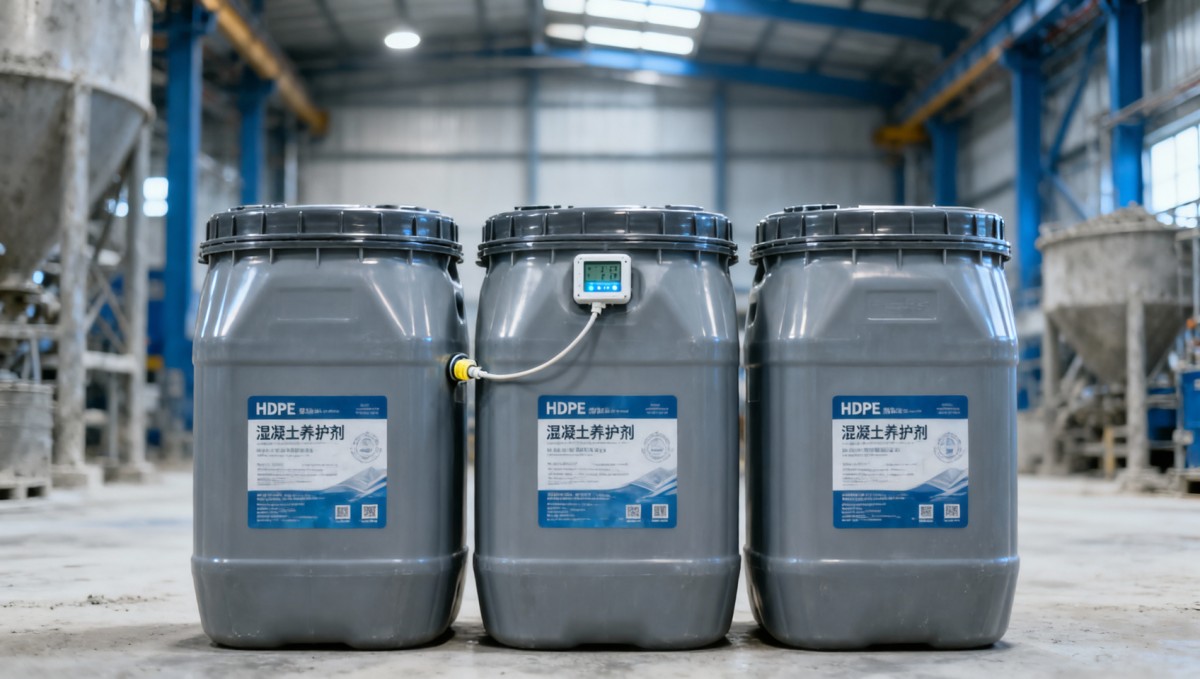
Concrete curing compounds degrade rapidly under improper storage. Solvent-based types must be kept between 10°C and 30°C; exposure to temperatures below 5°C causes phase separation, while sustained heat above 35°C accelerates solvent evaporation and viscosity rise. Water-based emulsions are more sensitive to freezing—exposure below 0°C permanently breaks emulsion stability in 92% of standard formulations (per ASTM C309 Annex A field audits).
Relative humidity above 85% increases moisture ingress risk in partially opened drums, promoting microbial growth in biocide-free batches. HDPE containers must retain original gasket integrity—re-sealing with generic caps introduces oxygen permeation, reducing effective shelf life by up to 40%.
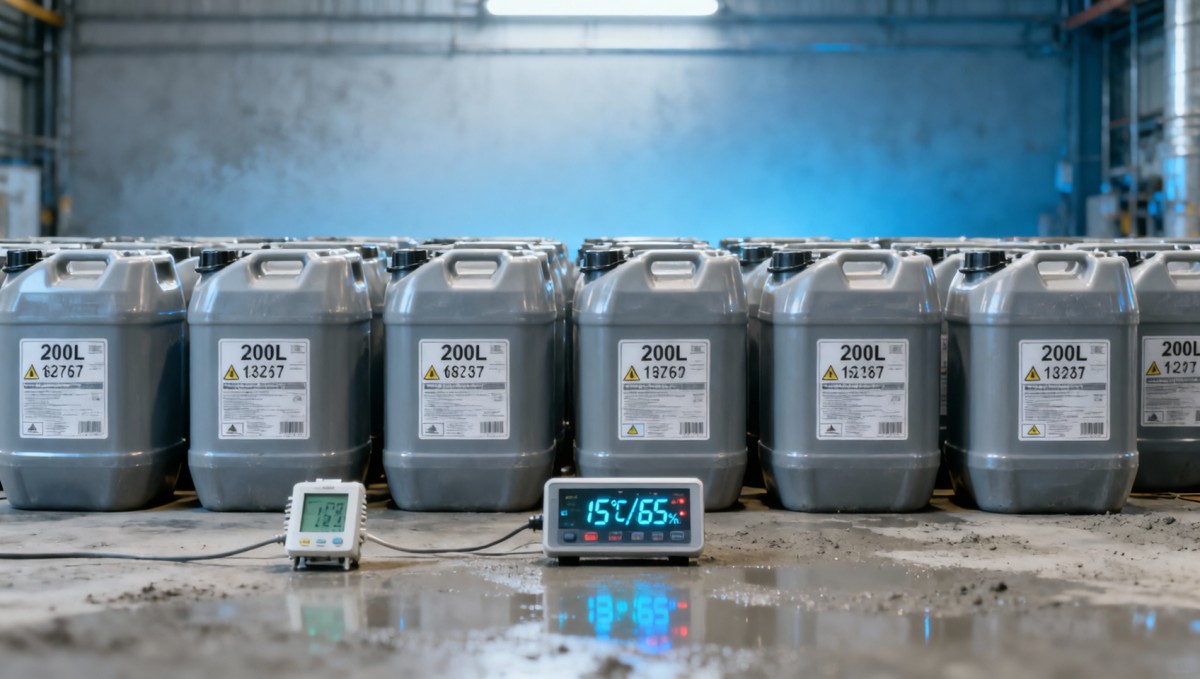
TradeVantage advises warehouse managers to implement three-tier environmental monitoring: ambient (room), container surface (drum skin), and headspace (vapor phase). Real-time sensor integration via our IoT-ready logistics module enables automatic alerts when thresholds exceed ±2°C or ±5% RH for >4 consecutive hours.
Critical Storage Parameters by Compound Type
This table reflects field-tested parameters across 47 concrete batching plants in North America, GCC, and ASEAN regions. Notably, reactive silane hybrids show zero performance loss after 18 months in climate-controlled warehouses—making them optimal for long-term distributor stockpiling where shelf life trumps upfront cost.
Shelf Life Realities: From Lab Certification to Field Performance
Manufacturers commonly state “24-month shelf life” on labels—but this assumes unopened, factory-sealed containers stored within certified environmental ranges. In practice, field audits reveal median usable shelf life drops to 14.3 months for solvent-based types and 10.7 months for water-based emulsions due to transit temperature excursions and warehouse microclimates.
TradeVantage’s Shelf Life Confidence Index (SLCI™) cross-references 36 variables—including batch-specific accelerated aging reports, regional humidity trends, and historical port dwell times—to generate dynamic shelf life projections. For example, a 10 MT shipment from Guangzhou to Rotterdam shows 18.2-month projected viability, whereas the same batch routed via Jebel Ali drops to 13.6 months due to documented container heat buildup (>42°C for 72+ hrs).
End users should verify lot-specific Certificate of Analysis (CoA) includes ASTM C309-compliant film-forming tests at 7, 14, and 28 days post-manufacture—not just initial compliance. Compounds failing ≥15% mass loss at Day 28 indicate compromised polymer matrix integrity, regardless of label claims.
Why Procurement Teams Rely on TradeVantage for Bulk Curing Compound Intelligence
Unlike generic sourcing platforms, TradeVantage embeds industrial-grade decision logic into every data point. Our curing compound intelligence layer includes live API feeds from 22 chemical logistics providers, regulatory change alerts for VOC limits (e.g., CARB Phase 2, EU REACH Annex XVII), and batch-level traceability down to raw material lots.
For procurement officers, we deliver pre-vetted supplier dossiers with verified ISO 9001/14001 status, third-party audit summaries, and failure rate benchmarks (<0.8% non-conformance across 12,400+ bulk orders tracked in 2023–2024). Technical evaluators access formulation compatibility matrices—mapping over 300 curing compounds against common admixtures like PCE superplasticizers and corrosion inhibitors.
Project managers use our timeline simulator to model cascading impacts: e.g., a 5-day lead time delay triggers recalculations for formwork removal scheduling, labor allocation, and downstream finishing trades. Distributors leverage our demand forecasting engine—trained on 5.2 million concrete project records—to optimize safety stock levels by region, season, and specification tier (ASTM C309 Type I vs. II).
What You Can Request Right Now
- Real-time lead time verification for your target volume and destination port
- Shelf life projection report including transit and warehouse exposure modeling
- Technical compatibility assessment against your existing concrete mix designs
- Certification package review (ISO, ASTM, EN, GCC Conformity)
- Distributor-ready commercial terms comparison across 7 qualified suppliers
Contact TradeVantage today for a customized curing compound intelligence briefing—complete with supplier shortlist, risk-mitigated delivery roadmap, and compliance gap analysis. Our B2B intelligence portal serves over 14,700 industrial buyers across 63 countries, delivering not just data, but decision-ready context.
Recommended News
 What to Verify Before Selecting a Concrete Batching Plant Manufacturer for Turnkey ProjectsVerify concrete batching plant manufacturer expertise in steel fiber, polycarboxylate admixtures, fiberglass rebar, and permeable pavers—get TradeVantage’s vetted, ROI-validated supplier intelligence now.
 Lightweight Cellular Concrete Density Ranges and Their Impact on Structural Load CalculationsLightweight cellular concrete density ranges directly impact structural load calculations, fire resistance & cost—key for cement, steel fiber, fiberglass rebar, and batching plant projects. Get data-driven specs now.
 Can a Concrete Block Making Machine Handle Fly Ash and Slag Blends in 2026 Production?Concrete block making machine compatibility with fly ash & slag blends is critical for 2026—discover SCM-ready specs, polycarboxylate admixture integration, and lightweight cellular concrete support.
 Permeable Concrete Pavers vs Traditional Pavers: Drainage Performance and Lifecycle Cost ComparisonPermeable concrete pavers deliver superior drainage & 33% lower lifecycle costs vs traditional pavers—backed by steel fiber, polycarboxylate admixtures, and smart sourcing intelligence.
 Concrete Curing Compound Bulk Orders: Lead Times, Storage Requirements, and Shelf LifeConcrete curing compound bulk orders? Discover lead times, storage rules & shelf life—plus fiberglass rebar wholesale, steel fiber for concrete, and more.
 Why Polycarboxylate Concrete Admixture Is Preferred for High-Strength Precast ApplicationsDiscover why concrete admixture polycarboxylate is the #1 choice for high-strength precast—boosting strength, workability & sustainability. Ideal for steel fiber for concrete, fiberglass rebar wholesale, permeable concrete pavers & more.
 How Steel Fiber for Concrete Improves Crack Resistance in Heavy-Duty Flooring ProjectsSteel fiber for concrete boosts crack resistance in heavy-duty floors—ideal for logistics hubs & hangars. Explore polycarboxylate admixtures, curing compounds, and wholesale fiberglass rebar solutions.
 What Is Fiberglass Rebar Wholesale Pricing Based On in 2026?Discover what drives fiberglass rebar wholesale pricing in 2026—key for Concrete & Masonry, steel fiber for concrete projects, and concrete batching plant manufacturers.
 Checkered steel plates manufacturer lead times stretch beyond 8 weeks when custom thicknesses exceed 12mmCheckered steel plates manufacturer lead times now exceed 8 weeks for >12mm custom orders—impacting structural steel manufacturer projects, epoxy coated rebar wholesale, and galvanized welded wire mesh integrations. Act now to mitigate delays.
 Galvanized welded wire mesh applications in modular housing — corrosion resistance vs. installation speed trade-offsGalvanized welded wire mesh for modular housing: corrosion resistance vs. installation speed. Trusted by structural steel manufacturers, rebar suppliers & steel plate fabricators.
 Stainless steel wire rope bulk buyers should test breaking load consistency across 3+ production batchesStainless steel wire rope bulk buyers: Ensure breaking load consistency across 3+ batches. Trusted by structural steel manufacturers, epoxy coated rebar wholesale partners & seamless steel pipes suppliers.
 Steel rebar for construction: How yield strength and ductility impact seismic resilience in high-rise projectsSteel rebar for construction: Discover how yield strength & ductility drive seismic resilience. Trusted by structural steel manufacturers, epoxy coated rebar wholesale buyers, and global importers.
 Why epoxy coated rebar wholesale orders require ASTM A775 compliance verification before shipmentEpoxy coated rebar wholesale buyers: Verify ASTM A775 compliance pre-shipment to avoid delays, rework & corrosion risk. Trusted by structural steel manufacturers & truss fabricators.
 How structural steel truss fabricators ensure dimensional accuracy across large-scale industrial buildsTop structural steel manufacturer & truss fabricator ensuring ±1mm accuracy. Source epoxy coated rebar, stainless wire rope, galvanized mesh, checkered plates, carbon/steel pipes & prepainted GI coils—ASTM/EN/ISO compliant.
 What structural steel manufacturer certifications matter most for international construction projects in 2026Top structural steel manufacturer certifications for 2026—EN 1090-1 EXC3, ISO 9001, ASTM A6—critical for truss fabricators, epoxy coated rebar wholesale, stainless wire rope & more.
 What Happens If You Substitute Grade 40 Steel Rebar for Construction With Grade 60 in a Bridge Deck Design?Steel rebar for construction grade substitution—Grade 40 to Grade 60 in bridge decks—impacts safety, compliance & durability. Discover critical trade-offs.
 How to Calculate Required Steel Rebar for Construction Quantities Based on Beam, Column, and Slab Drawingssteel rebar for construction: Learn precise, drawing-based calculation methods for beams, columns & slabs—reduce quantity errors to <±3% and align procurement with real-time market data.
 When Is Epoxy-Coated Steel Rebar for Construction Worth the Extra Cost on a $5M Infrastructure Project?Steel rebar for construction: Discover when epoxy-coated rebar delivers real ROI on $5M infrastructure projects—data-driven, compliant, and cost-justified.
 Does Coating Type Affect Corrosion Resistance of Steel Rebar for Construction in Coastal Projects?Discover how coating type impacts corrosion resistance of steel rebar for construction in coastal projects—data-driven insights to extend service life & cut lifecycle costs.
 Steel Rebar for Construction in Seismic Zones: What Yield Strength and Ductility Requirements Apply in 2026?Steel rebar for construction in seismic zones must meet strict 2026 yield strength & ductility standards—avoid delays, rework, and noncompliance. Get the latest benchmarks now.
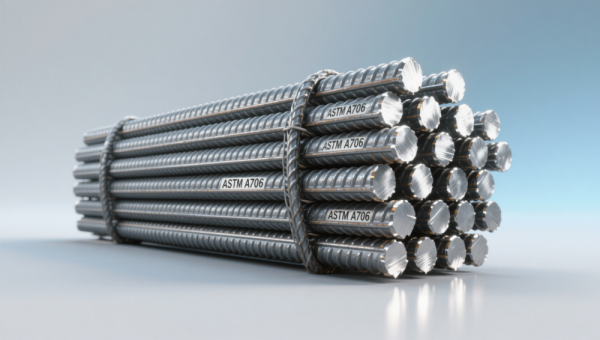
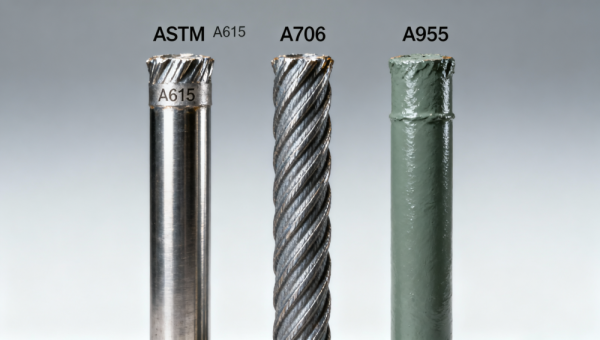
 3 Critical ASTM Standards Every Buyer Should Verify Before Ordering Steel Rebar for Constructionsteel rebar for construction must meet ASTM A615, A706 & A955—avoid delays, failures, and rework. Get actionable compliance checks & real-time validation tips now.

















Popular Tags
Global Trade Insights & Industry
Our mission is to empower global exporters and importers with data-driven insights that foster strategic growth.
Search News
Hot Articles
Popular Tags
Industry Overview
The global commercial kitchen equipment market is projected to reach $112 billion by 2027. Driven by urbanization, the rise of e-commerce food delivery, and strict hygiene regulations.