

How structural steel truss fabricators ensure dimensional accuracy across large-scale industrial builds
In large-scale industrial builds, dimensional accuracy isn’t optional—it’s foundational. Structural steel truss fabricators leverage precision CNC machining, laser-guided alignment, and rigorous QA protocols to uphold tolerances within ±1mm across spans exceeding 100 meters. As a trusted structural steel manufacturer and epoxy coated rebar wholesale partner, TradeVantage connects global project teams with vetted suppliers of stainless steel wire rope bulk, galvanized welded wire mesh, checkered steel plates manufacturer outputs, carbon steel plates bulk, seamless steel pipes wholesale, prepainted GI steel coils, and steel rebar for construction—ensuring every component meets ASTM, EN, and ISO compliance benchmarks.
How Fabricators Maintain Sub-Millimeter Tolerances at Scale
Dimensional accuracy in structural steel trusses is not achieved through isolated tools—but via integrated process control spanning design validation, material handling, fabrication execution, and post-weld verification. Leading fabricators deploy digital twin workflows that synchronize BIM models with shop-floor CNC programs, eliminating manual translation errors that historically contributed to 3–5mm cumulative drift over 80m spans.
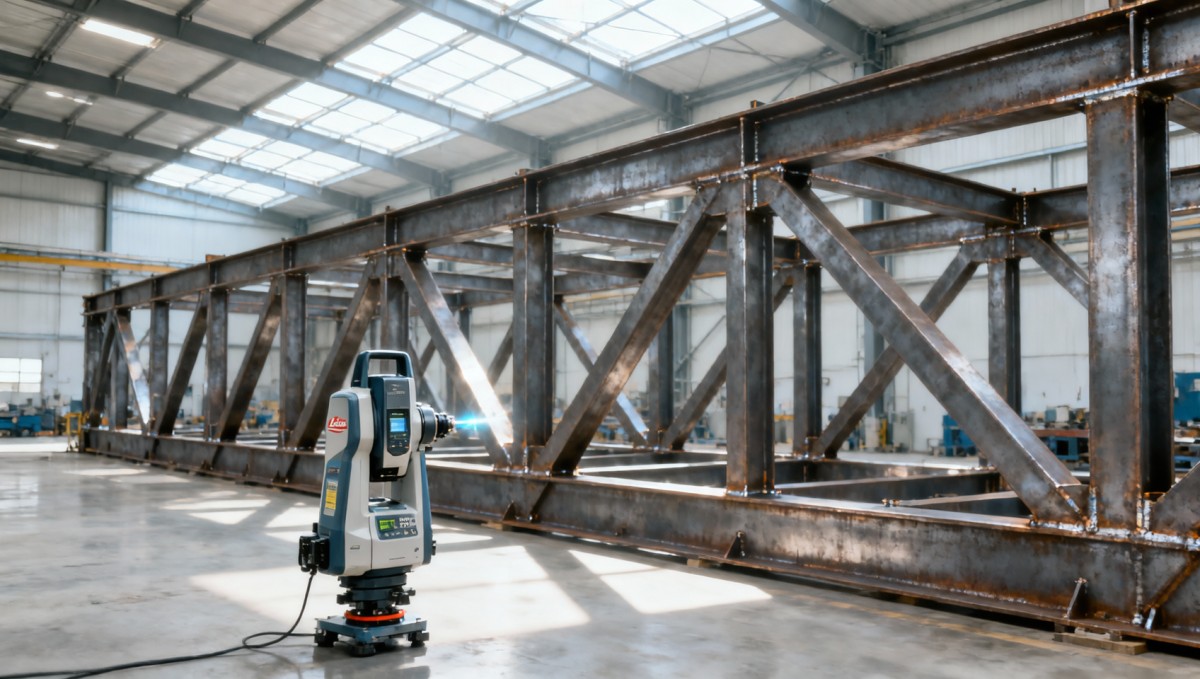
Laser tracker systems (e.g., Leica AT960) are now standard on Tier-1 facilities, enabling real-time positional feedback during assembly. These systems verify chord alignment, node plate orientation, and diagonal geometry against nominal coordinates—capturing deviations as small as ±0.3mm at distances up to 80m. This replaces legacy theodolite-based checks that required 4–6 hours per truss bay and delivered ±2.5mm uncertainty.
Thermal compensation algorithms embedded in CNC plasma cutting software adjust kerf width and lead-in paths based on ambient temperature (±10℃ range) and plate thickness (12–100mm), preventing thermal distortion-induced warping during multi-pass welding. This reduces post-fabrication straightening by 70% and cuts QA rework cycles from 3–5 days to under 24 hours.
What Procurement Teams Should Verify Before Awarding Contracts
Procurement decisions for structural steel trusses must go beyond price and delivery timelines. Technical due diligence requires verification of traceable calibration records for all metrology equipment, weld procedure specifications (WPS) qualified to AWS D1.1 or EN ISO 15614-1, and documented first-article inspection reports covering at least 5 critical dimensions per truss type.
TradeVantage’s supplier vetting framework includes mandatory third-party audit reports confirming adherence to ISO 9001:2015 Clause 8.5.2 (Identification and traceability) and Clause 8.6 (Release of products and services). Suppliers must demonstrate minimum 98.2% on-time dimensional compliance across 3 consecutive production batches—verified via digital QA logs, not self-reported summaries.
A robust procurement checklist includes:
- Calibration certificates for laser trackers, CMM arms, and torque-controlled bolting tools—valid within last 6 months
- Welder qualification records aligned to joint configuration (e.g., K-joint, T-joint) and base metal grade (ASTM A572 Gr.50, EN S355JR)
- Pre-shipment dimensional reports signed by an independent NDT Level II inspector, including photogrammetric scan overlays
- Material test reports (MTRs) with full heat number traceability and mechanical property verification per ASTM A6/A6M
Key Dimensional Verification Metrics Across Truss Types
Tolerance requirements vary significantly by truss geometry and loading regime. The table below reflects industry-accepted maximum permissible deviations per AWS D1.6/D1.6M and EN 1090-2 Execution Class EXC3 standards.
Note: Warren trusses demand tighter angular control due to their reliance on axial load transfer—deviations >±0.2° at gusset connections can induce unintended bending moments exceeding 12% of design capacity. TradeVantage cross-references supplier capability statements against these thresholds before inclusion in our verified supplier database.
Why Standardized QA Protocols Reduce Field Rework by 40%+
Field installation delays caused by dimensional mismatches average 7–12 days per major structure—and cost $18,000–$45,000/day in idle labor, crane rental, and schedule penalties. Fabricators using ISO/IEC 17025-accredited in-house labs reduce such incidents by enforcing 6-point dimensional sign-off before dispatch: chord length, web angle, node plate flatness, bolt hole position, camber, and final assembled weight vs. BIM model.
Photogrammetric scanning (using Artec Leo or similar) captures 3D point clouds of finished trusses at 0.1mm resolution. These scans are automatically compared against nominal CAD models using GD&T analysis software (e.g., PolyWorks Inspector), generating deviation heatmaps and automated pass/fail reports. This replaces subjective visual inspections and eliminates “fit-up” surprises during erection.
TradeVantage’s intelligence platform tracks supplier QA performance across 12 metrics—including mean deviation magnitude, outlier frequency (>±1.2mm), and root-cause recurrence rate (weld shrinkage vs. cutting error vs. handling damage). Clients access this data to benchmark vendors objectively—not just on certifications, but on measurable dimensional consistency.
Why Partner With TradeVantage for Your Next Structural Steel Sourcing Cycle
You need more than a supplier list—you need a decision-enabling intelligence layer. TradeVantage delivers real-time dimensional compliance scores, live QA report access, and side-by-side technical capability mapping across 200+ pre-vetted structural steel truss fabricators in China, India, Turkey, Vietnam, and Mexico.
We help you:
- Compare actual field-validated tolerance performance—not just claimed capabilities—across ≥3 shortlisted suppliers
- Request certified dimensional reports for specific truss configurations (e.g., 90m parallel chord, 80mm-thick chords, EN S460ML grade)
- Verify welder certification validity and weld procedure coverage for your exact joint geometry and plate thickness range
- Access historical delivery reliability data, including on-time dimensional acceptance rates (not just shipment dates)
Contact TradeVantage today to request a free dimensional compliance assessment report for your upcoming project—or to receive curated supplier profiles matched to your span length, load class, and regulatory jurisdiction (ASTM, EN, AS/NZS, GB/T).

- CNC machining
- EMS
- ESS
- procurement
- ML
- material handling
- prepainted gi steel coils
- seamless steel pipes wholesale
- carbon steel plates bulk
- checkered steel plates manufacturer
- galvanized welded wire mesh
- stainless steel wire rope bulk
- steel rebar for construction
- epoxy coated rebar wholesale
- structural steel truss fabricator
- structural steel manufacturer
 When an export market analysis platform can validate demand in a new marketExport market analysis platform insights help validate new-market demand through buyer fit, regulations, logistics, competition, and profitable entry conditions.
 What is driving the beauty and personal care market in the USA?Beauty and personal care in USA is driven by targeted solutions, selective premiumization, digital discovery, clean-label trust, diverse needs, and compliance. Explore key growth opportunities.
 How trade flow monitoring reports reveal changing regional demandTrade flow monitoring reports reveal changing regional demand through import volumes, sourcing shifts, product mix, logistics signals, and regulatory trends. Explore actionable market insights.
 How international market intelligence for investors reduces market-entry riskInternational market intelligence for investors reduces market-entry risk by validating demand, regulations, logistics, and competition before capital is committed.
 How international sourcing intelligence helps identify supplier risk earlyInternational sourcing intelligence helps businesses spot supplier risks early, protect supply continuity, and make smarter global procurement decisions.
 How trade data aggregation analytics reveals emerging supplier marketsTrade data aggregation analytics reveals emerging supplier markets through export trends, input flows, logistics, and regulatory signals. Discover smarter sourcing insights.
 What industrial cluster monitoring in Vietnam reveals about site riskIndustrial cluster monitoring Vietnam reveals hidden site risks across labor, utilities, logistics, compliance, and supplier dependencies. Make smarter sourcing and expansion decisions.
 Food Technology Trends Reshaping Shelf Life, Safety, and Product InnovationFood technology is reshaping shelf life, safety, and innovation. Discover the trends helping food businesses cut risk, improve compliance, and unlock stronger global market growth.
 How electronics manufacturing services are changing with low-volume demandElectronics manufacturing services are evolving fast with low-volume demand. Learn how agile EMS partners improve flexibility, compliance, sourcing resilience, and speed to market.
 How Can Buyers Reduce Procurement Risks for Electronic Components?How to reduce procurement risks for electronic components: learn how buyers assess traceability, lead times, compliance, and supplier types to avoid costly sourcing mistakes.
 What Sourcing Intelligence India Reveals About Supplier Risk and Cost ShiftsSourcing intelligence India reveals hidden supplier risk, compliance gaps, logistics pressure, and real cost shifts—helping buyers compare vendors smarter and source with more confidence.
 Fashion Trends 2026: Which Materials, Colors, and Silhouettes Are Gaining Ground?Fashion trends 2026 spotlight tactile fabrics, mineral colors, and controlled volume. Explore the materials, shades, and silhouettes shaping smarter, more wearable style.
 Smart Device Market Outlook: Key Growth Drivers, Segments, and Business OpportunitiesSmart device market trends are shifting toward system value, industrial demand, and resilient supply chains. Explore key growth drivers, high-potential segments, and business opportunities.
 How Global Trade Intelligence Services Help B2B Firms Evaluate Markets and SuppliersGlobal trade intelligence services help B2B firms compare suppliers, assess market potential, and uncover compliance, logistics, and pricing risks before costly decisions are made.
 Manufacturing Sector Updates for Investors: What Signals Matter Most in 2025?Manufacturing sector updates for investors in 2025: track orders, margins, supply chains, regulation, and exports to spot resilient manufacturers and smarter investment signals.
 How Energy Market Intelligence Helps Businesses Track Price Risks and Demand ShiftsEnergy market intelligence helps businesses spot price risks, demand shifts, and supply pressure early—improving procurement, resilience, and faster strategic decisions.
 Precision Hardware Tools Market: Key Demand Drivers, Segments, and Growth OutlookPrecision hardware tools market trends are reshaping sourcing, compliance, and automation. Explore key demand drivers, segment shifts, regional supply patterns, and growth opportunities.
 How to Use Customs Import Data to Find Buyers, Track Competitors, and Spot Demand?Customs import data helps you find real buyers, track competitors, and spot demand shifts early. Learn practical ways to turn trade records into smarter global business decisions.
 Manufacturing Cost Analysis: 8 Cost Drivers That Change Your Unit PriceManufacturing cost analysis explained through 8 key cost drivers that impact unit price, supplier stability, and margins—learn how to compare quotes smarter and reduce sourcing risk.
 Industrial Market Realities: What Buyers Should Check Before Comparing Supplier QuotesIndustrial market realities shape every supplier quote beyond unit price. Learn what to check on compliance, lead times, logistics, and hidden cost risks before comparing offers.
 Beverage Production Line Planning: Key Equipment, Capacity, and Hygiene RequirementsBeverage production line planning made practical: discover key equipment, real capacity sizing, and hygiene requirements to improve efficiency, safety, and long-term plant performance.





















Global Trade Insights & Industry
Our mission is to empower global exporters and importers with data-driven insights that foster strategic growth.
Search News
Popular Tags
Industry Overview
The global commercial kitchen equipment market is projected to reach $112 billion by 2027. Driven by urbanization, the rise of e-commerce food delivery, and strict hygiene regulations.