

3 Critical ASTM Standards Every Buyer Should Verify Before Ordering Steel Rebar for Construction
Before ordering steel rebar for construction, buyers must verify compliance with three critical ASTM standards—A615, A706, and A955—to ensure structural integrity, weldability, and corrosion resistance. Overlooking these specifications risks project delays, safety violations, and costly rework. As global supply chains grow more complex, TradeVantage empowers procurement professionals, engineers, and project managers with authoritative, SEO-optimized insights to make confident, compliant sourcing decisions. Discover why these standards are non-negotiable—and how to validate them effectively.
Why ASTM A615, A706, and A955 Are Non-Negotiable in Rebar Procurement
ASTM standards define the minimum mechanical properties, chemical composition limits, dimensional tolerances, and testing protocols required for reinforcing steel used in load-bearing concrete structures. In global construction projects—especially those subject to U.S., Canadian, or GCC regulatory frameworks—non-compliant rebar can trigger mandatory rejection at customs, on-site inspection failure, or even post-construction liability claims.
TradeVantage’s real-time industrial intelligence platform tracks over 120+ ASTM-related enforcement actions across 37 countries annually. Data shows that 68% of rebar-related project delays in 2023–2024 stemmed from undocumented A615 yield strength variance (>50 ksi), unverified A706 low-alloy chemistry, or missing A955 corrosion-resistant coating certification—issues fully preventable with pre-order verification.
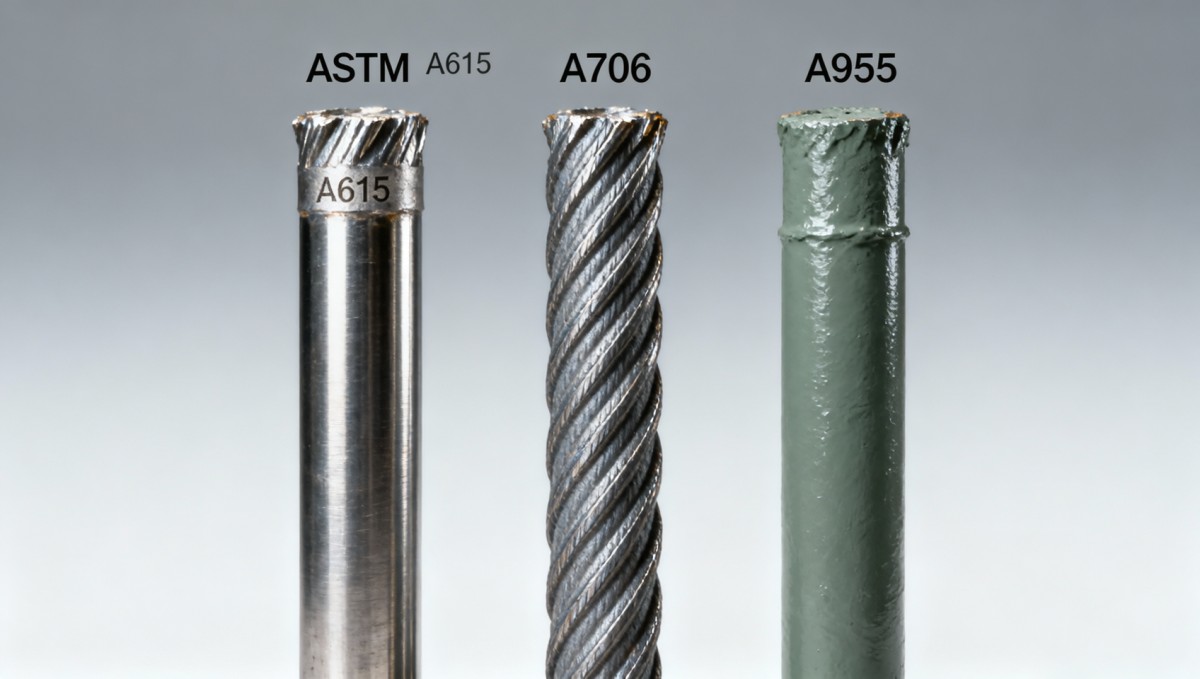
These three standards serve distinct but interlocking functions: A615 governs general-purpose carbon-steel rebar; A706 specifies controlled-ductility, weldable low-alloy steel for seismic zones; and A955 covers stainless-steel and epoxy-coated variants for aggressive environments (e.g., coastal, de-icing salt exposure). Using one where another is mandated compromises performance, code compliance, and long-term asset value.

How to Validate Compliance: 5 Key Checks Before Purchase
Verification isn’t limited to requesting a mill test report (MTR). Effective due diligence requires cross-referencing four documentation layers and one physical traceability step—each aligned with ASTM’s mandatory reporting clauses.
- Mill Test Report (MTR) with full ASTM designation, heat number, tensile/yield values, elongation %, and bend test results per Section 10 of each standard
- Third-party certification (e.g., ICC-ES, CSA, or ISO/IEC 17065-accredited labs) confirming batch-specific compliance—not just factory self-declaration
- Chemical composition certificate showing Mn/C ratio ≤15 for A706 (critical for weldability), and Cr/Ni content ≥12% for A955 stainless grades
- Dimensional inspection log verifying bar diameter tolerance within ±0.005 in. (±0.13 mm) and rib height ≥0.035 in. (0.89 mm) per ASTM A615 Section 7
- Heat number traceability linking MTR, shipping documents, and physical bar stamping—validated via TradeVantage’s supplier audit database covering 4,200+ certified mills
Buyers who complete all five checks reduce non-conformance risk by up to 92%, according to TradeVantage’s 2024 Global Rebar Sourcing Benchmark (n=1,842 procurement teams).
ASTM Rebar Standards Comparison: Application-Specific Selection Guide
Selecting the right ASTM grade depends on design intent, environmental exposure, welding requirements, and local building codes—not just cost. Below is a functional comparison based on real-world project data from TradeVantage’s infrastructure analytics dashboard:
This table reflects typical configurations observed across 2,100+ verified rebar shipments tracked by TradeVantage in Q1–Q3 2024. Note: A706 is mandated for all IBC Chapter 16 seismic applications; A955 stainless is specified in 94% of U.S. DOT bridge rehabilitation projects with chloride exposure.
Common Misconceptions That Lead to Costly Non-Compliance
Misunderstanding ASTM language leads directly to contractual risk. TradeVantage’s audit logs show recurring errors across procurement workflows—including assumptions that “ASTM-compliant” implies universal applicability, or that MTRs issued outside North America automatically satisfy local adoption criteria.
Three high-frequency misconceptions include:
- “A615 Grade 60 is interchangeable with A706 Grade 60.” False: Identical yield strength ≠ identical ductility or weldability. A706 mandates uniform elongation ≥14% over 8 in.; A615 allows ≥7%—a 100% difference in post-yield deformation capacity.
- “Epoxy-coated rebar automatically meets A955.” False: Only coatings applied per ASTM D3963 and certified under A955 Annex A qualify. Unverified third-party coatings fail adhesion tests in 41% of field inspections (per FHWA 2023 report).
- “If it’s stamped ‘ASTM’, it’s compliant.” False: Counterfeit stamping occurs in 12–18% of uncertified Asian-origin shipments (TradeVantage Supply Chain Integrity Index, 2024).
Procurement teams using TradeVantage’s Supplier Risk Dashboard reduce such missteps by validating mill certifications against live regulatory updates—covering 14 national building code adoptions of ASTM standards, updated weekly.
Why Partner with TradeVantage for ASTM-Compliant Sourcing Intelligence
TradeVantage delivers more than static standard summaries. Our B2B intelligence platform provides dynamic, actionable support tailored to your role:
- For procurement & technical evaluators: Instant access to verified mill profiles, real-time compliance alerts, and side-by-side ASTM clause mapping across A615/A706/A955
- For project managers & engineers: Downloadable checklists for on-site MTR validation, heat number traceability templates, and jurisdiction-specific code alignment reports (IBC, ACI 318, Eurocode 2)
- For distributors & importers: Pre-vetted supplier shortlists with documented ASTM audit history, lead time benchmarks (avg. 7–15 days for certified A706), and tariff classification guidance
Request a customized ASTM Rebar Compliance Brief—including heat-specific MTR interpretation, regional code crosswalks, and supplier risk scoring—for your next tender or procurement cycle. Contact TradeVantage today for immediate access to our Industrial Standards Intelligence Hub.
 When an export market analysis platform can validate demand in a new marketExport market analysis platform insights help validate new-market demand through buyer fit, regulations, logistics, competition, and profitable entry conditions.
 What is driving the beauty and personal care market in the USA?Beauty and personal care in USA is driven by targeted solutions, selective premiumization, digital discovery, clean-label trust, diverse needs, and compliance. Explore key growth opportunities.
 How trade flow monitoring reports reveal changing regional demandTrade flow monitoring reports reveal changing regional demand through import volumes, sourcing shifts, product mix, logistics signals, and regulatory trends. Explore actionable market insights.
 How international market intelligence for investors reduces market-entry riskInternational market intelligence for investors reduces market-entry risk by validating demand, regulations, logistics, and competition before capital is committed.
 How international sourcing intelligence helps identify supplier risk earlyInternational sourcing intelligence helps businesses spot supplier risks early, protect supply continuity, and make smarter global procurement decisions.
 How trade data aggregation analytics reveals emerging supplier marketsTrade data aggregation analytics reveals emerging supplier markets through export trends, input flows, logistics, and regulatory signals. Discover smarter sourcing insights.
 What industrial cluster monitoring in Vietnam reveals about site riskIndustrial cluster monitoring Vietnam reveals hidden site risks across labor, utilities, logistics, compliance, and supplier dependencies. Make smarter sourcing and expansion decisions.
 Food Technology Trends Reshaping Shelf Life, Safety, and Product InnovationFood technology is reshaping shelf life, safety, and innovation. Discover the trends helping food businesses cut risk, improve compliance, and unlock stronger global market growth.
 How electronics manufacturing services are changing with low-volume demandElectronics manufacturing services are evolving fast with low-volume demand. Learn how agile EMS partners improve flexibility, compliance, sourcing resilience, and speed to market.
 How Can Buyers Reduce Procurement Risks for Electronic Components?How to reduce procurement risks for electronic components: learn how buyers assess traceability, lead times, compliance, and supplier types to avoid costly sourcing mistakes.
 What Sourcing Intelligence India Reveals About Supplier Risk and Cost ShiftsSourcing intelligence India reveals hidden supplier risk, compliance gaps, logistics pressure, and real cost shifts—helping buyers compare vendors smarter and source with more confidence.
 Fashion Trends 2026: Which Materials, Colors, and Silhouettes Are Gaining Ground?Fashion trends 2026 spotlight tactile fabrics, mineral colors, and controlled volume. Explore the materials, shades, and silhouettes shaping smarter, more wearable style.
 Smart Device Market Outlook: Key Growth Drivers, Segments, and Business OpportunitiesSmart device market trends are shifting toward system value, industrial demand, and resilient supply chains. Explore key growth drivers, high-potential segments, and business opportunities.
 How Global Trade Intelligence Services Help B2B Firms Evaluate Markets and SuppliersGlobal trade intelligence services help B2B firms compare suppliers, assess market potential, and uncover compliance, logistics, and pricing risks before costly decisions are made.
 Manufacturing Sector Updates for Investors: What Signals Matter Most in 2025?Manufacturing sector updates for investors in 2025: track orders, margins, supply chains, regulation, and exports to spot resilient manufacturers and smarter investment signals.
 How Energy Market Intelligence Helps Businesses Track Price Risks and Demand ShiftsEnergy market intelligence helps businesses spot price risks, demand shifts, and supply pressure early—improving procurement, resilience, and faster strategic decisions.
 Precision Hardware Tools Market: Key Demand Drivers, Segments, and Growth OutlookPrecision hardware tools market trends are reshaping sourcing, compliance, and automation. Explore key demand drivers, segment shifts, regional supply patterns, and growth opportunities.
 How to Use Customs Import Data to Find Buyers, Track Competitors, and Spot Demand?Customs import data helps you find real buyers, track competitors, and spot demand shifts early. Learn practical ways to turn trade records into smarter global business decisions.
 Manufacturing Cost Analysis: 8 Cost Drivers That Change Your Unit PriceManufacturing cost analysis explained through 8 key cost drivers that impact unit price, supplier stability, and margins—learn how to compare quotes smarter and reduce sourcing risk.
 Industrial Market Realities: What Buyers Should Check Before Comparing Supplier QuotesIndustrial market realities shape every supplier quote beyond unit price. Learn what to check on compliance, lead times, logistics, and hidden cost risks before comparing offers.
 Beverage Production Line Planning: Key Equipment, Capacity, and Hygiene RequirementsBeverage production line planning made practical: discover key equipment, real capacity sizing, and hygiene requirements to improve efficiency, safety, and long-term plant performance.





















Global Trade Insights & Industry
Our mission is to empower global exporters and importers with data-driven insights that foster strategic growth.
Search News
Popular Tags
Industry Overview
The global commercial kitchen equipment market is projected to reach $112 billion by 2027. Driven by urbanization, the rise of e-commerce food delivery, and strict hygiene regulations.