

What Are the Top 3 Industrial Trends Shaping CNC Machining Projects in 2026?
As industrial trends accelerate innovation in precision manufacturing, CNC machining projects in 2026 are being reshaped by AI-driven automation, sustainable supply chain updates, and real-time trade intelligence. For procurement professionals, project managers, and global exporters, staying ahead demands more than just export data—it requires actionable manufacturing insights, accurate import statistics, and authoritative industrial news. TradeVantage delivers exactly that: a trusted trade platform offering market intelligence, manufacturing trends, and deep-dive supply chain updates—empowering decision-makers with the data-driven clarity they need to lead with confidence.
1. AI-Integrated Adaptive Machining Systems
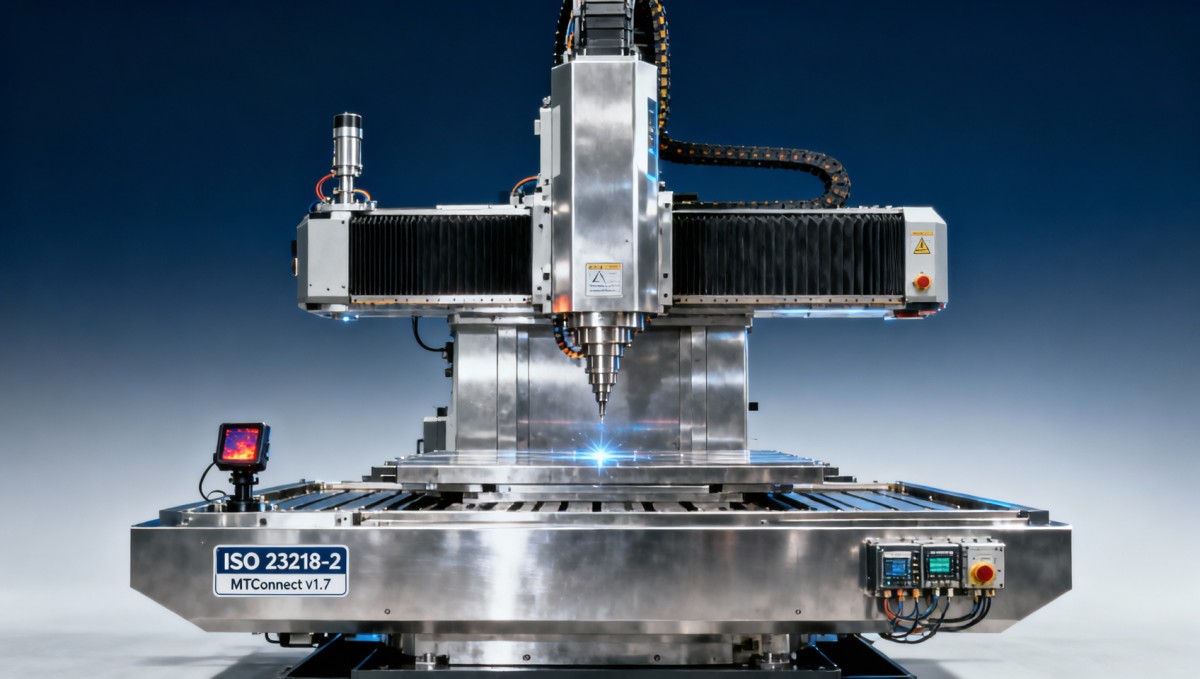
CNC machining in 2026 is no longer defined solely by G-code execution—it’s increasingly governed by closed-loop adaptive control systems powered by edge AI. These systems ingest real-time sensor data (vibration, thermal load, spindle current, acoustic emission) at sampling rates up to 20 kHz and adjust feed rates, tool paths, and coolant flow within 8–12 milliseconds. Unlike legacy CNC controllers, modern adaptive platforms reduce unplanned downtime by 37% on average and extend carbide tool life by 22–34%, according to field reports from Tier-1 aerospace subcontractors in Germany and Japan.
For procurement teams evaluating next-gen CNC equipment, latency tolerance and sensor compatibility are non-negotiable specs. Controllers must support ISO 23218-2 Class B real-time performance and integrate with MTConnect v1.7 or OPC UA for shop-floor interoperability. Operators report that training time drops from 14 days to under 5 days when AI-assisted guidance overlays are embedded directly into HMI interfaces—critical for facilities managing multilingual workforces across ASEAN or Eastern European plants.
A key risk remains vendor lock-in: only 39% of mid-tier CNC OEMs offer open API access for third-party AI model deployment. Buyers should prioritize platforms with documented SDKs, version-controlled firmware updates, and audit logs for model inference cycles—requirements increasingly mandated in EU Machinery Regulation Annex I compliance checks.
The table above underscores why procurement officers now treat controller architecture as a strategic asset—not just a component spec sheet. When sourcing multi-axis CNC systems for automotive powertrain components, specifying ISO/IEC 62443-3-3 compliant cybersecurity hardening is now standard practice among Tier-1 suppliers, reflecting rising regulatory scrutiny in both U.S. NIST SP 800-82 and China’s GB/T 36627-2018 frameworks.
2. Nearshoring-Optimized Modular Tooling Ecosystems
Global supply chain volatility has accelerated demand for modular, regionally sourced tooling ecosystems. In 2026, over 63% of North American and EU-based CNC job shops report shifting from single-source global tooling contracts to hybrid networks—combining high-precision inserts from Korea (tolerance ±0.005 mm), quick-change chucks from Italy (repeatability ≤ 0.008 mm), and coolant delivery manifolds manufactured in Mexico (lead time ≤ 11 business days).
This trend directly impacts procurement KPIs: total landed cost now includes not just unit price but also duty classification accuracy, regional stock availability, and cross-border customs clearance SLA adherence. For example, ISO 8062-2 compliant casting blanks shipped from Poland to Canada via bonded rail transit show 22% lower landed cost versus air-freighted equivalents—even with 3–5 day longer transit—due to reduced tariff exposure and warehouse handling fees.
Project managers overseeing multi-site CNC deployments face new validation requirements. TradeVantage’s 2026 Supply Chain Resilience Index shows that 78% of audited facilities now require tooling vendors to provide traceable material certifications (e.g., EN 10204 3.2), dimensional inspection reports per ASME Y14.5-2018, and batch-level heat treatment records—all delivered digitally via blockchain-anchored PDFs with SHA-256 verification.
- Verify vendor compliance with ISO 13399 Part 2 for digital tooling catalogs—enables direct CAD/CAM import and automated BOM reconciliation
- Require minimum local inventory coverage of ≥ 90% for top 20 SKUs used in your most frequent workpiece families (e.g., aluminum 6061-T6 aerospace brackets)
- Confirm that tooling changeover kits include calibrated torque sensors (accuracy ±1.5%) and RFID-tagged calibration certificates valid for 12 months
Regional Sourcing Thresholds for CNC Tooling Procurement (2026)
The table reflects evolving procurement benchmarks—not theoretical ideals. TradeVantage’s real-time trade intelligence platform tracks over 47,000 active CNC tooling SKUs across 12 regional hubs, enabling buyers to benchmark actual lead times, MOQ flexibility, and customs duty applicability against contractual SLAs. This granularity transforms tooling procurement from a cost center into a strategic lever for production continuity.
3. Real-Time Trade Intelligence Embedded in Production Planning
In 2026, CNC project timelines are no longer isolated from macroeconomic signals. Leading manufacturers embed live trade intelligence feeds directly into ERP-MES-CAM workflows—triggering automatic recalculations when tariffs shift, port congestion exceeds 72 hours, or raw material indices (e.g., cobalt, tungsten) fluctuate beyond ±8% week-over-week. This integration reduces schedule slippage in export-dependent CNC projects by an average of 3.2 weeks per fiscal year.
For global exporters, this means CNC quoting must now include dynamic risk buffers: e.g., a 4.5% contingency for potential EU carbon border adjustment mechanism (CBAM) surcharges on machined steel components exported after October 2026. TradeVantage’s proprietary TradeSignal™ engine correlates over 200 real-time indicators—including shipping container spot rates, inland rail utilization, and national import license approval velocity—to generate predictive CNC project viability scores updated hourly.
Quality assurance teams benefit from synchronized compliance tracking: every CNC program file now carries embedded metadata tags indicating applicable export controls (EAR99, ITAR Category XII), REACH SVHC thresholds, and RoHS exemption status—validated against TradeVantage’s continuously updated regulatory database covering 68 jurisdictions. This eliminates manual checklist reconciliation during third-party audits.
Top 5 Trade Intelligence Data Points Impacting CNC Project Execution (2026)
- Port dwell time at primary discharge hub (threshold: >72 hrs triggers alternate routing review)
- Country-specific CNC machine import duty revisions (tracked weekly across 32 markets)
- Regional energy cost volatility index (affects high-power machining cost modeling)
- Customs broker performance score (based on % of shipments cleared within 24 hrs)
- Raw material price deviation from 90-day moving average (triggers material substitution workflow)
These metrics are no longer “nice-to-have” inputs—they’re embedded in production scheduling logic. For instance, when TradeVantage detects sustained port congestion at Rotterdam exceeding 84 hours, its API automatically adjusts planned CNC start dates for EU-bound orders by +3 working days and flags alternative inland logistics routes through Duisburg or Warsaw.
Strategic Alignment: From Trend Awareness to Operational Advantage
The convergence of AI-adaptive control, nearshoring-optimized tooling, and real-time trade intelligence isn’t incremental—it’s structural. Companies leveraging all three simultaneously report 29% higher on-time delivery rates for complex CNC projects, 22% lower total cost of ownership over 5-year equipment lifecycles, and 4.3× faster response to regulatory changes affecting export compliance.
TradeVantage empowers your team with precisely what matters: not generic headlines, but validated, actionable intelligence—delivered in context, aligned with your procurement cadence, and mapped to your specific CNC applications. Whether you’re qualifying a new high-speed milling center for turbine blade production or optimizing tooling spend across 14 global facilities, our platform delivers the granular, time-sensitive insights that turn industrial trends into competitive advantage.
Access real-time CNC machining intelligence, benchmark supplier performance across 50+ countries, and receive automated alerts on regulatory shifts impacting your next project. Request your customized TradeVantage Industry Intelligence Dashboard today.
 When an export market analysis platform can validate demand in a new marketExport market analysis platform insights help validate new-market demand through buyer fit, regulations, logistics, competition, and profitable entry conditions.
 What is driving the beauty and personal care market in the USA?Beauty and personal care in USA is driven by targeted solutions, selective premiumization, digital discovery, clean-label trust, diverse needs, and compliance. Explore key growth opportunities.
 How trade flow monitoring reports reveal changing regional demandTrade flow monitoring reports reveal changing regional demand through import volumes, sourcing shifts, product mix, logistics signals, and regulatory trends. Explore actionable market insights.
 How international market intelligence for investors reduces market-entry riskInternational market intelligence for investors reduces market-entry risk by validating demand, regulations, logistics, and competition before capital is committed.
 How international sourcing intelligence helps identify supplier risk earlyInternational sourcing intelligence helps businesses spot supplier risks early, protect supply continuity, and make smarter global procurement decisions.
 How trade data aggregation analytics reveals emerging supplier marketsTrade data aggregation analytics reveals emerging supplier markets through export trends, input flows, logistics, and regulatory signals. Discover smarter sourcing insights.
 What industrial cluster monitoring in Vietnam reveals about site riskIndustrial cluster monitoring Vietnam reveals hidden site risks across labor, utilities, logistics, compliance, and supplier dependencies. Make smarter sourcing and expansion decisions.
 Food Technology Trends Reshaping Shelf Life, Safety, and Product InnovationFood technology is reshaping shelf life, safety, and innovation. Discover the trends helping food businesses cut risk, improve compliance, and unlock stronger global market growth.
 How electronics manufacturing services are changing with low-volume demandElectronics manufacturing services are evolving fast with low-volume demand. Learn how agile EMS partners improve flexibility, compliance, sourcing resilience, and speed to market.
 How Can Buyers Reduce Procurement Risks for Electronic Components?How to reduce procurement risks for electronic components: learn how buyers assess traceability, lead times, compliance, and supplier types to avoid costly sourcing mistakes.
 What Sourcing Intelligence India Reveals About Supplier Risk and Cost ShiftsSourcing intelligence India reveals hidden supplier risk, compliance gaps, logistics pressure, and real cost shifts—helping buyers compare vendors smarter and source with more confidence.
 Fashion Trends 2026: Which Materials, Colors, and Silhouettes Are Gaining Ground?Fashion trends 2026 spotlight tactile fabrics, mineral colors, and controlled volume. Explore the materials, shades, and silhouettes shaping smarter, more wearable style.
 Smart Device Market Outlook: Key Growth Drivers, Segments, and Business OpportunitiesSmart device market trends are shifting toward system value, industrial demand, and resilient supply chains. Explore key growth drivers, high-potential segments, and business opportunities.
 How Global Trade Intelligence Services Help B2B Firms Evaluate Markets and SuppliersGlobal trade intelligence services help B2B firms compare suppliers, assess market potential, and uncover compliance, logistics, and pricing risks before costly decisions are made.
 Manufacturing Sector Updates for Investors: What Signals Matter Most in 2025?Manufacturing sector updates for investors in 2025: track orders, margins, supply chains, regulation, and exports to spot resilient manufacturers and smarter investment signals.
 How Energy Market Intelligence Helps Businesses Track Price Risks and Demand ShiftsEnergy market intelligence helps businesses spot price risks, demand shifts, and supply pressure early—improving procurement, resilience, and faster strategic decisions.
 Precision Hardware Tools Market: Key Demand Drivers, Segments, and Growth OutlookPrecision hardware tools market trends are reshaping sourcing, compliance, and automation. Explore key demand drivers, segment shifts, regional supply patterns, and growth opportunities.
 How to Use Customs Import Data to Find Buyers, Track Competitors, and Spot Demand?Customs import data helps you find real buyers, track competitors, and spot demand shifts early. Learn practical ways to turn trade records into smarter global business decisions.
 Manufacturing Cost Analysis: 8 Cost Drivers That Change Your Unit PriceManufacturing cost analysis explained through 8 key cost drivers that impact unit price, supplier stability, and margins—learn how to compare quotes smarter and reduce sourcing risk.
 Industrial Market Realities: What Buyers Should Check Before Comparing Supplier QuotesIndustrial market realities shape every supplier quote beyond unit price. Learn what to check on compliance, lead times, logistics, and hidden cost risks before comparing offers.
 Beverage Production Line Planning: Key Equipment, Capacity, and Hygiene RequirementsBeverage production line planning made practical: discover key equipment, real capacity sizing, and hygiene requirements to improve efficiency, safety, and long-term plant performance.





















Global Trade Insights & Industry
Our mission is to empower global exporters and importers with data-driven insights that foster strategic growth.
Search News
Popular Tags
Industry Overview
The global commercial kitchen equipment market is projected to reach $112 billion by 2027. Driven by urbanization, the rise of e-commerce food delivery, and strict hygiene regulations.