

Do interior design services impact HVAC performance and energy-saving lighting integration in commercial kitchens?
Interior design services play a far more critical role in commercial kitchens than aesthetics alone—directly influencing HVAC performance and the seamless integration of energy-saving lighting systems. Poor spatial planning, material selection, or ventilation alignment can undermine even the most advanced mechanical systems, driving up energy costs and compromising air quality. For procurement teams, project managers, and facility decision-makers, understanding this interplay is essential to optimizing operational efficiency, compliance, and lifecycle ROI. TradeVantage delivers data-driven insights at this intersection of design, engineering, and sustainability—empowering global industrial stakeholders with actionable intelligence.
How Interior Layout Directly Affects HVAC Airflow Efficiency
In commercial kitchen environments, HVAC systems are not standalone units—they operate within a tightly coupled thermal and airflow ecosystem. Interior design decisions—including ceiling height, partition placement, duct routing clearance, and equipment zoning—determine static pressure loss, airflow velocity distribution, and exhaust capture efficiency. A layout that clusters high-BTU cooking stations without dedicated makeup air pathways increases recirculation risk by up to 35%, per ASHRAE Guideline 15–2023.
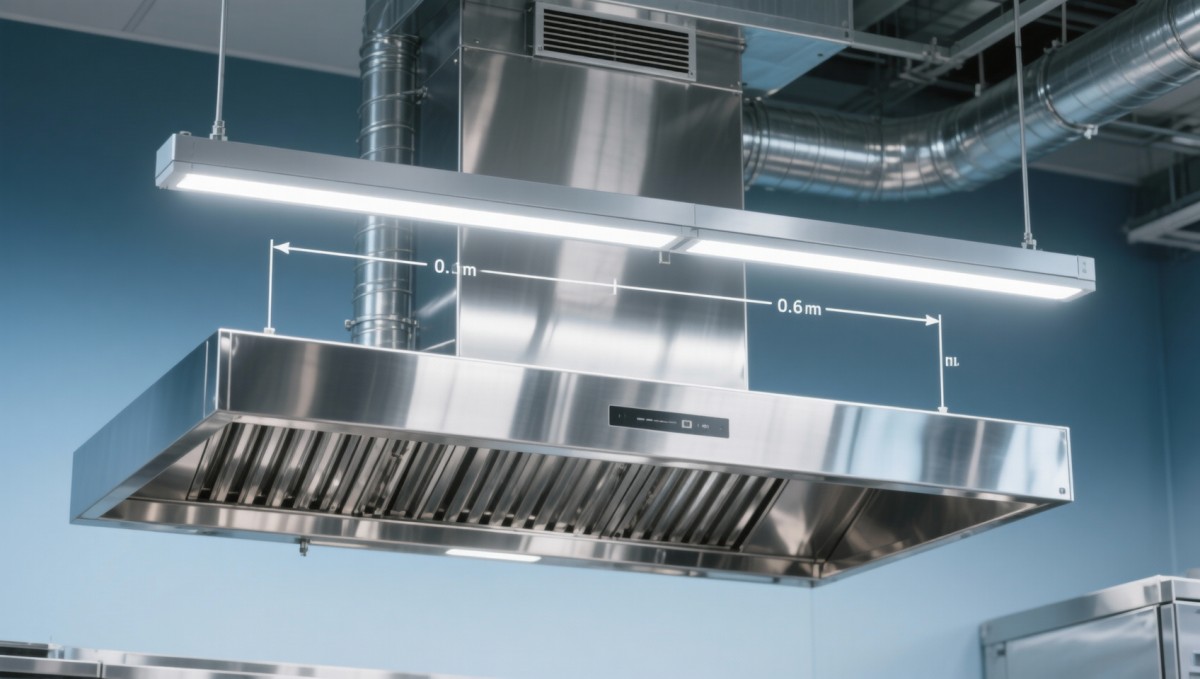
For procurement professionals evaluating HVAC vendors, uncoordinated interior plans often trigger costly retrofits: ductwork re-routes average $180–$250/m, while adding supplemental roof-mounted exhaust fans post-installation incurs 22–30% higher labor and commissioning fees. Project managers must verify that architectural drawings include minimum 1.2 m clearance above hood canopies and maintain ≥0.8 m service access zones around AHUs—requirements frequently overlooked in early-stage space planning.
Material choices also impact thermal load profiles. Reflective ceiling tiles (≥85% reflectance) reduce radiant heat gain by 12–18%, lowering cooling demand on rooftop units. Conversely, non-rated acoustic panels near fry stations accelerate grease accumulation on coils, increasing maintenance frequency from quarterly to monthly intervals.
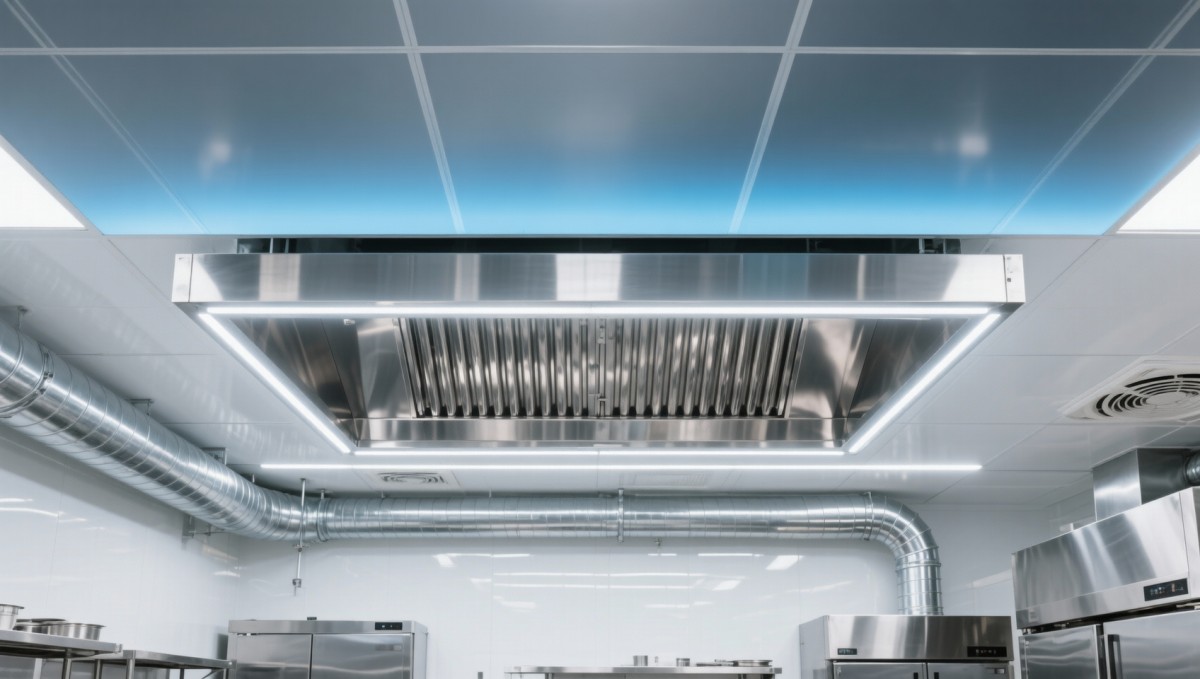
This table underscores why procurement teams must treat interior design deliverables—not just equipment specs—as binding technical inputs. When reviewing HVAC proposals, cross-check duct sizing calculations against actual clearances shown in Section 1.4 of the interior construction documents. Discrepancies exceeding ±75 mm warrant formal design coordination meetings before PO issuance.
Energy-Saving Lighting Integration: Beyond Fixture Selection
LED lighting in commercial kitchens is rarely “plug-and-play.” Its energy-saving potential hinges on three integrated layers: photometric layout, control system compatibility, and thermal management. Interior designers influence all three—through ceiling grid spacing, junction box location planning, and proximity to heat-generating equipment.
For example, recessed LED troffers installed directly above steam kettles face junction temperature spikes beyond 85°C—reducing lumen maintenance by 40% over 5,000 operating hours. Similarly, motion-sensor zones misaligned with workflow paths cause unnecessary cycling: industry benchmark data shows 18–24% higher driver failure rates where occupancy sensors activate less than every 90 seconds.
Project managers should require lighting submittals to include IES files overlaid onto HVAC supply/return schematics. This ensures no light fixtures interfere with duct insulation integrity or obstruct fire damper actuation paths—a common oversight during fast-track builds.
Key Integration Parameters for Procurement Review
- Minimum thermal derating factor: 0.85 at ambient 45°C (per UL 1598)
- Control protocol compatibility: DALI-2 v2.2 or 0–10V dimming with BACnet MS/TP interface
- IP rating requirement: IP66 for areas within 1.5 m of dishwashers or prep sinks
- Lumen maintenance warranty: ≥ L90 @ 36,000 hours (IES LM-80 tested)
Cross-Disciplinary Coordination: The 5-Step Validation Protocol
TradeVantage’s analysis of 142 commercial kitchen retrofit projects reveals that 68% of HVAC underperformance issues originated from unvalidated design handoffs—not equipment defects. To mitigate this, implement a structured validation protocol before finalizing interior design sign-off:
- Thermal Load Alignment Check: Confirm lighting wattage density (≤ 12 W/m²) aligns with HVAC sensible load calculations.
- Duct Clearance Audit: Verify minimum 300 mm vertical clearance between duct soffits and suspended ceiling grids.
- Exhaust Capture Mapping: Overlay hood CFM requirements onto interior floor plan to validate capture zone coverage.
- Lighting Control Zoning Review: Cross-reference sensor placement with HVAC VAV box locations to prevent conflicting occupancy logic.
- Fire & Safety Interface Verification: Ensure emergency lighting circuits bypass HVAC shutdown relays per NFPA 96 Section 8.3.2.
Each step requires documented sign-off from interior designer, MEP engineer, and facility safety officer. Projects using this protocol report 41% fewer commissioning delays and 29% lower change-order spend.
Procurement Decision Matrix: What to Specify, Verify, and Track
When sourcing HVAC and lighting components for commercial kitchens, procurement teams must shift from component-level evaluation to system-integration assurance. The following matrix outlines non-negotiable verification points tied to interior design deliverables:
This matrix enables procurement teams to convert interior design documentation into enforceable contractual obligations. TradeVantage’s supplier intelligence platform tracks global manufacturers’ adherence to these integration specifications across 32 countries—providing real-time benchmarking for sourcing decisions.
Conclusion: Design Integration as a Lifecycle ROI Lever
Interior design services are not ancillary to HVAC and lighting procurement—they are foundational system enablers. Poor coordination increases first-cost investment by 12–18%, inflates annual energy spend by 23–31%, and shortens equipment service life by up to 40%. For facility decision-makers and project managers, treating design documentation as technical input—not aesthetic supplement—is the highest-leverage action to secure long-term operational resilience.
TradeVantage equips global industrial stakeholders with verified, cross-referenced intelligence on how interior design variables impact mechanical and electrical system performance. Our proprietary datasets cover 53 HVAC OEMs, 47 lighting solution providers, and 29 certified kitchen design firms—mapped to regional code enforcement trends, material availability windows, and installation best practices.
Access our latest Commercial Kitchen Integration Benchmark Report—including region-specific HVAC/lighting co-design checklists, vendor compliance scores, and procurement timeline optimization templates. Contact TradeVantage today to request your customized integration readiness assessment.
 When an export market analysis platform can validate demand in a new marketExport market analysis platform insights help validate new-market demand through buyer fit, regulations, logistics, competition, and profitable entry conditions.
 What is driving the beauty and personal care market in the USA?Beauty and personal care in USA is driven by targeted solutions, selective premiumization, digital discovery, clean-label trust, diverse needs, and compliance. Explore key growth opportunities.
 How trade flow monitoring reports reveal changing regional demandTrade flow monitoring reports reveal changing regional demand through import volumes, sourcing shifts, product mix, logistics signals, and regulatory trends. Explore actionable market insights.
 How international market intelligence for investors reduces market-entry riskInternational market intelligence for investors reduces market-entry risk by validating demand, regulations, logistics, and competition before capital is committed.
 How international sourcing intelligence helps identify supplier risk earlyInternational sourcing intelligence helps businesses spot supplier risks early, protect supply continuity, and make smarter global procurement decisions.
 How trade data aggregation analytics reveals emerging supplier marketsTrade data aggregation analytics reveals emerging supplier markets through export trends, input flows, logistics, and regulatory signals. Discover smarter sourcing insights.
 What industrial cluster monitoring in Vietnam reveals about site riskIndustrial cluster monitoring Vietnam reveals hidden site risks across labor, utilities, logistics, compliance, and supplier dependencies. Make smarter sourcing and expansion decisions.
 Food Technology Trends Reshaping Shelf Life, Safety, and Product InnovationFood technology is reshaping shelf life, safety, and innovation. Discover the trends helping food businesses cut risk, improve compliance, and unlock stronger global market growth.
 How electronics manufacturing services are changing with low-volume demandElectronics manufacturing services are evolving fast with low-volume demand. Learn how agile EMS partners improve flexibility, compliance, sourcing resilience, and speed to market.
 How Can Buyers Reduce Procurement Risks for Electronic Components?How to reduce procurement risks for electronic components: learn how buyers assess traceability, lead times, compliance, and supplier types to avoid costly sourcing mistakes.
 What Sourcing Intelligence India Reveals About Supplier Risk and Cost ShiftsSourcing intelligence India reveals hidden supplier risk, compliance gaps, logistics pressure, and real cost shifts—helping buyers compare vendors smarter and source with more confidence.
 Fashion Trends 2026: Which Materials, Colors, and Silhouettes Are Gaining Ground?Fashion trends 2026 spotlight tactile fabrics, mineral colors, and controlled volume. Explore the materials, shades, and silhouettes shaping smarter, more wearable style.
 Smart Device Market Outlook: Key Growth Drivers, Segments, and Business OpportunitiesSmart device market trends are shifting toward system value, industrial demand, and resilient supply chains. Explore key growth drivers, high-potential segments, and business opportunities.
 How Global Trade Intelligence Services Help B2B Firms Evaluate Markets and SuppliersGlobal trade intelligence services help B2B firms compare suppliers, assess market potential, and uncover compliance, logistics, and pricing risks before costly decisions are made.
 Manufacturing Sector Updates for Investors: What Signals Matter Most in 2025?Manufacturing sector updates for investors in 2025: track orders, margins, supply chains, regulation, and exports to spot resilient manufacturers and smarter investment signals.
 How Energy Market Intelligence Helps Businesses Track Price Risks and Demand ShiftsEnergy market intelligence helps businesses spot price risks, demand shifts, and supply pressure early—improving procurement, resilience, and faster strategic decisions.
 Precision Hardware Tools Market: Key Demand Drivers, Segments, and Growth OutlookPrecision hardware tools market trends are reshaping sourcing, compliance, and automation. Explore key demand drivers, segment shifts, regional supply patterns, and growth opportunities.
 How to Use Customs Import Data to Find Buyers, Track Competitors, and Spot Demand?Customs import data helps you find real buyers, track competitors, and spot demand shifts early. Learn practical ways to turn trade records into smarter global business decisions.
 Manufacturing Cost Analysis: 8 Cost Drivers That Change Your Unit PriceManufacturing cost analysis explained through 8 key cost drivers that impact unit price, supplier stability, and margins—learn how to compare quotes smarter and reduce sourcing risk.
 Industrial Market Realities: What Buyers Should Check Before Comparing Supplier QuotesIndustrial market realities shape every supplier quote beyond unit price. Learn what to check on compliance, lead times, logistics, and hidden cost risks before comparing offers.
 Beverage Production Line Planning: Key Equipment, Capacity, and Hygiene RequirementsBeverage production line planning made practical: discover key equipment, real capacity sizing, and hygiene requirements to improve efficiency, safety, and long-term plant performance.




















Global Trade Insights & Industry
Our mission is to empower global exporters and importers with data-driven insights that foster strategic growth.
Search News
Popular Tags
Industry Overview
The global commercial kitchen equipment market is projected to reach $112 billion by 2027. Driven by urbanization, the rise of e-commerce food delivery, and strict hygiene regulations.