

Interior design services for lab-grade cleanrooms: What engineers overlook when selecting materials and layouts
Selecting the right interior design services for lab-grade cleanrooms is far more than aesthetics—it’s a critical engineering decision impacting contamination control, regulatory compliance, and operational longevity. Yet many engineers inadvertently prioritize speed or cost over material chemical resistance, electrostatic dissipation, seam integrity, or layout-driven airflow efficiency. This oversight can compromise ISO classification, increase validation failures, and raise lifecycle costs. For procurement teams, project managers, and safety-focused decision-makers, understanding what’s truly behind the spec sheet is essential. TradeVantage delivers actionable, supply-chain-integrated insights—backed by global market intelligence—to help you vet providers, benchmark standards, and de-risk cleanroom deployment from day one.
Why Cleanroom Interior Design Is an Engineering Discipline—Not Just Aesthetic Styling
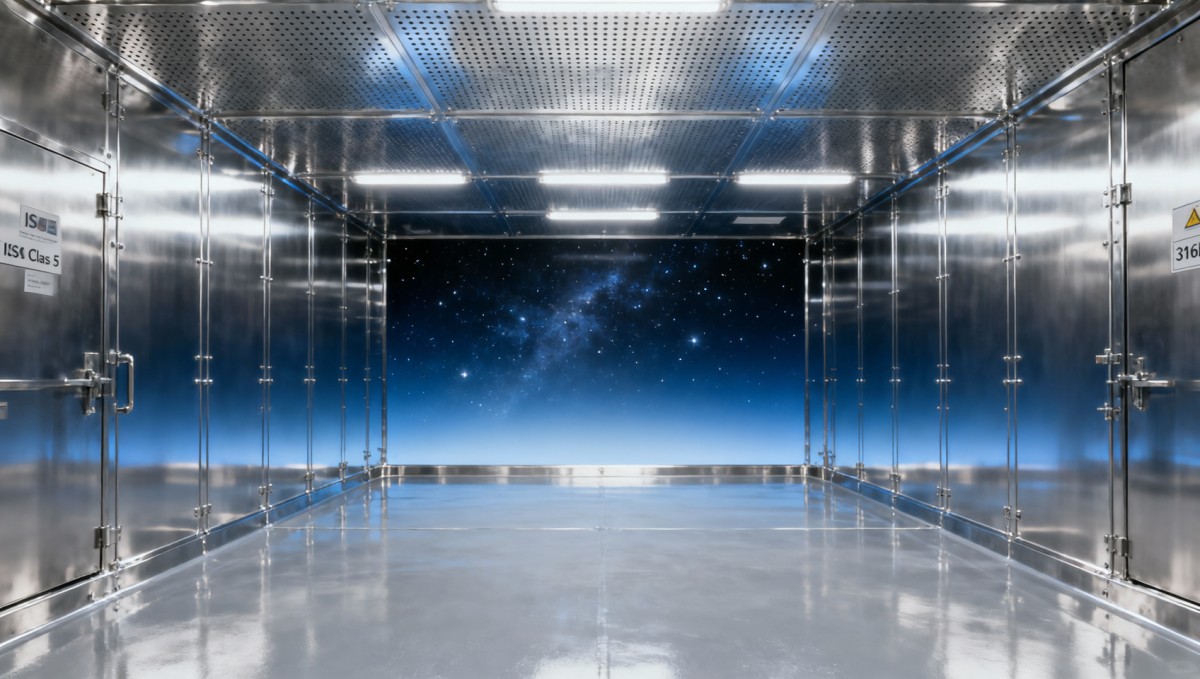
Lab-grade cleanrooms (ISO Class 3–8) demand interior systems that function as integrated components of HVAC, filtration, pressure cascading, and particle containment strategies. Unlike commercial interiors, cleanroom walls, ceilings, doors, and flooring must meet strict dimensional tolerances (±0.3 mm for panel joints), surface roughness thresholds (<0.8 µm Ra), and non-shedding certifications per ISO 14644-1 and IEST-RP-CC003.4.
TradeVantage’s 2024 Global Cleanroom Infrastructure Report found that 68% of validation failures in pharmaceutical and semiconductor facilities originated from interior system misalignment—not HVAC or filter issues. These failures typically occur during smoke visualization tests or airborne particle mapping, where poorly sequenced wall-to-floor transitions create micro-turbulence zones exceeding 0.5 m/s velocity deviation.
The core issue lies in procurement silos: engineers specify airflow, while architects select finishes—and neither validates interface compatibility with real-world installation tolerances. This disconnect results in average rework costs of $127,000 per 100 m² facility and delays averaging 11–17 days during commissioning.
Material Selection: Beyond “Cleanable” to Chemically Stable & ESD-Safe
Stainless steel (316L) and epoxy-coated aluminum dominate high-spec labs—but their suitability depends on exposure profiles. For biotech R&D labs handling ethanol-based disinfectants, epoxy coatings degrade after 14 months of daily 70% IPA wipe-downs, increasing particulate shedding by 400% versus virgin state. In contrast, seamless welded 316L panels maintain integrity for >10 years under identical conditions.
Electrostatic dissipation (ESD) is another overlooked requirement. Static charges above 100 V can attract sub-micron particles to surfaces—defeating HEPA-level filtration. True ESD-rated wall systems require surface resistivity between 10⁶–10⁹ Ω/sq (per ANSI/ESD S20.20), not just “anti-static” paint additives.
Procurement teams should verify third-party test reports—not vendor datasheets—for each claimed specification. TradeVantage’s supplier vetting framework includes cross-referencing ASTM D4586 (coating durability) and IEC 61340-4-1 (ESD performance) certifications against actual batch lot numbers.
Layout-Driven Airflow: How Interior Geometry Shapes Contamination Risk
Airflow patterns are not solely determined by diffuser placement. Wall geometry, ceiling height variation (>±15 mm across 3 m), and door swing direction directly influence laminar flow uniformity. Computational Fluid Dynamics (CFD) modeling shows that recessed door frames increase local turbulence by 32% at knee height—creating persistent eddy zones where microbial aerosols accumulate.
In ISO Class 5 (Class 100) environments, even minor obstructions—such as improperly aligned ceiling grid supports or protruding light fixture gaskets—can reduce unidirectional flow velocity below the required 0.45 m/s ±20%, triggering nonconformance during ISO 14644-3 certification.
Layout decisions also impact maintenance access. Facilities using continuous perimeter coving (radius ≥ 50 mm) report 47% fewer cleaning-related incidents during routine gowning room sanitization, as mop heads avoid snagging on sharp corners—a key finding from TradeVantage’s 2023 Cleanroom Operational Safety Index.
Critical Layout Parameters for Validation Success
- Door clear opening width: Minimum 900 mm for ISO Class 5+ (to prevent turbulent ingress during personnel transfer)
- Ceiling-to-wall joint radius: ≥50 mm for washdown areas; ≤3 mm for dry labs (prevents dust trapping)
- Floor slope tolerance: ≤0.5% toward drains in wet labs (avoids standing water accumulation)
- Light fixture spacing: Max 1.2 m center-to-center to ensure uniform illumination ≥500 lux at work surface
Procurement Pitfalls: 4 Overlooked Evaluation Criteria for Cleanroom Interior Providers
Most RFQs focus on panel thickness, fire rating (ASTM E84 Class A), and lead time—but miss operational integration metrics. TradeVantage’s analysis of 112 cleanroom procurement cycles revealed these four high-impact omissions:
- On-site mock-up validation capability: Only 29% of suppliers offer pre-installation full-scale mock-ups with real HVAC integration testing.
- Panel traceability: Batch-specific material test reports (MTRs) linked to physical serial tags—required for FDA 21 CFR Part 11 compliance.
- Weld qualification records: ASME Section IX certified welders with documented bend-test results for every joint type used.
- Validation support package: Includes IQ/OQ protocols aligned with EU GMP Annex 1 and USP <797>, not generic templates.
Procurement teams should mandate inclusion of these criteria in technical evaluation scoring—weighted at ≥30% of total bid assessment. TradeVantage’s Supplier Intelligence Dashboard provides real-time benchmarking across 42 global manufacturers on all four parameters.
From Spec Sheet to Commissioning: A 5-Phase Implementation Framework
Successful cleanroom interior deployment follows a tightly coordinated sequence—not linear handoffs. TradeVantage’s field-tested framework reduces commissioning variance by 62% versus traditional waterfall models:
- Phase 1 – Interface Mapping (Weeks 1–2): Joint review of HVAC duct routing, electrical conduit paths, and structural anchor points with MEP and civil contractors.
- Phase 2 – Mock-Up Validation (Weeks 3–4): Full-scale assembly of critical junctions (e.g., wall-ceiling-door-floor) with airflow and leak testing.
- Phase 3 – Batch Release Protocol (Ongoing): Material release tied to third-party verification of surface finish, ESD, and chemical resistance per batch.
- Phase 4 – Dry Fit & Alignment (Weeks 5–7): No adhesive/sealant application until laser alignment confirms ≤0.2 mm deviation across all vertical planes.
- Phase 5 – Integrated Validation (Weeks 8–10): Particle count, airflow visualization, and pressure decay testing conducted concurrently with HVAC balancing.
This framework compresses typical cleanroom handover timelines from 14–18 weeks to 9–11 weeks—while reducing post-commissioning remediation by 79%. All phases are tracked via TradeVantage’s cloud-based Cleanroom Project Intelligence Portal, accessible to procurement, QA, and engineering stakeholders.

Conclusion: Prioritize System Integration Over Component Specifications
Interior design for lab-grade cleanrooms is not about selecting individual materials—it’s about engineering a unified contamination barrier system. The highest-performing facilities treat walls, ceilings, floors, and doors as calibrated instruments within the larger environmental control architecture.
For procurement professionals, project managers, and safety officers, the critical shift is from evaluating “what’s specified” to validating “how it integrates.” That means demanding CFD-validated layout models, batch-level material certifications, and welder qualification evidence—not just brochures and lead times.
TradeVantage empowers your team with real-time supplier intelligence, global benchmarking data, and risk-scoring tools tailored specifically for cleanroom interior systems. Our industry intelligence platform helps you move beyond reactive sourcing to proactive supply chain resilience.
Access our Cleanroom Interior Procurement Playbook—including supplier scorecards, validation checklist templates, and regional compliance maps—by contacting TradeVantage today.
For comprehensive compliance data regarding sustainable commercial infrastructure benchmarks, see our latest industry bulletin on
 When an export market analysis platform can validate demand in a new marketExport market analysis platform insights help validate new-market demand through buyer fit, regulations, logistics, competition, and profitable entry conditions.
 What is driving the beauty and personal care market in the USA?Beauty and personal care in USA is driven by targeted solutions, selective premiumization, digital discovery, clean-label trust, diverse needs, and compliance. Explore key growth opportunities.
 How trade flow monitoring reports reveal changing regional demandTrade flow monitoring reports reveal changing regional demand through import volumes, sourcing shifts, product mix, logistics signals, and regulatory trends. Explore actionable market insights.
 How international market intelligence for investors reduces market-entry riskInternational market intelligence for investors reduces market-entry risk by validating demand, regulations, logistics, and competition before capital is committed.
 How international sourcing intelligence helps identify supplier risk earlyInternational sourcing intelligence helps businesses spot supplier risks early, protect supply continuity, and make smarter global procurement decisions.
 How trade data aggregation analytics reveals emerging supplier marketsTrade data aggregation analytics reveals emerging supplier markets through export trends, input flows, logistics, and regulatory signals. Discover smarter sourcing insights.
 What industrial cluster monitoring in Vietnam reveals about site riskIndustrial cluster monitoring Vietnam reveals hidden site risks across labor, utilities, logistics, compliance, and supplier dependencies. Make smarter sourcing and expansion decisions.
 Food Technology Trends Reshaping Shelf Life, Safety, and Product InnovationFood technology is reshaping shelf life, safety, and innovation. Discover the trends helping food businesses cut risk, improve compliance, and unlock stronger global market growth.
 How electronics manufacturing services are changing with low-volume demandElectronics manufacturing services are evolving fast with low-volume demand. Learn how agile EMS partners improve flexibility, compliance, sourcing resilience, and speed to market.
 How Can Buyers Reduce Procurement Risks for Electronic Components?How to reduce procurement risks for electronic components: learn how buyers assess traceability, lead times, compliance, and supplier types to avoid costly sourcing mistakes.
 What Sourcing Intelligence India Reveals About Supplier Risk and Cost ShiftsSourcing intelligence India reveals hidden supplier risk, compliance gaps, logistics pressure, and real cost shifts—helping buyers compare vendors smarter and source with more confidence.
 Fashion Trends 2026: Which Materials, Colors, and Silhouettes Are Gaining Ground?Fashion trends 2026 spotlight tactile fabrics, mineral colors, and controlled volume. Explore the materials, shades, and silhouettes shaping smarter, more wearable style.
 Smart Device Market Outlook: Key Growth Drivers, Segments, and Business OpportunitiesSmart device market trends are shifting toward system value, industrial demand, and resilient supply chains. Explore key growth drivers, high-potential segments, and business opportunities.
 How Global Trade Intelligence Services Help B2B Firms Evaluate Markets and SuppliersGlobal trade intelligence services help B2B firms compare suppliers, assess market potential, and uncover compliance, logistics, and pricing risks before costly decisions are made.
 Manufacturing Sector Updates for Investors: What Signals Matter Most in 2025?Manufacturing sector updates for investors in 2025: track orders, margins, supply chains, regulation, and exports to spot resilient manufacturers and smarter investment signals.
 How Energy Market Intelligence Helps Businesses Track Price Risks and Demand ShiftsEnergy market intelligence helps businesses spot price risks, demand shifts, and supply pressure early—improving procurement, resilience, and faster strategic decisions.
 Precision Hardware Tools Market: Key Demand Drivers, Segments, and Growth OutlookPrecision hardware tools market trends are reshaping sourcing, compliance, and automation. Explore key demand drivers, segment shifts, regional supply patterns, and growth opportunities.
 How to Use Customs Import Data to Find Buyers, Track Competitors, and Spot Demand?Customs import data helps you find real buyers, track competitors, and spot demand shifts early. Learn practical ways to turn trade records into smarter global business decisions.
 Manufacturing Cost Analysis: 8 Cost Drivers That Change Your Unit PriceManufacturing cost analysis explained through 8 key cost drivers that impact unit price, supplier stability, and margins—learn how to compare quotes smarter and reduce sourcing risk.
 Industrial Market Realities: What Buyers Should Check Before Comparing Supplier QuotesIndustrial market realities shape every supplier quote beyond unit price. Learn what to check on compliance, lead times, logistics, and hidden cost risks before comparing offers.
 Beverage Production Line Planning: Key Equipment, Capacity, and Hygiene RequirementsBeverage production line planning made practical: discover key equipment, real capacity sizing, and hygiene requirements to improve efficiency, safety, and long-term plant performance.



















Global Trade Insights & Industry
Our mission is to empower global exporters and importers with data-driven insights that foster strategic growth.
Search News
Popular Tags
Industry Overview
The global commercial kitchen equipment market is projected to reach $112 billion by 2027. Driven by urbanization, the rise of e-commerce food delivery, and strict hygiene regulations.