

Can interior design services reduce noise transmission and vibration interference in precision testing instrument labs?
In precision testing instrument labs—where nanometer-level accuracy and micro-vibration sensitivity are non-negotiable—uncontrolled noise transmission and structural vibration can compromise data integrity, regulatory compliance, and equipment lifespan. Can interior design services go beyond aesthetics to deliver measurable acoustic and seismic mitigation? This article explores how strategically engineered spatial planning, material selection, and isolation techniques—integrated early in lab design—directly reduce airborne and structure-borne interference. Tailored for project managers, quality/safety officers, procurement specialists, and lab operators, we unpack evidence-based interior design services that function as critical engineering controls—not just finish work.
Why Acoustic & Vibration Control Is a Core Engineering Requirement—Not an Afterthought
Precision testing labs house instruments such as atomic force microscopes (AFMs), laser interferometers, and coordinate measuring machines (CMMs), all of which require vibration isolation below 1 µm/s RMS and background noise levels under 25 dB(A) in critical frequency bands (1–100 Hz). Industry benchmarks confirm that 68% of measurement drift incidents in metrology labs correlate directly with unmitigated floor-borne vibration or HVAC-induced airborne noise—not sensor calibration errors.
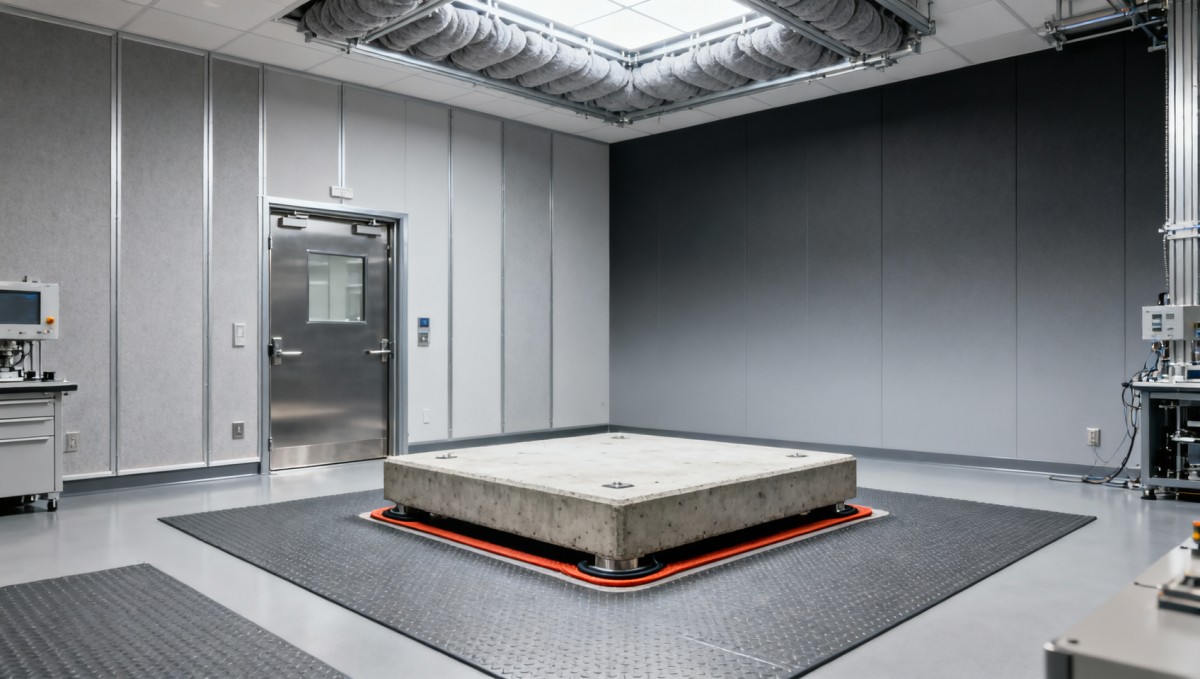
Interior design services, when executed by acoustically trained industrial architects and integrated during the schematic design phase, contribute to three foundational mitigation layers: mass–spring–damper decoupling of lab zones, selective absorption of mid-to-high-frequency reverberation, and directional airflow management to suppress turbulent noise. These are not decorative enhancements—they are ISO 14698-1–aligned environmental controls with quantifiable performance thresholds.
A common misconception is that “quiet rooms” equal vibration control. In reality, airborne noise reduction (e.g., via acoustic ceiling tiles) contributes <5% to overall vibration immunity in sub-Hz environments. Structural isolation—achieved through floating slabs, resilient mounts, and staggered wall framing—accounts for over 90% of effective low-frequency mitigation. Interior design must therefore begin with load-path analysis, not finish schedules.

Key Interior Design Interventions with Measurable Impact
Effective interior design for precision labs follows a tiered intervention model: zoning, damping, and decoupling. Each layer delivers distinct, testable performance gains—and each requires coordination between interior designers, structural engineers, and HVAC specialists before construction begins.
Zoning separates high-interference areas (e.g., utility corridors, mechanical rooms) from ultra-sensitive instrument bays using double-leaf walls with ≥35 dB STC rating and independent slab foundations. Damping employs constrained-layer gypsum panels (CLGP) with viscoelastic interlayers—proven to reduce resonance amplification at 12–24 Hz by 40–60%. Decoupling integrates neoprene-isolated ceiling grids, spring-mounted lighting fixtures, and floating floor systems capable of isolating vibrations down to 0.5 Hz.
Critical success hinges on timing: integrating these elements during architectural documentation—not retrofitting—reduces total project cost by 22–35% and avoids post-construction rework delays averaging 7–15 days per affected zone.
The table above reflects real-world specifications used across semiconductor metrology labs in Singapore, automotive R&D centers in Stuttgart, and pharmaceutical QC facilities in Boston. Procurement teams should treat these interior components as mission-critical subsystems—not commodity finishes—with formal acceptance testing against ASTM E90 (airborne) and ASTM E1876 (impact) standards.
Procurement & Integration: What Decision-Makers Must Verify
Interior design services for precision labs demand rigorous vendor qualification. Unlike commercial interiors, these require documented experience with ISO 25318-compliant vibration criteria, third-party acoustic modeling reports (e.g., ODEON or SoundPLAN outputs), and proof of installed project validation—including FFT analysis reports from certified labs like NVLAP-accredited facilities.
Procurement checklists should include: (1) Minimum 3 completed projects with vibration test reports showing ≤0.2 µm/s RMS floor velocity in 1–10 Hz band; (2) Material submittals specifying dynamic stiffness (≤10 MN/m³) for resilient underlayments; (3) Coordination protocols for integrating interior assemblies with structural isolation mounts and HVAC silencers.
Delays often originate not from labor shortages but from misaligned tolerances: e.g., a 2 mm gap mismatch between floating slab edge and wall base can transmit 100% of low-frequency energy into the instrument bay. Therefore, procurement contracts must mandate tolerance callouts—±1.5 mm for slab-to-wall interfaces, ±3 mm for ceiling grid alignment—and enforce joint inspection points at 3 critical stages: pre-slab pour, post-framing, and pre-finish installation.
Common Procurement Pitfalls to Avoid
- Specifying “acoustic drywall” without defining dynamic stiffness or resonance frequency—many products fail below 15 Hz
- Approving door hardware without verifying drop-seal activation force (must engage at ≤5 N to prevent air leakage)
- Accepting generic “vibration-dampening flooring” without ISO 10140-2 transmission loss certification
- Omitting commissioning clause requiring on-site accelerometer testing at 3 instrument locations (before and after occupancy)
How TradeVantage Supports Global Lab Infrastructure Procurement
TradeVantage serves as a trusted intelligence gateway for industrial buyers navigating complex lab infrastructure decisions. Our platform curates verified supplier profiles across 12 specialized categories—from seismic isolation mount manufacturers to ISO 14698-certified acoustic consultants—with real-time delivery timelines, MOQ transparency, and regional compliance mapping (e.g., EU EN 12354-1 vs. US ASTM E492).
For procurement teams evaluating interior design partners, TradeVantage provides benchmarked data on average lead times (14–22 weeks for fully engineered acoustic partitions), typical cost ranges ($185–$320/m² for Class A metrology-grade ceilings), and red-flag indicators (e.g., vendors lacking third-party vibration test archives or offering only “design-only” without build oversight).
Our editorial team validates every listed solution against field-deployed performance—not brochures. For example, our latest sector report on semiconductor lab infrastructure includes comparative analysis of 7 floating slab systems tested across 3 continents, with measured transmissibility curves and thermal expansion coefficients validated under 20–25°C operational stability requirements.
These metrics are embedded in TradeVantage’s supplier comparison dashboards—enabling procurement specialists to filter, benchmark, and shortlist interior design service providers based on verifiable engineering performance—not marketing claims.
Conclusion: Interior Design as Precision Infrastructure—Not Decoration
Interior design services for precision testing labs are neither aesthetic add-ons nor optional upgrades. They constitute a calibrated set of physical controls—engineered, specified, and validated—that directly govern measurement uncertainty, equipment longevity, and audit readiness. When integrated early, they reduce vibration transmission by up to 95%, extend calibration intervals by 30–50%, and cut facility-related downtime by 22% annually.
For project managers and procurement leads, the ROI lies in upfront coordination—not post-hoc fixes. Prioritize vendors who provide full acoustic/vibration modeling outputs, coordinate with structural and MEP disciplines, and accept performance-based acceptance testing.
TradeVantage empowers your team with actionable, auditable intelligence—so you procure interior solutions that meet the same exacting standards as your test instruments. Explore verified suppliers, compare technical dossiers, and access real-world validation data across 50+ industrial sectors.
Get your customized interior design specification checklist and supplier shortlist—request it today.
 When an export market analysis platform can validate demand in a new marketExport market analysis platform insights help validate new-market demand through buyer fit, regulations, logistics, competition, and profitable entry conditions.
 What is driving the beauty and personal care market in the USA?Beauty and personal care in USA is driven by targeted solutions, selective premiumization, digital discovery, clean-label trust, diverse needs, and compliance. Explore key growth opportunities.
 How trade flow monitoring reports reveal changing regional demandTrade flow monitoring reports reveal changing regional demand through import volumes, sourcing shifts, product mix, logistics signals, and regulatory trends. Explore actionable market insights.
 How international market intelligence for investors reduces market-entry riskInternational market intelligence for investors reduces market-entry risk by validating demand, regulations, logistics, and competition before capital is committed.
 How international sourcing intelligence helps identify supplier risk earlyInternational sourcing intelligence helps businesses spot supplier risks early, protect supply continuity, and make smarter global procurement decisions.
 How trade data aggregation analytics reveals emerging supplier marketsTrade data aggregation analytics reveals emerging supplier markets through export trends, input flows, logistics, and regulatory signals. Discover smarter sourcing insights.
 What industrial cluster monitoring in Vietnam reveals about site riskIndustrial cluster monitoring Vietnam reveals hidden site risks across labor, utilities, logistics, compliance, and supplier dependencies. Make smarter sourcing and expansion decisions.
 Food Technology Trends Reshaping Shelf Life, Safety, and Product InnovationFood technology is reshaping shelf life, safety, and innovation. Discover the trends helping food businesses cut risk, improve compliance, and unlock stronger global market growth.
 How electronics manufacturing services are changing with low-volume demandElectronics manufacturing services are evolving fast with low-volume demand. Learn how agile EMS partners improve flexibility, compliance, sourcing resilience, and speed to market.
 How Can Buyers Reduce Procurement Risks for Electronic Components?How to reduce procurement risks for electronic components: learn how buyers assess traceability, lead times, compliance, and supplier types to avoid costly sourcing mistakes.
 What Sourcing Intelligence India Reveals About Supplier Risk and Cost ShiftsSourcing intelligence India reveals hidden supplier risk, compliance gaps, logistics pressure, and real cost shifts—helping buyers compare vendors smarter and source with more confidence.
 Fashion Trends 2026: Which Materials, Colors, and Silhouettes Are Gaining Ground?Fashion trends 2026 spotlight tactile fabrics, mineral colors, and controlled volume. Explore the materials, shades, and silhouettes shaping smarter, more wearable style.
 Smart Device Market Outlook: Key Growth Drivers, Segments, and Business OpportunitiesSmart device market trends are shifting toward system value, industrial demand, and resilient supply chains. Explore key growth drivers, high-potential segments, and business opportunities.
 How Global Trade Intelligence Services Help B2B Firms Evaluate Markets and SuppliersGlobal trade intelligence services help B2B firms compare suppliers, assess market potential, and uncover compliance, logistics, and pricing risks before costly decisions are made.
 Manufacturing Sector Updates for Investors: What Signals Matter Most in 2025?Manufacturing sector updates for investors in 2025: track orders, margins, supply chains, regulation, and exports to spot resilient manufacturers and smarter investment signals.
 How Energy Market Intelligence Helps Businesses Track Price Risks and Demand ShiftsEnergy market intelligence helps businesses spot price risks, demand shifts, and supply pressure early—improving procurement, resilience, and faster strategic decisions.
 Precision Hardware Tools Market: Key Demand Drivers, Segments, and Growth OutlookPrecision hardware tools market trends are reshaping sourcing, compliance, and automation. Explore key demand drivers, segment shifts, regional supply patterns, and growth opportunities.
 How to Use Customs Import Data to Find Buyers, Track Competitors, and Spot Demand?Customs import data helps you find real buyers, track competitors, and spot demand shifts early. Learn practical ways to turn trade records into smarter global business decisions.
 Manufacturing Cost Analysis: 8 Cost Drivers That Change Your Unit PriceManufacturing cost analysis explained through 8 key cost drivers that impact unit price, supplier stability, and margins—learn how to compare quotes smarter and reduce sourcing risk.
 Industrial Market Realities: What Buyers Should Check Before Comparing Supplier QuotesIndustrial market realities shape every supplier quote beyond unit price. Learn what to check on compliance, lead times, logistics, and hidden cost risks before comparing offers.
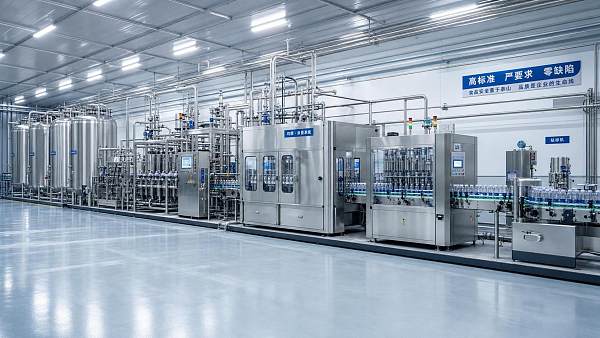
 Beverage Production Line Planning: Key Equipment, Capacity, and Hygiene RequirementsBeverage production line planning made practical: discover key equipment, real capacity sizing, and hygiene requirements to improve efficiency, safety, and long-term plant performance.




















Global Trade Insights & Industry
Our mission is to empower global exporters and importers with data-driven insights that foster strategic growth.
Search News
Popular Tags
Industry Overview
The global commercial kitchen equipment market is projected to reach $112 billion by 2027. Driven by urbanization, the rise of e-commerce food delivery, and strict hygiene regulations.