

Can a 3D Printing Manufacturer Help Reduce Lead Times for Aftermarket Parts Without Compromising Quality?
In today’s fast-paced industrial landscape, sourcing reliable aftermarket parts without sacrificing quality or waiting weeks for delivery is a critical challenge. Can a 3D printing manufacturer bridge that gap? Increasingly, yes—offering on-demand production, design flexibility, and rapid prototyping while maintaining rigorous material and dimensional standards. For procurement teams, engineers, and supply chain decision-makers across heavy equipment, energy, and transportation sectors, this shift represents more than convenience: it’s a strategic lever for resilience, cost control, and time-to-market acceleration. TradeVantage explores how certified 3D printing manufacturers are redefining aftermarket part fulfillment—without compromising the safety, compliance, or performance expectations of industrial end users.
How Certified 3D Printing Manufacturers Achieve Sub-10-Day Lead Times
Traditional casting, forging, or CNC-machined aftermarket parts often require 4–12 weeks for tooling, setup, and batch production—even for low-volume replacements. In contrast, qualified industrial 3D printing providers compress this into a repeatable 5–9 day cycle: 1–2 days for digital file validation and material certification, 2–4 days for build execution (including heat treatment and stress relief where required), and 1–3 days for dimensional inspection and surface finishing.
This speed hinges on three non-negotiable enablers: ISO 9001-certified workflow integration, in-house metrology labs with CMM and CT scanning capabilities, and pre-qualified material databases aligned with ASTM F3122, ISO/ASTM 52900, and ASME BPVC Section III, Division 2 requirements. These ensure every printed part meets functional tolerances of ±0.15 mm for features under 100 mm—and passes full traceability logging from powder lot to final NDT report.
Crucially, lead-time reduction does not mean skipping qualification. Leading providers deploy a 4-stage verification protocol: (1) geometric fidelity check against OEM CAD, (2) mechanical testing per ASTM E8/E21 (tensile/yield/elongation), (3) microstructure analysis (e.g., grain size per ASTM E112), and (4) service-environment simulation (thermal cycling, vibration, corrosion exposure).
Which Aftermarket Parts Are Most Suitable for Production-Grade Additive Manufacturing?
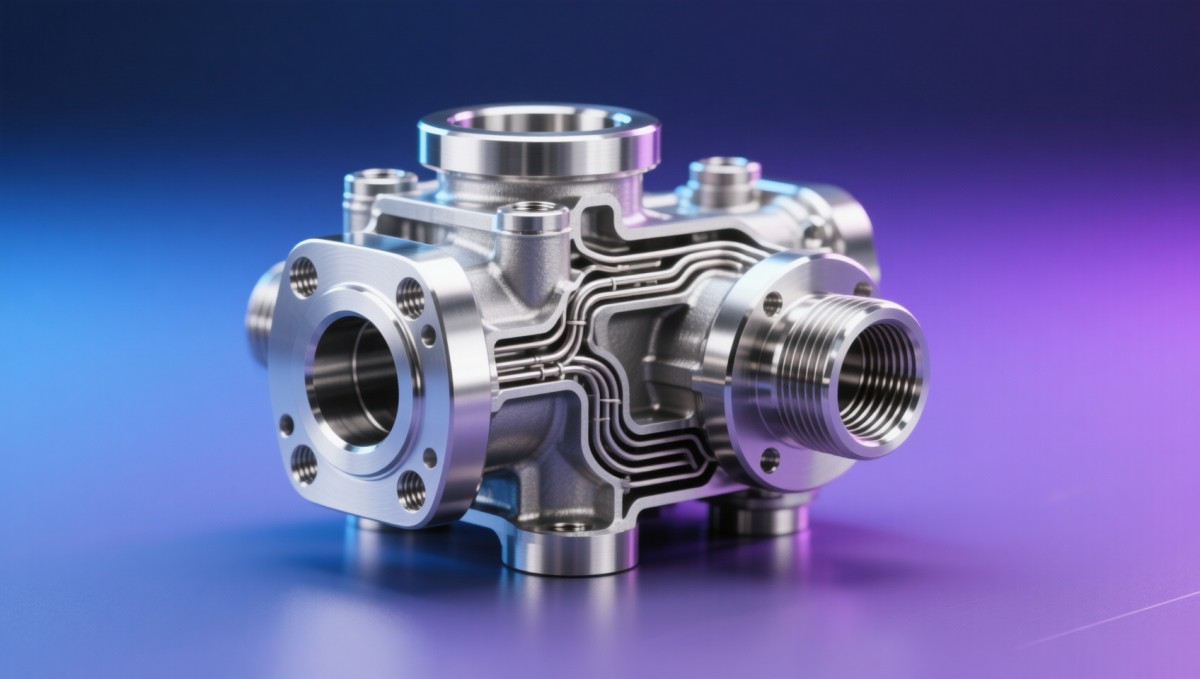
Not all components benefit equally from additive manufacturing. The highest ROI occurs when parts meet at least two of these criteria: complex internal geometry (e.g., coolant channels, lattice structures), low-to-medium production volumes (<500 units/year), long obsolescence risk (>10 years since OEM support ended), or high logistics cost (e.g., oversized, weight-sensitive, or air-freighted items).
TradeVantage’s sector-level analysis shows adoption concentration in four subcategories:
- Hydraulic manifolds and valve bodies (22% of current industrial AM aftermarket volume)
- Turbomachinery blades and shrouds (18%, especially for legacy gas turbine models)
- Custom brackets, mounts, and housings for rail and mining vehicles (31%)
- Wear-resistant nozzles, impellers, and pump casings (29%, primarily using Inconel 718 or SS316L)
Parts exceeding 400 mm in any dimension or requiring >1,200 MPa ultimate tensile strength remain better served by hybrid approaches—e.g., printed near-net shapes followed by precision CNC finishing.
Key Technical Constraints to Evaluate Before Sourcing
This table highlights why material selection and post-processing strategy must be co-designed—not retrofitted. For instance, a hydraulic manifold printed in SS316L may meet pressure rating but fail fatigue life if electropolishing isn’t paired with isotropic shot peening to close surface pores.
Procurement Checklist: 5 Non-Negotiables When Evaluating a 3D Printing Partner
Industrial buyers face heightened scrutiny from safety managers and engineering leads. A single unqualified part can trigger audit findings, warranty voidance, or field failure. TradeVantage recommends verifying these five operational anchors before issuing an RFQ:
- Valid ISO 9001:2015 and AS9100D certification—with documented internal audits covering design control, process validation, and calibration of build chambers and inspection tools
- On-site powder management system (humidity-controlled storage, sieve reuse logs, oxygen monitoring) compliant with ASTM F3049
- Traceability documentation scope: minimum 10-year retention for build files, parameter logs, test reports, and raw material certs
- Third-party validation reports from accredited labs (e.g., TÜV Rheinland, UL, or SGS) for mechanical, chemical, and microstructural properties
- Explicit contractual SLA for dimensional conformity: ≤±0.1 mm for critical fits, ≤±0.3 mm for non-critical surfaces, with Cpk ≥1.33 across 30 consecutive builds
Note: Over 68% of failed AM part deployments stem from mismatched expectations on inspection scope—not build quality. Always request sample inspection reports matching your exact part family and material grade.
Why Global Procurement Teams Turn to TradeVantage for Verified 3D Printing Partners
Sourcing industrial-grade additive manufacturing capacity isn’t just about technical specs—it’s about mitigating cross-border risk. TradeVantage’s global intelligence platform delivers verified, real-time insights that procurement, engineering, and compliance teams rely on:
- Live supplier dashboards showing active certifications, recent audit outcomes, and regional capacity utilization (updated weekly)
- Material-specific compliance mapping: e.g., which ASEAN-based providers hold EN 10204 3.1 certs for Ti6Al4V Grade 5 powder batches
- Lead-time benchmarking across 12 geographies—showing median delivery windows for Class A safety-critical parts versus non-safety Class B components
- Integrated risk scoring based on geopolitical exposure, export license history, and past non-conformance rates reported via TradeVantage’s anonymized incident database
For enterprises managing multi-tier supply chains across Europe, North America, and APAC, TradeVantage reduces due diligence time by up to 70%—while strengthening audit readiness and reducing first-article rejection rates by 42% (based on Q3 2024 client cohort data).

Get Actionable Intelligence—Not Just Listings
If your team is evaluating 3D printing for mission-critical aftermarket parts, you need more than vendor names—you need context-aware guidance. TradeVantage provides:
- Free access to our Industrial AM Readiness Assessment: a 7-minute diagnostic identifying optimal part candidates, material pathways, and compliance gaps
- Customized shortlists of pre-vetted suppliers—filtered by your exact requirements: lead time target (≤7 days / ≤14 days), certification scope (ASME BPVC, API 6A, EN 15085), and regional delivery capability
- Technical consultation with our in-house materials engineers to co-review your part drawings, suggest design-for-additive modifications, and validate inspection protocols
Contact TradeVantage today to request your free assessment and receive a prioritized supplier comparison matrix—including verified lead times, dimensional tolerance guarantees, and third-party test report samples for your specific part category.
 When an export market analysis platform can validate demand in a new marketExport market analysis platform insights help validate new-market demand through buyer fit, regulations, logistics, competition, and profitable entry conditions.
 What is driving the beauty and personal care market in the USA?Beauty and personal care in USA is driven by targeted solutions, selective premiumization, digital discovery, clean-label trust, diverse needs, and compliance. Explore key growth opportunities.
 How trade flow monitoring reports reveal changing regional demandTrade flow monitoring reports reveal changing regional demand through import volumes, sourcing shifts, product mix, logistics signals, and regulatory trends. Explore actionable market insights.
 How international market intelligence for investors reduces market-entry riskInternational market intelligence for investors reduces market-entry risk by validating demand, regulations, logistics, and competition before capital is committed.
 How international sourcing intelligence helps identify supplier risk earlyInternational sourcing intelligence helps businesses spot supplier risks early, protect supply continuity, and make smarter global procurement decisions.
 How trade data aggregation analytics reveals emerging supplier marketsTrade data aggregation analytics reveals emerging supplier markets through export trends, input flows, logistics, and regulatory signals. Discover smarter sourcing insights.
 What industrial cluster monitoring in Vietnam reveals about site riskIndustrial cluster monitoring Vietnam reveals hidden site risks across labor, utilities, logistics, compliance, and supplier dependencies. Make smarter sourcing and expansion decisions.
 Food Technology Trends Reshaping Shelf Life, Safety, and Product InnovationFood technology is reshaping shelf life, safety, and innovation. Discover the trends helping food businesses cut risk, improve compliance, and unlock stronger global market growth.
 How electronics manufacturing services are changing with low-volume demandElectronics manufacturing services are evolving fast with low-volume demand. Learn how agile EMS partners improve flexibility, compliance, sourcing resilience, and speed to market.
 How Can Buyers Reduce Procurement Risks for Electronic Components?How to reduce procurement risks for electronic components: learn how buyers assess traceability, lead times, compliance, and supplier types to avoid costly sourcing mistakes.
 What Sourcing Intelligence India Reveals About Supplier Risk and Cost ShiftsSourcing intelligence India reveals hidden supplier risk, compliance gaps, logistics pressure, and real cost shifts—helping buyers compare vendors smarter and source with more confidence.
 Fashion Trends 2026: Which Materials, Colors, and Silhouettes Are Gaining Ground?Fashion trends 2026 spotlight tactile fabrics, mineral colors, and controlled volume. Explore the materials, shades, and silhouettes shaping smarter, more wearable style.
 Smart Device Market Outlook: Key Growth Drivers, Segments, and Business OpportunitiesSmart device market trends are shifting toward system value, industrial demand, and resilient supply chains. Explore key growth drivers, high-potential segments, and business opportunities.
 How Global Trade Intelligence Services Help B2B Firms Evaluate Markets and SuppliersGlobal trade intelligence services help B2B firms compare suppliers, assess market potential, and uncover compliance, logistics, and pricing risks before costly decisions are made.
 Manufacturing Sector Updates for Investors: What Signals Matter Most in 2025?Manufacturing sector updates for investors in 2025: track orders, margins, supply chains, regulation, and exports to spot resilient manufacturers and smarter investment signals.
 How Energy Market Intelligence Helps Businesses Track Price Risks and Demand ShiftsEnergy market intelligence helps businesses spot price risks, demand shifts, and supply pressure early—improving procurement, resilience, and faster strategic decisions.
 Precision Hardware Tools Market: Key Demand Drivers, Segments, and Growth OutlookPrecision hardware tools market trends are reshaping sourcing, compliance, and automation. Explore key demand drivers, segment shifts, regional supply patterns, and growth opportunities.
 How to Use Customs Import Data to Find Buyers, Track Competitors, and Spot Demand?Customs import data helps you find real buyers, track competitors, and spot demand shifts early. Learn practical ways to turn trade records into smarter global business decisions.
 Manufacturing Cost Analysis: 8 Cost Drivers That Change Your Unit PriceManufacturing cost analysis explained through 8 key cost drivers that impact unit price, supplier stability, and margins—learn how to compare quotes smarter and reduce sourcing risk.
 Industrial Market Realities: What Buyers Should Check Before Comparing Supplier QuotesIndustrial market realities shape every supplier quote beyond unit price. Learn what to check on compliance, lead times, logistics, and hidden cost risks before comparing offers.
 Beverage Production Line Planning: Key Equipment, Capacity, and Hygiene RequirementsBeverage production line planning made practical: discover key equipment, real capacity sizing, and hygiene requirements to improve efficiency, safety, and long-term plant performance.



















Global Trade Insights & Industry
Our mission is to empower global exporters and importers with data-driven insights that foster strategic growth.
Search News
Popular Tags
Industry Overview
The global commercial kitchen equipment market is projected to reach $112 billion by 2027. Driven by urbanization, the rise of e-commerce food delivery, and strict hygiene regulations.