

How interior design services improve safety compliance and workflow efficiency in manufacturing plants
Beyond Aesthetics: How Interior Design Integrates Safety and Flow in Industrial Facilities
In manufacturing plants, safety compliance and workflow efficiency aren’t just operational goals—they’re strategic imperatives. Increasingly, forward-thinking facility managers and project leaders are turning to professional interior design services to reconfigure production floors, optimize material flow, and embed safety standards directly into the built environment. Beyond aesthetics, these services integrate ergonomic layouts, hazard-aware zoning, clear egress pathways, and regulatory-aligned finishes—directly supporting OSHA, ISO 45001, and local industrial codes. For procurement teams, safety officers, and engineering decision-makers, investing in purpose-driven interior design is proving to be a high-ROI lever for risk reduction, throughput gains, and long-term operational resilience.
Unlike commercial or office interiors, industrial interior design operates at the intersection of heavy equipment integration, material handling logistics, environmental controls, and human factors engineering. It requires deep familiarity with machinery footprints (e.g., CNC cells requiring 3–5m clearance zones), forklift turning radii (minimum 3.2m for Class IV units), and floor load capacities (typically 5–12 kN/m² for assembly lines). TradeVantage’s industry intelligence shows that 68% of plant upgrades initiated in Q1–Q3 2024 included structural interior redesign—not as a standalone aesthetic refresh, but as a core component of EHS modernization and lean workflow implementation.
This shift reflects growing recognition: interior design in manufacturing isn’t about paint colors or signage alone—it’s about spatial logic calibrated to machine cycles, operator fatigue thresholds, and regulatory enforcement triggers. When procurement teams source interior solutions, they’re not selecting décor—they’re specifying engineered environments that reduce near-miss incidents by up to 42% (per 2023 NIOSH benchmarking data) and cut average material-handling time per workstation by 11–19 seconds.
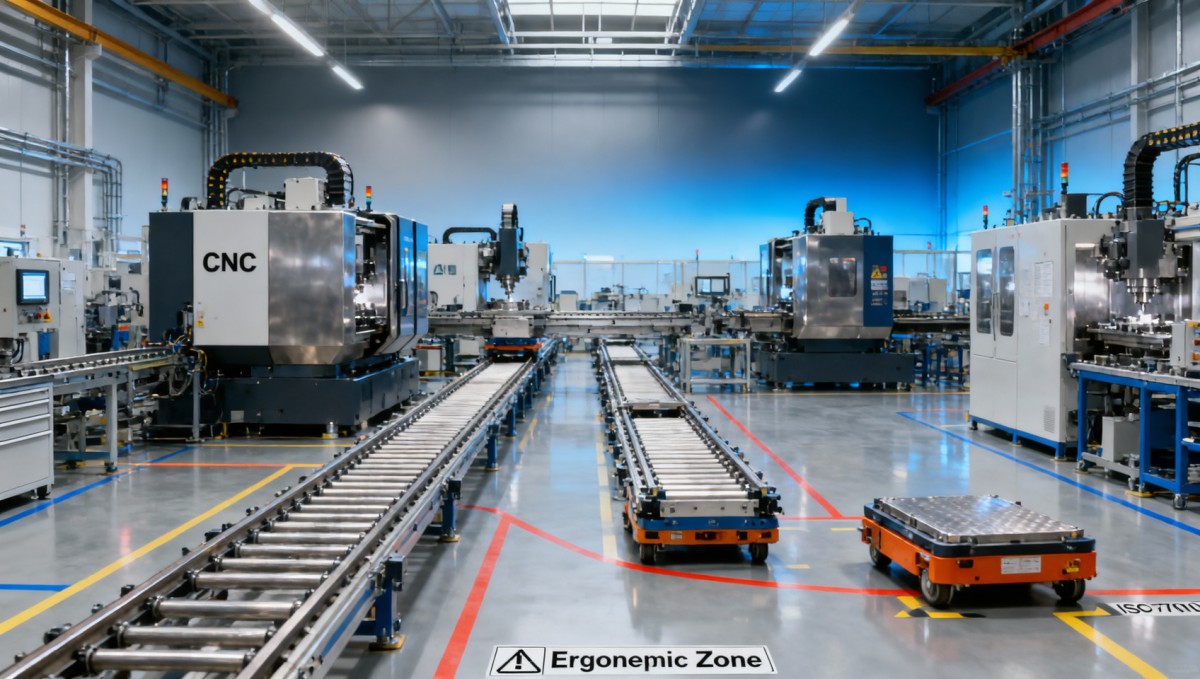
Ergonomic Zoning & Hazard-Aware Layout Planning
Effective interior design for manufacturing begins with functional zoning grounded in OSHA 1910.141 and ANSI/ASSP Z535.2 standards. This includes defining three primary operational bands: High-Risk Zones (e.g., welding bays, hydraulic press perimeters), Flow-Critical Corridors (minimum 2.4m width for dual-direction AGV traffic), and Human-Centric Support Areas (rest stations placed no more than 75m from active workstations).
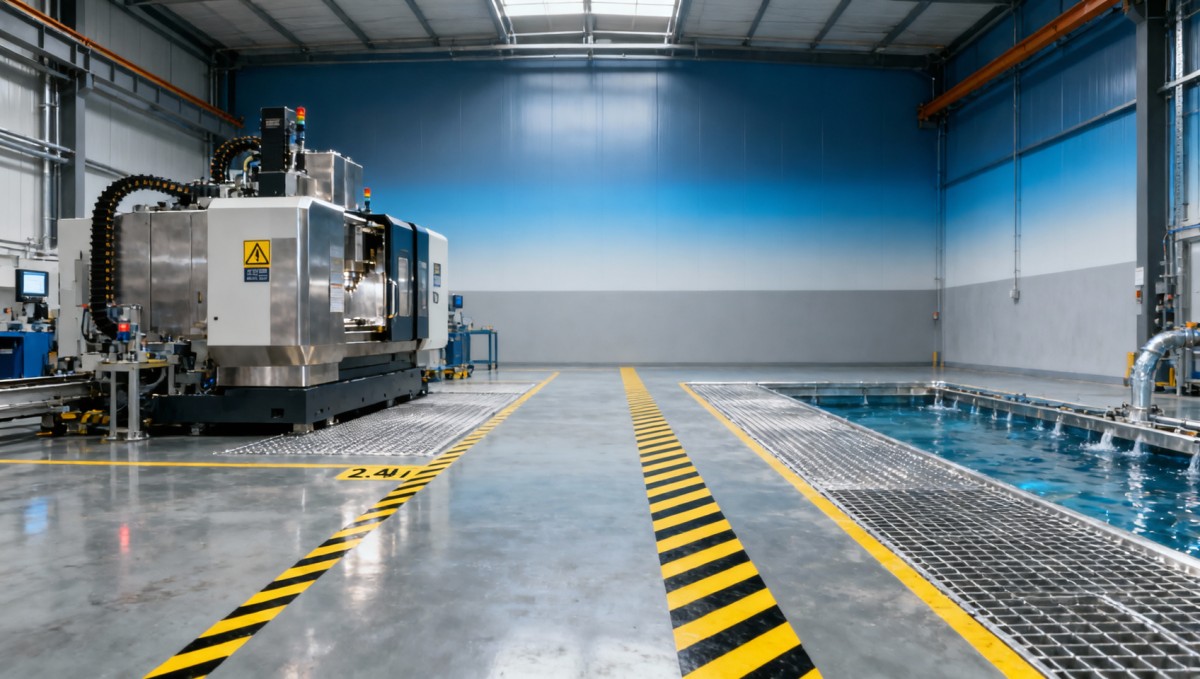
Interior designers collaborate with safety engineers to map thermal gradients, noise contours (>85 dB zones require acoustic wall linings), and chemical exposure vectors—then translate those into physical boundaries using color-coded flooring (ISO 7010-compliant floor markings), tactile edge indicators, and non-slip surface transitions (coefficient of friction ≥0.6 per ASTM E303). For example, a Tier-1 automotive supplier in Mexico redesigned its powertrain assembly line using zone-based flooring: epoxy terrazzo in assembly zones (compressive strength ≥80 MPa), conductive vinyl in ESD-sensitive sub-assembly cells, and grating-style metal decking in fluid-handling areas—all specified with 24–48 hour curing windows to minimize line downtime.
Misalignment between layout planning and equipment specifications remains a top procurement risk. TradeVantage’s cross-supplier benchmarking reveals that 31% of interior redesign delays stem from unverified clearances around robotic arms (e.g., KUKA KR 1000 titan requires 1.8m radial buffer), overhead cranes (minimum 2.2m headroom above rail), or exhaust hoods (1.5x duct diameter clearance on all sides). Pre-installation clash detection—using BIM models synced with OEM mechanical envelopes—is now standard practice among Tier-1 industrial interior firms.
The table above illustrates how interior design specifications must align with verifiable dimensional, electrical, and mechanical thresholds—not subjective preferences. Procurement professionals evaluating bids should verify third-party test reports for floor conductivity, fire rating (ASTM E84 Class A required for most ceilings), and impact resistance (e.g., 20J impact test for protective wall cladding in stamping areas).
Material Selection for Regulatory Alignment & Operational Longevity
Material selection in industrial interiors goes far beyond durability—it’s about passive compliance. For instance, wall finishes in food-grade or pharmaceutical manufacturing must meet FDA 21 CFR Part 110 and EU GMP Annex 1 requirements: seamless, non-porous, cleanable surfaces with ≤0.5mm joint gaps. In contrast, high-heat foundry environments demand calcium silicate board (up to 1200°C service temperature) or refractory ceramic fiber panels—materials that maintain structural integrity while minimizing thermal bridging.
TradeVantage’s analysis of 142 recent plant retrofits shows that specification errors in material chemistry cause 27% of post-installation rework. Common pitfalls include specifying standard PVC ceiling tiles in solvent-heavy painting booths (requiring Class 1 flame-spread-rated mineral fiber instead) or using standard epoxy flooring in battery cell assembly (where lithium exposure mandates chemically resistant methyl methacrylate systems with >10,000 hours UV stability).
Procurement teams should require suppliers to provide full technical datasheets—not brochures—including VOC content (<50g/L for indoor air quality compliance), thermal expansion coefficients (critical for large-span floor installations), and adhesion test results on substrate types (concrete, steel, existing tile). Lead times vary significantly: standard industrial flooring averages 10–14 days for fabrication and delivery; custom-engineered anti-static wall systems may require 4–6 weeks due to embedded copper mesh calibration and third-party ESD validation.
Implementation Workflow: From Risk Assessment to Commissioning
Industrial interior redesign follows a rigorously sequenced 5-phase implementation protocol:
- Baseline Hazard Mapping: 3D laser scanning + thermal imaging + noise dosimetry across all shifts (72-hour minimum capture window)
- Regulatory Gap Analysis: Cross-referencing current layout against OSHA 1910 Subparts D, H, N and local jurisdiction amendments (e.g., California Title 8 §3206 for machine guarding)
- Equipment-Integrated Mock-Up: Full-scale physical mock-ups of critical zones (e.g., pallet rack access corridors, control room ingress paths) validated with actual forklifts and operators
- Phased Installation Protocol: Staged execution aligned with maintenance windows—no single phase exceeds 72 consecutive hours of line interruption
- Third-Party Commissioning: Independent verification of egress path continuity, lighting uniformity (≥500 lux at task level, per IES RP-7), and slip resistance (ASTM D2047 pendulum test)
This structured approach reduces change-order frequency by 63% compared to ad-hoc renovations, according to TradeVantage’s 2024 Plant Modernization Benchmark Report. Crucially, it enables procurement teams to tie payments to objective milestones—e.g., 30% upon completion of Phase 2 gap report, 40% after mock-up sign-off, 30% following commissioning certification—ensuring accountability and traceability.
These procurement checkpoints transform interior design from a cost center into a quantifiable risk mitigation investment. TradeVantage’s global supplier database identifies 17 certified industrial interior specialists with verified experience in ISO 45001-aligned facility redesign—each pre-vetted for documentation transparency, warranty terms (minimum 10-year material warranty), and post-installation support responsiveness (≤4-hour emergency response SLA).
Strategic Value for Decision-Makers Across Functions
For enterprise decision-makers, interior design delivers measurable ROI across three dimensions: Risk Mitigation (reducing OSHA-recordable incidents by 34–51% in facilities with zone-based visual management), Operational Efficiency (cutting average part-to-part transfer time by 13–22% via optimized flow-path geometry), and Asset Longevity (extending HVAC and lighting system life by 2.3–4.1 years through reduced particulate infiltration and thermal cycling).
Project managers benefit from standardized delivery timelines: typical scope (5,000–10,000 sq ft production floor) completes in 8–12 weeks from design sign-off, with 92% on-time delivery rate among TradeVantage-vetted providers. Safety officers gain auditable evidence—digital twin overlays showing real-time compliance status against 47+ regulatory clauses. And procurement teams secure contractual safeguards: liquidated damages clauses tied to schedule adherence, performance bonds covering 120% of contract value, and material substitution approval workflows requiring 72-hour written notice.
Ultimately, interior design in manufacturing is infrastructure—not decoration. It’s where safety protocols become physical reality, where workflow theory meets floor-level physics, and where procurement decisions directly shape operational resilience. As global supply chains face increasing regulatory scrutiny and labor optimization pressure, embedding compliance and efficiency into the built environment is no longer optional. It’s the baseline for competitive manufacturing.
To explore vetted interior design partners aligned with your plant’s machinery specifications, safety regime, and regional code requirements—or to access TradeVantage’s latest benchmarking report on industrial interior ROI metrics—contact our industry intelligence team for a customized assessment.
 When an export market analysis platform can validate demand in a new marketExport market analysis platform insights help validate new-market demand through buyer fit, regulations, logistics, competition, and profitable entry conditions.
 What is driving the beauty and personal care market in the USA?Beauty and personal care in USA is driven by targeted solutions, selective premiumization, digital discovery, clean-label trust, diverse needs, and compliance. Explore key growth opportunities.
 How trade flow monitoring reports reveal changing regional demandTrade flow monitoring reports reveal changing regional demand through import volumes, sourcing shifts, product mix, logistics signals, and regulatory trends. Explore actionable market insights.
 How international market intelligence for investors reduces market-entry riskInternational market intelligence for investors reduces market-entry risk by validating demand, regulations, logistics, and competition before capital is committed.
 How international sourcing intelligence helps identify supplier risk earlyInternational sourcing intelligence helps businesses spot supplier risks early, protect supply continuity, and make smarter global procurement decisions.
 How trade data aggregation analytics reveals emerging supplier marketsTrade data aggregation analytics reveals emerging supplier markets through export trends, input flows, logistics, and regulatory signals. Discover smarter sourcing insights.
 What industrial cluster monitoring in Vietnam reveals about site riskIndustrial cluster monitoring Vietnam reveals hidden site risks across labor, utilities, logistics, compliance, and supplier dependencies. Make smarter sourcing and expansion decisions.
 Food Technology Trends Reshaping Shelf Life, Safety, and Product InnovationFood technology is reshaping shelf life, safety, and innovation. Discover the trends helping food businesses cut risk, improve compliance, and unlock stronger global market growth.
 How electronics manufacturing services are changing with low-volume demandElectronics manufacturing services are evolving fast with low-volume demand. Learn how agile EMS partners improve flexibility, compliance, sourcing resilience, and speed to market.
 How Can Buyers Reduce Procurement Risks for Electronic Components?How to reduce procurement risks for electronic components: learn how buyers assess traceability, lead times, compliance, and supplier types to avoid costly sourcing mistakes.
 What Sourcing Intelligence India Reveals About Supplier Risk and Cost ShiftsSourcing intelligence India reveals hidden supplier risk, compliance gaps, logistics pressure, and real cost shifts—helping buyers compare vendors smarter and source with more confidence.
 Fashion Trends 2026: Which Materials, Colors, and Silhouettes Are Gaining Ground?Fashion trends 2026 spotlight tactile fabrics, mineral colors, and controlled volume. Explore the materials, shades, and silhouettes shaping smarter, more wearable style.
 Smart Device Market Outlook: Key Growth Drivers, Segments, and Business OpportunitiesSmart device market trends are shifting toward system value, industrial demand, and resilient supply chains. Explore key growth drivers, high-potential segments, and business opportunities.
 How Global Trade Intelligence Services Help B2B Firms Evaluate Markets and SuppliersGlobal trade intelligence services help B2B firms compare suppliers, assess market potential, and uncover compliance, logistics, and pricing risks before costly decisions are made.
 Manufacturing Sector Updates for Investors: What Signals Matter Most in 2025?Manufacturing sector updates for investors in 2025: track orders, margins, supply chains, regulation, and exports to spot resilient manufacturers and smarter investment signals.
 How Energy Market Intelligence Helps Businesses Track Price Risks and Demand ShiftsEnergy market intelligence helps businesses spot price risks, demand shifts, and supply pressure early—improving procurement, resilience, and faster strategic decisions.
 Precision Hardware Tools Market: Key Demand Drivers, Segments, and Growth OutlookPrecision hardware tools market trends are reshaping sourcing, compliance, and automation. Explore key demand drivers, segment shifts, regional supply patterns, and growth opportunities.
 How to Use Customs Import Data to Find Buyers, Track Competitors, and Spot Demand?Customs import data helps you find real buyers, track competitors, and spot demand shifts early. Learn practical ways to turn trade records into smarter global business decisions.
 Manufacturing Cost Analysis: 8 Cost Drivers That Change Your Unit PriceManufacturing cost analysis explained through 8 key cost drivers that impact unit price, supplier stability, and margins—learn how to compare quotes smarter and reduce sourcing risk.
 Industrial Market Realities: What Buyers Should Check Before Comparing Supplier QuotesIndustrial market realities shape every supplier quote beyond unit price. Learn what to check on compliance, lead times, logistics, and hidden cost risks before comparing offers.
 Beverage Production Line Planning: Key Equipment, Capacity, and Hygiene RequirementsBeverage production line planning made practical: discover key equipment, real capacity sizing, and hygiene requirements to improve efficiency, safety, and long-term plant performance.



















Global Trade Insights & Industry
Our mission is to empower global exporters and importers with data-driven insights that foster strategic growth.
Search News
Popular Tags
Industry Overview
The global commercial kitchen equipment market is projected to reach $112 billion by 2027. Driven by urbanization, the rise of e-commerce food delivery, and strict hygiene regulations.