

World's First 24,000-TEU Methanol Dual-Fuel Container Ship Completed
On May 8, 2026, the world’s first 24,000-TEU methanol dual-fuel ultra-large container ship was completed in China. This milestone signals accelerating implementation of global green shipping regulations—and opens a newly certified delivery window for Chinese shipbuilding exports. Shippers, charterers, and liner operators seeking near-term low-carbon vessel deployment are now able to consider an immediately deliverable option compliant with major international environmental standards. Direct trade enterprises, marine equipment suppliers, and maritime finance institutions should monitor implications for fleet renewal cycles, fuel infrastructure planning, and asset certification requirements.
Event Overview
On May 8, 2026, the world’s first 24,000-TEU methanol dual-fuel ultra-large container ship was completed in China. The vessel meets IMO Tier III, EU FuelEU Maritime, and U.S. EPA Tier 4 emission requirements. It has received dual green class certification from DNV and China Classification Society (CCS). No further operational or contractual details have been publicly disclosed.
Industries Affected by This Development
Direct shipping operators (liner companies):
These entities face tightening regulatory timelines under FuelEU Maritime and IMO decarbonization targets. The availability of a certified, large-capacity methanol-ready vessel provides a concrete pathway for early compliance—especially for routes where methanol bunkering infrastructure is emerging. Impact manifests in fleet strategy reviews, chartering decisions, and long-term fuel supply contracting.
Maritime leasing and financing institutions:
Green vessel financing criteria increasingly require verified emissions compliance and future-fuel readiness. Dual-class certification (DNV/CCS) strengthens asset eligibility for ESG-linked loan facilities and green bonds. Impact appears in risk assessment frameworks, collateral valuation models, and due diligence checklists for newbuild acquisitions.
Ports and bunkering service providers:
Methanol-fueled vessels require compatible handling, storage, and transfer infrastructure. While this ship does not mandate immediate port upgrades, its delivery signals growing demand signals for mid-term investment planning. Impact centers on feasibility studies for methanol terminal integration, safety protocol alignment, and inter-agency coordination with national maritime authorities.
Shipbuilding supply chain firms (engine manufacturers, tank systems, control systems):
Class-approved methanol dual-fuel propulsion systems—including engines, fuel tanks, and safety-critical controls—must meet stringent material compatibility and leak-detection standards. This vessel’s certification validates specific technical configurations. Impact includes R&D prioritization, component qualification timelines, and export documentation requirements for Tier 2–3 suppliers.
What Relevant Enterprises or Practitioners Should Monitor and Act On
Track official guidance on FuelEU Maritime phase-in schedules and grandfathering clauses
Current FuelEU Maritime rules include transitional provisions for vessels entering service before 2025. This ship delivers in 2026—placing it outside initial grace periods. Stakeholders should verify whether its certification qualifies for any compliance flexibility under revised EU Commission interpretations.
Monitor methanol supply chain development in key trading corridors
Methanol dual-fuel capability only delivers emissions benefits when green methanol is available at scale. Focus should be on ports along Asia–Europe and trans-Pacific routes where pilot bunkering projects are underway—e.g., Rotterdam, Singapore, Los Angeles—rather than assuming global coverage.
Distinguish between regulatory certification and commercial operability
Dual class approval confirms design compliance—not real-world fuel availability, crew training, or insurance terms. Companies evaluating procurement or chartering should separately assess bunker supply contracts, crew certification pathways, and P&I club guidance on methanol operations.
Prepare documentation for green asset reporting and disclosure
Financial institutions and listed carriers increasingly report on fleet carbon intensity under CDP, SASB, and ISSB frameworks. Having class-certified low-emission assets simplifies data collection—but requires standardized emissions accounting methodology aligned with IMO’s Energy Efficiency Design Index (EEDI) and Carbon Intensity Indicator (CII) updates.
Editorial Perspective / Industry Observation
Observably, this delivery functions less as a standalone technological breakthrough and more as a system-level validation: it confirms that integrated design, classification, and construction processes for large-scale alternative-fuel vessels are operationally mature within China’s shipbuilding sector. Analysis shows that the dual-class certification (DNV/CCS) reflects convergence—not divergence—in global green ship standards, easing cross-border acceptance. From an industry perspective, the event is best understood as a signal of accelerated supply-chain readiness rather than immediate market saturation; vessel orders remain concentrated among early-adopter owners, and methanol bunkering infrastructure lags behind vessel delivery. Continued attention is warranted on certification scalability, fuel lifecycle emissions verification, and regional policy harmonization—particularly between EU, U.S., and Asian maritime regulators.
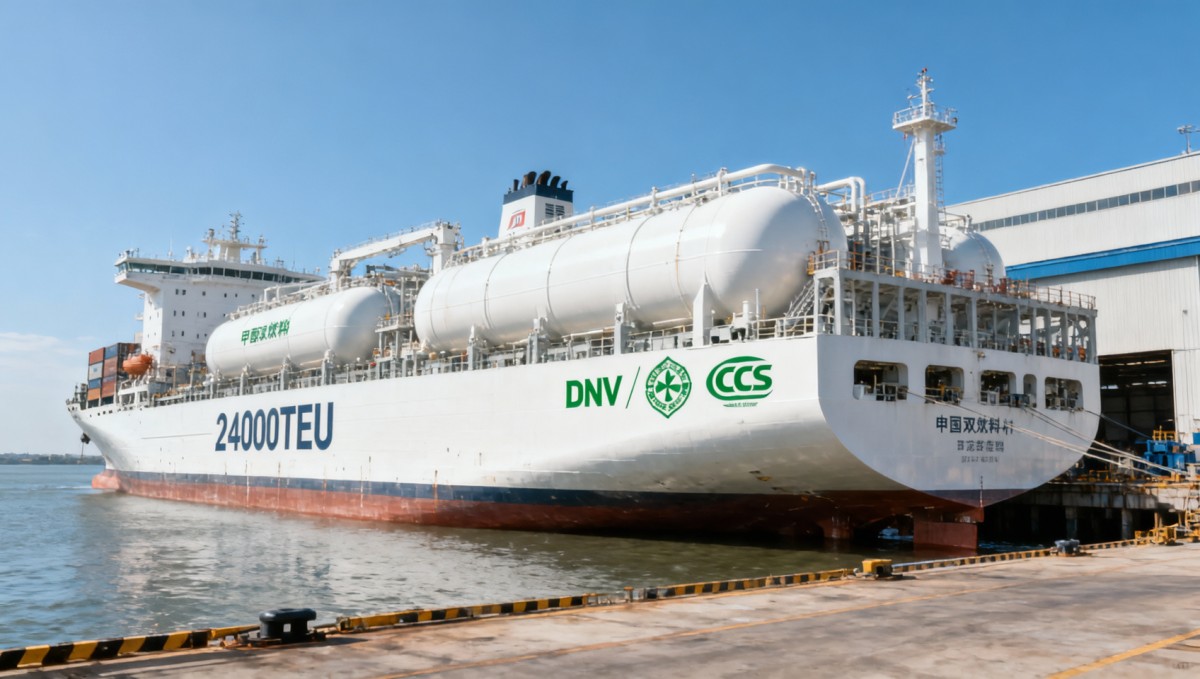
In summary, the completion of this vessel marks a tangible step toward operationalizing maritime decarbonization—not just legislating it. Its significance lies not in replacing conventional fuels overnight, but in establishing a certifiable, deliverable reference point for large-container logistics stakeholders navigating complex, overlapping regulatory regimes. Currently, it is more accurate to interpret this development as a supply-side enabler for near-term compliance planning, rather than evidence of broad-based fuel transition momentum.
Source: Publicly announced completion date and technical specifications (IMO Tier III, FuelEU Maritime, EPA Tier 4 compliance; DNV/CCS dual certification); no additional sources cited. Ongoing observation is recommended regarding actual delivery confirmation, chartering status, and methanol bunkering deployment timelines—none of which are confirmed in the source information.
Recommended News
 PBOC Gold Reserves Reach $341.05B in April 2026 Amid RMB StrengthPBOC gold reserves hit $341.05B in April 2026 amid RMB strength — critical FX insights for exporters, traders & procurement teams managing RMB-denominated trade.
 Zhengzhou EV Power Module Export Certification Window OpensZhengzhou EV power module export certification is live—AEC-Q100, UL 62368-1 & IEC 61851-23 compliant OBC/DC-DC modules now ready for EU, Korea & Thailand markets.
 China's Medical Imaging Equipment Market Hits ¥75B; Domestic DR/Ultrasound Expand in Africa & LatAmChina's medical imaging equipment market hits ¥75B; DR & portable ultrasound exports surge in Africa and LatAm with CE/FDA/WHO PQ certifications.
 New Unisoc Summit Launches 'AGI for Industry' StrategyAGI for Industry: New Unisoc’s IEC 61131-3–certified AI chip solution replaces x86 PLCs—boosting smart factory adoption in emerging markets. Discover impact & action steps.
 NIO Power's Labor Day Charging Report: 1M Swaps, Zero Major FailuresNIO Power's Labor Day report: 1M+ battery swaps, zero major failures — proof of standardized EV battery reliability for global infrastructure players.
 Shenzhen Robot Industry Output Exceeds $24B; Export Lead Time Cut to 6 WeeksShenzhen robot industry output tops $24B; export lead time slashed to 6 weeks for ISO/UL/CE-compliant collaborative robots—key insight for global automation buyers.
 Wuwen Xinqiong Raises Over RMB 700M: Accelerating AI Agent Infrastructure for Cross-Border BOM Coordination and Multilingual QCWuwen Xinqiong raises RMB 700M+ to accelerate AI agent infrastructure for cross-border BOM coordination and multilingual QC—boosting compliance, audit readiness & supply chain agility.
 DeepSeek V4 Integrated into Lingzhu AI Creative PlatformDeepSeek V4 is now live on Lingzhu AI Creative Platform—boosting demand analysis 3x & enabling multilingual BOM parsing (12 languages) and cross-cultural visual generation for global packaging, gifting & decor.
 China’s New IoT Action Plan Mandates Security & Interop for NB-IoT/RedCap ModulesChina’s new IoT Action Plan mandates NB-IoT & RedCap module security and interoperability—key for EU/US/ASEAN exports. Act now to ensure compliance.
 World's First 24,000-TEU Methanol Dual-Fuel Container Ship CompletedWorld's first 24,000-TEU methanol dual-fuel container ship completed in China—certified for IMO Tier III, FuelEU & EPA Tier 4. Act now on green fleet compliance.
 Export Import Intelligence for Comparing Apparel Supplier RegionsExport import intelligence helps apparel teams compare supplier regions by trade flow, compliance, lead time, and cost to source smarter and reduce risk.
 What Industrial Market Reports Can Reveal About Apparel Demand ShiftsIndustrial market reports reveal apparel demand shifts, sourcing risks, and regional buying trends—helping brands act faster, reduce uncertainty, and uncover profitable growth opportunities.
 AI Robotics in Quality Control: Where It Actually HelpsAI robotics improves quality control where consistency, traceability, and safety matter most. Learn its best factory use cases, limits, and how to judge real ROI.
 Robotics News: The Upgrade Signals Maintenance Teams Should TrackRobotics news for maintenance teams: learn which upgrade signals—cycle time drift, torque spikes, sensor issues, software alerts, and parts risk—can cut downtime and improve robot reliability.
 Robotic Trends That Are Changing Factory Planning in 2026Robotic trends are reshaping factory planning in 2026. Explore how AI, modular cells, AMRs, and software-defined automation help manufacturers build smarter, scalable, future-ready operations.
 AI Robotics in Quality Control: Where It Actually HelpsAI robotics improves quality control where consistency, traceability, and safety matter most. Learn its best factory use cases, limits, and how to judge real ROI.
 Robotics News: The Upgrade Signals Maintenance Teams Should TrackRobotics news for maintenance teams: learn which upgrade signals—cycle time drift, torque spikes, sensor issues, software alerts, and parts risk—can cut downtime and improve robot reliability.
 Commercial Insights on Robotics: What Shapes Purchase DecisionsCommercial insights for industrial robotics buyers: compare total cost, supplier reliability, and integration readiness to make smarter purchase decisions and improve ROI.
 Wuwen Xinqiong Raises $100M+ for AI Agent Infrastructure in ManufacturingWuwen Xinqiong raises $100M+ for AI agent infrastructure in manufacturing — enabling multilingual BOM coordination, automated quality inspection, and cross-border supply chain agility. Discover the impact.
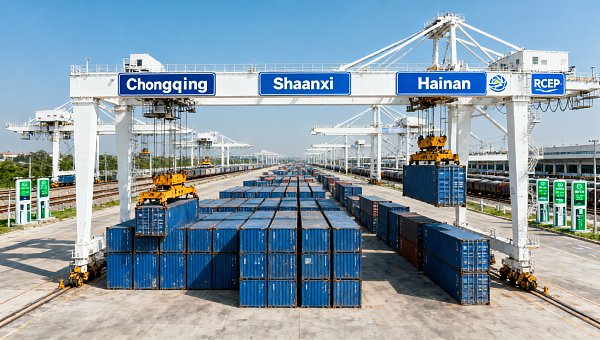
 Q1 Regional Export Growth: Shaanxi, Hainan, Chongqing LeadQ1 Regional Export Growth: Shaanxi, Hainan, Chongqing lead with +73.7%, +38.5%, +34.3% — key for OEMs, procurement & logistics teams optimizing RCEP-compliant sourcing.
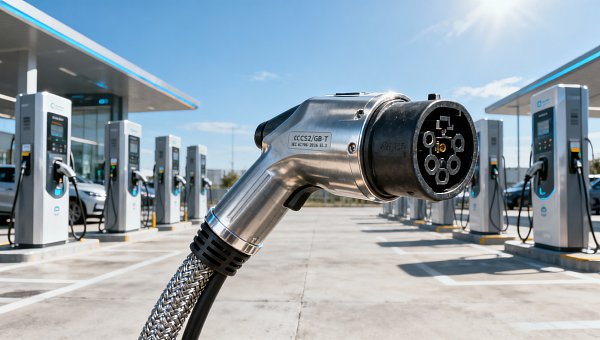
 EV Charging Infrastructure Hits 21.48M Units; IEC 62196-3:2026 Ed.3 Certification Window OpensEV charging infrastructure hits 21.48M units; IEC 62196-3:2026 Ed.3 certification window is open—act now to meet Q3 2026 compliance deadlines for North America, ANZ & South Korea.
















Global Trade Insights & Industry
Our mission is to empower global exporters and importers with data-driven insights that foster strategic growth.
Search News
Popular Tags
Industry Overview
The global commercial kitchen equipment market is projected to reach $112 billion by 2027. Driven by urbanization, the rise of e-commerce food delivery, and strict hygiene regulations.