

Zhengzhou EV Power Module Export Certification Window Opens
Amid rising investment in Zhengzhou’s new energy vehicle (NEV) supply chain, a certification milestone for on-board chargers (OBC) and DC-DC converters — key power electronics components — has emerged in Q1 2026. This development signals heightened readiness for export to regulated automotive markets including the EU, South Korea, and Thailand, and warrants attention from power module manufacturers, Tier 2 suppliers, and international compliance service providers.
Event Overview
On May 8, 2026, Qianzhan Network published an industry analysis indicating that Zhengzhou’s OBC and DC-DC converter cluster has achieved a mature local supply chain. As of Q1 2026, 23 enterprises in the region have obtained AEC-Q100 automotive-grade qualification. Concurrently, these firms have initiated certification under UL 62368-1 and IEC 61851-23 (2nd edition), two updated safety standards relevant to EV charging systems and interoperability.
Impact on Specific Industry Segments
Direct Exporters & OEM/Tier 2 Suppliers: These entities face shortened time-to-market when qualifying Zhengzhou-sourced OBC/DC-DC modules for European or Asian vehicle programs. The availability of AEC-Q100–certified suppliers reduces dependency on long lead-time audits and accelerates component integration into vehicle platforms targeting those regions.
Component Manufacturing Firms (Non-Zhengzhou Based): Competitive pressure may increase as Zhengzhou-based manufacturers gain formal recognition for automotive-grade reliability. Firms relying on legacy qualification pathways or lacking parallel UL/IEC 61851-23 alignment may see reduced competitiveness in bid processes for Tier 2 contracts with global automakers active in ASEAN or EU markets.
Compliance & Certification Service Providers: Demand for localized support in AEC-Q100 test coordination, UL 62368-1 documentation review, and IEC 61851-23 conformance testing is likely to rise. Providers with established labs or partnerships in Central China may see increased engagement from regional manufacturers seeking faster turnaround.
Supply Chain Integration & Logistics Operators: Increased export activity involving certified modules may trigger adjustments in customs classification, documentation requirements (e.g., conformity declarations per EU Directive 2014/53/EU for radio-emitting variants), and logistics routing — particularly for air freight shipments requiring rapid delivery to EU or Korean assembly plants.
What Relevant Enterprises Should Monitor and Act On
Track official updates on IEC 61851-23 implementation timelines
The second edition of IEC 61851-23 entered force in 2025 but includes phased adoption provisions by market. Enterprises should monitor national transposition status in target countries — e.g., whether South Korea’s KEA or Thailand’s TISI has issued enforcement guidance — before finalizing product launch schedules.
Verify scope alignment between AEC-Q100 certification and actual application conditions
AEC-Q100 qualification covers specific stress-test profiles (e.g., temperature cycling, HAST). Enterprises integrating Zhengzhou-sourced modules must confirm that the certified grade (Grade 1 vs. Grade 0) matches their vehicle’s operational environment — especially for battery thermal management–integrated DC-DC units deployed in high-ambient-temperature markets like Thailand.
Assess readiness of existing procurement contracts for UL/IEC-compliant alternatives
Buyers currently sourcing non-certified OBC/DC-DC modules should evaluate contractual flexibility to switch to Zhengzhou-based suppliers now undergoing dual-standard certification. Early engagement with qualified vendors may allow negotiation of transitional pricing or volume commitments ahead of full market uptake.
Prepare technical documentation packages aligned with both UL 62368-1 and IEC 61851-23
While AEC-Q100 addresses reliability, UL 62368-1 focuses on hazard-based safety engineering, and IEC 61851-23 specifies communication protocol robustness during charging handshakes. Firms supporting Zhengzhou suppliers’ exports should ensure internal documentation (e.g., risk assessments, firmware validation reports) covers all three domains — not just AEC-Q100 test records.
Editorial Perspective / Industry Observation
Observably, this development is less a completed market shift and more a procedural inflection point: it reflects institutionalized capability rather than immediate volume growth. The simultaneous pursuit of AEC-Q100 and two distinct UL/IEC standards suggests a strategic effort to meet divergent regulatory entry points — not merely replicate existing Western supplier pathways. Analysis shows that the focus on certification velocity (rather than scale or cost leadership) implies priority is being placed on access over dominance. From an industry perspective, this window should be interpreted as a signal of growing regional capacity to meet baseline automotive safety and interoperability thresholds — not yet evidence of full technical parity across design, validation depth, or long-term field reliability data.
Consequently, the significance lies not in immediate substitution of incumbent suppliers, but in expanded optionality for Tier 2 sourcing strategies — particularly where speed-to-qualification outweighs absolute cost advantage. Continued observation is warranted on whether subsequent quarters show broadening participation beyond the initial 23 firms, and whether certification outcomes translate into verifiable design-win announcements with named OEMs.
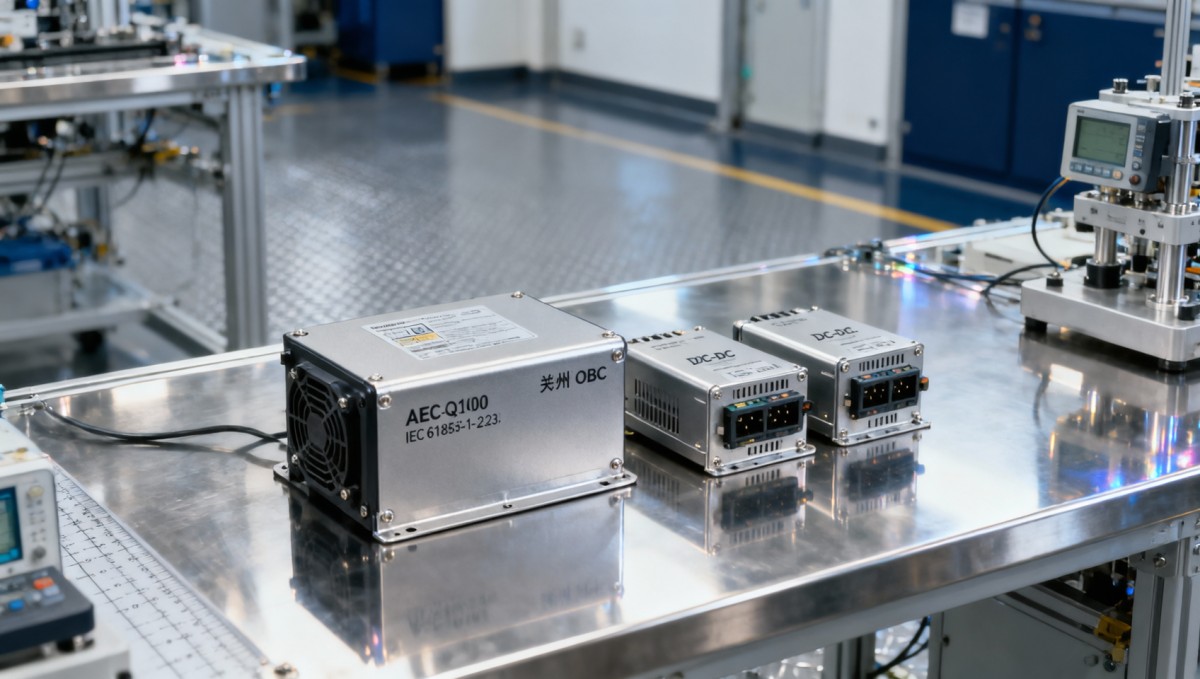
In summary, the Zhengzhou OBC/DC-DC certification progress represents a measurable step toward functional equivalence in core EV power electronics compliance — one that lowers barriers for regional suppliers entering regulated export markets. It does not indicate a wholesale reconfiguration of global supply chains, but rather marks a maturing node within them. Current interpretation should emphasize its role as an enabler of incremental, compliance-driven sourcing diversification — not a disruptive displacement event.
Source: Qianzhan Network (published May 8, 2026)
Points for ongoing observation: Adoption rate of IEC 61851-23 among Zhengzhou-certified firms beyond initial applicants; public confirmation of first commercial deployments in EU/Korean/Thai vehicle platforms.
 When an export market analysis platform can validate demand in a new marketExport market analysis platform insights help validate new-market demand through buyer fit, regulations, logistics, competition, and profitable entry conditions.
 What is driving the beauty and personal care market in the USA?Beauty and personal care in USA is driven by targeted solutions, selective premiumization, digital discovery, clean-label trust, diverse needs, and compliance. Explore key growth opportunities.
 How trade flow monitoring reports reveal changing regional demandTrade flow monitoring reports reveal changing regional demand through import volumes, sourcing shifts, product mix, logistics signals, and regulatory trends. Explore actionable market insights.
 How international market intelligence for investors reduces market-entry riskInternational market intelligence for investors reduces market-entry risk by validating demand, regulations, logistics, and competition before capital is committed.
 How international sourcing intelligence helps identify supplier risk earlyInternational sourcing intelligence helps businesses spot supplier risks early, protect supply continuity, and make smarter global procurement decisions.
 How trade data aggregation analytics reveals emerging supplier marketsTrade data aggregation analytics reveals emerging supplier markets through export trends, input flows, logistics, and regulatory signals. Discover smarter sourcing insights.
 What industrial cluster monitoring in Vietnam reveals about site riskIndustrial cluster monitoring Vietnam reveals hidden site risks across labor, utilities, logistics, compliance, and supplier dependencies. Make smarter sourcing and expansion decisions.
 Food Technology Trends Reshaping Shelf Life, Safety, and Product InnovationFood technology is reshaping shelf life, safety, and innovation. Discover the trends helping food businesses cut risk, improve compliance, and unlock stronger global market growth.
 How electronics manufacturing services are changing with low-volume demandElectronics manufacturing services are evolving fast with low-volume demand. Learn how agile EMS partners improve flexibility, compliance, sourcing resilience, and speed to market.
 How Can Buyers Reduce Procurement Risks for Electronic Components?How to reduce procurement risks for electronic components: learn how buyers assess traceability, lead times, compliance, and supplier types to avoid costly sourcing mistakes.
 What Sourcing Intelligence India Reveals About Supplier Risk and Cost ShiftsSourcing intelligence India reveals hidden supplier risk, compliance gaps, logistics pressure, and real cost shifts—helping buyers compare vendors smarter and source with more confidence.
 Fashion Trends 2026: Which Materials, Colors, and Silhouettes Are Gaining Ground?Fashion trends 2026 spotlight tactile fabrics, mineral colors, and controlled volume. Explore the materials, shades, and silhouettes shaping smarter, more wearable style.
 Smart Device Market Outlook: Key Growth Drivers, Segments, and Business OpportunitiesSmart device market trends are shifting toward system value, industrial demand, and resilient supply chains. Explore key growth drivers, high-potential segments, and business opportunities.
 How Global Trade Intelligence Services Help B2B Firms Evaluate Markets and SuppliersGlobal trade intelligence services help B2B firms compare suppliers, assess market potential, and uncover compliance, logistics, and pricing risks before costly decisions are made.
 Manufacturing Sector Updates for Investors: What Signals Matter Most in 2025?Manufacturing sector updates for investors in 2025: track orders, margins, supply chains, regulation, and exports to spot resilient manufacturers and smarter investment signals.
 How Energy Market Intelligence Helps Businesses Track Price Risks and Demand ShiftsEnergy market intelligence helps businesses spot price risks, demand shifts, and supply pressure early—improving procurement, resilience, and faster strategic decisions.
 Precision Hardware Tools Market: Key Demand Drivers, Segments, and Growth OutlookPrecision hardware tools market trends are reshaping sourcing, compliance, and automation. Explore key demand drivers, segment shifts, regional supply patterns, and growth opportunities.
 How to Use Customs Import Data to Find Buyers, Track Competitors, and Spot Demand?Customs import data helps you find real buyers, track competitors, and spot demand shifts early. Learn practical ways to turn trade records into smarter global business decisions.
 Manufacturing Cost Analysis: 8 Cost Drivers That Change Your Unit PriceManufacturing cost analysis explained through 8 key cost drivers that impact unit price, supplier stability, and margins—learn how to compare quotes smarter and reduce sourcing risk.
 Industrial Market Realities: What Buyers Should Check Before Comparing Supplier QuotesIndustrial market realities shape every supplier quote beyond unit price. Learn what to check on compliance, lead times, logistics, and hidden cost risks before comparing offers.
 Beverage Production Line Planning: Key Equipment, Capacity, and Hygiene RequirementsBeverage production line planning made practical: discover key equipment, real capacity sizing, and hygiene requirements to improve efficiency, safety, and long-term plant performance.





















Global Trade Insights & Industry
Our mission is to empower global exporters and importers with data-driven insights that foster strategic growth.
Search News
Popular Tags
Industry Overview
The global commercial kitchen equipment market is projected to reach $112 billion by 2027. Driven by urbanization, the rise of e-commerce food delivery, and strict hygiene regulations.