

New Unisoc Summit Launches 'AGI for Industry' Strategy
On May 7, 2026, New Unisoc Group launched its 'AGI for Industry' strategy in Beijing, announcing that its Ascend + Cambricon heterogeneous AI chip solution has achieved IEC 61131-3 real-time control certification—enabling direct replacement of x86-based PLCs and industrial PCs in automation systems. The development signals implications for industrial automation equipment exporters, smart factory integrators, and SME-focused industrial software vendors across emerging markets.
Event Overview
On May 7, 2026, New Unisoc Group held an innovation summit in Beijing and introduced the 'AGI for Industry' strategic initiative. It confirmed that its Ascend + Cambricon heterogeneous AI chip solution has passed IEC 61131-3 real-time control certification, qualifying it for use in programmable logic controllers (PLCs) and industrial PCs (IPCs) traditionally based on x86 architecture. The solution is already deployed in smart factory projects across 12 countries—including Vietnam, Mexico, and Turkey—and supports Chinese-language instruction programming and localized industrial protocol stacks.
Industries Affected by This Development
Industrial Automation Equipment Exporters
These firms supply PLCs, IPCs, and embedded controllers to overseas manufacturers. Because the certified solution enables drop-in replacement of x86-based hardware in industrial control environments, exporters may face increased competitive pressure in price-sensitive, mid-tier smart factory tenders—particularly where local language support and simplified deployment are valued.
Smart Factory System Integrators
Integrators deploying automation lines in Vietnam, Mexico, Turkey, and similar markets now have a certified alternative to legacy x86 platforms. The inclusion of native Chinese-language programming and pre-integrated regional industrial protocols lowers configuration time and reduces training overhead for local engineering teams—potentially shortening project delivery cycles.
SME-Focused Industrial Software Vendors
Vendors offering HMI, SCADA, or edge analytics tools tailored to small- and medium-sized manufacturers must assess compatibility with the new heterogeneous AI chip platform. Since the solution includes a localized protocol stack, software vendors may need to verify interoperability with Modbus RTU/TCP, CANopen, or regional variants such as Turkey’s TEIAS-compliant extensions.
What Relevant Enterprises or Practitioners Should Monitor and Do Now
Track official certification documentation and regional regulatory alignment
While IEC 61131-3 certification is confirmed, compliance with country-specific safety or electromagnetic compatibility (EMC) standards—e.g., Vietnam’s QCVN 14:2023, Mexico’s NOM-001-SEDE, or Turkey’s TSE EN 61000 series—has not been publicly disclosed. Exporters and integrators should request formal test reports before committing to large-scale deployments.
Monitor deployment patterns in Tier-2 industrial clusters
The initial rollout targets smart factory projects—not broad OEM adoption. Current deployments appear concentrated in electronics assembly, textile automation, and food packaging facilities in export-oriented industrial zones. Companies should observe whether follow-up orders reflect repeat procurement or one-off pilot contracts.
Distinguish between technical readiness and commercial scalability
Certification confirms functional equivalence under lab conditions; it does not indicate volume production capacity, long-term thermal reliability, or field service infrastructure. Firms evaluating this platform should treat it as a qualified candidate—not yet a de facto standard—until at least two consecutive quarters of verified shipment data become available.
Prepare for protocol stack integration testing
Since the solution includes a localized industrial protocol stack, integrators and software vendors should allocate internal resources to validate message timing, error handling, and failover behavior against their existing HMIs or MES interfaces—especially when interfacing with legacy equipment from non-Chinese vendors.
Editorial Perspective / Industry Observation
Observably, this announcement functions primarily as a technical validation milestone—not yet a market inflection point. The IEC 61131-3 certification is a necessary but insufficient condition for widespread adoption in mission-critical control applications. Analysis shows that the emphasis on Chinese-language programming and regional protocol support suggests a deliberate go-to-market focus on cost-conscious, digitally transitioning manufacturers—not high-precision or safety-critical sectors like automotive Tier-1 production or pharmaceutical manufacturing. From an industry perspective, this reflects a broader shift toward ‘certified affordability’: where functional equivalence, localization, and reduced deployment friction outweigh raw computational performance in emerging-market automation decisions. It is more accurately understood as an early signal of architectural diversification in industrial edge computing—not an immediate displacement of x86.
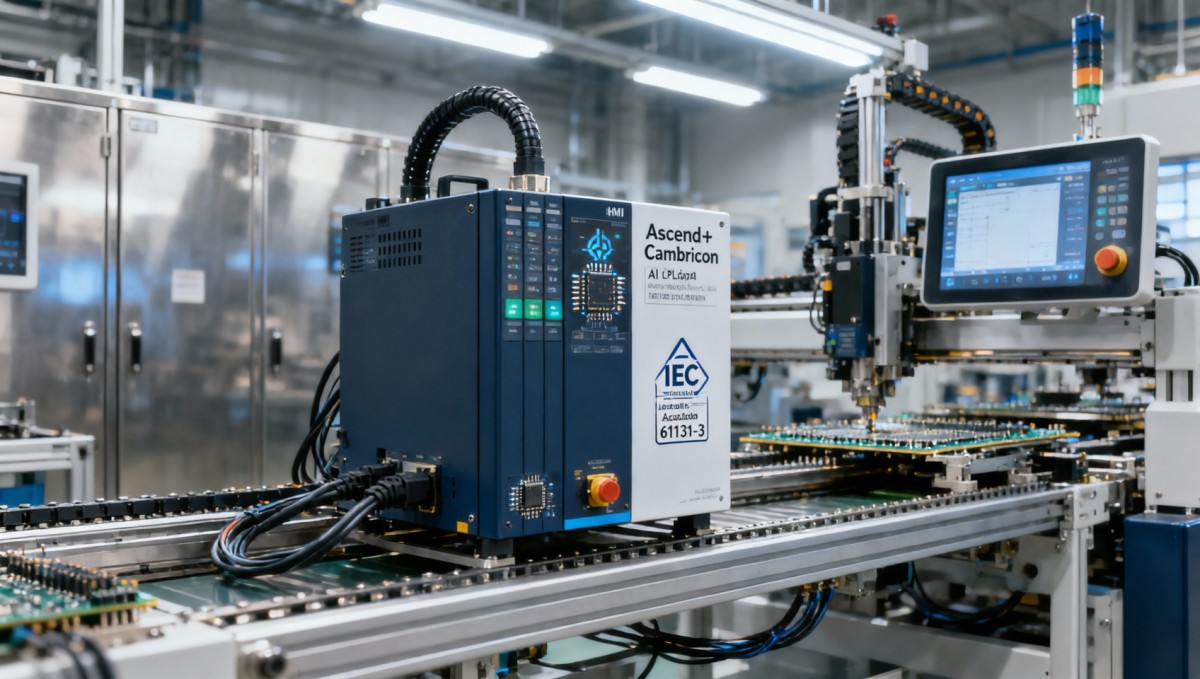
In summary, the 'AGI for Industry' initiative marks a credible step toward AI-accelerated, locally adaptable industrial control hardware—but its near-term impact remains constrained to specific geographies, application segments, and procurement contexts. It is better interpreted as evidence of maturing domestic AI chip integration capability in deterministic control workloads, rather than as a broad-based technology transition already underway.
Source: Official announcement by New Unisoc Group, May 7, 2026. Certification status and deployment geography confirmed in press materials. No third-party verification or independent test reports cited. Ongoing observation is warranted regarding regional regulatory approvals and quarterly shipment disclosures.
 When an export market analysis platform can validate demand in a new marketExport market analysis platform insights help validate new-market demand through buyer fit, regulations, logistics, competition, and profitable entry conditions.
 What is driving the beauty and personal care market in the USA?Beauty and personal care in USA is driven by targeted solutions, selective premiumization, digital discovery, clean-label trust, diverse needs, and compliance. Explore key growth opportunities.
 How trade flow monitoring reports reveal changing regional demandTrade flow monitoring reports reveal changing regional demand through import volumes, sourcing shifts, product mix, logistics signals, and regulatory trends. Explore actionable market insights.
 How international market intelligence for investors reduces market-entry riskInternational market intelligence for investors reduces market-entry risk by validating demand, regulations, logistics, and competition before capital is committed.
 How international sourcing intelligence helps identify supplier risk earlyInternational sourcing intelligence helps businesses spot supplier risks early, protect supply continuity, and make smarter global procurement decisions.
 How trade data aggregation analytics reveals emerging supplier marketsTrade data aggregation analytics reveals emerging supplier markets through export trends, input flows, logistics, and regulatory signals. Discover smarter sourcing insights.
 What industrial cluster monitoring in Vietnam reveals about site riskIndustrial cluster monitoring Vietnam reveals hidden site risks across labor, utilities, logistics, compliance, and supplier dependencies. Make smarter sourcing and expansion decisions.
 Food Technology Trends Reshaping Shelf Life, Safety, and Product InnovationFood technology is reshaping shelf life, safety, and innovation. Discover the trends helping food businesses cut risk, improve compliance, and unlock stronger global market growth.
 How electronics manufacturing services are changing with low-volume demandElectronics manufacturing services are evolving fast with low-volume demand. Learn how agile EMS partners improve flexibility, compliance, sourcing resilience, and speed to market.
 How Can Buyers Reduce Procurement Risks for Electronic Components?How to reduce procurement risks for electronic components: learn how buyers assess traceability, lead times, compliance, and supplier types to avoid costly sourcing mistakes.
 What Sourcing Intelligence India Reveals About Supplier Risk and Cost ShiftsSourcing intelligence India reveals hidden supplier risk, compliance gaps, logistics pressure, and real cost shifts—helping buyers compare vendors smarter and source with more confidence.
 Fashion Trends 2026: Which Materials, Colors, and Silhouettes Are Gaining Ground?Fashion trends 2026 spotlight tactile fabrics, mineral colors, and controlled volume. Explore the materials, shades, and silhouettes shaping smarter, more wearable style.
 Smart Device Market Outlook: Key Growth Drivers, Segments, and Business OpportunitiesSmart device market trends are shifting toward system value, industrial demand, and resilient supply chains. Explore key growth drivers, high-potential segments, and business opportunities.
 How Global Trade Intelligence Services Help B2B Firms Evaluate Markets and SuppliersGlobal trade intelligence services help B2B firms compare suppliers, assess market potential, and uncover compliance, logistics, and pricing risks before costly decisions are made.
 Manufacturing Sector Updates for Investors: What Signals Matter Most in 2025?Manufacturing sector updates for investors in 2025: track orders, margins, supply chains, regulation, and exports to spot resilient manufacturers and smarter investment signals.
 How Energy Market Intelligence Helps Businesses Track Price Risks and Demand ShiftsEnergy market intelligence helps businesses spot price risks, demand shifts, and supply pressure early—improving procurement, resilience, and faster strategic decisions.
 Precision Hardware Tools Market: Key Demand Drivers, Segments, and Growth OutlookPrecision hardware tools market trends are reshaping sourcing, compliance, and automation. Explore key demand drivers, segment shifts, regional supply patterns, and growth opportunities.
 How to Use Customs Import Data to Find Buyers, Track Competitors, and Spot Demand?Customs import data helps you find real buyers, track competitors, and spot demand shifts early. Learn practical ways to turn trade records into smarter global business decisions.
 Manufacturing Cost Analysis: 8 Cost Drivers That Change Your Unit PriceManufacturing cost analysis explained through 8 key cost drivers that impact unit price, supplier stability, and margins—learn how to compare quotes smarter and reduce sourcing risk.
 Industrial Market Realities: What Buyers Should Check Before Comparing Supplier QuotesIndustrial market realities shape every supplier quote beyond unit price. Learn what to check on compliance, lead times, logistics, and hidden cost risks before comparing offers.
 Beverage Production Line Planning: Key Equipment, Capacity, and Hygiene RequirementsBeverage production line planning made practical: discover key equipment, real capacity sizing, and hygiene requirements to improve efficiency, safety, and long-term plant performance.




















Global Trade Insights & Industry
Our mission is to empower global exporters and importers with data-driven insights that foster strategic growth.
Search News
Popular Tags
Industry Overview
The global commercial kitchen equipment market is projected to reach $112 billion by 2027. Driven by urbanization, the rise of e-commerce food delivery, and strict hygiene regulations.