

Shenzhen Robot Industry Output Exceeds $24B; Export Lead Time Cut to 6 Weeks
On May 8, 2026, data from Qianzhan Network revealed that Shenzhen’s robot industry cluster achieved a total output value exceeding $24 billion (RMB 240 billion), with exports accounting for 41% of the total. This development signals accelerating international competitiveness—particularly for industrial and collaborative robots—and warrants close attention from automation integrators, export-oriented manufacturers, and supply chain service providers serving North American and European markets.
Event Overview
As disclosed by Qianzhan Network on May 8, 2026, Shenzhen’s robot industry cluster recorded an output value surpassing RMB 240 billion in 2026. Exports represented 41% of this total. Leading enterprises have established an ‘EU–US Green Channel’, shortening delivery cycles to within six weeks for collaborative robot orders compliant with ISO 10218 and ISO/TS 15066 standards. These firms also offer pre-review services for UL and CE certifications to support urgent production line upgrades requested by overseas automation integrators.
Impact on Specific Subsectors
Export-Oriented Trading Companies
These companies face tightening delivery expectations from EU and US customers, especially those upgrading legacy automation systems under time-sensitive projects. The six-week lead time sets a new de facto benchmark for responsiveness—potentially compressing order-to-shipment windows across comparable product categories.
Automation Integration Firms (Especially EU/US-Based)
Integrators sourcing collaborative robots from Shenzhen now benefit from faster certification readiness and shorter fulfillment cycles. This may accelerate project timelines for mid-scale manufacturing upgrades—but also raises dependency on suppliers maintaining consistent compliance and documentation rigor.
Component & Subsystem Suppliers
Suppliers supporting Shenzhen-based robot OEMs may experience increased demand volatility, as accelerated delivery cycles require tighter synchronization across subassembly, testing, and certification workflows. Just-in-time inventory models may need recalibration to accommodate compressed final-assembly windows.
Supply Chain & Certification Support Providers
Third-party labs and regulatory consultants offering UL/CE pre-review services are likely seeing heightened engagement from Shenzhen manufacturers. Demand may shift toward bundled support covering both technical compliance (e.g., ISO/TS 15066 risk assessment) and documentation readiness for dual-market submissions.
What Relevant Enterprises or Practitioners Should Focus On Now
Monitor official updates on standard alignment and certification reciprocity
While UL/CE pre-review is now offered, formal recognition of Chinese test reports by EU Notified Bodies or U.S. NRTLs remains subject to ongoing bilateral arrangements. Track announcements from SAC, CNCA, and EU Commission’s NANDO database for changes affecting mutual acceptance.
Prioritize visibility into certified model availability and configuration constraints
The six-week delivery applies only to orders meeting ISO 10218/TS 15066 specifications. Buyers should verify whether customizations (e.g., tooling interfaces, safety software options) fall outside the pre-validated scope—and thus extend lead times.
Distinguish between channel policy and scalable operational capacity
The ‘EU–US Green Channel’ reflects a prioritization protocol—not necessarily expanded production capacity. Observe whether delivery consistency holds across order volumes and model variants before adjusting long-term procurement plans.
Prepare documentation handover protocols with Shenzhen partners
To leverage the UL/CE pre-review service effectively, integrators should align internal QA checklists and customs documentation requirements early—especially regarding traceability of firmware versions, safety-related components, and calibration logs.
Editorial Perspective / Industry Observation
Observably, this development reflects a maturing phase in China’s robotics export strategy: shifting from cost-driven volume to compliance-enabled speed. The six-week delivery window is not merely a logistics improvement—it signals deeper integration of international safety frameworks into domestic engineering workflows. Analysis shows that this is currently a targeted capability enhancement rather than an industry-wide standard; scalability beyond top-tier Shenzhen OEMs remains unconfirmed. From an industry standpoint, it functions more as a leading indicator of rising process discipline among high-performing exporters than as an immediate market-wide inflection point. Sustained monitoring is warranted—not for near-term disruption, but for signs of broader adoption and potential ripple effects on regional supplier benchmarks.
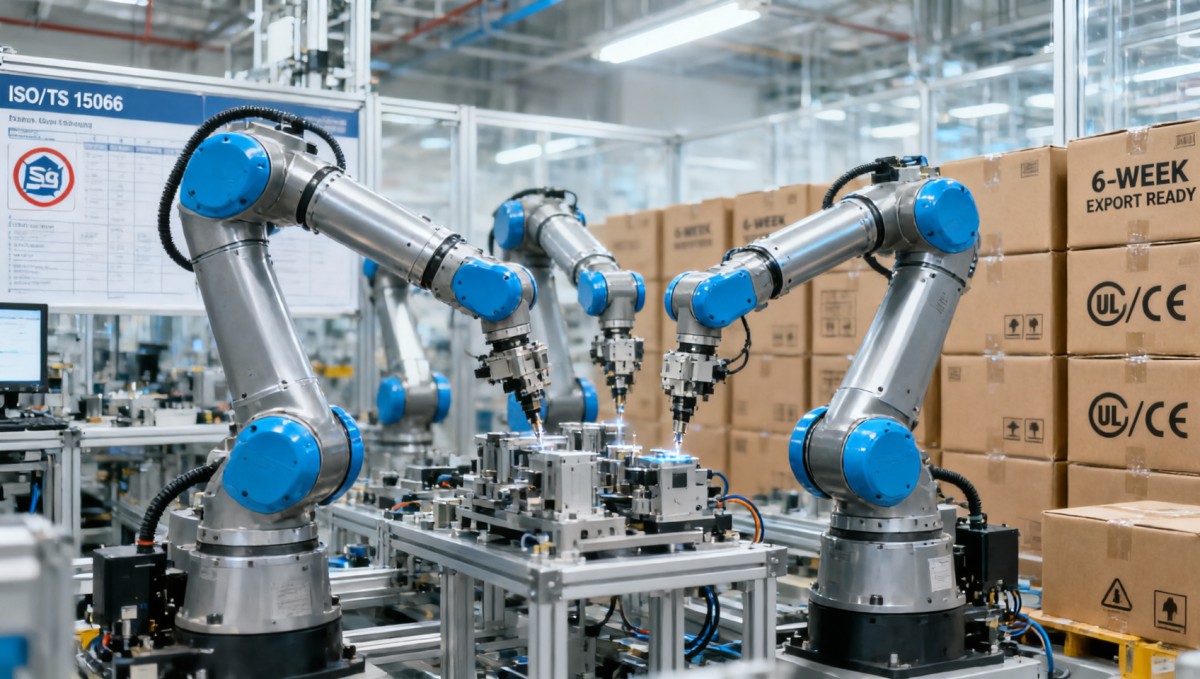
In summary, Shenzhen’s reported output milestone and shortened export lead times highlight a measurable step toward higher-value, regulation-aligned robotics trade. However, the impact remains concentrated among compliant, certified product lines served by select manufacturers. It is best understood not as a broad market shift, but as an emerging operational benchmark—one that raises the bar for responsiveness and compliance readiness in transatlantic automation supply chains.
Source: Qianzhan Network (disclosed May 8, 2026).
Note: Ongoing observation is recommended regarding the scalability of the ‘EU–US Green Channel’ beyond current participating enterprises and the formal status of UL/CE pre-review outcomes in regulatory acceptance processes.
 When an export market analysis platform can validate demand in a new marketExport market analysis platform insights help validate new-market demand through buyer fit, regulations, logistics, competition, and profitable entry conditions.
 What is driving the beauty and personal care market in the USA?Beauty and personal care in USA is driven by targeted solutions, selective premiumization, digital discovery, clean-label trust, diverse needs, and compliance. Explore key growth opportunities.
 How trade flow monitoring reports reveal changing regional demandTrade flow monitoring reports reveal changing regional demand through import volumes, sourcing shifts, product mix, logistics signals, and regulatory trends. Explore actionable market insights.
 How international market intelligence for investors reduces market-entry riskInternational market intelligence for investors reduces market-entry risk by validating demand, regulations, logistics, and competition before capital is committed.
 How international sourcing intelligence helps identify supplier risk earlyInternational sourcing intelligence helps businesses spot supplier risks early, protect supply continuity, and make smarter global procurement decisions.
 How trade data aggregation analytics reveals emerging supplier marketsTrade data aggregation analytics reveals emerging supplier markets through export trends, input flows, logistics, and regulatory signals. Discover smarter sourcing insights.
 What industrial cluster monitoring in Vietnam reveals about site riskIndustrial cluster monitoring Vietnam reveals hidden site risks across labor, utilities, logistics, compliance, and supplier dependencies. Make smarter sourcing and expansion decisions.
 Food Technology Trends Reshaping Shelf Life, Safety, and Product InnovationFood technology is reshaping shelf life, safety, and innovation. Discover the trends helping food businesses cut risk, improve compliance, and unlock stronger global market growth.
 How electronics manufacturing services are changing with low-volume demandElectronics manufacturing services are evolving fast with low-volume demand. Learn how agile EMS partners improve flexibility, compliance, sourcing resilience, and speed to market.
 How Can Buyers Reduce Procurement Risks for Electronic Components?How to reduce procurement risks for electronic components: learn how buyers assess traceability, lead times, compliance, and supplier types to avoid costly sourcing mistakes.
 What Sourcing Intelligence India Reveals About Supplier Risk and Cost ShiftsSourcing intelligence India reveals hidden supplier risk, compliance gaps, logistics pressure, and real cost shifts—helping buyers compare vendors smarter and source with more confidence.
 Fashion Trends 2026: Which Materials, Colors, and Silhouettes Are Gaining Ground?Fashion trends 2026 spotlight tactile fabrics, mineral colors, and controlled volume. Explore the materials, shades, and silhouettes shaping smarter, more wearable style.
 Smart Device Market Outlook: Key Growth Drivers, Segments, and Business OpportunitiesSmart device market trends are shifting toward system value, industrial demand, and resilient supply chains. Explore key growth drivers, high-potential segments, and business opportunities.
 How Global Trade Intelligence Services Help B2B Firms Evaluate Markets and SuppliersGlobal trade intelligence services help B2B firms compare suppliers, assess market potential, and uncover compliance, logistics, and pricing risks before costly decisions are made.
 Manufacturing Sector Updates for Investors: What Signals Matter Most in 2025?Manufacturing sector updates for investors in 2025: track orders, margins, supply chains, regulation, and exports to spot resilient manufacturers and smarter investment signals.
 How Energy Market Intelligence Helps Businesses Track Price Risks and Demand ShiftsEnergy market intelligence helps businesses spot price risks, demand shifts, and supply pressure early—improving procurement, resilience, and faster strategic decisions.
 Precision Hardware Tools Market: Key Demand Drivers, Segments, and Growth OutlookPrecision hardware tools market trends are reshaping sourcing, compliance, and automation. Explore key demand drivers, segment shifts, regional supply patterns, and growth opportunities.
 How to Use Customs Import Data to Find Buyers, Track Competitors, and Spot Demand?Customs import data helps you find real buyers, track competitors, and spot demand shifts early. Learn practical ways to turn trade records into smarter global business decisions.
 Manufacturing Cost Analysis: 8 Cost Drivers That Change Your Unit PriceManufacturing cost analysis explained through 8 key cost drivers that impact unit price, supplier stability, and margins—learn how to compare quotes smarter and reduce sourcing risk.
 Industrial Market Realities: What Buyers Should Check Before Comparing Supplier QuotesIndustrial market realities shape every supplier quote beyond unit price. Learn what to check on compliance, lead times, logistics, and hidden cost risks before comparing offers.
 Beverage Production Line Planning: Key Equipment, Capacity, and Hygiene RequirementsBeverage production line planning made practical: discover key equipment, real capacity sizing, and hygiene requirements to improve efficiency, safety, and long-term plant performance.




















Global Trade Insights & Industry
Our mission is to empower global exporters and importers with data-driven insights that foster strategic growth.
Search News
Popular Tags
Industry Overview
The global commercial kitchen equipment market is projected to reach $112 billion by 2027. Driven by urbanization, the rise of e-commerce food delivery, and strict hygiene regulations.