

China's Medical Imaging Equipment Market Hits ¥75B; Domestic DR/Ultrasound Expand in Africa & LatAm
China’s medical imaging equipment market reached approximately ¥75 billion in 2025, with CT systems accounting for 28% of the total. In Q1 2026, domestically manufactured digital radiography (DR) and portable ultrasound devices secured procurement contracts in 11 countries—including Kenya, Peru, and Nigeria—driven by CE/FDA/WHO PQ certifications and localized after-sales service networks. This development signals shifting dynamics for export-oriented medtech firms, supply chain partners, and procurement stakeholders active in emerging healthcare markets.
Event Overview
According to Qianzhan Network data released on May 8, 2026, China’s medical imaging equipment market size was about ¥75 billion in 2025. CT equipment represented 28% of that value. In Q1 2026, Chinese-made DR and portable ultrasound systems were awarded tenders in 11 countries across Africa and Latin America. These products hold CE, FDA, and WHO Prequalification (PQ) certifications, and are supported by local maintenance networks. Average delivery lead time was 45 days shorter than that of comparable Western-branded systems.
Industries Affected
Export-Oriented Medical Device Manufacturers
Manufacturers exporting DR and portable ultrasound systems face increased competitive pressure—and opportunity—in low- and middle-income country (LMIC) tenders. The certification alignment (CE/FDA/WHO PQ) and faster delivery timelines indicate a growing capability to meet international public procurement requirements, especially for primary care infrastructure projects.
Distribution & Tendering Service Providers
Firms facilitating tender participation—including regulatory compliance support, bid documentation preparation, and local partner coordination—are seeing rising demand. The successful bids in Kenya, Peru, and Nigeria suggest that localized service readiness—not just product specs—is now a decisive factor in LMIC procurement evaluations.
After-Sales Service & Spare Parts Logistics Providers
Local maintenance networks have become a documented differentiator. Companies managing field service, technician training, and spare parts warehousing in target markets may experience higher engagement from domestic OEMs seeking to replicate or scale this model.
Component Suppliers for DR and Portable Ultrasound Systems
Suppliers of key subsystems—such as flat-panel detectors, FPGA-based beamformers, or lithium-ion battery modules—may see order volume shifts aligned with export-focused production planning. However, no change in supplier concentration or technology sourcing has been reported.
What Enterprises and Practitioners Should Monitor and Act On
Track official tender frameworks and certification reciprocity updates
Several African and Latin American national procurement agencies are revising technical evaluation criteria to explicitly weight certification validity (e.g., WHO PQ acceptance) and local service capacity. Stakeholders should monitor tender guidelines issued by ministries of health in Kenya, Nigeria, Peru, and other recent award recipients.
Assess exposure to DR and portable ultrasound export channels
Companies involved in logistics, customs brokerage, or regulatory consulting should review their current client portfolios for DR/ultrasound OEMs targeting LMICs. Prioritizing support for CE/FDA/WHO PQ-aligned documentation workflows may improve responsiveness to upcoming RFP cycles.
Distinguish between policy intent and actual tender execution
While the 11-country tender success is confirmed, it reflects discrete project awards—not systemic market access expansion. Stakeholders should avoid overgeneralizing regional penetration; instead, verify whether follow-up tenders in the same countries have opened or been delayed.
Prepare for accelerated delivery commitments in future bids
The 45-day delivery advantage cited is tied to existing local warehousing and technician deployment. Firms supporting OEMs should audit current inventory buffers and cross-border shipment routing options for key components to assess feasibility of similar lead-time reductions in new markets.
Editorial Perspective / Industry Observation
Observably, this trend reflects an operational maturation—not just a pricing strategy—behind Chinese medical device exports. The convergence of triple certification (CE/FDA/WHO PQ) and localized service infrastructure suggests a shift from transactional sales toward long-term public-sector partnership models. Analysis shows that such progress is currently concentrated in DR and portable ultrasound segments; no evidence indicates parallel momentum in MRI, PET/CT, or high-end CT systems. From an industry perspective, this is best understood as an early-stage signal of capability building—not yet a broad-based market transformation. Continued monitoring is warranted, particularly for how WHO PQ listing timelines evolve and whether regional procurement consortia (e.g., PAHO, AU Health) begin referencing these tender outcomes in benchmarking reports.
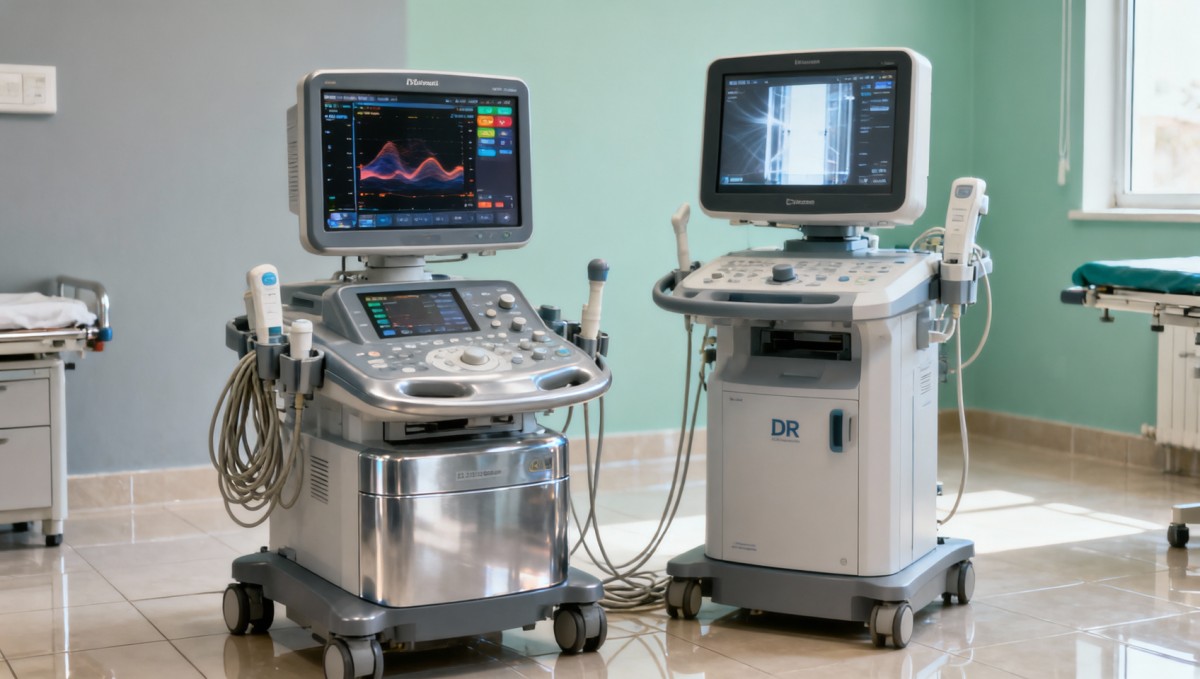
In summary, the ¥75 billion 2025 market size underscores China’s domestic scale, while the Q1 2026 tender wins highlight an emerging export competency grounded in certification rigor and service localization. This is not yet indicative of structural global market share gains, but rather a measurable step in capability alignment with LMIC procurement priorities. It is more accurately interpreted as a validation of targeted operational readiness than a wholesale shift in competitive positioning.
Source: Qianzhan Network (data released May 8, 2026).
Noted for ongoing observation: Certification renewal timelines for WHO PQ listings, and publication status of tender award details in recipient countries’ official procurement portals.
 When an export market analysis platform can validate demand in a new marketExport market analysis platform insights help validate new-market demand through buyer fit, regulations, logistics, competition, and profitable entry conditions.
 What is driving the beauty and personal care market in the USA?Beauty and personal care in USA is driven by targeted solutions, selective premiumization, digital discovery, clean-label trust, diverse needs, and compliance. Explore key growth opportunities.
 How trade flow monitoring reports reveal changing regional demandTrade flow monitoring reports reveal changing regional demand through import volumes, sourcing shifts, product mix, logistics signals, and regulatory trends. Explore actionable market insights.
 How international market intelligence for investors reduces market-entry riskInternational market intelligence for investors reduces market-entry risk by validating demand, regulations, logistics, and competition before capital is committed.
 How international sourcing intelligence helps identify supplier risk earlyInternational sourcing intelligence helps businesses spot supplier risks early, protect supply continuity, and make smarter global procurement decisions.
 How trade data aggregation analytics reveals emerging supplier marketsTrade data aggregation analytics reveals emerging supplier markets through export trends, input flows, logistics, and regulatory signals. Discover smarter sourcing insights.
 What industrial cluster monitoring in Vietnam reveals about site riskIndustrial cluster monitoring Vietnam reveals hidden site risks across labor, utilities, logistics, compliance, and supplier dependencies. Make smarter sourcing and expansion decisions.
 Food Technology Trends Reshaping Shelf Life, Safety, and Product InnovationFood technology is reshaping shelf life, safety, and innovation. Discover the trends helping food businesses cut risk, improve compliance, and unlock stronger global market growth.
 How electronics manufacturing services are changing with low-volume demandElectronics manufacturing services are evolving fast with low-volume demand. Learn how agile EMS partners improve flexibility, compliance, sourcing resilience, and speed to market.
 How Can Buyers Reduce Procurement Risks for Electronic Components?How to reduce procurement risks for electronic components: learn how buyers assess traceability, lead times, compliance, and supplier types to avoid costly sourcing mistakes.
 What Sourcing Intelligence India Reveals About Supplier Risk and Cost ShiftsSourcing intelligence India reveals hidden supplier risk, compliance gaps, logistics pressure, and real cost shifts—helping buyers compare vendors smarter and source with more confidence.
 Fashion Trends 2026: Which Materials, Colors, and Silhouettes Are Gaining Ground?Fashion trends 2026 spotlight tactile fabrics, mineral colors, and controlled volume. Explore the materials, shades, and silhouettes shaping smarter, more wearable style.
 Smart Device Market Outlook: Key Growth Drivers, Segments, and Business OpportunitiesSmart device market trends are shifting toward system value, industrial demand, and resilient supply chains. Explore key growth drivers, high-potential segments, and business opportunities.
 How Global Trade Intelligence Services Help B2B Firms Evaluate Markets and SuppliersGlobal trade intelligence services help B2B firms compare suppliers, assess market potential, and uncover compliance, logistics, and pricing risks before costly decisions are made.
 Manufacturing Sector Updates for Investors: What Signals Matter Most in 2025?Manufacturing sector updates for investors in 2025: track orders, margins, supply chains, regulation, and exports to spot resilient manufacturers and smarter investment signals.
 How Energy Market Intelligence Helps Businesses Track Price Risks and Demand ShiftsEnergy market intelligence helps businesses spot price risks, demand shifts, and supply pressure early—improving procurement, resilience, and faster strategic decisions.
 Precision Hardware Tools Market: Key Demand Drivers, Segments, and Growth OutlookPrecision hardware tools market trends are reshaping sourcing, compliance, and automation. Explore key demand drivers, segment shifts, regional supply patterns, and growth opportunities.
 How to Use Customs Import Data to Find Buyers, Track Competitors, and Spot Demand?Customs import data helps you find real buyers, track competitors, and spot demand shifts early. Learn practical ways to turn trade records into smarter global business decisions.
 Manufacturing Cost Analysis: 8 Cost Drivers That Change Your Unit PriceManufacturing cost analysis explained through 8 key cost drivers that impact unit price, supplier stability, and margins—learn how to compare quotes smarter and reduce sourcing risk.
 Industrial Market Realities: What Buyers Should Check Before Comparing Supplier QuotesIndustrial market realities shape every supplier quote beyond unit price. Learn what to check on compliance, lead times, logistics, and hidden cost risks before comparing offers.
 Beverage Production Line Planning: Key Equipment, Capacity, and Hygiene RequirementsBeverage production line planning made practical: discover key equipment, real capacity sizing, and hygiene requirements to improve efficiency, safety, and long-term plant performance.





















Global Trade Insights & Industry
Our mission is to empower global exporters and importers with data-driven insights that foster strategic growth.
Search News
Popular Tags
Industry Overview
The global commercial kitchen equipment market is projected to reach $112 billion by 2027. Driven by urbanization, the rise of e-commerce food delivery, and strict hygiene regulations.