

China’s 55% Safeguard Tariff on Australian Beef Takes Effect
From June 20, 2026, China began applying a 55% safeguard tariff on imported Australian beef, putting immediate pressure on restaurant and fresh food channels and quickly feeding into upstream quotations. For industry participants, the issue is not limited to beef trade itself: the move also deserves attention from businesses linked to food packaging, commercial kitchen equipment, hotel dining fit-out, and cold chain logistics, because pricing, stocking, and delivery planning may all need adjustment.
What Has Taken Effect as of June 20
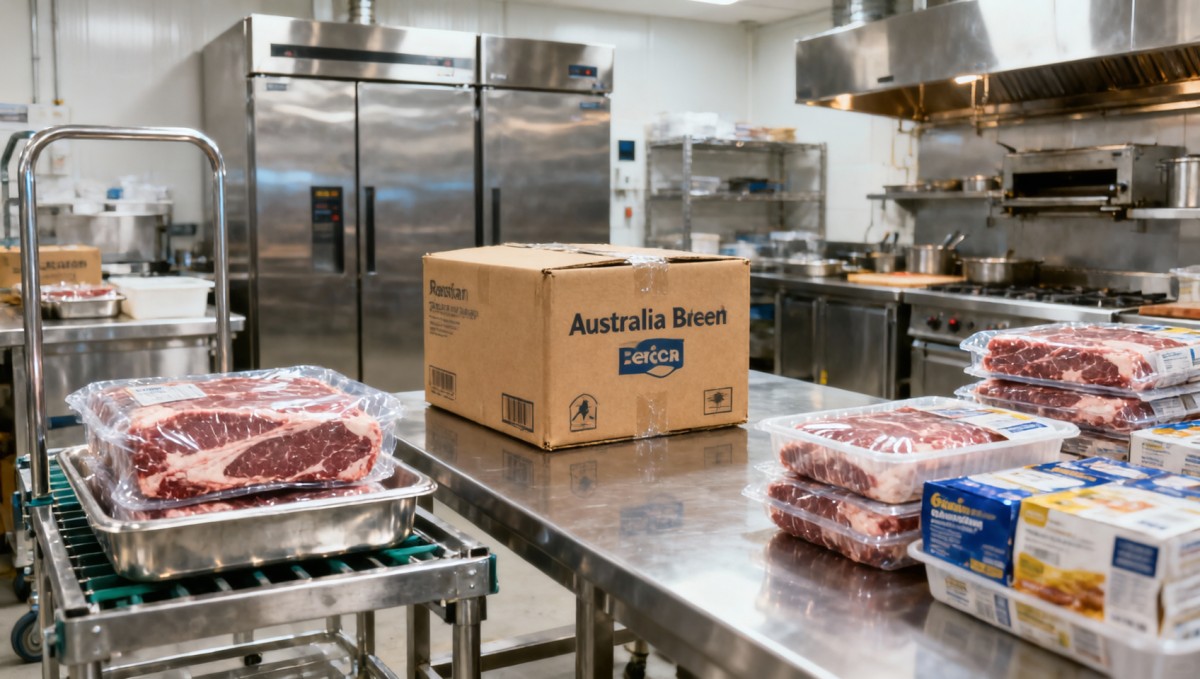
The confirmed development is that China started imposing a 55% safeguard tariff on Australian beef imports on June 20, 2026. According to the provided information, this is not described as a new trade dispute, but as an automatic trigger mechanism. The immediate market effect already noted in the input is that supplier quotations rose by RMB 18 per kilogram within a single day. The same policy change is also described as affecting related export-facing sectors, including vacuum packaging, modified-atmosphere trays, prepared-meat processing equipment, high-end restaurant space fit-out, and cold chain logistics. Overseas distributors are therefore being pushed to reassess localized inventory strategies.
Where the Pressure May Appear Across the Supply Chain
Imported beef trading and procurement now face direct price transmission
From an industry perspective, the most immediate pressure is likely to fall on companies directly handling Australian beef imports or sourcing imported beef for restaurant and fresh retail channels. The reason is straightforward: the tariff has already been accompanied by a sharp one-day rise in supplier quotations, which can affect purchasing costs, quotation validity, and contract discussions.
Restaurant and fresh distribution channels may need faster inventory decisions
Analysis shows that foodservice buyers and fresh distribution operators may be affected through menu costing, SKU selection, and replenishment timing. What deserves closer attention is whether price changes remain temporary at the quotation stage or begin to alter ordering rhythm, stocking cycles, and customer-facing pricing discussions.
Packaging and processing support businesses are exposed through order structure
Businesses supplying vacuum packaging, modified-atmosphere trays, or equipment used in prepared meat processing may not be hit by the tariff directly, but they may still feel secondary effects if imported beef volumes, product formats, or delivery plans change. In practice, the impact may show up in packaging specifications, procurement batches, or equipment utilization linked to meat preparation workflows.
Cold chain and hospitality support sectors may see planning uncertainty
Cold chain logistics providers and suppliers connected to high-end dining environments may need to watch for changes in shipment planning, inventory localization, and project pacing. Observably, if distributors revise local stocking strategies, service providers tied to storage, transport, and premium dining support may need to adapt operating assumptions even before broader market direction becomes clear.
What Companies Should Watch Now
Track whether policy language changes in follow-up notices
Analysis shows that companies should distinguish between the confirmed fact of implementation and any later clarification on scope, execution, or operational detail. Even when the current measure is already in force, follow-up wording can still matter for product planning and customer communication.
Review quotation cycles and contract communication
Because the provided information already indicates a same-day rise of RMB 18 per kilogram in supplier quotations, businesses should pay close attention to quotation validity periods, order confirmation timing, and how cost changes are explained to downstream buyers or channel partners.
Reassess localized inventory strategies with greater discipline
The input specifically notes that overseas distributors need to reconsider localized stock preparation. What deserves closer attention is not only inventory volume, but also inventory location, turnover speed, and the balance between short-term supply assurance and exposure to further price changes.
Check execution risks in packaging, delivery, and fulfillment
For companies connected to packaging, kitchen processing systems, cold chain handling, or hospitality support, the practical issue is whether changes in imported beef flow translate into adjustments in packaging demand, delivery windows, equipment scheduling, or customer fulfillment expectations. These are operational questions rather than abstract policy concerns.
Why This Matters Beyond a Single Tariff Headline
This section is an editorial observation. It is more appropriate to understand this development as a concrete operating signal rather than simply a political headline. The confirmed tariff action and the immediate quotation response suggest that the market is already reacting at the transaction level. At the same time, the available information does not yet establish a full long-term outcome for demand, substitution, or channel restructuring, so the situation still requires continued observation.
How to Read the Signal at This Stage
From an industry perspective, the significance of this update lies in how quickly a tariff mechanism can move from policy status to pricing pressure across linked business functions. The current information supports a cautious reading: this is already a real short-term operational change, but its broader medium-term effects on sourcing structure, channel behavior, and auxiliary export sectors should still be treated as developing rather than settled.
Basis of This Article and What Still Needs Verification
This article is based on the user-provided news title, event date, and event summary. For developments of this kind, commonly relevant source types may include official notices, company announcements, industry association updates, authoritative media reporting, and trade or standards-related documents. A specific official source link was not provided in the input, so further verification remains necessary. Areas that still warrant follow-up include any subsequent official clarification, changes in supplier quotation behavior, and how localized inventory strategies are adjusted in practice.
 How an industrial trade intelligence dashboard can identify new supplier marketsDiscover how an industrial trade intelligence dashboard helps identify new supplier markets by comparing capacity, landed cost, logistics resilience, and compliance risk.
 Which global market entry barriers should exporters assess first?Global market entry barriers exporters should assess first: tariffs, compliance, buyer qualification, logistics, and payment risk. Build a practical strategy for confident market entry.
 How trade data aggregation analytics can reveal emerging supplier marketsTrade data aggregation analytics reveals emerging supplier markets by connecting trade flows, capacity signals, logistics, and compliance insights for smarter sourcing decisions.
 When an export market analysis platform can validate demand in a new marketExport market analysis platform insights help validate new-market demand through buyer fit, regulations, logistics, competition, and profitable entry conditions.
 What is driving the beauty and personal care market in the USA?Beauty and personal care in USA is driven by targeted solutions, selective premiumization, digital discovery, clean-label trust, diverse needs, and compliance. Explore key growth opportunities.
 How trade flow monitoring reports reveal changing regional demandTrade flow monitoring reports reveal changing regional demand through import volumes, sourcing shifts, product mix, logistics signals, and regulatory trends. Explore actionable market insights.
 How international market intelligence for investors reduces market-entry riskInternational market intelligence for investors reduces market-entry risk by validating demand, regulations, logistics, and competition before capital is committed.
 How international sourcing intelligence helps identify supplier risk earlyInternational sourcing intelligence helps businesses spot supplier risks early, protect supply continuity, and make smarter global procurement decisions.
 How trade data aggregation analytics reveals emerging supplier marketsTrade data aggregation analytics reveals emerging supplier markets through export trends, input flows, logistics, and regulatory signals. Discover smarter sourcing insights.
 What industrial cluster monitoring in Vietnam reveals about site riskIndustrial cluster monitoring Vietnam reveals hidden site risks across labor, utilities, logistics, compliance, and supplier dependencies. Make smarter sourcing and expansion decisions.
 Food Technology Trends Reshaping Shelf Life, Safety, and Product InnovationFood technology is reshaping shelf life, safety, and innovation. Discover the trends helping food businesses cut risk, improve compliance, and unlock stronger global market growth.
 How electronics manufacturing services are changing with low-volume demandElectronics manufacturing services are evolving fast with low-volume demand. Learn how agile EMS partners improve flexibility, compliance, sourcing resilience, and speed to market.
 How Can Buyers Reduce Procurement Risks for Electronic Components?How to reduce procurement risks for electronic components: learn how buyers assess traceability, lead times, compliance, and supplier types to avoid costly sourcing mistakes.
 What Sourcing Intelligence India Reveals About Supplier Risk and Cost ShiftsSourcing intelligence India reveals hidden supplier risk, compliance gaps, logistics pressure, and real cost shifts—helping buyers compare vendors smarter and source with more confidence.
 Fashion Trends 2026: Which Materials, Colors, and Silhouettes Are Gaining Ground?Fashion trends 2026 spotlight tactile fabrics, mineral colors, and controlled volume. Explore the materials, shades, and silhouettes shaping smarter, more wearable style.
 Smart Device Market Outlook: Key Growth Drivers, Segments, and Business OpportunitiesSmart device market trends are shifting toward system value, industrial demand, and resilient supply chains. Explore key growth drivers, high-potential segments, and business opportunities.
 How Global Trade Intelligence Services Help B2B Firms Evaluate Markets and SuppliersGlobal trade intelligence services help B2B firms compare suppliers, assess market potential, and uncover compliance, logistics, and pricing risks before costly decisions are made.
 Manufacturing Sector Updates for Investors: What Signals Matter Most in 2025?Manufacturing sector updates for investors in 2025: track orders, margins, supply chains, regulation, and exports to spot resilient manufacturers and smarter investment signals.
 How Energy Market Intelligence Helps Businesses Track Price Risks and Demand ShiftsEnergy market intelligence helps businesses spot price risks, demand shifts, and supply pressure early—improving procurement, resilience, and faster strategic decisions.
 Precision Hardware Tools Market: Key Demand Drivers, Segments, and Growth OutlookPrecision hardware tools market trends are reshaping sourcing, compliance, and automation. Explore key demand drivers, segment shifts, regional supply patterns, and growth opportunities.
 How to Use Customs Import Data to Find Buyers, Track Competitors, and Spot Demand?Customs import data helps you find real buyers, track competitors, and spot demand shifts early. Learn practical ways to turn trade records into smarter global business decisions.





















Global Trade Insights & Industry
Our mission is to empower global exporters and importers with data-driven insights that foster strategic growth.
Search News
Popular Tags
Industry Overview
The global commercial kitchen equipment market is projected to reach $112 billion by 2027. Driven by urbanization, the rise of e-commerce food delivery, and strict hygiene regulations.