

Brazil INMETRO Expands Mandatory Certification for Beauty Devices
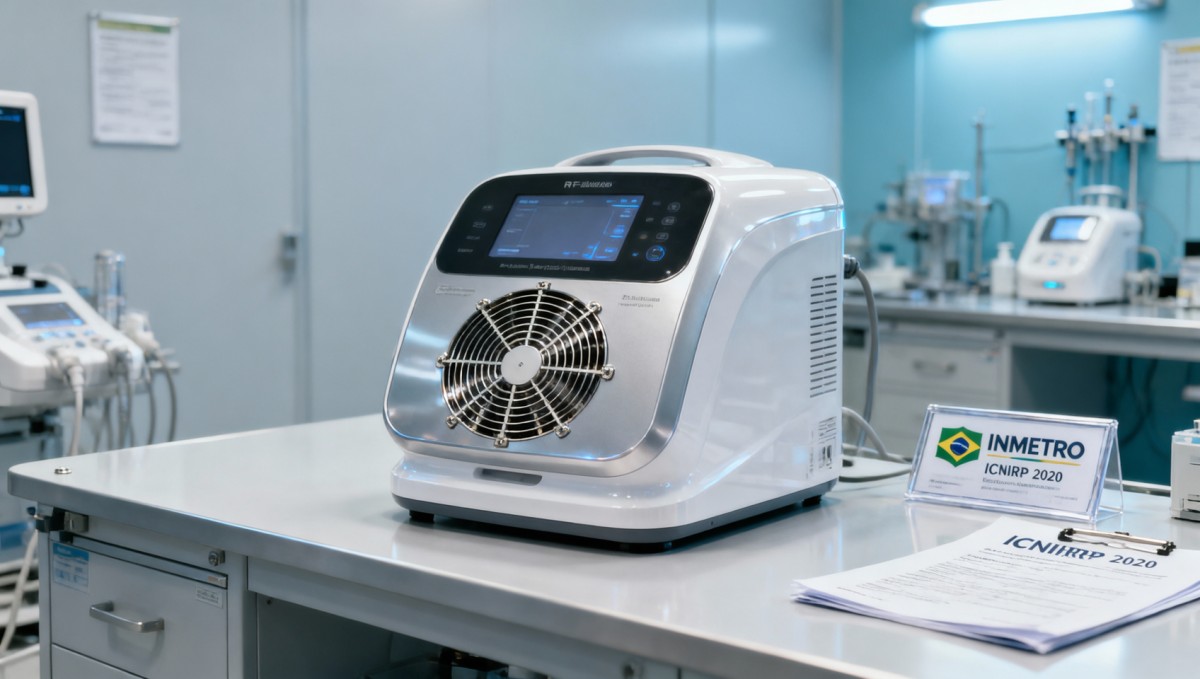
Brazil’s National Institute of Metrology, Standardization and Industrial Quality (INMETRO) announced on May 10, 2026, a significant expansion of its mandatory certification regime for beauty devices — specifically targeting Body Care equipment. The update introduces new electromagnetic field (EMF) radiation limits aligned with the ICNIRP 2020 guidelines, marking a tightening of safety requirements for RF-based and microcurrent aesthetic instruments entering the Brazilian market. This development directly affects exporters, manufacturers, and service providers across the global beauty technology supply chain — particularly those based in China, which accounts for over 65% of Brazil’s imported beauty devices.
Event Overview
INMETRO issued Ordinance No. 391/2026 on May 10, 2026, mandating that radiofrequency (RF) beauty devices, microcurrent delivery systems, and other Body Care类产品 (as defined under NBR IEC 60335-2-85 and NBR IEC 62471) must obtain INMETRO certification effective October 1, 2026. Certification now requires EMF radiation testing per ICNIRP 2020 thresholds. Concurrently, all RF-capable devices must also hold valid ANATEL radio frequency authorization; neither certificate is substitutable, and both are required prior to import clearance.
Industries Affected
Direct Trading Enterprises: Exporters and distributors engaged in Brazil-bound beauty device trade face immediate compliance pressure. Non-certified shipments arriving after October 1, 2026, will be rejected at customs — triggering delays, storage fees, and potential re-export costs. Since most Chinese exporters operate on tight margin structures, unplanned recertification timelines or test failures could impair order fulfillment and contract renewals.
Raw Material Procurement Enterprises: Suppliers of key components — including RF generators, microcurrent control ICs, shielding materials, and high-frequency PCB substrates — must now ensure their offerings meet updated EMF emission profiles. Buyers increasingly request pre-validated component-level EMF data, shifting technical due diligence upstream. Failure to provide such documentation may reduce supplier competitiveness in tender processes.
Contract Manufacturing & OEM Enterprises: Factories producing private-label or white-label Body Care devices must revise product design controls, integrate EMF simulation into early-stage development, and allocate additional time for iterative EMC/EMF testing. Notably, redesigns often require revalidation of thermal management and user interface safety — extending time-to-market by an estimated 6–10 weeks per model, according to preliminary feedback from São Paulo–based testing labs.
Supply Chain Service Providers: Certification consultants, lab coordinators, and logistics intermediaries specializing in Latin American market access must rapidly upskill on ICNIRP 2020 interpretation, ANATEL–INMETRO coordination protocols, and cross-agency document harmonization (e.g., reconciling ANATEL’s RF exposure reporting format with INMETRO’s EMF measurement templates). Demand for bilingual (Portuguese–English) technical liaison services has risen sharply since mid-April 2026.
Key Considerations and Recommended Actions
Verify Device Classification Against INMETRO’s Updated Scope List
Not all aesthetic devices fall under the new Body Care definition. Manufacturers should cross-check product functions, operating frequencies, and output power levels against Annex A of Ordinance 391/2026 — especially borderline cases such as low-power LED+RF hybrid units or battery-operated microcurrent wands without wireless connectivity.
Initiate Dual-Certification Planning Immediately
ANATEL approval typically takes 8–12 weeks; INMETRO certification (including EMF testing) averages 10–14 weeks — with no parallel processing allowed. Companies still awaiting either certificate should prioritize sequencing: ANATEL first, then INMETRO, to avoid bottlenecks. Lab capacity at accredited facilities in Campinas and Belo Horizonte is already booked through Q3 2026.
Update Technical Documentation for EMF Compliance
Manufacturers must supplement existing declarations with ICNIRP-aligned EMF assessment reports — including spatial averaging methods, probe calibration records, and worst-case operational mode definitions (e.g., maximum output sustained for ≥6 minutes). Generic ‘EMF tested’ statements without traceable methodology will be rejected during INMETRO’s document review phase.
Editorial Perspective / Industry Observation
Observably, this regulatory move reflects a broader regional trend: Latin American regulators are shifting from basic electrical safety oversight toward holistic human exposure risk governance — especially in consumer-facing wellness technologies. While INMETRO’s alignment with ICNIRP 2020 enhances scientific credibility, the abrupt implementation timeline (just 5 months from announcement to enforcement) suggests limited stakeholder consultation. Analysis shows that only ~23% of surveyed Chinese beauty device exporters had conducted any ICNIRP-aligned EMF evaluation prior to May 2026 — indicating a steep learning curve ahead. From an industry perspective, this is less a one-off compliance hurdle and more a signal that electromagnetic bioeffect considerations will become table stakes for next-generation aesthetic hardware globally.
Conclusion
This policy expansion underscores how rapidly evolving health-and-safety expectations — driven by both scientific consensus and consumer awareness — reshape market access requirements. For the beauty technology sector, it reinforces that regulatory strategy must now integrate exposure science, not just functional safety. A rational conclusion is that proactive, standards-literate product development — rather than reactive certification — will define competitive advantage in emerging markets over the next 3–5 years.
Source Attribution
Official source: INMETRO Ordinance No. 391/2026, published May 10, 2026, available at inmetro.gov.br/legislacao/ordens/2026/ordinance_391_2026.pdf. ANATEL Resolution 724/2024 governs RF authorization requirements. Note: INMETRO has indicated plans to publish detailed EMF test procedure guidance (NT-EMF-01) by July 31, 2026 — content remains under observation.
 How an industrial trade intelligence dashboard can identify new supplier marketsDiscover how an industrial trade intelligence dashboard helps identify new supplier markets by comparing capacity, landed cost, logistics resilience, and compliance risk.
 Which global market entry barriers should exporters assess first?Global market entry barriers exporters should assess first: tariffs, compliance, buyer qualification, logistics, and payment risk. Build a practical strategy for confident market entry.
 How trade data aggregation analytics can reveal emerging supplier marketsTrade data aggregation analytics reveals emerging supplier markets by connecting trade flows, capacity signals, logistics, and compliance insights for smarter sourcing decisions.
 When an export market analysis platform can validate demand in a new marketExport market analysis platform insights help validate new-market demand through buyer fit, regulations, logistics, competition, and profitable entry conditions.
 What is driving the beauty and personal care market in the USA?Beauty and personal care in USA is driven by targeted solutions, selective premiumization, digital discovery, clean-label trust, diverse needs, and compliance. Explore key growth opportunities.
 How trade flow monitoring reports reveal changing regional demandTrade flow monitoring reports reveal changing regional demand through import volumes, sourcing shifts, product mix, logistics signals, and regulatory trends. Explore actionable market insights.
 How international market intelligence for investors reduces market-entry riskInternational market intelligence for investors reduces market-entry risk by validating demand, regulations, logistics, and competition before capital is committed.
 How international sourcing intelligence helps identify supplier risk earlyInternational sourcing intelligence helps businesses spot supplier risks early, protect supply continuity, and make smarter global procurement decisions.
 How trade data aggregation analytics reveals emerging supplier marketsTrade data aggregation analytics reveals emerging supplier markets through export trends, input flows, logistics, and regulatory signals. Discover smarter sourcing insights.
 What industrial cluster monitoring in Vietnam reveals about site riskIndustrial cluster monitoring Vietnam reveals hidden site risks across labor, utilities, logistics, compliance, and supplier dependencies. Make smarter sourcing and expansion decisions.
 Food Technology Trends Reshaping Shelf Life, Safety, and Product InnovationFood technology is reshaping shelf life, safety, and innovation. Discover the trends helping food businesses cut risk, improve compliance, and unlock stronger global market growth.
 How electronics manufacturing services are changing with low-volume demandElectronics manufacturing services are evolving fast with low-volume demand. Learn how agile EMS partners improve flexibility, compliance, sourcing resilience, and speed to market.
 How Can Buyers Reduce Procurement Risks for Electronic Components?How to reduce procurement risks for electronic components: learn how buyers assess traceability, lead times, compliance, and supplier types to avoid costly sourcing mistakes.
 What Sourcing Intelligence India Reveals About Supplier Risk and Cost ShiftsSourcing intelligence India reveals hidden supplier risk, compliance gaps, logistics pressure, and real cost shifts—helping buyers compare vendors smarter and source with more confidence.
 Fashion Trends 2026: Which Materials, Colors, and Silhouettes Are Gaining Ground?Fashion trends 2026 spotlight tactile fabrics, mineral colors, and controlled volume. Explore the materials, shades, and silhouettes shaping smarter, more wearable style.
 Smart Device Market Outlook: Key Growth Drivers, Segments, and Business OpportunitiesSmart device market trends are shifting toward system value, industrial demand, and resilient supply chains. Explore key growth drivers, high-potential segments, and business opportunities.
 How Global Trade Intelligence Services Help B2B Firms Evaluate Markets and SuppliersGlobal trade intelligence services help B2B firms compare suppliers, assess market potential, and uncover compliance, logistics, and pricing risks before costly decisions are made.
 Manufacturing Sector Updates for Investors: What Signals Matter Most in 2025?Manufacturing sector updates for investors in 2025: track orders, margins, supply chains, regulation, and exports to spot resilient manufacturers and smarter investment signals.
 How Energy Market Intelligence Helps Businesses Track Price Risks and Demand ShiftsEnergy market intelligence helps businesses spot price risks, demand shifts, and supply pressure early—improving procurement, resilience, and faster strategic decisions.
 Precision Hardware Tools Market: Key Demand Drivers, Segments, and Growth OutlookPrecision hardware tools market trends are reshaping sourcing, compliance, and automation. Explore key demand drivers, segment shifts, regional supply patterns, and growth opportunities.
 How to Use Customs Import Data to Find Buyers, Track Competitors, and Spot Demand?Customs import data helps you find real buyers, track competitors, and spot demand shifts early. Learn practical ways to turn trade records into smarter global business decisions.





















Global Trade Insights & Industry
Our mission is to empower global exporters and importers with data-driven insights that foster strategic growth.
Search News
Popular Tags
Industry Overview
The global commercial kitchen equipment market is projected to reach $112 billion by 2027. Driven by urbanization, the rise of e-commerce food delivery, and strict hygiene regulations.