

New TÜV Rheinland GS Standard for Smart Lighting Effective May 10, 2026
On May 10, 2026, German certification body TÜV Rheinland launched the updated GS certification standard IEC 62493:2026 for smart lighting products. This revision significantly impacts China’s energy-saving lighting export sector—particularly manufacturers and exporters targeting Germany, Austria, the Netherlands, and other GS Mutual Recognition Agreement (MRA) markets—due to expanded electromagnetic compatibility (EMC) requirements and stricter standby power limits.
Event Overview
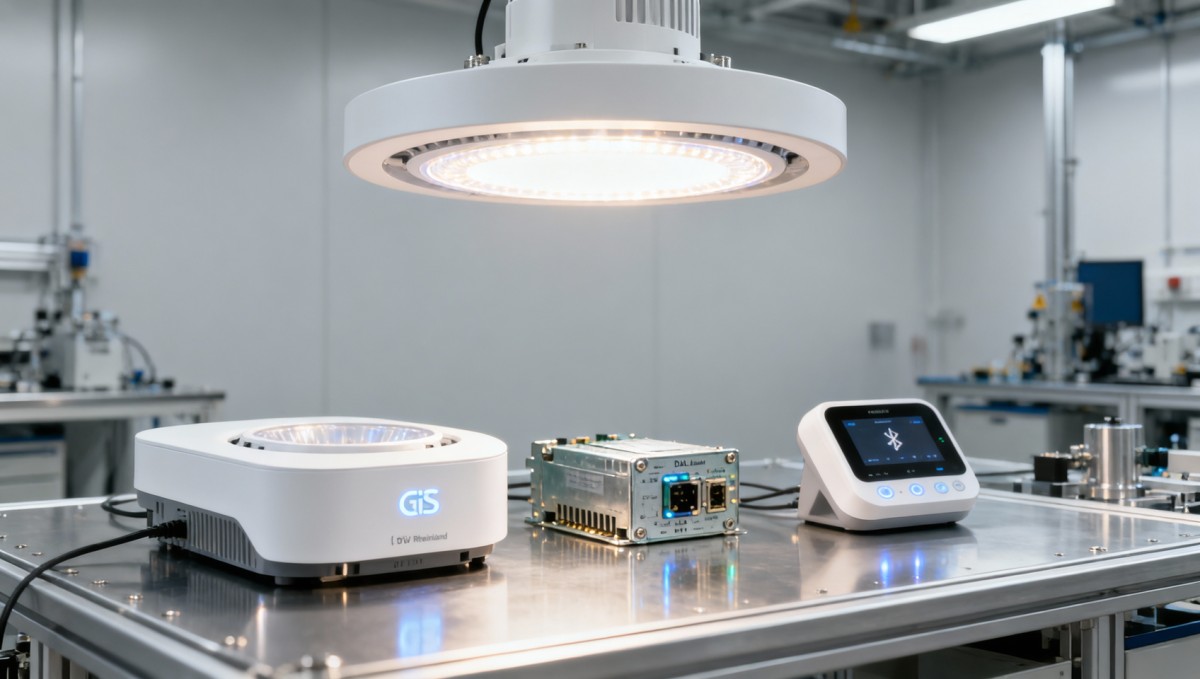
TÜV Rheinland officially implemented the revised GS certification standard IEC 62493:2026 on May 10, 2026. The update extends EMC emission limits to include LED drivers, smart dimming modules, and IoT gateway-integrated luminaires—components previously outside the scope of the prior version. Products certified under the legacy standard must undergo supplementary testing and obtain reissued certificates by November 30, 2026. Failure to comply will result in loss of market access in GS-recognized jurisdictions. Additionally, the new standard raises the maximum allowable standby power consumption threshold.
Industries Affected
Direct Exporters: Chinese enterprises exporting energy-saving lighting products to GS-aligned markets face immediate compliance pressure. Those holding legacy GS certificates must allocate budget and timeline for retesting—potentially delaying shipments or triggering contractual penalties with EU importers. Certification renewal is not optional; it is a mandatory gatekeeping requirement for customs clearance and retail placement in key EU markets.
Raw Material Suppliers: Suppliers of LED drivers, wireless control ICs, and integrated IoT modules now face heightened technical documentation demands. Buyers increasingly require pre-validated component-level EMC test reports aligned with IEC 62493:2026—even at the subassembly stage—to streamline final product certification. This shifts qualification responsibility upstream and may compress supplier margins due to added testing costs.
Contract Manufacturers & OEMs: Factories producing private-label or white-label smart luminaires for international brands must revise design controls and production line testing protocols. The inclusion of IoT gateways and dimming modules in the EMC scope means printed circuit board layout, shielding strategies, and firmware behavior (e.g., radio transmission duty cycles) now directly affect certification outcomes—requiring closer collaboration with electronics design engineers and RF specialists.
Supply Chain Service Providers: Third-party testing labs, certification consultants, and logistics firms offering GS compliance support are seeing increased inquiry volume—especially for expedited turnaround services. However, capacity constraints are emerging, as only TÜV-accredited labs (or those with formal delegation agreements) can issue valid GS marks under the new standard. Non-accredited labs’ reports no longer suffice for certification submission.
Key Focus Areas and Recommended Actions
Verify certificate expiry and transition deadlines
Exporters should audit all active GS certificates issued before May 10, 2026, and confirm whether their product configurations fall within the newly covered categories (e.g., presence of Bluetooth/Zigbee gateways or 0–10 V + DALI hybrid drivers). Certificates without explicit coverage of these functions require urgent reassessment—not just renewal.
Prioritize component-level EMC pre-validation
Manufacturers should request updated EMC test reports from driver and module suppliers referencing IEC 62493:2026, not earlier editions. Relying on legacy reports—even if technically similar—risks rejection during final system-level assessment, as test setups and measurement bandwidths have been modified.
Review standby power architecture holistically
The revised upper limit for standby consumption applies to the full luminaire—including control modules and network interfaces—not just the light engine. Design teams must reassess power supply topology, sleep-mode firmware logic, and always-on sensor circuits to avoid non-compliance, especially in connected fixtures with dual-band Wi-Fi or Matter-over-Thread functionality.
Editorial Perspective / Industry Observation
Analysis shows this update reflects a broader regulatory trend: shifting from lamp-centric safety/efficiency regulation toward system-level interoperability assurance. Unlike previous revisions focused on photometric output or basic electrical safety, IEC 62493:2026 treats smart lighting as part of the wider IoT ecosystem—subjecting its electromagnetic ‘behavior’ to scrutiny akin to consumer routers or smart home hubs. Observably, this blurs traditional boundaries between lighting standards bodies (e.g., CIE, IES) and telecommunications regulators (e.g., ETSI), suggesting future convergence in conformity assessment frameworks.
From an industry perspective, the six-month transition window (May–November 2026) is tighter than typical for GS updates—likely reflecting accelerated deployment timelines for EU digital building mandates. That compression favors vertically integrated manufacturers with in-house EMC labs but disadvantages SME exporters reliant on outsourced certification pathways.
Conclusion
This revision is not merely a technical refresh—it signals a structural recalibration of market access rules for intelligent lighting. For Chinese exporters, compliance is no longer about passing a one-time test; it demands embedded design discipline, traceable component sourcing, and proactive engagement with evolving system-level expectations. A rational conclusion is that long-term competitiveness will hinge less on cost arbitrage and more on demonstrable engineering rigor across the entire value chain.
Source Attribution
Official announcement: TÜV Rheinland Product Safety News, May 10, 2026 (GS-EN IEC 62493:2026 Implementation Notice); Technical Annex TR-IEC62493-2026 Rev. 1.2 (published April 2026). Further updates on accredited lab delegation status and interpretation guidelines are expected from TÜV Rheinland’s Lighting & IoT Certification Division; these remain under observation.
 How an industrial trade intelligence dashboard can identify new supplier marketsDiscover how an industrial trade intelligence dashboard helps identify new supplier markets by comparing capacity, landed cost, logistics resilience, and compliance risk.
 Which global market entry barriers should exporters assess first?Global market entry barriers exporters should assess first: tariffs, compliance, buyer qualification, logistics, and payment risk. Build a practical strategy for confident market entry.
 How trade data aggregation analytics can reveal emerging supplier marketsTrade data aggregation analytics reveals emerging supplier markets by connecting trade flows, capacity signals, logistics, and compliance insights for smarter sourcing decisions.
 When an export market analysis platform can validate demand in a new marketExport market analysis platform insights help validate new-market demand through buyer fit, regulations, logistics, competition, and profitable entry conditions.
 What is driving the beauty and personal care market in the USA?Beauty and personal care in USA is driven by targeted solutions, selective premiumization, digital discovery, clean-label trust, diverse needs, and compliance. Explore key growth opportunities.
 How trade flow monitoring reports reveal changing regional demandTrade flow monitoring reports reveal changing regional demand through import volumes, sourcing shifts, product mix, logistics signals, and regulatory trends. Explore actionable market insights.
 How international market intelligence for investors reduces market-entry riskInternational market intelligence for investors reduces market-entry risk by validating demand, regulations, logistics, and competition before capital is committed.
 How international sourcing intelligence helps identify supplier risk earlyInternational sourcing intelligence helps businesses spot supplier risks early, protect supply continuity, and make smarter global procurement decisions.
 How trade data aggregation analytics reveals emerging supplier marketsTrade data aggregation analytics reveals emerging supplier markets through export trends, input flows, logistics, and regulatory signals. Discover smarter sourcing insights.
 What industrial cluster monitoring in Vietnam reveals about site riskIndustrial cluster monitoring Vietnam reveals hidden site risks across labor, utilities, logistics, compliance, and supplier dependencies. Make smarter sourcing and expansion decisions.
 Food Technology Trends Reshaping Shelf Life, Safety, and Product InnovationFood technology is reshaping shelf life, safety, and innovation. Discover the trends helping food businesses cut risk, improve compliance, and unlock stronger global market growth.
 How electronics manufacturing services are changing with low-volume demandElectronics manufacturing services are evolving fast with low-volume demand. Learn how agile EMS partners improve flexibility, compliance, sourcing resilience, and speed to market.
 How Can Buyers Reduce Procurement Risks for Electronic Components?How to reduce procurement risks for electronic components: learn how buyers assess traceability, lead times, compliance, and supplier types to avoid costly sourcing mistakes.
 What Sourcing Intelligence India Reveals About Supplier Risk and Cost ShiftsSourcing intelligence India reveals hidden supplier risk, compliance gaps, logistics pressure, and real cost shifts—helping buyers compare vendors smarter and source with more confidence.
 Fashion Trends 2026: Which Materials, Colors, and Silhouettes Are Gaining Ground?Fashion trends 2026 spotlight tactile fabrics, mineral colors, and controlled volume. Explore the materials, shades, and silhouettes shaping smarter, more wearable style.
 Smart Device Market Outlook: Key Growth Drivers, Segments, and Business OpportunitiesSmart device market trends are shifting toward system value, industrial demand, and resilient supply chains. Explore key growth drivers, high-potential segments, and business opportunities.
 How Global Trade Intelligence Services Help B2B Firms Evaluate Markets and SuppliersGlobal trade intelligence services help B2B firms compare suppliers, assess market potential, and uncover compliance, logistics, and pricing risks before costly decisions are made.
 Manufacturing Sector Updates for Investors: What Signals Matter Most in 2025?Manufacturing sector updates for investors in 2025: track orders, margins, supply chains, regulation, and exports to spot resilient manufacturers and smarter investment signals.
 How Energy Market Intelligence Helps Businesses Track Price Risks and Demand ShiftsEnergy market intelligence helps businesses spot price risks, demand shifts, and supply pressure early—improving procurement, resilience, and faster strategic decisions.
 Precision Hardware Tools Market: Key Demand Drivers, Segments, and Growth OutlookPrecision hardware tools market trends are reshaping sourcing, compliance, and automation. Explore key demand drivers, segment shifts, regional supply patterns, and growth opportunities.
 How to Use Customs Import Data to Find Buyers, Track Competitors, and Spot Demand?Customs import data helps you find real buyers, track competitors, and spot demand shifts early. Learn practical ways to turn trade records into smarter global business decisions.





















Global Trade Insights & Industry
Our mission is to empower global exporters and importers with data-driven insights that foster strategic growth.
Search News
Popular Tags
Industry Overview
The global commercial kitchen equipment market is projected to reach $112 billion by 2027. Driven by urbanization, the rise of e-commerce food delivery, and strict hygiene regulations.