

India Updates Steel Standard: HIC Testing Mandated for Hardware Exports
India’s Bureau of Indian Standards (BIS) revised IS 2062 — the standard for hot-rolled structural steel — effective May 10, 2026. The update introduces mandatory hydrogen-induced cracking (HIC) testing for high-strength fasteners and anchor components used in construction hardware and tools. This change directly affects Chinese exporters supplying such products to the Indian market, where annual hardware and tools steel component exports exceed USD 1.2 billion.
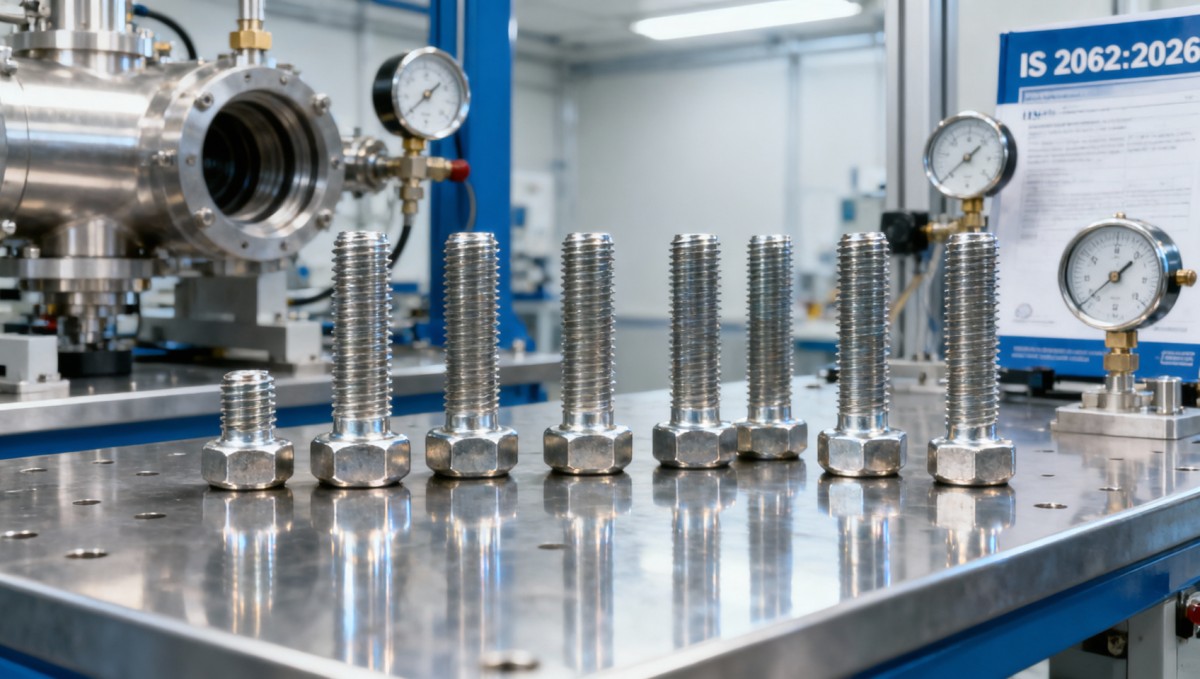
Event Overview
The Bureau of Indian Standards (BIS) published the revised IS 2062:2026 on May 10, 2026. The updated standard adds a compulsory hydrogen-induced cracking (HIC) test requirement for high-strength bolts, anchor rods, and other critical hardware & tools components intended for structural applications. Only test reports issued by laboratories accredited under India’s National Accreditation Board for Testing and Calibration Laboratories (NABL) are accepted. Enforcement begins August 1, 2026.
Industries Affected
Direct Exporters
Chinese hardware & tools exporters shipping steel fasteners or anchoring systems to India must now secure NABL-accredited HIC test reports prior to customs clearance. This adds verification steps, increases documentation lead time, and may delay shipments by 7–10 working days. Exporters lacking pre-qualified lab partnerships face immediate compliance risk post-August 2026.
Raw Material Suppliers
Domestic Chinese steel mills and alloy suppliers serving hardware manufacturers must now ensure batch-level traceability and metallurgical consistency to meet HIC performance thresholds — particularly for grades used in quenched-and-tempered fasteners. Variability in sulfur content, inclusion morphology, or residual hydrogen levels may trigger test failures, prompting tighter internal controls and potential reprocessing.
Manufacturing Enterprises
Hardware and tools manufacturers involved in heat treatment, surface finishing (e.g., electroplating), or cold forming must review process parameters that influence hydrogen uptake. For instance, acid pickling or cathodic cleaning steps may introduce atomic hydrogen; post-plating baking protocols may require revision to mitigate embrittlement risk. Process validation against HIC criteria is now a prerequisite, not optional.
Supply Chain Service Providers
Third-party inspection agencies, logistics integrators offering pre-shipment compliance support, and certification consultants must expand service scope to include HIC test coordination with NABL labs — including sample dispatch, report translation, and regulatory liaison. Demand for India-specific compliance advisory services is expected to rise, especially among SME exporters unfamiliar with NABL’s reporting framework.
Key Focus Areas and Recommended Actions
Verify Lab Accreditation Status
Confirm whether your current testing partner holds active NABL accreditation *specifically* for ISO 17025-compliant HIC testing per ASTM G142 or equivalent. Note: General NABL accreditation does not guarantee coverage for this specific test method.
Conduct Pre-Compliance Batch Testing
Initiate trial HIC testing on representative production lots before August 2026. Use results to identify metallurgical or process-related vulnerabilities — e.g., susceptibility linked to plating chemistry or tempering temperature — and adjust accordingly.
Update Technical Documentation
Revise product datasheets, test certificates, and export declarations to explicitly reference compliance with IS 2062:2026 Clause X.X (HIC requirement). Include NABL lab ID, test date, and specimen lot number — all required for BIS verification.
Editorial Perspective / Industry Observation
Observably, this amendment reflects a broader trend in emerging markets: shifting from dimensional and tensile-based conformity toward performance-critical failure-mode prevention. While HIC testing has long been embedded in oil & gas or pressure vessel standards (e.g., API RP 941), its extension into general construction hardware signals heightened scrutiny of long-term structural integrity — especially amid rising infrastructure investment in India. Analysis shows that the requirement is less about raising technical barriers per se, and more about aligning import quality expectations with domestic safety governance reforms underway under India’s National Building Code 2025 updates.
Conclusion
This revision marks a material step in regulatory maturation for India’s construction materials ecosystem. It does not signal a trade restriction, but rather a calibrated elevation of technical accountability. For Chinese exporters, it is better understood as a catalyst for upgrading quality assurance maturity — one that rewards proactive alignment over reactive compliance.
Source Attribution
Official notice: Bureau of Indian Standards (BIS) Gazette Notification No. S.O. 1872(E), dated May 10, 2026, amending IS 2062. Full text available at www.bis.gov.in. Note: Pending clarification on acceptable HIC test methods (ASTM G142 vs. ISO 17025-aligned variants) and transitional arrangements for consignments shipped pre-August 1 but cleared post-enforcement — subject to ongoing monitoring.
 How an industrial trade intelligence dashboard can identify new supplier marketsDiscover how an industrial trade intelligence dashboard helps identify new supplier markets by comparing capacity, landed cost, logistics resilience, and compliance risk.
 Which global market entry barriers should exporters assess first?Global market entry barriers exporters should assess first: tariffs, compliance, buyer qualification, logistics, and payment risk. Build a practical strategy for confident market entry.
 How trade data aggregation analytics can reveal emerging supplier marketsTrade data aggregation analytics reveals emerging supplier markets by connecting trade flows, capacity signals, logistics, and compliance insights for smarter sourcing decisions.
 When an export market analysis platform can validate demand in a new marketExport market analysis platform insights help validate new-market demand through buyer fit, regulations, logistics, competition, and profitable entry conditions.
 What is driving the beauty and personal care market in the USA?Beauty and personal care in USA is driven by targeted solutions, selective premiumization, digital discovery, clean-label trust, diverse needs, and compliance. Explore key growth opportunities.
 How trade flow monitoring reports reveal changing regional demandTrade flow monitoring reports reveal changing regional demand through import volumes, sourcing shifts, product mix, logistics signals, and regulatory trends. Explore actionable market insights.
 How international market intelligence for investors reduces market-entry riskInternational market intelligence for investors reduces market-entry risk by validating demand, regulations, logistics, and competition before capital is committed.
 How international sourcing intelligence helps identify supplier risk earlyInternational sourcing intelligence helps businesses spot supplier risks early, protect supply continuity, and make smarter global procurement decisions.
 How trade data aggregation analytics reveals emerging supplier marketsTrade data aggregation analytics reveals emerging supplier markets through export trends, input flows, logistics, and regulatory signals. Discover smarter sourcing insights.
 What industrial cluster monitoring in Vietnam reveals about site riskIndustrial cluster monitoring Vietnam reveals hidden site risks across labor, utilities, logistics, compliance, and supplier dependencies. Make smarter sourcing and expansion decisions.
 Food Technology Trends Reshaping Shelf Life, Safety, and Product InnovationFood technology is reshaping shelf life, safety, and innovation. Discover the trends helping food businesses cut risk, improve compliance, and unlock stronger global market growth.
 How electronics manufacturing services are changing with low-volume demandElectronics manufacturing services are evolving fast with low-volume demand. Learn how agile EMS partners improve flexibility, compliance, sourcing resilience, and speed to market.
 How Can Buyers Reduce Procurement Risks for Electronic Components?How to reduce procurement risks for electronic components: learn how buyers assess traceability, lead times, compliance, and supplier types to avoid costly sourcing mistakes.
 What Sourcing Intelligence India Reveals About Supplier Risk and Cost ShiftsSourcing intelligence India reveals hidden supplier risk, compliance gaps, logistics pressure, and real cost shifts—helping buyers compare vendors smarter and source with more confidence.
 Fashion Trends 2026: Which Materials, Colors, and Silhouettes Are Gaining Ground?Fashion trends 2026 spotlight tactile fabrics, mineral colors, and controlled volume. Explore the materials, shades, and silhouettes shaping smarter, more wearable style.
 Smart Device Market Outlook: Key Growth Drivers, Segments, and Business OpportunitiesSmart device market trends are shifting toward system value, industrial demand, and resilient supply chains. Explore key growth drivers, high-potential segments, and business opportunities.
 How Global Trade Intelligence Services Help B2B Firms Evaluate Markets and SuppliersGlobal trade intelligence services help B2B firms compare suppliers, assess market potential, and uncover compliance, logistics, and pricing risks before costly decisions are made.
 Manufacturing Sector Updates for Investors: What Signals Matter Most in 2025?Manufacturing sector updates for investors in 2025: track orders, margins, supply chains, regulation, and exports to spot resilient manufacturers and smarter investment signals.
 How Energy Market Intelligence Helps Businesses Track Price Risks and Demand ShiftsEnergy market intelligence helps businesses spot price risks, demand shifts, and supply pressure early—improving procurement, resilience, and faster strategic decisions.
 Precision Hardware Tools Market: Key Demand Drivers, Segments, and Growth OutlookPrecision hardware tools market trends are reshaping sourcing, compliance, and automation. Explore key demand drivers, segment shifts, regional supply patterns, and growth opportunities.
 How to Use Customs Import Data to Find Buyers, Track Competitors, and Spot Demand?Customs import data helps you find real buyers, track competitors, and spot demand shifts early. Learn practical ways to turn trade records into smarter global business decisions.





















Global Trade Insights & Industry
Our mission is to empower global exporters and importers with data-driven insights that foster strategic growth.
Search News
Popular Tags
Industry Overview
The global commercial kitchen equipment market is projected to reach $112 billion by 2027. Driven by urbanization, the rise of e-commerce food delivery, and strict hygiene regulations.