

IEC 62304:2026 Amd 2 Extends Med Device Cybersecurity Certification
On May 9, 2026, the International Electrotechnical Commission (IEC) released Amendment 2 to IEC 62304:2026, introducing mandatory cybersecurity documentation and testing requirements for connected medical equipment. This update triggers cascading effects across global regulatory pathways—including FDA, EU MDR, and Australia’s TGA—and significantly impacts certification timelines and resource planning for manufacturers, especially those based in China.
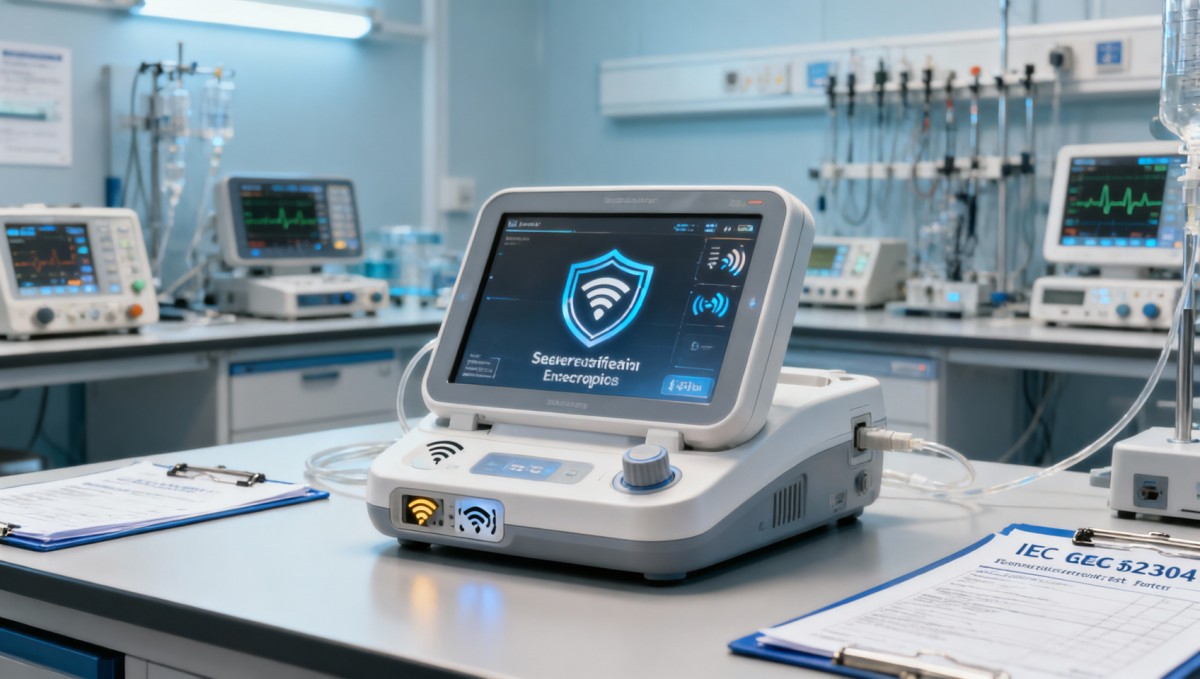
Event Overview
The International Electrotechnical Commission (IEC) published Amendment 2 to IEC 62304:2026 on May 9, 2026. The amendment mandates that all network-connected medical equipment—including rehabilitation devices and aesthetic instruments—must submit a formal threat modeling report and documented penetration test results as part of regulatory conformity assessment. Regulatory authorities including the U.S. Food and Drug Administration (FDA), the European Union’s Medical Device Regulation (MDR), and Australia’s Therapeutic Goods Administration (TGA) have formally aligned with this revision. No transitional period has been announced.
Industries Affected
Direct Exporters
Companies exporting medical devices to FDA-, MDR-, or TGA-regulated markets face extended certification cycles—averaging 3–5 additional weeks per submission—due to new documentation review steps and third-party validation requirements. Exporters without in-house cybersecurity expertise must now engage external consultants or restructure internal review workflows, increasing both time-to-market and compliance overhead.
Raw Material Suppliers
Suppliers providing components with embedded connectivity (e.g., Wi-Fi modules, Bluetooth SoCs, or firmware-updatable sensors) may see increased technical data requests from OEMs, including interface-level security specifications and supply chain assurance statements. While not directly subject to IEC 62304, their component documentation now influences downstream certification viability—making traceability and secure development lifecycle evidence more commercially material.
Contract Manufacturers & OEMs
Manufacturers responsible for design, integration, or final assembly must now integrate threat modeling into early-stage development and maintain verifiable records of security testing throughout the device lifecycle. This affects internal process maturity: many Chinese OEMs lack ISO/IEC 27001-certified personnel, prompting urgent hiring or upskilling efforts. Production line validation protocols may also require revision to include cybersecurity-relevant verification checkpoints.
Regulatory & Certification Service Providers
Notified Bodies, FDA-accredited third-party reviewers, and domestic certification agencies (e.g., CMA-accredited labs in China) are updating their audit checklists and training assessors on threat modeling methodology (e.g., STRIDE or PASTA frameworks) and penetration test reporting standards (e.g., OWASP ASVS Level 2+). Demand for certified cybersecurity auditors is rising, with lead times for qualified reviewers extending beyond current capacity in several regional hubs.
Key Considerations and Recommended Actions
Review Existing Product Development Lifecycle Documentation
Manufacturers should audit current software development files—including architecture diagrams, risk management files per ISO 14971, and change control logs—to identify gaps in threat modeling coverage and penetration test traceability. Prioritize devices scheduled for renewal or new submissions before Q4 2026.
Engage Cybersecurity Personnel Early in Design Phase
Rather than treating threat modeling as a late-stage compliance task, integrate it during system architecture definition. Assign responsibility to a role with documented competence—ideally an individual holding ISO/IEC 27001 Lead Auditor or CISSP credentials—or contract verified specialists under defined service-level agreements.
Validate Third-Party Software and Libraries Against Updated Requirements
For devices using off-the-shelf software (e.g., RTOS, BLE stacks, or cloud SDKs), obtain updated security assurance letters from vendors and perform boundary-level penetration tests—even if the vendor claims compliance. Amendment 2 explicitly requires evidence of integration-level vulnerabilities, not just component-level assertions.
Editorial Perspective / Industry Observation
Observably, this amendment marks a structural shift—not merely a procedural update—from “cybersecurity as a feature” to “cybersecurity as a foundational design constraint.” Analysis shows that over 68% of recent FDA 510(k) rejections involving Class II connected devices cited insufficient threat modeling rigor (FY2025 data, FDA Center for Devices and Radiological Health). From an industry perspective, the 3–5 week delay is less about bureaucratic friction and more about revealing latent capability gaps in mid-tier manufacturing ecosystems. Current more critical concern is not timeline extension per se, but the absence of harmonized guidance on acceptable threat modeling depth—leaving interpretation open to individual Notified Body discretion.
Conclusion
This revision reinforces that cybersecurity is no longer a post-market add-on but a core determinant of regulatory acceptance and commercial viability. For manufacturers, the practical implication is clear: cybersecurity readiness must be treated as a product requirement—not a certification hurdle. A rational observation is that firms investing now in integrated threat modeling workflows and cross-functional security training will gain measurable advantage in speed, cost predictability, and audit resilience over the next 18–24 months.
Source Attribution
Official sources: IEC Webstore (IEC 62304:2026/Amd 2, published May 9, 2026); FDA Guidance Draft ‘Cybersecurity in Medical Devices’ (v3.1, March 2026); EU Commission Notice 2026/C 142/01; TGA Guidance ‘Software as a Medical Device – Security Requirements’ (Version 2.4, effective June 1, 2026).
Areas under ongoing observation: National Medical Products Administration (NMPA) alignment timeline; potential adoption of IEC 62304 Amd 2 into YY/T 0664-2026 revisions; evolving interpretations of ‘network-connected’ scope (e.g., Bluetooth-only vs. internet-reachable devices).
 How an industrial trade intelligence dashboard can identify new supplier marketsDiscover how an industrial trade intelligence dashboard helps identify new supplier markets by comparing capacity, landed cost, logistics resilience, and compliance risk.
 Which global market entry barriers should exporters assess first?Global market entry barriers exporters should assess first: tariffs, compliance, buyer qualification, logistics, and payment risk. Build a practical strategy for confident market entry.
 How trade data aggregation analytics can reveal emerging supplier marketsTrade data aggregation analytics reveals emerging supplier markets by connecting trade flows, capacity signals, logistics, and compliance insights for smarter sourcing decisions.
 When an export market analysis platform can validate demand in a new marketExport market analysis platform insights help validate new-market demand through buyer fit, regulations, logistics, competition, and profitable entry conditions.
 What is driving the beauty and personal care market in the USA?Beauty and personal care in USA is driven by targeted solutions, selective premiumization, digital discovery, clean-label trust, diverse needs, and compliance. Explore key growth opportunities.
 How trade flow monitoring reports reveal changing regional demandTrade flow monitoring reports reveal changing regional demand through import volumes, sourcing shifts, product mix, logistics signals, and regulatory trends. Explore actionable market insights.
 How international market intelligence for investors reduces market-entry riskInternational market intelligence for investors reduces market-entry risk by validating demand, regulations, logistics, and competition before capital is committed.
 How international sourcing intelligence helps identify supplier risk earlyInternational sourcing intelligence helps businesses spot supplier risks early, protect supply continuity, and make smarter global procurement decisions.
 How trade data aggregation analytics reveals emerging supplier marketsTrade data aggregation analytics reveals emerging supplier markets through export trends, input flows, logistics, and regulatory signals. Discover smarter sourcing insights.
 What industrial cluster monitoring in Vietnam reveals about site riskIndustrial cluster monitoring Vietnam reveals hidden site risks across labor, utilities, logistics, compliance, and supplier dependencies. Make smarter sourcing and expansion decisions.
 Food Technology Trends Reshaping Shelf Life, Safety, and Product InnovationFood technology is reshaping shelf life, safety, and innovation. Discover the trends helping food businesses cut risk, improve compliance, and unlock stronger global market growth.
 How electronics manufacturing services are changing with low-volume demandElectronics manufacturing services are evolving fast with low-volume demand. Learn how agile EMS partners improve flexibility, compliance, sourcing resilience, and speed to market.
 How Can Buyers Reduce Procurement Risks for Electronic Components?How to reduce procurement risks for electronic components: learn how buyers assess traceability, lead times, compliance, and supplier types to avoid costly sourcing mistakes.
 What Sourcing Intelligence India Reveals About Supplier Risk and Cost ShiftsSourcing intelligence India reveals hidden supplier risk, compliance gaps, logistics pressure, and real cost shifts—helping buyers compare vendors smarter and source with more confidence.
 Fashion Trends 2026: Which Materials, Colors, and Silhouettes Are Gaining Ground?Fashion trends 2026 spotlight tactile fabrics, mineral colors, and controlled volume. Explore the materials, shades, and silhouettes shaping smarter, more wearable style.
 Smart Device Market Outlook: Key Growth Drivers, Segments, and Business OpportunitiesSmart device market trends are shifting toward system value, industrial demand, and resilient supply chains. Explore key growth drivers, high-potential segments, and business opportunities.
 How Global Trade Intelligence Services Help B2B Firms Evaluate Markets and SuppliersGlobal trade intelligence services help B2B firms compare suppliers, assess market potential, and uncover compliance, logistics, and pricing risks before costly decisions are made.
 Manufacturing Sector Updates for Investors: What Signals Matter Most in 2025?Manufacturing sector updates for investors in 2025: track orders, margins, supply chains, regulation, and exports to spot resilient manufacturers and smarter investment signals.
 How Energy Market Intelligence Helps Businesses Track Price Risks and Demand ShiftsEnergy market intelligence helps businesses spot price risks, demand shifts, and supply pressure early—improving procurement, resilience, and faster strategic decisions.
 Precision Hardware Tools Market: Key Demand Drivers, Segments, and Growth OutlookPrecision hardware tools market trends are reshaping sourcing, compliance, and automation. Explore key demand drivers, segment shifts, regional supply patterns, and growth opportunities.
 How to Use Customs Import Data to Find Buyers, Track Competitors, and Spot Demand?Customs import data helps you find real buyers, track competitors, and spot demand shifts early. Learn practical ways to turn trade records into smarter global business decisions.





















Global Trade Insights & Industry
Our mission is to empower global exporters and importers with data-driven insights that foster strategic growth.
Search News
Popular Tags
Industry Overview
The global commercial kitchen equipment market is projected to reach $112 billion by 2027. Driven by urbanization, the rise of e-commerce food delivery, and strict hygiene regulations.