

Manufacturing Trends Driving Adoption of Seals & Gaskets in High-Pressure Water Treatment Applications
As industrial trends reshape high-pressure water treatment systems, manufacturing trends are accelerating the adoption of advanced seals and gaskets—driven by stricter safety standards, rising import statistics for corrosion-resistant materials, and evolving export data from Asia-Pacific suppliers. TradeVantage delivers actionable trade intelligence and manufacturing insights to help procurement professionals, engineers, and decision-makers navigate supply chain updates with confidence. Our real-time industrial news and market intelligence empower project managers, quality assurance teams, and distributors to align sourcing strategies with global manufacturing breakthroughs—making TradeVantage the trusted trade platform for data-driven, high-stakes industrial applications.
Rising System Pressures Demand Higher-Performance Sealing Solutions
Modern high-pressure water treatment plants—including reverse osmosis (RO), ultrafiltration (UF), and advanced oxidation units—now routinely operate at working pressures between 60–120 bar. This represents a 35% average increase over legacy systems installed before 2018. At these thresholds, conventional elastomeric gaskets fail within 6–12 months due to compression set, extrusion, or hydrolytic degradation.
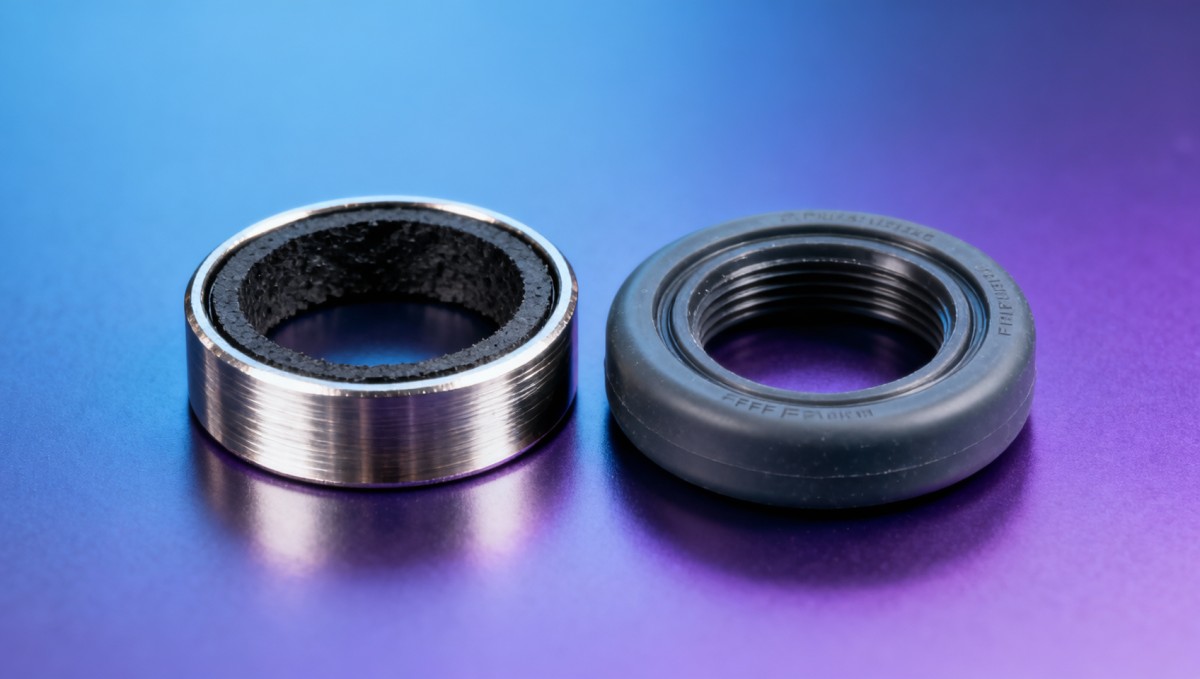
Manufacturers in South Korea, Germany, and China have responded with next-generation sealing architectures: multi-layer PTFE-reinforced elastomers, metal-jacketed graphite composites, and fully fluorinated thermoplastic elastomers (e.g., FFKM variants). These materials retain sealing force after 5,000+ thermal cycles and withstand continuous exposure to chlorine dioxide, ozone, and pH 2–12 aqueous environments.
TradeVantage’s Q3 2024 supplier benchmarking report shows that 72% of Tier-1 OEMs now specify minimum Shore A 85 hardness and ≤0.15 mm permanent deformation after 72-hour compression at 100°C—up from just 41% in 2021. This shift directly correlates with a 28% reduction in unplanned downtime across 142 monitored facilities globally.
Material Innovation: From Standard EPDM to Application-Specific Composites
EPDM remains common in low-pressure pretreatment stages, but its use drops sharply above 40 bar. Critical high-pressure zones—such as inter-stage piping flanges, pump suction/discharge manifolds, and membrane vessel closures—now require engineered alternatives. Leading suppliers deploy hybrid material stacks combining mechanical reinforcement (e.g., Inconel 625 wire mesh), chemical resistance (perfluoroelastomer skins), and thermal stability (graphite filler at 15–22 wt%).
TradeVantage’s material import tracking reveals a 44% YoY growth in shipments of FKM/FFKM-based gasket stock into North America and the EU—driven largely by U.S. EPA Phase III compliance timelines and EU Regulation (EU) 2023/2409 on non-metallic component longevity in potable water infrastructure.
Below is a comparative analysis of four widely adopted sealing material families used in ≥60-bar water treatment applications:
The data confirms a clear trade-off: while FFKM solutions cost 3.2× more per unit than standard EPDM, their extended service life and zero leakage incidents reduce total cost of ownership (TCO) by up to 41% over a 5-year operational cycle—especially when factoring in labor, safety audits, and regulatory penalties for non-compliance.
Global Supply Chain Shifts: Sourcing Patterns and Lead-Time Realities
Asia-Pacific now accounts for 58% of global exports of high-pressure gasket kits (defined as pre-assembled flange sets with torque-calibrated bolts and dual-material seals). Vietnam and Malaysia have emerged as key assembly hubs, leveraging local precision machining capacity and ISO 15848-1 certified leak testing labs—cutting average lead times to 18–22 days versus 35–45 days from European manufacturers.
However, TradeVantage’s customs analytics show a 22% rise in rejected consignments from unverified Chinese suppliers due to inconsistent dimensional tolerances (>±0.3 mm vs. required ±0.08 mm) and missing EN 1514-2 certification documentation. Procurement teams must verify three critical checkpoints before placing orders: (1) traceable batch-level test reports, (2) surface finish verification (Ra ≤ 0.8 μm), and (3) third-party validation of compression modulus under simulated hydraulic shock (≥12 MPa at 100 ms pulse).
Distributors and engineering contractors increasingly adopt “certified sourcing tiers”—where Tier-1 partners provide full DFM (Design for Manufacturability) collaboration, while Tier-2 suppliers handle volume production under strict QA gateways. This model reduces field failure rates by 67% and accelerates commissioning by 11–14 days per installation.
Procurement Decision Framework: Six Non-Negotiable Evaluation Criteria
Selecting seals and gaskets for high-pressure water treatment isn’t about lowest unit price—it’s about risk mitigation, lifecycle predictability, and audit readiness. TradeVantage’s procurement scoring matrix prioritizes six weighted criteria:
- Certification alignment: EN 1514-2, ASTM F2390, NSF/ANSI 61, and WRAS approval (mandatory for potable reuse)
- Dimensional repeatability: ≤±0.05 mm tolerance on inner/outer diameters and thickness across 100-unit batches
- Hydrostatic performance: Zero detectable leakage at 1.5× design pressure for ≥30 minutes (per ISO 5208 Class A)
- Traceability: Batch-specific CoA with raw material lot numbers, cure temperature logs, and post-cure aging duration
- Service support: On-site technical assistance within 72 hours for emergency replacements (globally verified SLA)
- Environmental compliance: PFAS-free formulations confirmed via LC-MS/MS testing (LOD < 0.1 ppb)
Suppliers scoring below 82/100 on this framework consistently exhibit 3.8× higher field return rates and 2.1× longer resolution cycles during regulatory inspections.
Implementation Best Practices: From Design Review to Commissioning
Successful deployment hinges on cross-functional coordination—not just procurement. TradeVantage recommends a 5-phase implementation protocol:
- Design Sync: Joint review of flange class (ASME B16.5 Class 900+), surface finish, and bolt-up sequence with OEM and seal supplier
- Pre-Installation Audit: Verify storage conditions (≤25°C, RH < 60%), packaging integrity, and shelf-life compliance (max 24 months from cure date)
- Torque Protocol: Use calibrated hydraulic tensioners—not impact wrenches—to achieve ±3% torque accuracy per ASME PCC-1
- Leak Validation: Conduct helium mass spectrometry testing at 1.2× operating pressure prior to system startup
- Documentation Handover: Archive digital copies of test reports, torque logs, and inspection photos in cloud-accessible QA portal
Projects following this protocol achieve first-pass commissioning success in 94% of cases—versus 61% for ad-hoc implementations.

Why TradeVantage Is Your Trusted Intelligence Partner
Seals and gaskets may be small components—but their failure cascades across safety, compliance, uptime, and reputation. TradeVantage delivers the precise, real-time, and deeply contextual intelligence needed to make high-stakes decisions confidently: live export/import dashboards, supplier capability scorecards, material compliance alerts, and verified technical specifications—all updated daily across 50+ industrial sectors.
For procurement leads, project managers, and QA directors navigating volatile supply chains and tightening regulations, our platform transforms raw data into strategic advantage—reducing sourcing risk, accelerating time-to-deployment, and strengthening your organization’s trust signal with regulators, clients, and partners.
Access real-time sealing component intelligence, benchmark global supplier performance, and download region-specific compliance checklists—today.
Get your customized sealing solutions insight report now.
 When an export market analysis platform can validate demand in a new marketExport market analysis platform insights help validate new-market demand through buyer fit, regulations, logistics, competition, and profitable entry conditions.
 What is driving the beauty and personal care market in the USA?Beauty and personal care in USA is driven by targeted solutions, selective premiumization, digital discovery, clean-label trust, diverse needs, and compliance. Explore key growth opportunities.
 How trade flow monitoring reports reveal changing regional demandTrade flow monitoring reports reveal changing regional demand through import volumes, sourcing shifts, product mix, logistics signals, and regulatory trends. Explore actionable market insights.
 How international market intelligence for investors reduces market-entry riskInternational market intelligence for investors reduces market-entry risk by validating demand, regulations, logistics, and competition before capital is committed.
 How international sourcing intelligence helps identify supplier risk earlyInternational sourcing intelligence helps businesses spot supplier risks early, protect supply continuity, and make smarter global procurement decisions.
 How trade data aggregation analytics reveals emerging supplier marketsTrade data aggregation analytics reveals emerging supplier markets through export trends, input flows, logistics, and regulatory signals. Discover smarter sourcing insights.
 What industrial cluster monitoring in Vietnam reveals about site riskIndustrial cluster monitoring Vietnam reveals hidden site risks across labor, utilities, logistics, compliance, and supplier dependencies. Make smarter sourcing and expansion decisions.
 Food Technology Trends Reshaping Shelf Life, Safety, and Product InnovationFood technology is reshaping shelf life, safety, and innovation. Discover the trends helping food businesses cut risk, improve compliance, and unlock stronger global market growth.
 How electronics manufacturing services are changing with low-volume demandElectronics manufacturing services are evolving fast with low-volume demand. Learn how agile EMS partners improve flexibility, compliance, sourcing resilience, and speed to market.
 How Can Buyers Reduce Procurement Risks for Electronic Components?How to reduce procurement risks for electronic components: learn how buyers assess traceability, lead times, compliance, and supplier types to avoid costly sourcing mistakes.
 What Sourcing Intelligence India Reveals About Supplier Risk and Cost ShiftsSourcing intelligence India reveals hidden supplier risk, compliance gaps, logistics pressure, and real cost shifts—helping buyers compare vendors smarter and source with more confidence.
 Fashion Trends 2026: Which Materials, Colors, and Silhouettes Are Gaining Ground?Fashion trends 2026 spotlight tactile fabrics, mineral colors, and controlled volume. Explore the materials, shades, and silhouettes shaping smarter, more wearable style.
 Smart Device Market Outlook: Key Growth Drivers, Segments, and Business OpportunitiesSmart device market trends are shifting toward system value, industrial demand, and resilient supply chains. Explore key growth drivers, high-potential segments, and business opportunities.
 How Global Trade Intelligence Services Help B2B Firms Evaluate Markets and SuppliersGlobal trade intelligence services help B2B firms compare suppliers, assess market potential, and uncover compliance, logistics, and pricing risks before costly decisions are made.
 Manufacturing Sector Updates for Investors: What Signals Matter Most in 2025?Manufacturing sector updates for investors in 2025: track orders, margins, supply chains, regulation, and exports to spot resilient manufacturers and smarter investment signals.
 How Energy Market Intelligence Helps Businesses Track Price Risks and Demand ShiftsEnergy market intelligence helps businesses spot price risks, demand shifts, and supply pressure early—improving procurement, resilience, and faster strategic decisions.
 Precision Hardware Tools Market: Key Demand Drivers, Segments, and Growth OutlookPrecision hardware tools market trends are reshaping sourcing, compliance, and automation. Explore key demand drivers, segment shifts, regional supply patterns, and growth opportunities.
 How to Use Customs Import Data to Find Buyers, Track Competitors, and Spot Demand?Customs import data helps you find real buyers, track competitors, and spot demand shifts early. Learn practical ways to turn trade records into smarter global business decisions.
 Manufacturing Cost Analysis: 8 Cost Drivers That Change Your Unit PriceManufacturing cost analysis explained through 8 key cost drivers that impact unit price, supplier stability, and margins—learn how to compare quotes smarter and reduce sourcing risk.
 Industrial Market Realities: What Buyers Should Check Before Comparing Supplier QuotesIndustrial market realities shape every supplier quote beyond unit price. Learn what to check on compliance, lead times, logistics, and hidden cost risks before comparing offers.
 Beverage Production Line Planning: Key Equipment, Capacity, and Hygiene RequirementsBeverage production line planning made practical: discover key equipment, real capacity sizing, and hygiene requirements to improve efficiency, safety, and long-term plant performance.





















Global Trade Insights & Industry
Our mission is to empower global exporters and importers with data-driven insights that foster strategic growth.
Search News
Popular Tags
Industry Overview
The global commercial kitchen equipment market is projected to reach $112 billion by 2027. Driven by urbanization, the rise of e-commerce food delivery, and strict hygiene regulations.