

MWR Enacts 8 New Water Standards on May 11, 2026
On May 11, 2026, China’s Ministry of Water Resources (MWR) implemented eight new industry standards—including the Technical Standard for Water Rights Trading and the Specification for Flow Measurement at Hydraulic Structures and Weirs/Flumes. These standards directly impact manufacturers and exporters of smart water meters, flow sensors, precision irrigation controllers, and water quality monitoring terminals—particularly those targeting water-stressed markets in the Middle East, Africa, and Southeast Asia where alignment with evolving water rights frameworks is becoming a procurement prerequisite.
Event Overview
On May 11, 2026, the Ministry of Water Resources officially promulgated and enforced eight new industry standards. Confirmed titles include the Technical Standard for Water Rights Trading and the Specification for Flow Measurement at Hydraulic Structures and Weirs/Flumes. All eight standards took effect on the same date. The standards collectively strengthen technical requirements related to water resource metering, trading, and scheduling. No further details—such as full standard numbers, scope of application beyond stated titles, or official implementation guidance documents—have been publicly released as of the effective date.
Industries Affected by Sector
Export-Oriented Manufacturing Enterprises
These enterprises produce devices such as smart water meters, electromagnetic and ultrasonic flow sensors, irrigation control units, and water quality monitoring terminals. They are affected because the new standards define updated metrological and functional benchmarks—especially for flow accuracy, data traceability, and interface compatibility—that may become prerequisites for product registration or tender eligibility in overseas markets adopting similar water governance models.
International Trade & Distribution Firms
Firms engaged in cross-border distribution of water technology equipment are affected due to shifting buyer expectations. Procurement entities in the Middle East, Africa, and Southeast Asia are explicitly evaluating whether Chinese-sourced equipment complies with emerging water rights reform trends; MWR’s standardized technical baselines now serve as an objective reference point for compliance verification during pre-shipment assessment or certification processes.
Supply Chain & Certification Service Providers
Third-party testing labs, certification bodies, and logistics integrators supporting water equipment exports are affected as demand rises for conformity assessments against these newly enforced standards. While the standards are national—not international—buyers in target regions are referencing them as de facto technical benchmarks, increasing requests for test reports citing alignment with MWR’s May 2026 requirements.
Key Focus Areas and Practical Responses for Stakeholders
Monitor official updates on standard interpretation and supporting guidance
Analysis shows that MWR has not yet published explanatory notes, implementation handbooks, or transitional provisions for the eight standards. Exporters should track announcements from the MWR Standardization Office and the China National Institute of Standardization for clarifications—particularly regarding retroactivity, conformance pathways for legacy products, and interoperation with ISO or IEC measurement standards.
Identify and prioritize high-impact product categories and export destinations
Observably, flow measurement devices (e.g., flume-mounted ultrasonic sensors) and irrigation controllers with integrated water rights transaction interfaces are most directly referenced in the two named standards. Firms should prioritize technical documentation updates for products exported to countries undergoing formal water rights institutionalization—such as Jordan, South Africa, and Vietnam—where procurement tenders increasingly cite technical equivalency to national water resource standards.
Distinguish between regulatory signal and operational requirement
Current more appropriate understanding is that the May 11 enforcement constitutes a domestic regulatory milestone—not an immediate export mandate. However, its significance lies in establishing a verifiable, government-endorsed technical baseline. Buyers in target regions are using it as a proxy for reliability and interoperability; therefore, aligning product specifications—even voluntarily—strengthens competitive positioning in pre-tender technical evaluations.
Initiate internal technical review and documentation alignment
Manufacturers should audit existing product datasheets, calibration protocols, and firmware version logs against the stated scope of the Technical Standard for Water Rights Trading (e.g., data structure for water allocation records) and the Specification for Flow Measurement (e.g., uncertainty thresholds for open-channel flow under low-flow conditions). Where gaps exist, update internal test plans—not necessarily for re-certification, but to support transparent technical dialogue with overseas buyers.
Editorial Perspective / Industry Observation
This development is better understood as a strong policy signal than an immediate operational constraint. Analysis shows it reflects China’s institutional effort to codify water resource management practices at the technical layer—a move that indirectly supports export competitiveness by offering third-party buyers a consistent, authoritative reference. Observably, its influence is currently concentrated in procurement due diligence rather than customs clearance or mandatory certification. Yet because water rights reforms are gaining momentum across multiple developing economies, sustained attention is warranted: future bilateral technical cooperation agreements or regional water infrastructure financing programs may formally reference or harmonize with these MWR standards.
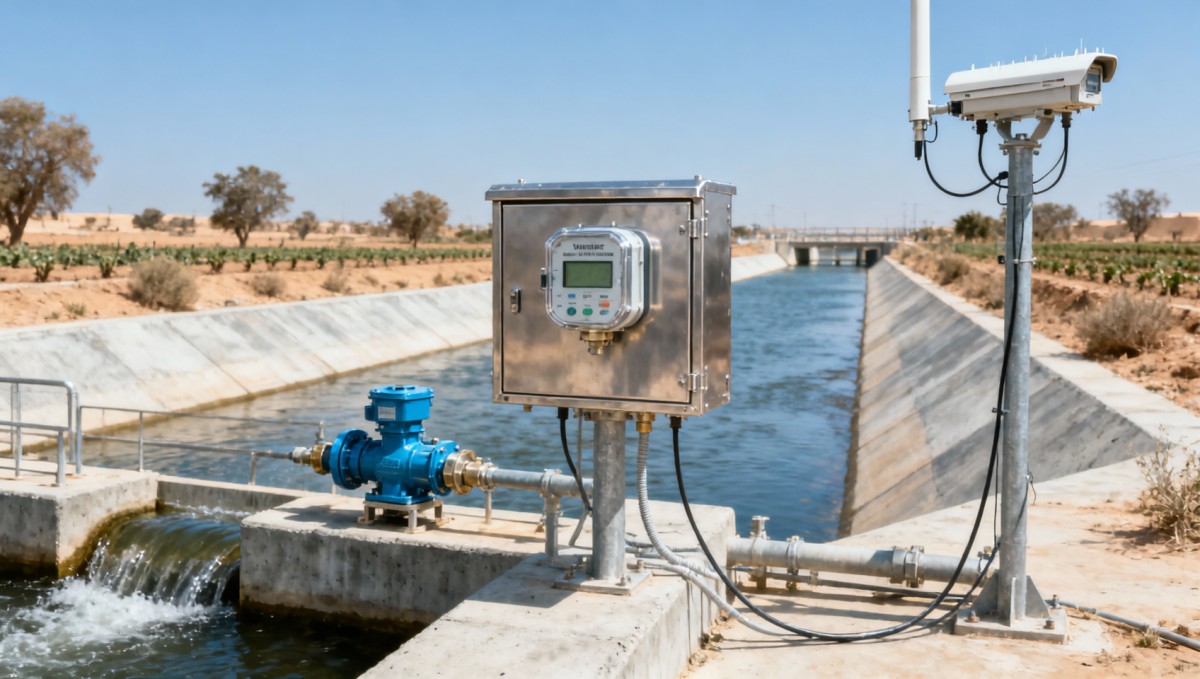
In summary, the May 11, 2026 enforcement of eight MWR standards does not introduce new export barriers—but it does elevate the value of demonstrable technical alignment for water technology exporters. Its primary industry significance lies in providing an official, actionable benchmark for product readiness in markets where water governance modernization is accelerating. At present, it is more appropriately interpreted as a strategic alignment opportunity than a compliance deadline.
Source: Ministry of Water Resources of the People’s Republic of China (official announcement, effective May 11, 2026).
Note: Full texts of the eight standards, official English translations, and supplementary implementation guidance have not been publicly released as of the effective date and remain subject to ongoing observation.
 Which global market entry barriers should exporters assess first?Global market entry barriers exporters should assess first: tariffs, compliance, buyer qualification, logistics, and payment risk. Build a practical strategy for confident market entry.
 How trade data aggregation analytics can reveal emerging supplier marketsTrade data aggregation analytics reveals emerging supplier markets by connecting trade flows, capacity signals, logistics, and compliance insights for smarter sourcing decisions.
 When an export market analysis platform can validate demand in a new marketExport market analysis platform insights help validate new-market demand through buyer fit, regulations, logistics, competition, and profitable entry conditions.
 What is driving the beauty and personal care market in the USA?Beauty and personal care in USA is driven by targeted solutions, selective premiumization, digital discovery, clean-label trust, diverse needs, and compliance. Explore key growth opportunities.
 How trade flow monitoring reports reveal changing regional demandTrade flow monitoring reports reveal changing regional demand through import volumes, sourcing shifts, product mix, logistics signals, and regulatory trends. Explore actionable market insights.
 How international market intelligence for investors reduces market-entry riskInternational market intelligence for investors reduces market-entry risk by validating demand, regulations, logistics, and competition before capital is committed.
 How international sourcing intelligence helps identify supplier risk earlyInternational sourcing intelligence helps businesses spot supplier risks early, protect supply continuity, and make smarter global procurement decisions.
 How trade data aggregation analytics reveals emerging supplier marketsTrade data aggregation analytics reveals emerging supplier markets through export trends, input flows, logistics, and regulatory signals. Discover smarter sourcing insights.
 What industrial cluster monitoring in Vietnam reveals about site riskIndustrial cluster monitoring Vietnam reveals hidden site risks across labor, utilities, logistics, compliance, and supplier dependencies. Make smarter sourcing and expansion decisions.
 Food Technology Trends Reshaping Shelf Life, Safety, and Product InnovationFood technology is reshaping shelf life, safety, and innovation. Discover the trends helping food businesses cut risk, improve compliance, and unlock stronger global market growth.
 How electronics manufacturing services are changing with low-volume demandElectronics manufacturing services are evolving fast with low-volume demand. Learn how agile EMS partners improve flexibility, compliance, sourcing resilience, and speed to market.
 How Can Buyers Reduce Procurement Risks for Electronic Components?How to reduce procurement risks for electronic components: learn how buyers assess traceability, lead times, compliance, and supplier types to avoid costly sourcing mistakes.
 What Sourcing Intelligence India Reveals About Supplier Risk and Cost ShiftsSourcing intelligence India reveals hidden supplier risk, compliance gaps, logistics pressure, and real cost shifts—helping buyers compare vendors smarter and source with more confidence.
 Fashion Trends 2026: Which Materials, Colors, and Silhouettes Are Gaining Ground?Fashion trends 2026 spotlight tactile fabrics, mineral colors, and controlled volume. Explore the materials, shades, and silhouettes shaping smarter, more wearable style.
 Smart Device Market Outlook: Key Growth Drivers, Segments, and Business OpportunitiesSmart device market trends are shifting toward system value, industrial demand, and resilient supply chains. Explore key growth drivers, high-potential segments, and business opportunities.
 How Global Trade Intelligence Services Help B2B Firms Evaluate Markets and SuppliersGlobal trade intelligence services help B2B firms compare suppliers, assess market potential, and uncover compliance, logistics, and pricing risks before costly decisions are made.
 Manufacturing Sector Updates for Investors: What Signals Matter Most in 2025?Manufacturing sector updates for investors in 2025: track orders, margins, supply chains, regulation, and exports to spot resilient manufacturers and smarter investment signals.
 How Energy Market Intelligence Helps Businesses Track Price Risks and Demand ShiftsEnergy market intelligence helps businesses spot price risks, demand shifts, and supply pressure early—improving procurement, resilience, and faster strategic decisions.
 Precision Hardware Tools Market: Key Demand Drivers, Segments, and Growth OutlookPrecision hardware tools market trends are reshaping sourcing, compliance, and automation. Explore key demand drivers, segment shifts, regional supply patterns, and growth opportunities.
 How to Use Customs Import Data to Find Buyers, Track Competitors, and Spot Demand?Customs import data helps you find real buyers, track competitors, and spot demand shifts early. Learn practical ways to turn trade records into smarter global business decisions.
 Manufacturing Cost Analysis: 8 Cost Drivers That Change Your Unit PriceManufacturing cost analysis explained through 8 key cost drivers that impact unit price, supplier stability, and margins—learn how to compare quotes smarter and reduce sourcing risk.





















Global Trade Insights & Industry
Our mission is to empower global exporters and importers with data-driven insights that foster strategic growth.
Search News
Popular Tags
Industry Overview
The global commercial kitchen equipment market is projected to reach $112 billion by 2027. Driven by urbanization, the rise of e-commerce food delivery, and strict hygiene regulations.