

Industrial Chemical Analysis for Faster QC Decisions
For quality control and safety teams, industrial chemical analysis is the fastest path to confident decisions on raw materials, process stability, and compliance risks. By turning complex test data into actionable insight, businesses can reduce delays, prevent costly errors, and strengthen product consistency. This article explores how modern analytical methods support faster QC workflows in the chemical industry.
In chemical manufacturing, a delayed release decision can affect an entire production window, while an inaccurate result can trigger rework, waste, or a compliance event. For QC managers and safety officers, the practical question is not whether testing matters, but how to make industrial chemical analysis faster, more reliable, and easier to act on across incoming inspection, in-process control, and final verification.
Modern laboratories and plant-based testing programs now combine instrumental methods, rapid screening tools, digital reporting, and tighter sampling plans to compress turnaround time from days to hours in many routine applications. This matters in sectors handling solvents, additives, intermediates, coatings, surfactants, resins, acids, and specialty blends where specification drift of even 1%–2% can alter downstream performance or storage safety.
Why Faster Industrial Chemical Analysis Changes QC Outcomes
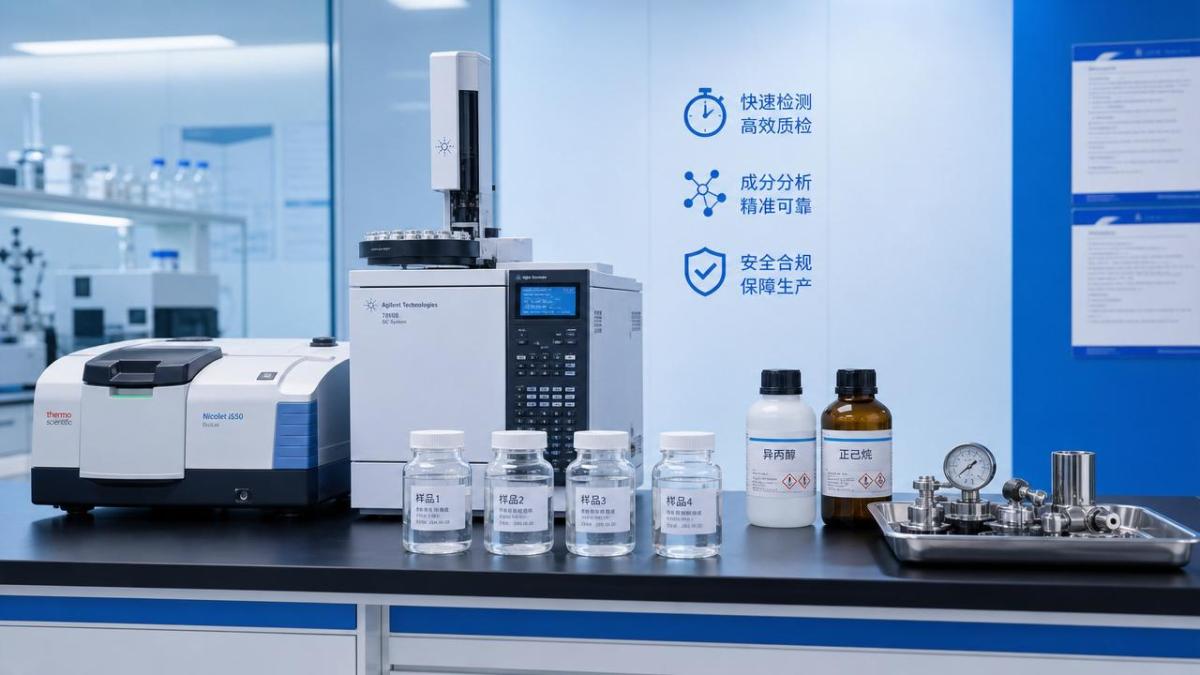
Faster industrial chemical analysis improves more than speed. It changes the timing of decisions, which is often the real bottleneck in chemical operations. When analytical data reaches QC and safety teams within 30 minutes to 4 hours instead of after a full shift, nonconforming batches can be isolated earlier, process adjustments can be made with less material loss, and hazardous deviations can be contained before they spread across storage or packaging lines.
For imported raw materials and globally sourced inputs, rapid analysis also supports better receiving control. A shipment may arrive with a certificate of analysis, but local verification remains critical for identity, purity, moisture, pH, heavy contaminants, or residual solvents. In many plants, 4 checkpoints define release quality: identity, concentration, contamination risk, and stability indicators. Missing any one of these can slow a vessel discharge, warehouse transfer, or production campaign.
Key decision points that depend on analytical speed
- Incoming raw material release within 2–8 hours of arrival
- In-process adjustment during the first 10%–30% of a batch cycle
- Final product approval before packaging, shipping, or export documentation
- Safety escalation when off-spec pH, vapor risk, or contamination is detected
Different analytical methods support different decisions. Some are optimized for precision and trace-level detection, while others are used for quick screening at the plant floor. The best QC programs do not rely on a single instrument. They build a tiered approach where rapid methods filter routine decisions and confirmatory methods handle exceptions, disputes, or regulatory thresholds.
Common methods and their practical QC value
The table below shows how typical methods are used in chemical operations. The goal is not to rank one technique above another, but to match the method to the decision speed, detection requirement, and operational risk.
A clear pattern emerges: routine release decisions often benefit from fast, robust methods such as FTIR, titration, conductivity, density, or moisture analysis, while higher-risk disputes require chromatographic confirmation. This layered design helps teams balance speed and defensibility rather than sacrificing one for the other.
Where delays usually occur
Sampling and sample preparation
In many chemical plants, 20%–40% of total turnaround time is lost before the instrument run starts. Waiting for tank access, inconsistent sample labeling, manual dilution, and repeated filtration all add delay. Standardized containers, barcode-linked chain of custody, and preapproved preparation protocols can reduce this waste significantly.
Method mismatch
A method with excellent sensitivity may still be the wrong operational choice if it requires a 3-hour sequence for a pass-fail release decision. QC teams should classify tests into at least 3 groups: rapid release, routine trend monitoring, and confirmatory investigation. That structure keeps high-complexity methods available for critical cases instead of overloading them with every sample.
How to Build a Faster and Safer Chemical QC Workflow
A faster workflow starts with workflow design, not just instrument investment. Many chemical companies already own capable equipment but still struggle with slow decisions because the process around the test is fragmented. The most effective programs link sampling, prioritization, analysis, review, and release into a controlled sequence with clear time targets, often by setting internal service windows such as 1 hour for urgent safety checks and 8 hours for standard raw material release.
A practical 5-step implementation model
- Map all QC decisions by risk level, from routine identity checks to critical contamination events.
- Assign target turnaround times, such as 15 minutes, 2 hours, or same-shift release.
- Select fit-for-purpose methods based on sample type, matrix complexity, and detection limit needs.
- Digitize result capture and exception alerts to reduce manual review lag.
- Audit failure points every 30–90 days using deviation logs and retest frequency.
This model is especially useful for plants managing multiple chemical families. A solvent blending line, for example, may need density, refractive index, and GC checks, while an inorganic processing site may prioritize pH, conductivity, moisture, and elemental review. The right design reflects both chemistry and operational urgency.
Selection criteria for methods and service partners
Whether analysis is performed in-house, by a contract laboratory, or through a hybrid model, QC leaders should evaluate more than test capability. The table below outlines 4 decision dimensions that directly affect speed, consistency, and safety control in industrial chemical analysis.
For buyers and decision-makers, the message is simple: faster industrial chemical analysis depends on operational fit. A laboratory or system that provides broad capability but weak scheduling discipline may still slow plant output. Reliable reporting windows, appropriate methods, and traceable records usually matter more than an oversized test menu.
Risk controls that safety teams should not overlook
Set trigger limits before a crisis occurs
Safety managers should define action thresholds in advance for parameters such as flashpoint shift, peroxide formation, pH drift, water ingress, or abnormal VOC levels. A trigger may not always represent a regulatory breach, but it can justify hold, resample, ventilation review, or segregation. Predefined limits save time when a result falls into a gray zone between acceptable and critical.
Link analysis to storage and handling rules
Analytical findings should influence where and how materials are stored. A result showing contamination, off-spec acidity, or unusual moisture may require quarantine, shorter retention, inert handling, or a revised transfer route. In facilities moving 10, 50, or 100 drums at a time, even one misclassified lot can create a larger safety exposure than the initial lab deviation suggests.
Using Market Intelligence to Support Better QC Decisions
Industrial chemical analysis becomes even more valuable when it is interpreted alongside supply chain and market intelligence. Specification risk does not exist in isolation. Changes in sourcing regions, feedstock availability, logistics timing, and substitution pressure can all increase the probability of variable raw materials entering the plant. QC and safety teams benefit when analytical priorities reflect these external signals.
This is where an industry intelligence platform such as GTIIN and TradeVantage adds practical value for B2B chemical operations. By tracking industrial trends across 50+ sectors, trade movements, regional production shifts, and supplier-side developments, businesses can identify where incoming material risk may increase and where tighter verification is justified. For exporters, importers, and manufacturers, this reduces blind spots between procurement decisions and laboratory controls.
When market context should influence testing plans
- When a key solvent or intermediate is sourced from a new region with different feedstock profiles
- When transport time extends by 7–14 days and stability concerns rise
- When substitute suppliers are introduced under cost or capacity pressure
- When regulatory attention increases around a contaminant, impurity class, or labeling issue
A more informed testing strategy does not always mean more testing. In many cases, it means smarter frequency control. A stable supplier may justify reduced confirmatory depth after a period of consistent performance, while a newly onboarded source may need tighter checks for the first 3–5 shipments. This risk-based approach supports both efficiency and defensible quality management.
Common mistakes that slow down chemical QC
Treating every sample as equally urgent
Without a triage model, laboratories become congested and critical samples wait behind low-impact routine work. Priority codes tied to safety, production dependency, and customer commitment can reduce queue confusion and shorten urgent response times.
Overreliance on certificates without local verification
Supplier documentation is useful, but receiving plants still need a verification plan proportionate to material risk. Identity mismatches, packaging errors, and handling-related contamination may not be visible in paperwork alone. Even a short screening sequence can prevent a much longer shutdown or dispute.
Separating lab data from procurement and operations insight
When QC data stays isolated, recurring quality drift may be seen only as isolated incidents. Shared review between procurement, plant operations, and safety functions helps identify whether a deviation reflects a supplier pattern, transport issue, storage problem, or internal process instability.
For chemical businesses that operate across borders, faster industrial chemical analysis works best when paired with timely market visibility, structured sampling rules, and clearly defined response thresholds. QC teams need results they can trust, while safety managers need signals they can act on before risk escalates.
GTIIN and TradeVantage help companies connect analytical discipline with broader trade and industry intelligence, making quality decisions more informed from both a laboratory and supply chain perspective. If your team is reviewing chemical QC workflows, supplier risk exposure, or industry-specific testing priorities, contact us to explore tailored insights, consult product details, or learn more solutions for faster, more confident decision-making.
 Which global market entry barriers should exporters assess first?Global market entry barriers exporters should assess first: tariffs, compliance, buyer qualification, logistics, and payment risk. Build a practical strategy for confident market entry.
 How trade data aggregation analytics can reveal emerging supplier marketsTrade data aggregation analytics reveals emerging supplier markets by connecting trade flows, capacity signals, logistics, and compliance insights for smarter sourcing decisions.
 When an export market analysis platform can validate demand in a new marketExport market analysis platform insights help validate new-market demand through buyer fit, regulations, logistics, competition, and profitable entry conditions.
 What is driving the beauty and personal care market in the USA?Beauty and personal care in USA is driven by targeted solutions, selective premiumization, digital discovery, clean-label trust, diverse needs, and compliance. Explore key growth opportunities.
 How trade flow monitoring reports reveal changing regional demandTrade flow monitoring reports reveal changing regional demand through import volumes, sourcing shifts, product mix, logistics signals, and regulatory trends. Explore actionable market insights.
 How international market intelligence for investors reduces market-entry riskInternational market intelligence for investors reduces market-entry risk by validating demand, regulations, logistics, and competition before capital is committed.
 How international sourcing intelligence helps identify supplier risk earlyInternational sourcing intelligence helps businesses spot supplier risks early, protect supply continuity, and make smarter global procurement decisions.
 How trade data aggregation analytics reveals emerging supplier marketsTrade data aggregation analytics reveals emerging supplier markets through export trends, input flows, logistics, and regulatory signals. Discover smarter sourcing insights.
 What industrial cluster monitoring in Vietnam reveals about site riskIndustrial cluster monitoring Vietnam reveals hidden site risks across labor, utilities, logistics, compliance, and supplier dependencies. Make smarter sourcing and expansion decisions.
 Food Technology Trends Reshaping Shelf Life, Safety, and Product InnovationFood technology is reshaping shelf life, safety, and innovation. Discover the trends helping food businesses cut risk, improve compliance, and unlock stronger global market growth.
 How electronics manufacturing services are changing with low-volume demandElectronics manufacturing services are evolving fast with low-volume demand. Learn how agile EMS partners improve flexibility, compliance, sourcing resilience, and speed to market.
 How Can Buyers Reduce Procurement Risks for Electronic Components?How to reduce procurement risks for electronic components: learn how buyers assess traceability, lead times, compliance, and supplier types to avoid costly sourcing mistakes.
 What Sourcing Intelligence India Reveals About Supplier Risk and Cost ShiftsSourcing intelligence India reveals hidden supplier risk, compliance gaps, logistics pressure, and real cost shifts—helping buyers compare vendors smarter and source with more confidence.
 Fashion Trends 2026: Which Materials, Colors, and Silhouettes Are Gaining Ground?Fashion trends 2026 spotlight tactile fabrics, mineral colors, and controlled volume. Explore the materials, shades, and silhouettes shaping smarter, more wearable style.
 Smart Device Market Outlook: Key Growth Drivers, Segments, and Business OpportunitiesSmart device market trends are shifting toward system value, industrial demand, and resilient supply chains. Explore key growth drivers, high-potential segments, and business opportunities.
 How Global Trade Intelligence Services Help B2B Firms Evaluate Markets and SuppliersGlobal trade intelligence services help B2B firms compare suppliers, assess market potential, and uncover compliance, logistics, and pricing risks before costly decisions are made.
 Manufacturing Sector Updates for Investors: What Signals Matter Most in 2025?Manufacturing sector updates for investors in 2025: track orders, margins, supply chains, regulation, and exports to spot resilient manufacturers and smarter investment signals.
 How Energy Market Intelligence Helps Businesses Track Price Risks and Demand ShiftsEnergy market intelligence helps businesses spot price risks, demand shifts, and supply pressure early—improving procurement, resilience, and faster strategic decisions.
 Precision Hardware Tools Market: Key Demand Drivers, Segments, and Growth OutlookPrecision hardware tools market trends are reshaping sourcing, compliance, and automation. Explore key demand drivers, segment shifts, regional supply patterns, and growth opportunities.
 How to Use Customs Import Data to Find Buyers, Track Competitors, and Spot Demand?Customs import data helps you find real buyers, track competitors, and spot demand shifts early. Learn practical ways to turn trade records into smarter global business decisions.
 Manufacturing Cost Analysis: 8 Cost Drivers That Change Your Unit PriceManufacturing cost analysis explained through 8 key cost drivers that impact unit price, supplier stability, and margins—learn how to compare quotes smarter and reduce sourcing risk.





















Global Trade Insights & Industry
Our mission is to empower global exporters and importers with data-driven insights that foster strategic growth.
Search News
Popular Tags
Industry Overview
The global commercial kitchen equipment market is projected to reach $112 billion by 2027. Driven by urbanization, the rise of e-commerce food delivery, and strict hygiene regulations.