

Shin-Etsu Chemical Raises PVC Resin Prices Effective May 11, 2026
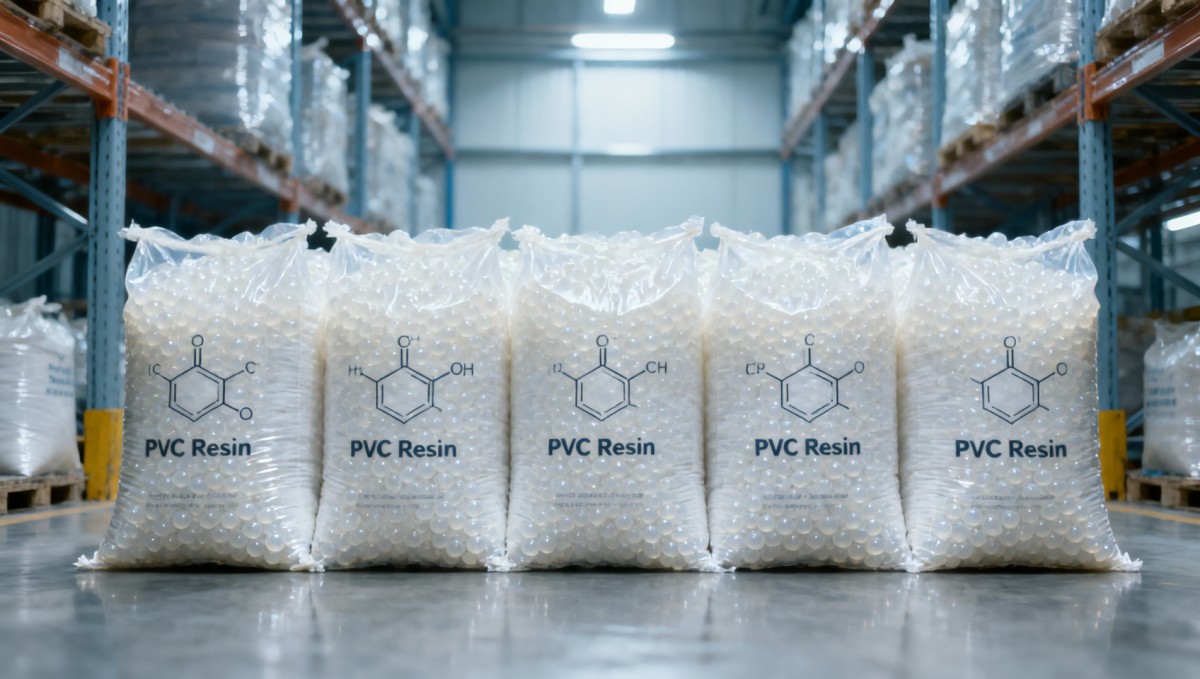
Japanese specialty chemical manufacturer Shin-Etsu Chemical Co., Ltd. announced a price increase of over JPY 30 per kilogram for its polyvinyl chloride (PVC) resin, effective May 11, 2026. The move directly affects export-oriented sectors including construction materials, packaging, medical devices, and home goods — particularly those relying on PVC as a core substrate in overseas supply chains.
Event Overview
Shin-Etsu Chemical confirmed it will raise the ex-factory price of PVC resin by more than JPY 30/kg, effective May 11, 2026. PVC resin is used across building products (e.g., pipes, profiles), flexible and rigid packaging, medical tubing and components, and consumer durables. The adjustment applies to shipments from Japan and is expected to influence downstream pricing and lead times for international buyers, especially those sourcing through Chinese compounding plants and OEM manufacturers.
Impact on Specific Industry Segments
Direct trading enterprises: Importers and distributors handling PVC-based finished goods or semi-finished materials (e.g., PVC films, sheets, extruded profiles) will face immediate pressure on landed cost calculations and quotation validity windows. Margins may narrow if pricing agreements with end customers are fixed-term and non-adjustable.
Raw material procurement teams: Buyers sourcing PVC resin or compound-grade feedstock from Japanese suppliers — or via China-based tolling partners — will encounter revised cost benchmarks. This affects budget reconciliation, purchase order terms, and inventory holding decisions, especially where safety stock is maintained against supply volatility.
Processing and manufacturing firms: Chinese and Southeast Asian PVC compounders, extruders, and injection molders supplying architectural cladding, food-grade packaging, or disposable medical devices will absorb part of the increase or renegotiate with clients. Lead time extensions may occur if raw material availability tightens amid buyer front-loading ahead of the price change.
Supply chain and logistics service providers: Freight forwarders and customs brokers supporting PVC-related imports into key markets (e.g., ASEAN, Middle East, North America) may see shifts in shipment timing and documentation volume. Increased scrutiny of origin declarations and tariff classification (e.g., HS code 3904.10) could arise where pricing adjustments trigger transfer pricing reviews.
Key Points for Enterprises and Practitioners to Monitor and Act On
Track official communications from Shin-Etsu and affiliated sales channels
Confirm whether the JPY 30+/kg increase applies uniformly across all PVC grades (e.g., suspension, emulsion, microsuspension), viscosities (K-value), and packaging formats. Monitor for supplementary notices regarding contract renewals, minimum order quantities, or allocation policies post-May 11.
Assess exposure by product line and destination market
Identify which exported items rely on PVC resin sourced directly or indirectly from Shin-Etsu — especially construction profiles bound for infrastructure projects, retort pouch laminates for food export, or Class I/II medical tubing. Prioritize review for markets where import duties or regulatory conformity assessments (e.g., FDA 21 CFR, EU REACH) limit substitution flexibility.
Distinguish between pricing signals and operational impact
Note that the announcement reflects an ex-factory adjustment — not yet a realized cost shift at the FOB or CIF level. Actual pass-through timing depends on existing purchase agreements, incoterms, and inventory turnover cycles. Avoid treating the May 11 date as a universal reset point for all downstream quotations.
Prepare procurement and communication contingencies now
Review open purchase orders scheduled for delivery in late April–early May; consider expediting select shipments if feasible under current terms. Initiate early dialogue with key customers on potential cost-sharing mechanisms or revised delivery schedules — particularly for long-lead architectural or medical contracts signed before Q2 2026.
Editorial Perspective / Industry Observation
Observably, this price action is less a standalone event and more a signal of sustained upstream cost pressure in the global PVC value chain — driven by energy input costs, chlorine balance management, and regional supply discipline. Analysis shows Shin-Etsu’s move aligns with recent pricing trends among other Japanese and Korean producers, suggesting coordinated recalibration rather than isolated margin recovery. From an industry perspective, the May 11 implementation date marks the start of a 6–8 week window during which downstream players must validate actual cost impact, assess formulation alternatives, and adjust commercial terms — making it a near-term inflection point, not a completed transition.
It is appropriate to understand this development as an early-stage cost transmission event — one that tests pricing resilience in PVC-dependent export categories but does not yet indicate structural supply shortage or irreversible input inflation. Its significance lies in timing and transparency: as a clearly dated, supplier-announced adjustment, it provides a defined reference point for contract renegotiation, cost modeling, and supply chain stress testing.
Information Sources: Official announcement by Shin-Etsu Chemical Co., Ltd. (dated April 2026, publicly disclosed via corporate news channel). Note: Ongoing monitoring is advised for follow-up statements on grade-specific adjustments, regional applicability, and potential responses from competing suppliers (e.g., Denka, LG Chem, Formosa Plastics).
Recommended News
 MWR Releases Water Rights Trading Data StandardWater Rights Trading Data Standard SL/T867—2026 launched by China’s MWR—enables seamless interoperability with EU WISDOM & Singapore Smart Water for exporters.
 2026 Shanghai International Drone Expo Opens, Accelerating Export Certification & Airworthiness Collaboration for Low-Altitude Economy2026 Shanghai Drone Expo accelerates export certification & airworthiness collaboration for low-altitude economy — key for drone subsystems, automotive electronics & lithium battery exporters.
 Pig Industry Forum Held on May 11, 2026: Cost Leadership and Export Opportunities for Feed & Environmental EquipmentPig industry forum highlights cost leadership & export opportunities for feed & environmental equipment—key insights for global agri-tech suppliers.
 Invesco Nasdaq Tech ETF Suspended, Resumes Trading at 10:30 AM on May 11, 2026Invesco Nasdaq Tech ETF suspended & resumed May 11, 2026—spotlight on surging AI hardware exports: servers, optical modules, liquid cooling, GPUs.
 Tencent Cloud Raises List Prices by 5% Starting May 9, 2026Tencent Cloud raises list prices by 5% starting May 9, 2026—impacting CDN, AI inference APIs, IoT & object storage. Assess cost exposure now.
 US April CPI Rises 3.4% YoY, Inflation Stickiness Pressures ExportersUS April CPI rises 3.4% YoY — inflation stickiness pressures Chinese exporters in fasteners, packaging & stationery. Act now on FX risk & logistics costs.
 2nd Air-Space IT Conference Opens, Accelerating北斗+Low-Altitude Economy Export CertificationBoost北斗+low-altitude economy exports: 2nd Air-Space IT Conference advances BeiDou-3, UAM certification & CNS standards for drones, eVTOL, GNSS, and composites.
 SMIC Merger Review Set for May 11, 2026SMIC Merger Review on May 11, 2026: Key signal for semiconductor equipment & materials suppliers—track impact on orders, qualifications, and supply chain strategy.
 MWR Enacts 8 New Water Standards on May 11, 2026MWR Enacts 8 New Water Standards on May 11, 2026 — Key for smart water meters, flow sensors & irrigation controllers exporting to Middle East, Africa, SEA.
 Shin-Etsu Chemical Raises PVC Resin Prices Effective May 11, 2026Shin-Etsu Chemical PVC resin price hike: +¥30/kg effective May 11, 2026. Impacts construction, medical, packaging & supply chains globally — act now.
 Industrial Chemical Analysis for Faster QC DecisionsIndustrial chemical analysis helps QC and safety teams speed release decisions, reduce risk, and improve compliance. Learn how faster testing drives more reliable chemical quality control.
 Chemical Industry Reports: 2026 Cost and Demand SignalsChemical industry reports for 2026 uncover key cost and demand signals shaping sourcing, pricing, and exports. See what matters most and act with sharper market confidence.
 How to Verify Chemical Trade Leads Before You QuoteChemical trade leads should be verified before you quote. Learn how to screen specs, intent, compliance, and buying authority to reduce risk and win better chemical deals.
 8 EV Makers Jointly Deny 'Battery Locking' Investigation Rumors8 EV makers jointly deny 'battery locking' rumors—clarifying no regulatory summons over OTA capacity limits or UL/UN38.3 compliance. Critical for exporters & supply chain partners.
 Shin-Etsu Chemical Raises PVC Resin Prices Effective May 11, 2026Shin-Etsu Chemical PVC resin price hike: +¥30/kg effective May 11, 2026. Impacts Chinese exporters of pipes, films, synthetic leather & furniture — act now to assess exposure and adjust procurement.
 China's April Export of Electromechanical Products Up 23.6%China's April electromechanical exports surged 23.6% YoY—driven by industrial robots, laser cutters, smart meters & PV inverters. Key insights for exporters, CNC firms & supply chain players.
 2026 Guangzhou Flooring Expo Concludes: Eco-Friendly Flooring Materials Draw Overseas Buyer FocusEco-friendly flooring materials—water-based PU, solvent-free epoxy & recycled-aggregate systems—dominated 2026 Guangzhou Flooring Expo, drawing strong EU/US/Middle East buyer interest.
 US May Restart 'Freedom Operation' in Strait of HormuzUS may restart 'Freedom Operation' in Strait of Hormuz—impacting marine insurance, freight routing & Middle East supply chains. Key insights for logistics leaders.
 April Soybean Imports Surge 40% to 8.48M TonsApril soybean imports surge 40% to 8.48M tons—key insight for plant-based protein, pet food, aquafeed & organic fertilizer exporters targeting NA, EU, Japan & beyond.
 Iran Plans to Regulate Subsea Cables in Strait of HormuzIran's subsea cable regulation in Strait of Hormuz impacts global data routes—discover key risks, affected industries & resilience strategies now.
 2nd Aerospace Information Tech Conference Opens北斗+Low-Altitude Economy Export Certification Pathway北斗+Low-Altitude Economy Export Certification Pathway: Discover how BeiDou modules, UAS systems & drone payloads align with FAA, EU & ASEAN regulations for faster global market access.
















Global Trade Insights & Industry
Our mission is to empower global exporters and importers with data-driven insights that foster strategic growth.
Search News
Popular Tags
Industry Overview
The global commercial kitchen equipment market is projected to reach $112 billion by 2027. Driven by urbanization, the rise of e-commerce food delivery, and strict hygiene regulations.