

How accurate are autonomous driving sensors in bad weather?
Autonomous driving sensors are critical to vehicle safety, but their accuracy can drop sharply in rain, snow, fog, and low-visibility conditions. For technical evaluators, understanding how lidar, radar, cameras, and ultrasonic systems perform under weather stress is essential for assessing real-world reliability. This article examines the limits, trade-offs, and testing factors that determine sensor performance in adverse environments.
For B2B buyers, system integrators, vehicle platform teams, and validation specialists, the issue is not whether a sensor works in a lab, but how reliably it performs across 4 seasons, multiple road classes, and mixed traffic conditions. In practical procurement and technical assessment, weather resilience often becomes a gate criterion because a perception stack that performs well at 100 m in clear weather may degrade to 30–60 m in heavy rain or dense fog.
That gap matters across the wider trade and industrial ecosystem. Logistics fleets, autonomous shuttles, mining vehicles, port equipment, and delivery robots all depend on dependable sensing. For technical evaluators, the most useful approach is to compare sensor modalities, quantify likely degradation ranges, review test methods, and identify mitigation strategies before committing to sourcing, deployment, or long-cycle validation.
Why weather accuracy is a decisive evaluation factor
Bad weather affects perception in at least 3 ways: it attenuates signals, adds false returns or visual noise, and changes the environment itself. Rain creates reflective streaks and spray, snow can cover markings and sensor windows, and fog reduces contrast while scattering emitted light. The result is not a simple on/off failure but a gradual reduction in detection confidence, classification quality, and tracking stability.
In many technical review programs, evaluators track 5 core metrics: detection range, angular resolution, false positive rate, latency, and object classification confidence. A sensor that remains functional but loses 20%–40% of its effective range may still pass a component test, yet fail a vehicle-level safety scenario when stopping distance, localization drift, and planning margins are considered together.
The operational cost of inaccurate sensing
Accuracy loss in adverse conditions does not only increase safety risk. It also raises fleet operating costs through more disengagements, lower route availability, higher maintenance frequency, and extra validation cycles. In commercial deployments, even a 5%–10% drop in route uptime can affect total cost of ownership, driver backup requirements, and service-level agreements.
What technical evaluators usually need to verify
- Performance at different precipitation levels, such as light rain versus heavy rain
- Range reduction at visibility bands below 200 m, 100 m, and 50 m
- Sensor contamination tolerance from mud, salt, ice, and spray
- Detection of low-reflectivity objects, pedestrians, and road edges
- Recovery time after obstruction, glare, or rapid environmental change
These checks help translate laboratory claims into realistic procurement criteria. A technically strong proposal should describe not only nominal performance but also environmental thresholds, cleaning strategy, heating capability, and fallback behavior when confidence drops below predefined levels.
How each sensor type performs in rain, snow, fog, and low visibility
No single modality delivers stable peak performance in every weather condition. Autonomous driving sensors are typically combined because each one fails differently. Lidar provides strong 3D geometry, radar penetrates weather better than optical systems, cameras support classification and lane understanding, and ultrasonic units help at short range. The challenge is evaluating the failure envelope of each system, not just its strengths.
Lidar: strong geometry, weaker in dense atmospheric interference
Lidar can deliver high-resolution point clouds and precise distance measurement, often supporting object detection at 100–250 m depending on target reflectivity and system design. However, rain droplets, snowflakes, and fog particles scatter emitted light. In moderate to heavy weather, this can shorten usable range, increase noise points, and reduce confidence in object boundaries.
In fog, lidar performance can be especially sensitive to particle density. The issue is not only absolute range loss but the instability of returns over time. For evaluators, temporal consistency across 10–30 second windows can be as important as peak range because planning systems depend on stable tracking rather than occasional strong detections.
Radar: robust in weather, but limited in detail
Radar is generally the most weather-resilient of the main autonomous driving sensors. It maintains useful performance in rain, fog, and darkness, and long-range automotive radar can support detection beyond 150 m in many scenarios. Its weakness is lower spatial resolution compared with lidar and cameras, which can make precise object shape recognition, lane-edge interpretation, and close-proximity classification more difficult.
For technical evaluation, radar should not be treated as a full substitute for optical sensing. It is best viewed as a continuity layer that preserves awareness when visibility drops. In a safety architecture, radar often becomes the anchor modality for maintaining speed control and obstacle tracking under low-contrast or night conditions.
Cameras: rich semantic information, highest sensitivity to visibility loss
Cameras are essential for traffic light state, lane markings, signage, and visual classification. Yet they are highly vulnerable to rain streaks, snow cover, glare, low sun, headlight bloom, and fog-induced contrast loss. Even when an image remains visible to a human reviewer, machine vision confidence can drop sharply if edge detail and color contrast fall below model thresholds.
In real programs, evaluators should separate image quality from algorithm robustness. A camera may provide acceptable raw visibility, while the perception model still underperforms because training data does not sufficiently cover wet roads, splash contamination, or nighttime snow scenes. This is why dataset diversity across 6–12 weather categories matters alongside hardware quality.
Ultrasonic sensors: useful nearby, limited for all-weather perception
Ultrasonic sensing is mainly used for close-range parking and low-speed obstacle detection, typically within 0.2–5 m. It is less central for high-speed autonomy, but still relevant in commercial vehicles, yard automation, and robotic platforms. Water films, ice, and irregular surfaces can affect echo quality, and the short range limits strategic perception value in bad weather.
The table below summarizes common performance patterns technical evaluators should expect when reviewing autonomous driving sensors under weather stress.
The key conclusion is straightforward: weather-robust autonomy relies on sensor fusion, not on a single best sensor. Technical teams should score each modality by failure mode and compensation value. A camera may be weak in fog but still indispensable for traffic semantics, while radar may remain stable in rain but require fusion support for fine localization and classification.
What accuracy really means in field testing
Accuracy is often oversimplified as a percentage, but field assessment is multidimensional. A system can detect an object yet misclassify it, identify a lane boundary late, or produce unstable tracks under spray and glare. Technical evaluators should define acceptance criteria across at least 4 layers: sensing, perception, tracking, and decision support.
Core performance metrics to request from suppliers
- Effective detection range in clear, rain, fog, and snow conditions
- False positive and false negative rates by object category
- Latency under nominal load and degraded visibility scenarios
- Sensor recovery time after temporary blockage or splash events
- Operational temperature band, often from -20°C to 50°C or broader
- Ingress protection and contamination management strategy
These metrics should be tied to defined scenarios, not only headline numbers. For example, a 120 m detection claim has limited value unless the supplier specifies target type, reflectivity, speed, precipitation level, and whether the result reflects 50th percentile or worst-case conditions.
Scenario granularity matters
A strong test plan separates urban, highway, industrial yard, and mixed logistics routes. It also distinguishes daytime from nighttime and dry road from reflective wet road. In many projects, the same autonomous driving sensors can show materially different outcomes across 8–12 scenario groups, even before extreme weather is introduced.
How to evaluate autonomous driving sensors for procurement and deployment
Technical procurement should balance component specifications with system-level evidence. A lower-cost sensor may appear attractive during sourcing, but weather-related performance gaps can create expensive integration work, route restrictions, or delayed certification milestones. For this reason, many B2B buyers use a weighted scorecard covering hardware, software, validation evidence, and serviceability.
A practical 6-point sourcing framework
- Check nominal and degraded-environment performance separately
- Review sensor fusion architecture and fallback logic
- Verify cleaning, heating, and anti-fogging mechanisms
- Assess test dataset breadth across regions and seasons
- Confirm integration support, calibration process, and update cycle
- Evaluate maintenance interval, spare strategy, and field diagnostics
In supply-chain terms, serviceability can be as important as raw performance. If a sensor requires recalibration every 2–4 weeks in harsh environments or has long replacement lead times, the operational burden can offset any initial acquisition savings.
The following table provides a practical checklist for comparing autonomous driving sensors and related supplier capabilities in adverse-weather programs.
A disciplined comparison process helps buyers move beyond vendor marketing language. The strongest proposals usually include environmental limits, validation method, maintenance assumptions, and software support model in one package. That level of detail is especially important when autonomous systems will operate across regions with different humidity, snowfall, temperature, and road contamination patterns.
Common misconceptions that distort technical evaluation
One common mistake is assuming that a high-spec sensor automatically ensures high bad-weather accuracy. In reality, sensor placement, enclosure design, cleaning mechanisms, fusion algorithms, and training data can change real-world results as much as the sensor hardware itself. A strong sensor installed in a contamination-prone position may underperform a modest sensor with better protection and integration.
Misconception 1: one modality can replace the rest
Some teams look for a single “best” answer among autonomous driving sensors. That approach rarely holds up in field deployment. Weather creates asymmetric failures, so resilience comes from complementary sensing and confidence-aware fusion. The right question is not which sensor wins, but which combination keeps the system functional across the broadest operating design domain.
Misconception 2: clear-weather test data is enough
A supplier may show excellent results in dry daylight conditions, but those results do not predict performance during night rain, slush spray, or fog at 80 km/h. Adverse-weather validation should cover repeated runs, not isolated demonstrations. Many evaluators require multiple sessions over several weeks to observe consistency, contamination effects, and software adaptation behavior.
Misconception 3: hardware alone determines reliability
Software increasingly defines bad-weather performance. Perception models, confidence thresholds, temporal filtering, radar-lidar-camera fusion, and fail-operational logic all shape the final outcome. This means procurement should include software lifecycle questions, update policy, and validation support rather than focusing only on sensor datasheets.
Recommendations for technical evaluators and B2B decision-makers
For organizations sourcing autonomous platforms, the most reliable path is to create a weather-specific evaluation matrix before vendor comparison begins. Define 4–6 mission-critical scenarios, assign measurable thresholds for detection and availability, and require side-by-side evidence. That structure reduces ambiguity and shortens the gap between technical review and commercial decision-making.
Minimum review package to request
- Scenario-based performance documentation for rain, snow, fog, and night driving
- Sensor cleaning, heating, and obstruction handling description
- Fusion architecture overview with degraded-mode behavior
- Validation plan covering at least 3 environment classes
- Maintenance and recalibration expectations over a 12-month operating cycle
These materials support better technical screening and stronger supplier discussions. They also help importers, integrators, and fleet operators compare solutions on practical readiness rather than headline claims. In global trade and industrial deployment, that level of rigor is what reduces project risk and improves long-term asset performance.
Autonomous driving sensors can perform with high reliability, but only when evaluated as part of a complete system that includes fusion logic, environmental protection, and field validation. Rain, snow, fog, glare, and contamination do not affect every modality equally, so the most dependable decision framework is one that measures degradation patterns, serviceability, and fallback behavior in concrete operating scenarios.
For technical evaluators, procurement teams, and industrial buyers seeking better clarity on sensor selection, validation methods, or broader autonomous mobility intelligence, now is the right time to review requirements in detail. Contact us to discuss your evaluation priorities, obtain a tailored content partnership, or explore more industry solutions through TradeVantage and GTIIN.
Recommended News
 PBOC Gold Reserves Reach $341.05B in April 2026 Amid RMB StrengthPBOC gold reserves hit $341.05B in April 2026 amid RMB strength — critical FX insights for exporters, traders & procurement teams managing RMB-denominated trade.
 Zhengzhou EV Power Module Export Certification Window OpensZhengzhou EV power module export certification is live—AEC-Q100, UL 62368-1 & IEC 61851-23 compliant OBC/DC-DC modules now ready for EU, Korea & Thailand markets.
 China's Medical Imaging Equipment Market Hits ¥75B; Domestic DR/Ultrasound Expand in Africa & LatAmChina's medical imaging equipment market hits ¥75B; DR & portable ultrasound exports surge in Africa and LatAm with CE/FDA/WHO PQ certifications.
 New Unisoc Summit Launches 'AGI for Industry' StrategyAGI for Industry: New Unisoc’s IEC 61131-3–certified AI chip solution replaces x86 PLCs—boosting smart factory adoption in emerging markets. Discover impact & action steps.
 NIO Power's Labor Day Charging Report: 1M Swaps, Zero Major FailuresNIO Power's Labor Day report: 1M+ battery swaps, zero major failures — proof of standardized EV battery reliability for global infrastructure players.
 Shenzhen Robot Industry Output Exceeds $24B; Export Lead Time Cut to 6 WeeksShenzhen robot industry output tops $24B; export lead time slashed to 6 weeks for ISO/UL/CE-compliant collaborative robots—key insight for global automation buyers.
 Wuwen Xinqiong Raises Over RMB 700M: Accelerating AI Agent Infrastructure for Cross-Border BOM Coordination and Multilingual QCWuwen Xinqiong raises RMB 700M+ to accelerate AI agent infrastructure for cross-border BOM coordination and multilingual QC—boosting compliance, audit readiness & supply chain agility.
 DeepSeek V4 Integrated into Lingzhu AI Creative PlatformDeepSeek V4 is now live on Lingzhu AI Creative Platform—boosting demand analysis 3x & enabling multilingual BOM parsing (12 languages) and cross-cultural visual generation for global packaging, gifting & decor.
 China’s New IoT Action Plan Mandates Security & Interop for NB-IoT/RedCap ModulesChina’s new IoT Action Plan mandates NB-IoT & RedCap module security and interoperability—key for EU/US/ASEAN exports. Act now to ensure compliance.
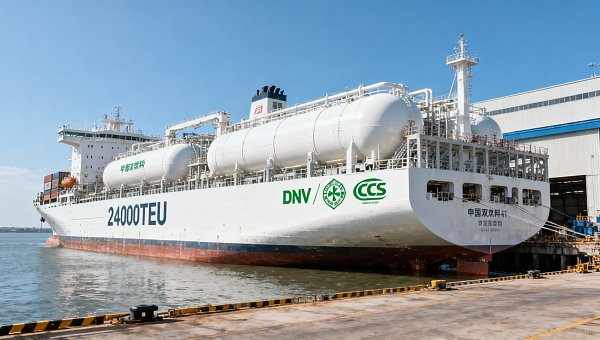
 World's First 24,000-TEU Methanol Dual-Fuel Container Ship CompletedWorld's first 24,000-TEU methanol dual-fuel container ship completed in China—certified for IMO Tier III, FuelEU & EPA Tier 4. Act now on green fleet compliance.
 Export Import Intelligence for Comparing Apparel Supplier RegionsExport import intelligence helps apparel teams compare supplier regions by trade flow, compliance, lead time, and cost to source smarter and reduce risk.
 What Industrial Market Reports Can Reveal About Apparel Demand ShiftsIndustrial market reports reveal apparel demand shifts, sourcing risks, and regional buying trends—helping brands act faster, reduce uncertainty, and uncover profitable growth opportunities.
 AI Robotics in Quality Control: Where It Actually HelpsAI robotics improves quality control where consistency, traceability, and safety matter most. Learn its best factory use cases, limits, and how to judge real ROI.
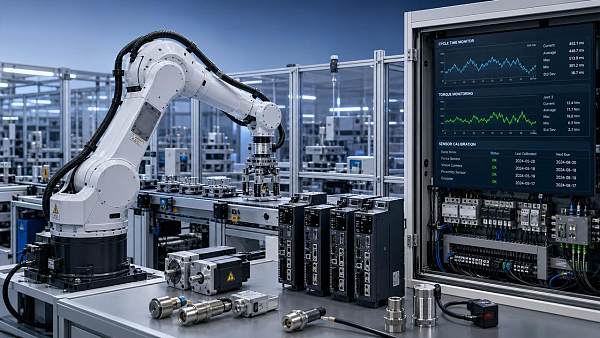
 Robotics News: The Upgrade Signals Maintenance Teams Should TrackRobotics news for maintenance teams: learn which upgrade signals—cycle time drift, torque spikes, sensor issues, software alerts, and parts risk—can cut downtime and improve robot reliability.
 Robotic Trends That Are Changing Factory Planning in 2026Robotic trends are reshaping factory planning in 2026. Explore how AI, modular cells, AMRs, and software-defined automation help manufacturers build smarter, scalable, future-ready operations.
 AI Robotics in Quality Control: Where It Actually HelpsAI robotics improves quality control where consistency, traceability, and safety matter most. Learn its best factory use cases, limits, and how to judge real ROI.
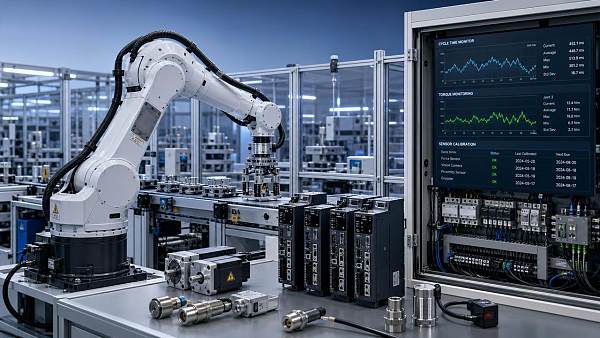
 Robotics News: The Upgrade Signals Maintenance Teams Should TrackRobotics news for maintenance teams: learn which upgrade signals—cycle time drift, torque spikes, sensor issues, software alerts, and parts risk—can cut downtime and improve robot reliability.
 Commercial Insights on Robotics: What Shapes Purchase DecisionsCommercial insights for industrial robotics buyers: compare total cost, supplier reliability, and integration readiness to make smarter purchase decisions and improve ROI.
 Wuwen Xinqiong Raises $100M+ for AI Agent Infrastructure in ManufacturingWuwen Xinqiong raises $100M+ for AI agent infrastructure in manufacturing — enabling multilingual BOM coordination, automated quality inspection, and cross-border supply chain agility. Discover the impact.
 Q1 Regional Export Growth: Shaanxi, Hainan, Chongqing LeadQ1 Regional Export Growth: Shaanxi, Hainan, Chongqing lead with +73.7%, +38.5%, +34.3% — key for OEMs, procurement & logistics teams optimizing RCEP-compliant sourcing.
 EV Charging Infrastructure Hits 21.48M Units; IEC 62196-3:2026 Ed.3 Certification Window OpensEV charging infrastructure hits 21.48M units; IEC 62196-3:2026 Ed.3 certification window is open—act now to meet Q3 2026 compliance deadlines for North America, ANZ & South Korea.










Global Trade Insights & Industry
Our mission is to empower global exporters and importers with data-driven insights that foster strategic growth.
Search News
Popular Tags
Industry Overview
The global commercial kitchen equipment market is projected to reach $112 billion by 2027. Driven by urbanization, the rise of e-commerce food delivery, and strict hygiene regulations.