

EU Tariffs on Chinese Steel Rise to 50%
On May 21, 2026, the EU began imposing tariffs of up to 50% on imported steel products from China, extending from core categories such as hot-rolled coil, stainless steel plate, and structural steel sections into downstream manufacturing links including construction steel, hardware tools, agricultural machinery parts, EV battery trays, metal piping, and metal frames for smart furniture. For exporters, manufacturers, import-facing sales teams, and supply chain operators, this is not only a cost issue but also a compliance signal, especially as companies are being urged to recheck CE/UKCA certification status and the accuracy of origin declarations.
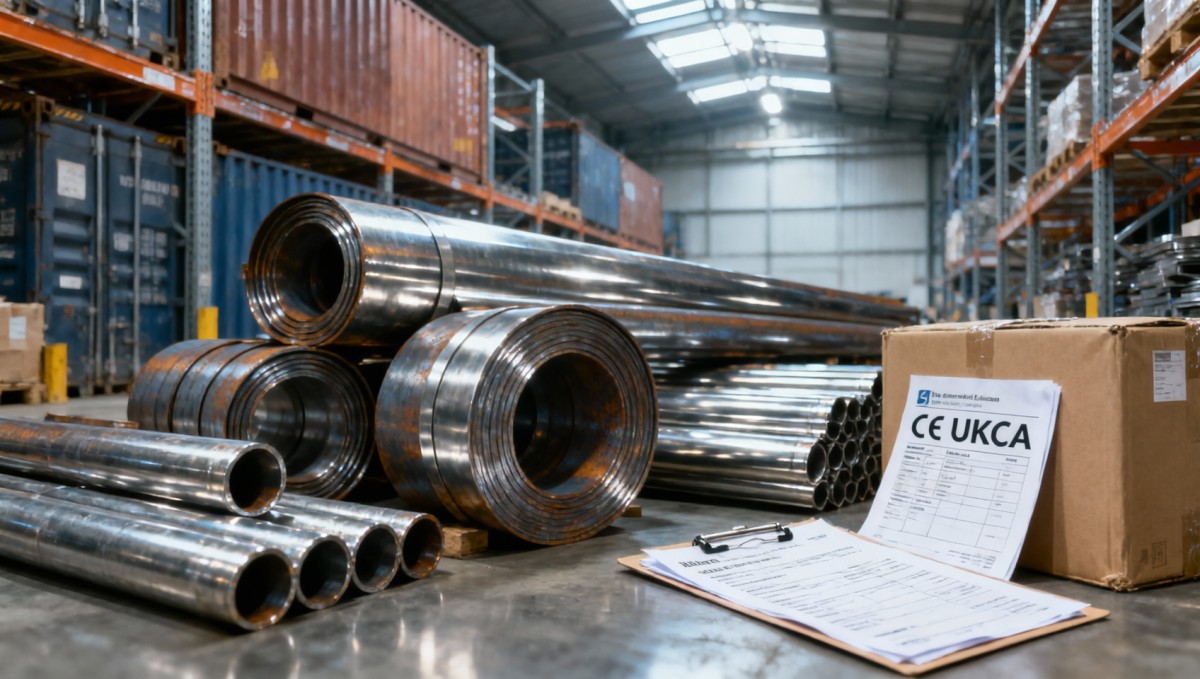
What the Measure Covers as Confirmed
The confirmed information indicates that, effective May 21, 2026, the EU added tariffs of up to 50% on imported steel products. The named product scope includes hot-rolled coil, stainless steel plate, and structural steel sections. The impact described in the source information also reaches downstream manufacturing segments tied to construction steel, hardware tools, agricultural machinery components, EV battery trays, metal pipelines, and smart furniture metal frames.
The same source information states that WTO experts characterized the measure as a typical form of trade protectionism. It also explicitly notes that Chinese exporters need to immediately review the status of their CE/UKCA certifications and verify the accuracy of origin declarations.
Where the Pressure May Appear First
Exporters dealing in basic steel and semi-finished products
From an industry perspective, this group is likely to face the most immediate pressure because the tariff action directly names core steel categories. The main impact may appear in quotation validity, landed-cost calculations, contract execution, and customer communication around delivery and documentation. What deserves closer attention is whether product classification, origin records, and market-entry documentation remain fully aligned.
Manufacturers using steel in downstream assemblies
Analysis shows that producers of hardware tools, agricultural machinery parts, EV battery trays, metal piping, and smart furniture frames may be affected even when steel is only one part of the finished product. The likely pressure points are export pricing, margin management, document consistency, and discussions with buyers over compliance responsibility. Companies in this position need to pay attention to how tariff exposure interacts with certification and origin statements in actual shipments.
Supply chain and delivery coordinators
Observably, supply chain service providers and trade operations teams may not be the direct subject of the tariff, but they are exposed through execution risk. The business impact may emerge in customs paperwork review, shipment scheduling, supporting document checks, and coordination between suppliers, exporters, and overseas customers. The immediate concern is whether every step in the delivery chain can support the declared origin and required conformity status.
Buyers and channel-side partners in the EU market
From an industry perspective, importers, distributors, and project-side buyers in Europe may also tighten scrutiny on product eligibility and documentation. The likely effect is not limited to purchase cost; it may also affect supplier screening, order confirmation, and document review before goods move. What deserves closer attention is whether customers begin asking for clearer proof on certification validity and origin-related statements before placing or renewing orders.
What Companies Need to Recheck Now
Certification status should be reviewed shipment by shipment
Based on the confirmed information, CE/UKCA status is an immediate checkpoint. In practice, companies should distinguish between having a certificate on file and having documentation that matches the specific product, shipment, and market access requirement involved in current business.
Origin declarations need closer document control
Analysis shows that origin declarations are now a higher-risk point in transaction execution. The key issue is not only whether an origin statement exists, but whether it is accurate, internally consistent, and supported across trade documents used in customs clearance and customer submission.
Product scope and downstream exposure should be mapped clearly
What deserves closer attention is that the confirmed impact extends beyond basic steel into multiple metal-product applications. Companies should therefore review whether their exposure sits in direct steel export, steel-intensive components, or finished goods containing affected material categories, because the operational response may differ across those scenarios.
Policy language and business execution should not be treated as the same thing
Observably, the policy signal and the practical handling of orders are related but not identical. Companies need to watch for how customers, customs-facing teams, and internal compliance staff interpret the measure in live transactions, especially where certificates, declarations, and product descriptions must align without ambiguity.
Why This Looks Like More Than a Short-Term Pricing Issue
Analysis shows that this development is more meaningful than a simple tariff adjustment on raw steel categories. The confirmed information links the measure to a wider set of metal-based downstream goods and pairs the tariff action with a clear compliance warning on CE/UKCA and origin declarations. That combination suggests the immediate issue is both commercial and procedural.
It is more appropriate to understand this as a policy signal with direct short-term consequences and possible broader implications that still require observation. The tariffs are already a confirmed fact, but the full operational effect across different product types, customer relationships, and shipment models should still be monitored carefully rather than assumed in advance.
How the Industry May Need to Read This Moment
At this stage, the most neutral reading is that the EU move creates immediate execution pressure for China-linked steel and metal-product exports while also raising the threshold for document accuracy and conformity readiness. The confirmed facts support attention from exporters, manufacturers, supply chain teams, and buyers, especially where steel is embedded in finished or semi-finished goods.
Current conditions make this better understood as both an active short-term change and a longer-term warning signal. It is not yet a basis for broad conclusions beyond the information provided, but it is clearly a development that affected businesses should continue to track closely.
Basis of This Article and What Still Needs Verification
This article is based on the user-provided news title, event date, and event summary. The summary confirms the tariff increase, the product categories named, the downstream sectors mentioned, the characterization by WTO experts, and the recommendation that Chinese exporters review CE/UKCA certification status and origin declaration accuracy.
Specific official source links were not provided in the input, so further verification is still needed against materials such as official announcements, company notices, industry association updates, authoritative media coverage, and relevant standard or compliance documents. Areas that warrant continued monitoring include any later clarification of scope, document requirements, and implementation language affecting affected metal-product exports.
 When an export market analysis platform can validate demand in a new marketExport market analysis platform insights help validate new-market demand through buyer fit, regulations, logistics, competition, and profitable entry conditions.
 What is driving the beauty and personal care market in the USA?Beauty and personal care in USA is driven by targeted solutions, selective premiumization, digital discovery, clean-label trust, diverse needs, and compliance. Explore key growth opportunities.
 How trade flow monitoring reports reveal changing regional demandTrade flow monitoring reports reveal changing regional demand through import volumes, sourcing shifts, product mix, logistics signals, and regulatory trends. Explore actionable market insights.
 How international market intelligence for investors reduces market-entry riskInternational market intelligence for investors reduces market-entry risk by validating demand, regulations, logistics, and competition before capital is committed.
 How international sourcing intelligence helps identify supplier risk earlyInternational sourcing intelligence helps businesses spot supplier risks early, protect supply continuity, and make smarter global procurement decisions.
 How trade data aggregation analytics reveals emerging supplier marketsTrade data aggregation analytics reveals emerging supplier markets through export trends, input flows, logistics, and regulatory signals. Discover smarter sourcing insights.
 What industrial cluster monitoring in Vietnam reveals about site riskIndustrial cluster monitoring Vietnam reveals hidden site risks across labor, utilities, logistics, compliance, and supplier dependencies. Make smarter sourcing and expansion decisions.
 Food Technology Trends Reshaping Shelf Life, Safety, and Product InnovationFood technology is reshaping shelf life, safety, and innovation. Discover the trends helping food businesses cut risk, improve compliance, and unlock stronger global market growth.
 How electronics manufacturing services are changing with low-volume demandElectronics manufacturing services are evolving fast with low-volume demand. Learn how agile EMS partners improve flexibility, compliance, sourcing resilience, and speed to market.
 How Can Buyers Reduce Procurement Risks for Electronic Components?How to reduce procurement risks for electronic components: learn how buyers assess traceability, lead times, compliance, and supplier types to avoid costly sourcing mistakes.
 What Sourcing Intelligence India Reveals About Supplier Risk and Cost ShiftsSourcing intelligence India reveals hidden supplier risk, compliance gaps, logistics pressure, and real cost shifts—helping buyers compare vendors smarter and source with more confidence.
 Fashion Trends 2026: Which Materials, Colors, and Silhouettes Are Gaining Ground?Fashion trends 2026 spotlight tactile fabrics, mineral colors, and controlled volume. Explore the materials, shades, and silhouettes shaping smarter, more wearable style.
 Smart Device Market Outlook: Key Growth Drivers, Segments, and Business OpportunitiesSmart device market trends are shifting toward system value, industrial demand, and resilient supply chains. Explore key growth drivers, high-potential segments, and business opportunities.
 How Global Trade Intelligence Services Help B2B Firms Evaluate Markets and SuppliersGlobal trade intelligence services help B2B firms compare suppliers, assess market potential, and uncover compliance, logistics, and pricing risks before costly decisions are made.
 Manufacturing Sector Updates for Investors: What Signals Matter Most in 2025?Manufacturing sector updates for investors in 2025: track orders, margins, supply chains, regulation, and exports to spot resilient manufacturers and smarter investment signals.
 How Energy Market Intelligence Helps Businesses Track Price Risks and Demand ShiftsEnergy market intelligence helps businesses spot price risks, demand shifts, and supply pressure early—improving procurement, resilience, and faster strategic decisions.
 Precision Hardware Tools Market: Key Demand Drivers, Segments, and Growth OutlookPrecision hardware tools market trends are reshaping sourcing, compliance, and automation. Explore key demand drivers, segment shifts, regional supply patterns, and growth opportunities.
 How to Use Customs Import Data to Find Buyers, Track Competitors, and Spot Demand?Customs import data helps you find real buyers, track competitors, and spot demand shifts early. Learn practical ways to turn trade records into smarter global business decisions.
 Manufacturing Cost Analysis: 8 Cost Drivers That Change Your Unit PriceManufacturing cost analysis explained through 8 key cost drivers that impact unit price, supplier stability, and margins—learn how to compare quotes smarter and reduce sourcing risk.
 Industrial Market Realities: What Buyers Should Check Before Comparing Supplier QuotesIndustrial market realities shape every supplier quote beyond unit price. Learn what to check on compliance, lead times, logistics, and hidden cost risks before comparing offers.
 Beverage Production Line Planning: Key Equipment, Capacity, and Hygiene RequirementsBeverage production line planning made practical: discover key equipment, real capacity sizing, and hygiene requirements to improve efficiency, safety, and long-term plant performance.




















Global Trade Insights & Industry
Our mission is to empower global exporters and importers with data-driven insights that foster strategic growth.
Search News
Popular Tags
Industry Overview
The global commercial kitchen equipment market is projected to reach $112 billion by 2027. Driven by urbanization, the rise of e-commerce food delivery, and strict hygiene regulations.