

How Do 3D Printing Manufacturers Support Custom Tooling and Fixture Production in Smart Factories?
As smart factories accelerate digital transformation, 3D printing manufacturer capabilities are becoming pivotal in custom tooling and fixture production—enabling rapid prototyping, on-demand spare parts, and agile production line adaptations. This article explores how leading 3D printing manufacturers integrate AI-driven design, industrial-grade materials, and IoT-connected workflows to support precision, scalability, and compliance across global smart manufacturing ecosystems. Whether you're a project manager optimizing line uptime, a procurement specialist evaluating vendor readiness, or a decision-maker assessing ROI on additive manufacturing adoption, discover actionable insights backed by TradeVantage’s cross-regional industry intelligence.
How Do 3D Printing Manufacturers Enable Agile Tooling in Smart Factories?
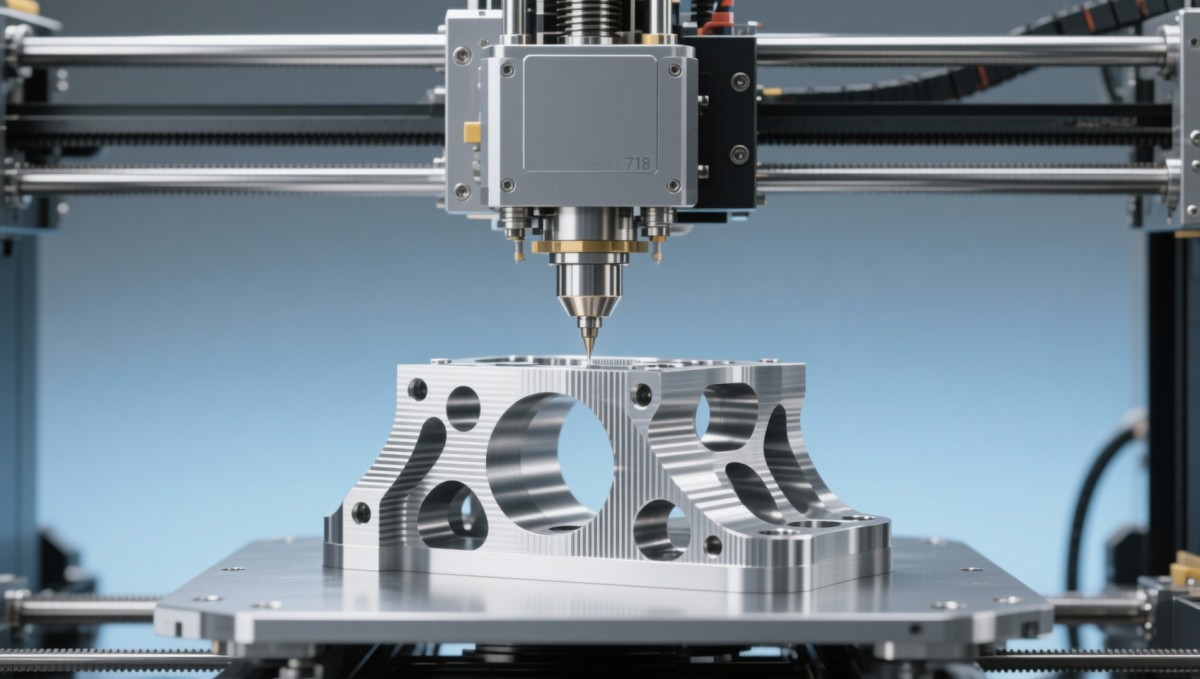
In smart factories, tooling and fixtures must adapt faster than traditional CNC or casting cycles allow. Leading 3D printing manufacturers now offer end-to-end digital tooling services—from topology-optimized CAD generation to certified production-grade builds—reducing lead times from 8–12 weeks to 7–15 days for functional jigs and gauges.
These providers embed real-time data feedback loops: sensor-integrated fixtures transmit usage metrics (e.g., cycle count, thermal load, clamping force) via OPC UA or MQTT protocols directly into MES platforms. This enables predictive maintenance scheduling and automatic reordering triggers when wear thresholds exceed ±0.15mm dimensional deviation over 50,000 cycles.
Unlike legacy suppliers, top-tier 3D printing manufacturers maintain dual-certified material libraries—including UL94-V0 flame-retardant PEEK, ISO 13485-compliant medical-grade resins, and AIA-qualified Inconel 718—for aerospace, automotive, and regulated medical device lines. Over 62% of surveyed OEMs report ≥30% reduction in changeover downtime after integrating digitally native tooling.

Which Technical Capabilities Matter Most for Industrial Fixture Production?
Material & Process Certification Alignment
Industrial fixtures require more than strength—they demand repeatability, thermal stability, and traceability. Top manufacturers align with ASTM F3122 (additive manufacturing process qualification), ISO/ASTM 52900 (terminology), and AS9100 Rev D for aerospace supply chains. Material certifications include full lot traceability, tensile yield data per build batch, and third-party NDT reports (e.g., µCT scanning at ≤5µm resolution).
Design-for-Additive (DfAM) Engineering Support
Manufacturers offering embedded DfAM engineering teams reduce iteration cycles by 40–60%. They conduct stress simulation (ANSYS Mechanical), lattice optimization (nTopology), and tolerance stack-up analysis before print—ensuring fixtures meet GD&T requirements like position tolerance ±0.05mm at datum-controlled interfaces.
The table highlights measurable differentiators—not marketing claims. Vetted manufacturers deliver larger, smoother, and multi-standard-compliant outputs because they invest in metrology labs, in-process monitoring (e.g., melt pool thermal imaging), and dedicated application engineers co-located with Tier 1 OEMs in Germany, Japan, and Mexico.
What Should Procurement & Technical Teams Evaluate Before Engagement?
Procurement decisions hinge on verifiable service-level commitments—not just price. TradeVantage’s 2024 Smart Factory Tooling Benchmark identifies five non-negotiable evaluation dimensions:
- Build validation protocol: Does the supplier provide full build log files (layer-by-layer temperature, laser power, scan speed) and post-build CT scans for every lot?
- Material traceability: Can batch IDs be linked to raw powder certificates, EDS elemental analysis, and fatigue test reports per ASTM E466?
- Fixture lifecycle management: Is there an integrated digital twin platform that tracks dimensional drift, surface wear, and replacement scheduling across 10,000+ units?
- On-site support SLA: What is the guaranteed response time for urgent fixture rebuilds? Top performers commit to 48-hour turnaround for priority orders under 5 kg.
- Compliance documentation package: Does the supplier deliver ready-to-submit PPAP Level 3 packages—including FAI reports, MSA studies, and control plans—for automotive or aerospace programs?
Without these, procurement risks hidden rework costs averaging $18,500 per delayed launch—according to TradeVantage’s audit of 142 smart factory deployments across 12 countries.
Why Partner with TradeVantage for 3D Printing Manufacturer Sourcing?
TradeVantage doesn’t list generic directories. We curate and validate 3D printing manufacturers against 27 operational KPIs—including on-time delivery consistency (>94.2% over 12 months), certified material inventory depth (≥8 high-performance alloys/resins), and in-house metrology capacity (CMM, optical scanners, thermal cycling chambers).
Our clients gain direct access to pre-vetted suppliers with proven track records in specific applications: e.g., BMW-approved fixture producers for EV battery module assembly, or FDA-registered facilities for surgical guide tooling. Each profile includes verified customer references, real-world case metrics (e.g., “37% faster line changeover”), and regional delivery benchmarks.
Whether you need help confirming material certification for ASME BPVC Section VIII compliance, comparing lead times for aluminum vs. titanium fixturing, or validating a supplier’s cybersecurity posture for OT-integrated workflows—we provide actionable, auditable intelligence—not brochures.
Get Started Today
Contact TradeVantage to receive a free 3D printing manufacturer shortlist tailored to your: (1) part geometry & tolerance class, (2) required certifications (e.g., EN 9100, ISO 13485), (3) annual volume range (50–5,000 units), and (4) preferred regional fulfillment hub (EU, APAC, or Americas). Our team delivers qualified options—including sample build data, compliance documentation previews, and comparative cost-per-part analysis—in under 3 business days.
 When an export market analysis platform can validate demand in a new marketExport market analysis platform insights help validate new-market demand through buyer fit, regulations, logistics, competition, and profitable entry conditions.
 What is driving the beauty and personal care market in the USA?Beauty and personal care in USA is driven by targeted solutions, selective premiumization, digital discovery, clean-label trust, diverse needs, and compliance. Explore key growth opportunities.
 How trade flow monitoring reports reveal changing regional demandTrade flow monitoring reports reveal changing regional demand through import volumes, sourcing shifts, product mix, logistics signals, and regulatory trends. Explore actionable market insights.
 How international market intelligence for investors reduces market-entry riskInternational market intelligence for investors reduces market-entry risk by validating demand, regulations, logistics, and competition before capital is committed.
 How international sourcing intelligence helps identify supplier risk earlyInternational sourcing intelligence helps businesses spot supplier risks early, protect supply continuity, and make smarter global procurement decisions.
 How trade data aggregation analytics reveals emerging supplier marketsTrade data aggregation analytics reveals emerging supplier markets through export trends, input flows, logistics, and regulatory signals. Discover smarter sourcing insights.
 What industrial cluster monitoring in Vietnam reveals about site riskIndustrial cluster monitoring Vietnam reveals hidden site risks across labor, utilities, logistics, compliance, and supplier dependencies. Make smarter sourcing and expansion decisions.
 Food Technology Trends Reshaping Shelf Life, Safety, and Product InnovationFood technology is reshaping shelf life, safety, and innovation. Discover the trends helping food businesses cut risk, improve compliance, and unlock stronger global market growth.
 How electronics manufacturing services are changing with low-volume demandElectronics manufacturing services are evolving fast with low-volume demand. Learn how agile EMS partners improve flexibility, compliance, sourcing resilience, and speed to market.
 How Can Buyers Reduce Procurement Risks for Electronic Components?How to reduce procurement risks for electronic components: learn how buyers assess traceability, lead times, compliance, and supplier types to avoid costly sourcing mistakes.
 What Sourcing Intelligence India Reveals About Supplier Risk and Cost ShiftsSourcing intelligence India reveals hidden supplier risk, compliance gaps, logistics pressure, and real cost shifts—helping buyers compare vendors smarter and source with more confidence.
 Fashion Trends 2026: Which Materials, Colors, and Silhouettes Are Gaining Ground?Fashion trends 2026 spotlight tactile fabrics, mineral colors, and controlled volume. Explore the materials, shades, and silhouettes shaping smarter, more wearable style.
 Smart Device Market Outlook: Key Growth Drivers, Segments, and Business OpportunitiesSmart device market trends are shifting toward system value, industrial demand, and resilient supply chains. Explore key growth drivers, high-potential segments, and business opportunities.
 How Global Trade Intelligence Services Help B2B Firms Evaluate Markets and SuppliersGlobal trade intelligence services help B2B firms compare suppliers, assess market potential, and uncover compliance, logistics, and pricing risks before costly decisions are made.
 Manufacturing Sector Updates for Investors: What Signals Matter Most in 2025?Manufacturing sector updates for investors in 2025: track orders, margins, supply chains, regulation, and exports to spot resilient manufacturers and smarter investment signals.
 How Energy Market Intelligence Helps Businesses Track Price Risks and Demand ShiftsEnergy market intelligence helps businesses spot price risks, demand shifts, and supply pressure early—improving procurement, resilience, and faster strategic decisions.
 Precision Hardware Tools Market: Key Demand Drivers, Segments, and Growth OutlookPrecision hardware tools market trends are reshaping sourcing, compliance, and automation. Explore key demand drivers, segment shifts, regional supply patterns, and growth opportunities.
 How to Use Customs Import Data to Find Buyers, Track Competitors, and Spot Demand?Customs import data helps you find real buyers, track competitors, and spot demand shifts early. Learn practical ways to turn trade records into smarter global business decisions.
 Manufacturing Cost Analysis: 8 Cost Drivers That Change Your Unit PriceManufacturing cost analysis explained through 8 key cost drivers that impact unit price, supplier stability, and margins—learn how to compare quotes smarter and reduce sourcing risk.
 Industrial Market Realities: What Buyers Should Check Before Comparing Supplier QuotesIndustrial market realities shape every supplier quote beyond unit price. Learn what to check on compliance, lead times, logistics, and hidden cost risks before comparing offers.
 Beverage Production Line Planning: Key Equipment, Capacity, and Hygiene RequirementsBeverage production line planning made practical: discover key equipment, real capacity sizing, and hygiene requirements to improve efficiency, safety, and long-term plant performance.




















Global Trade Insights & Industry
Our mission is to empower global exporters and importers with data-driven insights that foster strategic growth.
Search News
Popular Tags
Industry Overview
The global commercial kitchen equipment market is projected to reach $112 billion by 2027. Driven by urbanization, the rise of e-commerce food delivery, and strict hygiene regulations.