

Why Industrial Updates on Smart Factory Adoption Are Critical for Project Managers Planning 2026 Rollouts
For project managers spearheading smart factory rollouts in 2026, staying ahead demands more than internal roadmaps—it requires real-time industrial updates, accurate export statistics, and actionable supply chain trends. As global manufacturing data reshapes sourcing strategies, TradeVantage delivers authoritative trade insights, import data, and export trends—curated for B2B network growth and strategic decision-making. Whether you’re a procurement lead evaluating automation vendors or a technical assessor benchmarking Industry 4.0 readiness, our intelligence empowers exporters, importers, and enterprise decision-makers with trusted, SEO-optimized industrial updates that strengthen supply chain resilience and global competitiveness.
Why Real-Time Industrial Updates Directly Impact 2026 Smart Factory Timelines
Smart factory deployments are not isolated IT projects—they’re multi-year infrastructure commitments involving PLCs, CNC controllers, edge gateways, MES integration layers, and IIoT sensor networks. A 2026 rollout typically enters procurement planning in Q3 2024, with vendor qualification concluding by Q2 2025. Delays at any stage cascade: 7–15 days of unanticipated customs clearance for German motion controllers, 3-week backlogs in Japanese servo amplifier shipments, or sudden REACH compliance revisions for PCB substrates can derail commissioning windows.
Industrial updates act as early-warning signals. For example, TradeVantage’s Q1 2024 alert on Taiwan-based HMI module shortages—triggered by semiconductor wafer allocation shifts—enabled 12 European OEMs to pre-stock firmware-compatible alternatives before Q3 tender cycles. This isn’t theoretical foresight; it’s operational continuity backed by live trade flow tracking across 50+ industrial subsectors.
Project managers who rely solely on legacy supplier catalogs or static white papers miss dynamic variables: regional export license adjustments (e.g., new EU dual-use controls on AI-enabled vision inspection systems), port congestion metrics affecting containerized robotic arm deliveries, or even energy tariff surges altering ROI calculations for high-power laser cutting lines. These aren’t footnotes—they’re schedule-critical inputs.
What Industrial Updates Reveal Beyond the Headlines
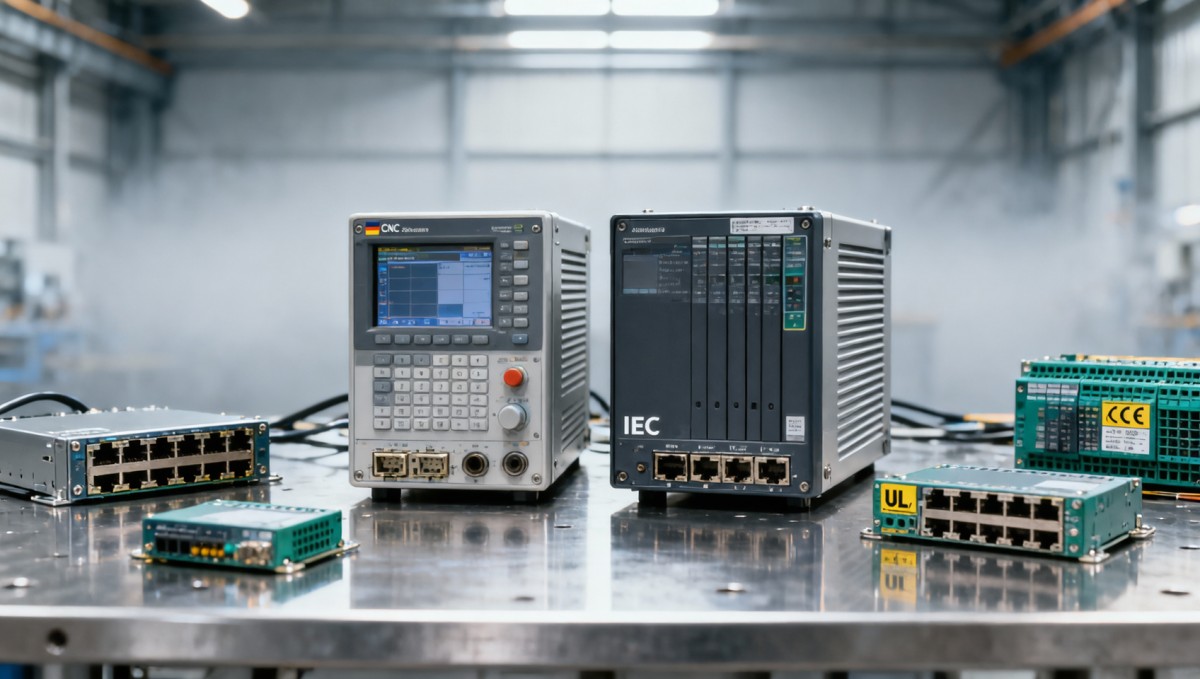
Most “smart factory news” focuses on pilot successes or tech specs—but industrial updates expose execution-level realities. TradeVantage’s intelligence layer maps four interlocking dimensions:
- Component-Level Export Trends: Monthly shipment volumes for key parts—e.g., industrial Ethernet switches (2023 avg: 185K units/month from South Korea; +22% YoY), or safety-rated PLCs (Germany exported 42K units in Q4 2023, down 9% due to IEC 62061 certification bottlenecks).
- Regulatory Shift Timelines: Enforceable dates—not just draft proposals—for standards like ISO/IEC 62443-4-2 (cybersecurity for control systems) or UL 62443-3-3, including country-specific adoption phases.
- Regional Manufacturing Capacity Signals: Factory utilization rates, labor cost indices, and raw material availability (e.g., cobalt price volatility impacting battery-powered AGV fleets).
- Logistics & Compliance Friction Points: Port dwell times, average customs clearance duration per HS code (e.g., HS 8537.10 for programmable logic controllers averages 4.2 days in Rotterdam vs. 11.7 days in Santos, Brazil).
This granularity transforms abstract “Industry 4.0 readiness” into measurable procurement parameters—such as verifying whether a vendor’s claimed “zero-defect assembly line” aligns with actual SMT component defect rate benchmarks (industry median: 125–250 DPMO for Class III aerospace-grade PCBAs).
How Project Teams Use Industrial Data to De-Risk Vendor Selection
Vendor evaluation is no longer just about datasheets and reference sites. TradeVantage’s industrial intelligence supports structured due diligence across five procurement dimensions:
This approach moves beyond “checklist compliance” to predictive procurement—identifying risks before they become change orders. For instance, identifying that 63% of industrial camera modules used in vision-guided robotics originate from one Taiwanese ODM allows teams to mandate dual-sourcing clauses during contract negotiation.
From Data to Deployment: Integrating Industrial Intelligence into Your 2026 Rollout Plan
Embedding industrial updates isn’t about adding another dashboard—it’s about synchronizing intelligence with your project’s critical path. Start with these three implementation steps:
- Map Key Milestones to Data Triggers: Assign alerts to specific dates—e.g., “Q2 2025: Monitor EU MDR Annex XVI updates for human-machine interface medical device classifications if deploying surgical robot control stations.”
- Assign Ownership Across Functions: Technical assessors validate certification validity; procurement leads track export license timelines; project managers review logistics KPIs weekly.
- Build Validation Loops: Cross-check vendor claims against TradeVantage’s verified shipment data—e.g., if a vendor states “50% faster deployment,” verify whether their average installation cycle time (tracked via service contract filings) improved from 14.2 to <10 days across 2023–2024.
This method reduces reliance on anecdotal references and creates auditable justification for procurement decisions—critical when justifying CAPEX to finance stakeholders or defending vendor choices during post-implementation reviews.
Why Choose TradeVantage for Your Smart Factory Intelligence Needs

TradeVantage isn’t a news aggregator—it’s an industrial intelligence engine built for B2B decision velocity. We deliver what matters to your role:
- For Project Managers: Real-time alerts on shipment delays, regulatory deadlines, and capacity constraints—delivered with impact scoring (e.g., “High risk to Q3 2025 commissioning”)
- For Procurement & Technical Assessors: Verified export statistics, certification validity checks, and tier-2 supply chain mapping—updated daily, not quarterly
- For Decision-Makers: Executive summaries linking industrial trends to TCO models, ROI sensitivity analysis, and competitive benchmarking across 50+ equipment categories
We support your 2026 rollout with actionable intelligence—not generic forecasts. Contact us today to access custom dashboards for your smart factory components, request vendor verification reports, or schedule a deep-dive session on your specific equipment categories (e.g., CNC spindles, SCADA servers, or industrial cybersecurity gateways). Let’s ensure your timeline stays on track—not derailed by information gaps.
 When an export market analysis platform can validate demand in a new marketExport market analysis platform insights help validate new-market demand through buyer fit, regulations, logistics, competition, and profitable entry conditions.
 What is driving the beauty and personal care market in the USA?Beauty and personal care in USA is driven by targeted solutions, selective premiumization, digital discovery, clean-label trust, diverse needs, and compliance. Explore key growth opportunities.
 How trade flow monitoring reports reveal changing regional demandTrade flow monitoring reports reveal changing regional demand through import volumes, sourcing shifts, product mix, logistics signals, and regulatory trends. Explore actionable market insights.
 How international market intelligence for investors reduces market-entry riskInternational market intelligence for investors reduces market-entry risk by validating demand, regulations, logistics, and competition before capital is committed.
 How international sourcing intelligence helps identify supplier risk earlyInternational sourcing intelligence helps businesses spot supplier risks early, protect supply continuity, and make smarter global procurement decisions.
 How trade data aggregation analytics reveals emerging supplier marketsTrade data aggregation analytics reveals emerging supplier markets through export trends, input flows, logistics, and regulatory signals. Discover smarter sourcing insights.
 What industrial cluster monitoring in Vietnam reveals about site riskIndustrial cluster monitoring Vietnam reveals hidden site risks across labor, utilities, logistics, compliance, and supplier dependencies. Make smarter sourcing and expansion decisions.
 Food Technology Trends Reshaping Shelf Life, Safety, and Product InnovationFood technology is reshaping shelf life, safety, and innovation. Discover the trends helping food businesses cut risk, improve compliance, and unlock stronger global market growth.
 How electronics manufacturing services are changing with low-volume demandElectronics manufacturing services are evolving fast with low-volume demand. Learn how agile EMS partners improve flexibility, compliance, sourcing resilience, and speed to market.
 How Can Buyers Reduce Procurement Risks for Electronic Components?How to reduce procurement risks for electronic components: learn how buyers assess traceability, lead times, compliance, and supplier types to avoid costly sourcing mistakes.
 What Sourcing Intelligence India Reveals About Supplier Risk and Cost ShiftsSourcing intelligence India reveals hidden supplier risk, compliance gaps, logistics pressure, and real cost shifts—helping buyers compare vendors smarter and source with more confidence.
 Fashion Trends 2026: Which Materials, Colors, and Silhouettes Are Gaining Ground?Fashion trends 2026 spotlight tactile fabrics, mineral colors, and controlled volume. Explore the materials, shades, and silhouettes shaping smarter, more wearable style.
 Smart Device Market Outlook: Key Growth Drivers, Segments, and Business OpportunitiesSmart device market trends are shifting toward system value, industrial demand, and resilient supply chains. Explore key growth drivers, high-potential segments, and business opportunities.
 How Global Trade Intelligence Services Help B2B Firms Evaluate Markets and SuppliersGlobal trade intelligence services help B2B firms compare suppliers, assess market potential, and uncover compliance, logistics, and pricing risks before costly decisions are made.
 Manufacturing Sector Updates for Investors: What Signals Matter Most in 2025?Manufacturing sector updates for investors in 2025: track orders, margins, supply chains, regulation, and exports to spot resilient manufacturers and smarter investment signals.
 How Energy Market Intelligence Helps Businesses Track Price Risks and Demand ShiftsEnergy market intelligence helps businesses spot price risks, demand shifts, and supply pressure early—improving procurement, resilience, and faster strategic decisions.
 Precision Hardware Tools Market: Key Demand Drivers, Segments, and Growth OutlookPrecision hardware tools market trends are reshaping sourcing, compliance, and automation. Explore key demand drivers, segment shifts, regional supply patterns, and growth opportunities.
 How to Use Customs Import Data to Find Buyers, Track Competitors, and Spot Demand?Customs import data helps you find real buyers, track competitors, and spot demand shifts early. Learn practical ways to turn trade records into smarter global business decisions.
 Manufacturing Cost Analysis: 8 Cost Drivers That Change Your Unit PriceManufacturing cost analysis explained through 8 key cost drivers that impact unit price, supplier stability, and margins—learn how to compare quotes smarter and reduce sourcing risk.
 Industrial Market Realities: What Buyers Should Check Before Comparing Supplier QuotesIndustrial market realities shape every supplier quote beyond unit price. Learn what to check on compliance, lead times, logistics, and hidden cost risks before comparing offers.
 Beverage Production Line Planning: Key Equipment, Capacity, and Hygiene RequirementsBeverage production line planning made practical: discover key equipment, real capacity sizing, and hygiene requirements to improve efficiency, safety, and long-term plant performance.




















Global Trade Insights & Industry
Our mission is to empower global exporters and importers with data-driven insights that foster strategic growth.
Search News
Popular Tags
Industry Overview
The global commercial kitchen equipment market is projected to reach $112 billion by 2027. Driven by urbanization, the rise of e-commerce food delivery, and strict hygiene regulations.