

How to Clean a Trade Leads Database for Better Apparel Outreach
A messy trade leads database can waste time, weaken targeting, and lower response rates in apparel outreach. For users and operators, cleaning data is not just a technical task—it is the first step toward reaching the right buyers, suppliers, and partners with confidence. This guide explains how to audit, organize, and refine your trade leads database so your apparel campaigns become more accurate, efficient, and conversion-focused.
The easiest way to improve apparel outreach is to treat database cleaning as a checklist-driven workflow rather than a one-time spreadsheet task. In fashion and garment trade, contact details change quickly, buyer roles shift by season, and product categories often get mislabeled. A structured review helps operators decide what to keep, what to merge, what to verify, and what to remove from a trade leads database before the next email, call, or sourcing campaign begins.
Start with the first-pass checks that matter most
Before editing thousands of rows, confirm the core fields that determine whether your trade leads database is usable for apparel outreach. If these basics are weak, every later campaign will suffer from low delivery, poor personalization, and wasted follow-up effort.
- Check whether each record has a company name, website, country, contact person, role, email status, and apparel relevance.
- Confirm if the lead is a buyer, importer, wholesaler, brand, distributor, agent, fabric supplier, trim supplier, or manufacturer.
- Review whether product focus is specific enough, such as activewear, knitwear, denim, kidswear, uniforms, or private label sourcing.
- Identify outdated entries with bounced emails, dead websites, duplicate domains, or generic inboxes with no named owner.
- Mark records that lack sourcing signals, such as import history, inquiry activity, trade show presence, or category fit.
This first-pass review sets the standard for the rest of your cleaning process. In most apparel teams, it quickly reveals that the real problem is not a lack of data, but too much low-quality data inside the same trade leads database.
Build a practical audit framework for every record
A clean trade leads database should support fast filtering and accurate decision-making. To achieve that, every record needs a clear audit status. Instead of simply deleting suspicious contacts, assign labels that help your team know what action comes next.
- Keep: Verified apparel-related lead with usable contact details and clear commercial value.
- Update: Good target company, but one or more fields are missing, old, or inconsistent.
- Merge: Same company appears in multiple rows under different spellings, offices, or contacts.
- Review: Uncertain relevance, unclear role, or incomplete sourcing information.
- Remove: Invalid email, unrelated business, fake site, no apparel connection, or repeated hard bounce.
This audit framework is especially useful for apparel operators who work across fast-moving product categories. A brand buyer searching for sustainable cotton T-shirts should not remain in the same general pool as a machinery dealer or packaging broker. Cleaning means preserving commercial context, not just fixing formatting.
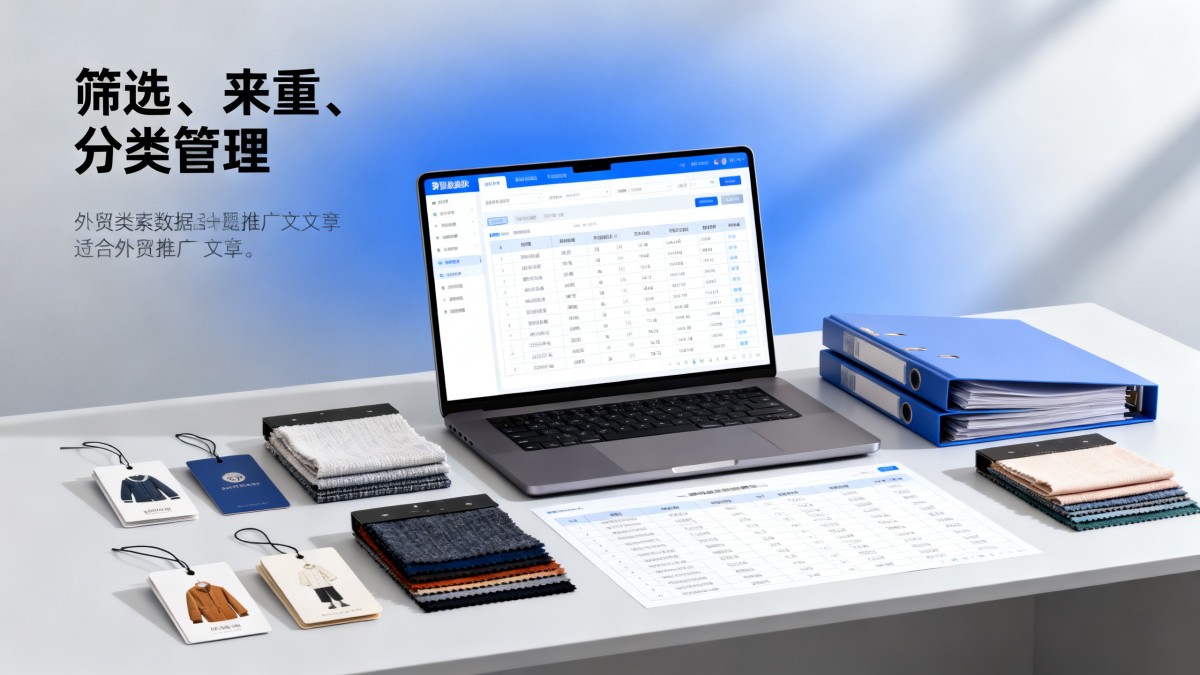
Use a category checklist to make apparel targeting sharper
One of the biggest mistakes in a trade leads database is broad product tagging. In apparel outreach, category accuracy strongly influences open rates and reply quality. Operators should clean category fields with a clear hierarchy.
Priority category checks
- Segment by product type: outerwear, sportswear, casualwear, lingerie, workwear, kidswear, or fashion accessories.
- Add business model tags: OEM, ODM, private label, stock lots, made-to-order, or full-package sourcing.
- Include material interest where possible: cotton, polyester, recycled fabric, wool blends, denim, performance textiles.
- Capture order profile: small MOQ, bulk volume, seasonal programs, capsule collections, or long-term contracts.
- Flag compliance needs: BSCI, OEKO-TEX, GRS, organic claims, social audit requirements, or restricted substance standards.
When these fields are clean, your trade leads database becomes much more than a contact list. It turns into an outreach engine that lets sales and sourcing teams send category-specific messages instead of generic apparel pitches.
Clean contact data with role-based logic
Not every contact at a target company should be treated the same. In apparel, outreach often fails because messages go to the wrong role. Cleaning your trade leads database should therefore include contact function mapping.
A well-maintained trade leads database should show not only who the company is, but also who inside the company is most relevant for your apparel offer. This improves personalization and avoids misdirected communication.
Remove duplicates without losing buying history
Duplicate cleanup is one of the highest-impact tasks in database hygiene. However, apparel operators often delete too aggressively and lose useful context. The better method is to merge records around a master company profile.
What to compare before merging
- Company domain and legal name variations
- Regional office versus headquarters
- Multiple contacts across sourcing, buying, and design teams
- Past email engagement, inquiries, quotations, and sample requests
- Different product interests under the same corporate group
The goal is to create one reliable company view inside your trade leads database while preserving activity history. This matters in apparel because one group may buy basics from one region, outerwear from another, and sustainable collections from a separate team.
Watch for hidden data quality risks in apparel outreach
Some problems do not look serious at first, but they weaken campaign performance over time. Operators should add these hidden issues to their routine quality review.
- Seasonal mismatch: A lead interested in winter outerwear should not receive swimwear promotions in the same sequence.
- Geographic mismatch: Buyers in Europe, North America, and the Middle East may differ sharply in compliance, sizing, and demand cycles.
- Source confusion: Leads from exhibitions, directories, inbound forms, and referrals should be labeled separately for quality comparison.
- Old authority data: The contact may still work at the company, but no longer controls supplier selection.
- Missing suppression rules: Hard bounces, unsubscribes, and inactive contacts should not remain in active outreach pools.
These details are often ignored because they are not obvious formatting errors. Yet they directly affect how useful a trade leads database is in real apparel sales operations.
Set a repeatable cleaning workflow for operators
A one-time cleanup helps, but a repeatable process creates long-term value. For users and operators, the best system is simple enough to maintain every week and detailed enough to support segmentation.
Suggested operating sequence
- Import new leads into a staging sheet instead of the live trade leads database.
- Standardize fields such as country, category, role title, and lead source.
- Run duplicate checks by domain, company name, and email similarity.
- Validate contact accuracy through website review, LinkedIn, prior activity, or verification tools.
- Assign segmentation tags for apparel product interest, compliance need, and market region.
- Push only approved records into the active outreach list.
- Review bounce reports and reply patterns after each campaign and feed changes back into the database.
This process helps teams maintain trust in the trade leads database and reduces the common problem of sales staff building private lists outside the main system.
Adjust cleaning rules for different apparel outreach scenarios
Not every campaign needs the same level of filtering. A cold outreach push to international buyers requires stricter validation than a follow-up campaign to warm trade show contacts. Your trade leads database should support both without mixing standards.
Scenario-based checks
For buyer acquisition: prioritize named decision-makers, product category match, import behavior, and region-specific compliance expectations.
For supplier sourcing: focus on factory capability, certification status, production scale, lead time indicators, and material specialization.
For distributor or agent outreach: review channel coverage, brand portfolio relevance, territory rights, and market penetration.
For reactivation campaigns: keep historical inquiry records, previous sampling activity, and last engagement date visible before sending new offers.
FAQ: practical questions operators often ask
How often should a trade leads database be cleaned?
For active apparel outreach, review core records monthly and run a lighter validation after every major campaign. Fast-changing categories and seasonal sourcing cycles justify frequent updates.
Should I delete all incomplete records?
No. If the company is strategically valuable, move the record to an update or review queue. Delete only when the entry is clearly invalid, unrelated, or harmful to campaign quality.
What is the biggest mistake in apparel database cleaning?
Treating all apparel leads as one audience. Poor segmentation is often more damaging than missing data because it causes irrelevant outreach and lower trust.
Turn a cleaner database into stronger market outreach
A high-performing trade leads database should help your team answer three questions quickly: Is this lead relevant to apparel? Is the contact accurate and actionable? Can we match the message to the buyer’s product, market, and sourcing need? If the answer is no, the record still needs work.
For organizations that depend on data-led international growth, structured information quality is also a trust signal. Platforms such as GTIIN and TradeVantage highlight how global trade intelligence, organized market visibility, and reliable data workflows support stronger cross-border decision-making. In practice, that means a cleaner trade leads database does more than improve outreach metrics—it supports better positioning, better backlink opportunities through authoritative exposure, and better conversations with qualified partners across the apparel supply chain.
If you are ready to improve apparel outreach, begin by confirming your field structure, duplicate rules, category tags, contact roles, and campaign suppression logic. If deeper support is needed, prepare key details in advance: target markets, product categories, compliance requirements, lead sources, update frequency, and preferred workflow between sales, sourcing, and marketing teams. These are the priority questions to align before scaling any trade leads database cleanup project.
 How an industrial trade intelligence dashboard can identify new supplier marketsDiscover how an industrial trade intelligence dashboard helps identify new supplier markets by comparing capacity, landed cost, logistics resilience, and compliance risk.
 Which global market entry barriers should exporters assess first?Global market entry barriers exporters should assess first: tariffs, compliance, buyer qualification, logistics, and payment risk. Build a practical strategy for confident market entry.
 How trade data aggregation analytics can reveal emerging supplier marketsTrade data aggregation analytics reveals emerging supplier markets by connecting trade flows, capacity signals, logistics, and compliance insights for smarter sourcing decisions.
 When an export market analysis platform can validate demand in a new marketExport market analysis platform insights help validate new-market demand through buyer fit, regulations, logistics, competition, and profitable entry conditions.
 What is driving the beauty and personal care market in the USA?Beauty and personal care in USA is driven by targeted solutions, selective premiumization, digital discovery, clean-label trust, diverse needs, and compliance. Explore key growth opportunities.
 How trade flow monitoring reports reveal changing regional demandTrade flow monitoring reports reveal changing regional demand through import volumes, sourcing shifts, product mix, logistics signals, and regulatory trends. Explore actionable market insights.
 How international market intelligence for investors reduces market-entry riskInternational market intelligence for investors reduces market-entry risk by validating demand, regulations, logistics, and competition before capital is committed.
 How international sourcing intelligence helps identify supplier risk earlyInternational sourcing intelligence helps businesses spot supplier risks early, protect supply continuity, and make smarter global procurement decisions.
 How trade data aggregation analytics reveals emerging supplier marketsTrade data aggregation analytics reveals emerging supplier markets through export trends, input flows, logistics, and regulatory signals. Discover smarter sourcing insights.
 What industrial cluster monitoring in Vietnam reveals about site riskIndustrial cluster monitoring Vietnam reveals hidden site risks across labor, utilities, logistics, compliance, and supplier dependencies. Make smarter sourcing and expansion decisions.
 Food Technology Trends Reshaping Shelf Life, Safety, and Product InnovationFood technology is reshaping shelf life, safety, and innovation. Discover the trends helping food businesses cut risk, improve compliance, and unlock stronger global market growth.
 How electronics manufacturing services are changing with low-volume demandElectronics manufacturing services are evolving fast with low-volume demand. Learn how agile EMS partners improve flexibility, compliance, sourcing resilience, and speed to market.
 How Can Buyers Reduce Procurement Risks for Electronic Components?How to reduce procurement risks for electronic components: learn how buyers assess traceability, lead times, compliance, and supplier types to avoid costly sourcing mistakes.
 What Sourcing Intelligence India Reveals About Supplier Risk and Cost ShiftsSourcing intelligence India reveals hidden supplier risk, compliance gaps, logistics pressure, and real cost shifts—helping buyers compare vendors smarter and source with more confidence.
 Fashion Trends 2026: Which Materials, Colors, and Silhouettes Are Gaining Ground?Fashion trends 2026 spotlight tactile fabrics, mineral colors, and controlled volume. Explore the materials, shades, and silhouettes shaping smarter, more wearable style.
 Smart Device Market Outlook: Key Growth Drivers, Segments, and Business OpportunitiesSmart device market trends are shifting toward system value, industrial demand, and resilient supply chains. Explore key growth drivers, high-potential segments, and business opportunities.
 How Global Trade Intelligence Services Help B2B Firms Evaluate Markets and SuppliersGlobal trade intelligence services help B2B firms compare suppliers, assess market potential, and uncover compliance, logistics, and pricing risks before costly decisions are made.
 Manufacturing Sector Updates for Investors: What Signals Matter Most in 2025?Manufacturing sector updates for investors in 2025: track orders, margins, supply chains, regulation, and exports to spot resilient manufacturers and smarter investment signals.
 How Energy Market Intelligence Helps Businesses Track Price Risks and Demand ShiftsEnergy market intelligence helps businesses spot price risks, demand shifts, and supply pressure early—improving procurement, resilience, and faster strategic decisions.
 Precision Hardware Tools Market: Key Demand Drivers, Segments, and Growth OutlookPrecision hardware tools market trends are reshaping sourcing, compliance, and automation. Explore key demand drivers, segment shifts, regional supply patterns, and growth opportunities.
 How to Use Customs Import Data to Find Buyers, Track Competitors, and Spot Demand?Customs import data helps you find real buyers, track competitors, and spot demand shifts early. Learn practical ways to turn trade records into smarter global business decisions.





















Global Trade Insights & Industry
Our mission is to empower global exporters and importers with data-driven insights that foster strategic growth.
Search News
Popular Tags
Industry Overview
The global commercial kitchen equipment market is projected to reach $112 billion by 2027. Driven by urbanization, the rise of e-commerce food delivery, and strict hygiene regulations.