

Farm Irrigation Systems: Common Design Mistakes to Avoid
Designing efficient farm irrigation systems requires more than choosing pipes and pumps—it demands careful planning to avoid costly errors that reduce water efficiency, crop performance, and long-term ROI. For project managers and engineering leads, understanding the most common design mistakes is essential to delivering reliable, scalable, and sustainable irrigation solutions in modern agriculture.
What Project Managers Get Wrong First: Treating Irrigation as an Equipment Purchase Instead of a System Design
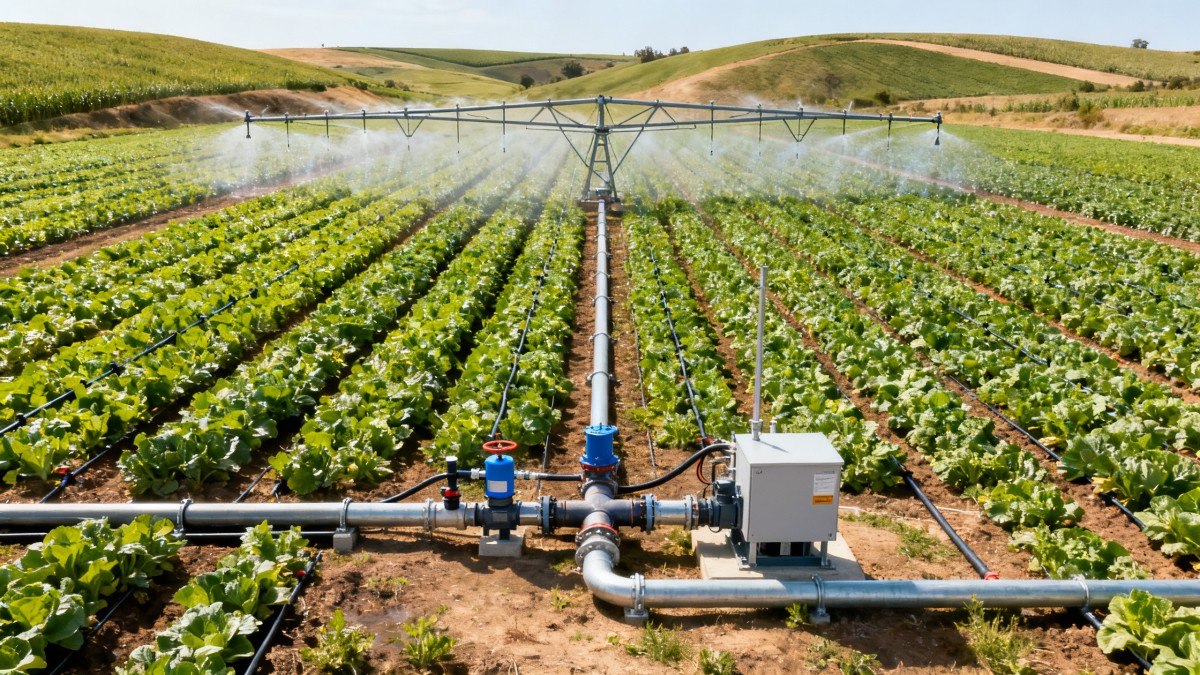
The core search intent behind this topic is practical and risk-oriented. Readers are not looking for a generic explanation of irrigation types. They want to know which design mistakes in farm irrigation systems create budget overruns, poor field performance, uneven water distribution, and long-term operational headaches—and how to avoid them before installation begins.
For project managers and engineering leads, the biggest concern is usually not whether irrigation is important. It is whether the system will work reliably under real farm conditions, meet crop demand, stay within budget, and remain manageable for operations teams after handover. In other words, they are judging design decisions through the lens of performance, risk, lifecycle cost, and scalability.
This is why many irrigation projects fail early: the system is framed as a procurement task rather than an integrated engineering project. Pipes, pumps, filters, emitters, controllers, pressure zones, water sources, soil variability, crop stages, and energy consumption all interact. A mistake in one area often creates hidden costs somewhere else.
The most effective way to avoid failure is to treat farm irrigation systems as infrastructure assets with measurable business outcomes. The design should support water-use efficiency, yield consistency, labor savings, system uptime, and future expansion. Once that principle is clear, the most common mistakes become easier to identify and prevent.
Ignoring Field Variability and Designing for an “Average” Farm
One of the most common design mistakes is assuming that a farm can be irrigated as one uniform block. In reality, slope, soil texture, infiltration rate, field shape, microclimate, elevation changes, and crop differences can vary significantly even within the same property. Designing for the “average” condition usually means the system is wrong for large parts of the field.
When designers overlook variability, some zones receive too much water while others receive too little. The result is uneven crop growth, nutrient leaching, disease pressure, and wasted pumping energy. For project managers, this often surfaces later as complaints from growers or operators who notice that one section consistently underperforms.
Before finalizing layout or hydraulic calculations, teams should validate topographic maps, soil surveys, crop plans, and block-level field conditions. If the data is outdated or too general, conduct additional site assessment. A relatively small investment in field diagnostics can prevent expensive redesigns after installation.
Zoning strategy matters here. Farms with mixed soil types or significant elevation differences often need separate irrigation zones with different scheduling logic, pressure regulation, or emitter selection. A system that appears cheaper on paper can become more expensive if it forces uniform irrigation across non-uniform conditions.
Underestimating Water Source Reliability and Quality
Many farm irrigation systems are designed around theoretical water availability instead of verified supply conditions. Teams may assume a borewell, canal, reservoir, or municipal source will consistently deliver the required volume and pressure throughout the season. That assumption is risky.
Water source problems show up in several forms: seasonal flow reduction, inconsistent pressure, sediment load, biological contamination, dissolved minerals, or legal constraints on water withdrawal. If these factors are not built into the design, the system may perform well only under ideal conditions, not during peak demand when crops need it most.
Water quality is especially important in drip and micro-irrigation. Suspended solids, iron, algae, or chemical precipitation can clog emitters and reduce distribution uniformity. Yet some projects still specify filters as standard accessories rather than designing filtration according to actual water analysis and emitter sensitivity.
Project leaders should require three validations before design approval: source capacity testing, water quality analysis, and seasonal reliability assessment. Without those inputs, pump sizing, filtration design, fertigation setup, and maintenance planning are based on guesswork. That increases both technical and commercial risk.
Using Incorrect Hydraulic Calculations or Oversimplified Pipe Sizing
If there is one mistake that creates the widest range of downstream problems, it is poor hydraulic design. Inadequate pipe sizing, excessive friction loss, incorrect pressure assumptions, or badly balanced submains can make even premium irrigation equipment perform poorly.
In practice, this often happens when designers rely on rule-of-thumb dimensions or copy layouts from another farm without recalculating for local conditions. A system may look structurally complete but still fail to deliver proper flow and pressure at the far ends of the network. That translates directly into non-uniform irrigation.
For engineering leads, hydraulic design should be treated as a non-negotiable quality gate. Every zone should be checked for design flow, pressure loss, velocity limits, elevation impact, emitter discharge requirements, and future expansion load. If the system includes automation, pressure fluctuations should also be assessed in relation to valve sequencing and controller logic.
Oversizing can be just as problematic as undersizing. Larger pipes and pumps increase capital cost, and oversized pumps often operate inefficiently if the duty point does not match field demand. A sound design does not simply maximize capacity; it balances performance, efficiency, and flexibility.
Choosing the Wrong Irrigation Method for the Crop, Farm Layout, or Business Model
Not every farm needs the same irrigation method. Surface irrigation, sprinkler systems, center pivots, drip irrigation, and subsurface systems each have different strengths, weaknesses, and management requirements. A common mistake is choosing the method that is most familiar, cheapest upfront, or easiest to source locally rather than the one best suited to agronomic and operational realities.
For example, drip irrigation may offer excellent water-use efficiency, but it demands disciplined filtration, flushing, and maintenance. Sprinklers may provide broad coverage, but wind drift and evaporation losses can reduce efficiency in some climates. Center pivots support large-scale field operations, but they require field geometry and investment profiles that not every farm can justify.
Project managers should evaluate irrigation method selection against five factors: crop value, field configuration, labor availability, water quality, and operational capability. High-efficiency technology can become a poor investment if the farm team lacks the resources to maintain it properly or if the field layout limits its performance.
The right question is not “Which system is most advanced?” It is “Which system delivers the best total value under this farm’s technical and business constraints?” That shift in thinking helps avoid expensive mismatches between design ambition and farm reality.
Failing to Design for Operation, Maintenance, and Human Error
Many irrigation projects are engineered for startup, not for ten years of real-world use. That is a major mistake. Even technically sound farm irrigation systems can underperform if operators struggle with access, flushing routines, valve identification, scheduling interfaces, or maintenance procedures.
From a project leadership perspective, maintainability should be considered during design, not after commissioning. Filters need accessible placement. Flush points must be practical to use. Control valves should be labeled clearly. Spare parts should be standardized where possible. Layouts should allow safe access for inspection and repair.
Human error is also a design issue. If operators can easily open the wrong valve, miss a maintenance sequence, or misread pressure conditions, the system is too dependent on perfect behavior. Better designs simplify decisions, reduce manual complexity, and provide visible monitoring points that help detect problems early.
Digital controls can help, but only if matched to user capability. Overly complex automation may look impressive during project presentation yet create confusion in the field. The best systems are not the most complicated; they are the easiest to operate correctly and consistently.
Overlooking Energy Efficiency and Lifecycle Cost
Some irrigation designs are approved because they meet the initial capital budget, only to become expensive burdens during operation. This usually happens when energy use, maintenance frequency, replacement cycles, and system downtime are not included in the decision framework.
Pump selection is a frequent source of lifecycle inefficiency. A pump that satisfies peak flow on paper may consume excessive energy if it operates far from its best efficiency point across normal seasonal conditions. Likewise, poor pressure regulation can increase energy demand while reducing irrigation precision.
For project managers, the better approach is lifecycle evaluation rather than equipment-price comparison. Ask how much water will be applied per unit of energy, what the annual maintenance burden will be, how often filters or emitters are likely to require intervention, and how system performance may degrade over time.
When comparing design options, include total cost of ownership over several seasons. A design with slightly higher upfront cost may generate stronger ROI through lower power use, fewer repairs, reduced labor, and better crop consistency. That is especially important in regions facing rising input costs and tighter water controls.
Leaving No Room for Expansion, Change, or Climate Pressure
Farm operations change. Crops rotate, planted areas expand, water regulations tighten, and climate variability alters irrigation demand. Yet many systems are designed with little spare capacity or no strategic flexibility. That can turn future growth into a costly retrofit exercise.
A rigid system may struggle to support additional zones, new fertigation requirements, altered planting density, or new water-saving targets. In some cases, a farm must replace major components earlier than expected simply because the original design was optimized too narrowly around current conditions.
Scalability does not mean overbuilding everything. It means identifying where flexibility adds value: reserve capacity in mains, modular filtration, controller compatibility, accessible tie-in points, and logical zoning that can evolve with farm development. Good project planning anticipates uncertainty instead of assuming stable conditions.
Climate pressure makes this even more important. More frequent drought, heat stress, and irregular rainfall are changing how farms use water. Systems designed only for historical averages may not perform well under future demand patterns. Resilience should now be treated as a core design criterion, not a secondary benefit.
Weak Commissioning and No Performance Verification
Another major design-related mistake appears at the final stage: assuming installation completion means the project is successful. In reality, farm irrigation systems should not be considered fully delivered until hydraulic performance, distribution uniformity, control logic, and operational readiness have been verified in the field.
Without structured commissioning, hidden defects remain in the system: pressure imbalance, blocked emitters, calibration errors, leaking joints, poor valve response, or incorrect scheduling setup. These issues may not be obvious on day one, but they gradually undermine water efficiency and crop outcomes.
Project teams should build a commissioning checklist that includes pressure testing, flow validation by zone, filtration performance checks, automation testing, flushing confirmation, and operator training. Documentation matters as well. As-built drawings, maintenance schedules, and troubleshooting procedures should be part of the handover package.
If possible, define measurable acceptance criteria before installation starts. That creates a clearer basis for contractor accountability and reduces disputes after startup. For managers responsible for ROI, performance verification is where design intent becomes operational reality.
A Practical Decision Framework for Better Irrigation Projects
To avoid the most common mistakes, project teams can use a simple review framework before procurement begins. First, confirm field variability and agronomic requirements. Second, validate water source quantity, quality, and seasonal reliability. Third, complete full hydraulic calculations for each zone and operating scenario.
Fourth, compare irrigation methods against crop, labor, maintenance capability, and business objectives—not just upfront cost. Fifth, check maintainability and operator usability. Sixth, evaluate lifecycle cost, including energy and service burden. Seventh, test scalability for future farm changes. Finally, require commissioning standards and post-installation verification.
This framework helps leaders make better decisions because it turns irrigation design into a structured risk review rather than a vendor-led equipment selection process. It also aligns technical planning with what business stakeholders actually care about: stable output, efficient resource use, and fewer operational surprises.
Conclusion: Better Farm Irrigation Systems Start With Better Design Questions
The biggest mistakes in farm irrigation systems rarely come from one faulty component. They come from incomplete design thinking—ignoring field variability, assuming water reliability, simplifying hydraulics, choosing the wrong method, neglecting maintenance, overlooking energy cost, and failing to plan for change.
For project managers and engineering leads, the takeaway is clear: successful irrigation is not defined by installation speed or equipment brand alone. It is defined by whether the system delivers consistent agronomic performance, efficient water use, manageable operations, and long-term value.
When irrigation projects are evaluated through that lens, design quality becomes a strategic advantage. The farms that avoid these common mistakes are better positioned to protect yield, control cost, and adapt to an increasingly demanding agricultural environment.
 How an industrial trade intelligence dashboard can identify new supplier marketsDiscover how an industrial trade intelligence dashboard helps identify new supplier markets by comparing capacity, landed cost, logistics resilience, and compliance risk.
 Which global market entry barriers should exporters assess first?Global market entry barriers exporters should assess first: tariffs, compliance, buyer qualification, logistics, and payment risk. Build a practical strategy for confident market entry.
 How trade data aggregation analytics can reveal emerging supplier marketsTrade data aggregation analytics reveals emerging supplier markets by connecting trade flows, capacity signals, logistics, and compliance insights for smarter sourcing decisions.
 When an export market analysis platform can validate demand in a new marketExport market analysis platform insights help validate new-market demand through buyer fit, regulations, logistics, competition, and profitable entry conditions.
 What is driving the beauty and personal care market in the USA?Beauty and personal care in USA is driven by targeted solutions, selective premiumization, digital discovery, clean-label trust, diverse needs, and compliance. Explore key growth opportunities.
 How trade flow monitoring reports reveal changing regional demandTrade flow monitoring reports reveal changing regional demand through import volumes, sourcing shifts, product mix, logistics signals, and regulatory trends. Explore actionable market insights.
 How international market intelligence for investors reduces market-entry riskInternational market intelligence for investors reduces market-entry risk by validating demand, regulations, logistics, and competition before capital is committed.
 How international sourcing intelligence helps identify supplier risk earlyInternational sourcing intelligence helps businesses spot supplier risks early, protect supply continuity, and make smarter global procurement decisions.
 How trade data aggregation analytics reveals emerging supplier marketsTrade data aggregation analytics reveals emerging supplier markets through export trends, input flows, logistics, and regulatory signals. Discover smarter sourcing insights.
 What industrial cluster monitoring in Vietnam reveals about site riskIndustrial cluster monitoring Vietnam reveals hidden site risks across labor, utilities, logistics, compliance, and supplier dependencies. Make smarter sourcing and expansion decisions.
 Food Technology Trends Reshaping Shelf Life, Safety, and Product InnovationFood technology is reshaping shelf life, safety, and innovation. Discover the trends helping food businesses cut risk, improve compliance, and unlock stronger global market growth.
 How electronics manufacturing services are changing with low-volume demandElectronics manufacturing services are evolving fast with low-volume demand. Learn how agile EMS partners improve flexibility, compliance, sourcing resilience, and speed to market.
 How Can Buyers Reduce Procurement Risks for Electronic Components?How to reduce procurement risks for electronic components: learn how buyers assess traceability, lead times, compliance, and supplier types to avoid costly sourcing mistakes.
 What Sourcing Intelligence India Reveals About Supplier Risk and Cost ShiftsSourcing intelligence India reveals hidden supplier risk, compliance gaps, logistics pressure, and real cost shifts—helping buyers compare vendors smarter and source with more confidence.
 Fashion Trends 2026: Which Materials, Colors, and Silhouettes Are Gaining Ground?Fashion trends 2026 spotlight tactile fabrics, mineral colors, and controlled volume. Explore the materials, shades, and silhouettes shaping smarter, more wearable style.
 Smart Device Market Outlook: Key Growth Drivers, Segments, and Business OpportunitiesSmart device market trends are shifting toward system value, industrial demand, and resilient supply chains. Explore key growth drivers, high-potential segments, and business opportunities.
 How Global Trade Intelligence Services Help B2B Firms Evaluate Markets and SuppliersGlobal trade intelligence services help B2B firms compare suppliers, assess market potential, and uncover compliance, logistics, and pricing risks before costly decisions are made.
 Manufacturing Sector Updates for Investors: What Signals Matter Most in 2025?Manufacturing sector updates for investors in 2025: track orders, margins, supply chains, regulation, and exports to spot resilient manufacturers and smarter investment signals.
 How Energy Market Intelligence Helps Businesses Track Price Risks and Demand ShiftsEnergy market intelligence helps businesses spot price risks, demand shifts, and supply pressure early—improving procurement, resilience, and faster strategic decisions.
 Precision Hardware Tools Market: Key Demand Drivers, Segments, and Growth OutlookPrecision hardware tools market trends are reshaping sourcing, compliance, and automation. Explore key demand drivers, segment shifts, regional supply patterns, and growth opportunities.
 How to Use Customs Import Data to Find Buyers, Track Competitors, and Spot Demand?Customs import data helps you find real buyers, track competitors, and spot demand shifts early. Learn practical ways to turn trade records into smarter global business decisions.





















Global Trade Insights & Industry
Our mission is to empower global exporters and importers with data-driven insights that foster strategic growth.
Search News
Popular Tags
Industry Overview
The global commercial kitchen equipment market is projected to reach $112 billion by 2027. Driven by urbanization, the rise of e-commerce food delivery, and strict hygiene regulations.