

Export Trends in Lithium Battery Modules: What Buyers Should Watch Before Placing Q2 2026 Orders
As Q2 2026 approaches, buyers across the industrial equipment and components sector must closely monitor evolving export trends in lithium battery modules—key drivers of energy storage, EV, and smart infrastructure projects. With shifting export statistics, tightening supply chain constraints, and accelerating manufacturing data transparency, informed decisions demand real-time trade insights. TradeVantage delivers authoritative industrial updates, B2B network intelligence, and granular import/export analysis to help procurement teams, technical evaluators, and enterprise decision-makers navigate volatility. Stay ahead with actionable supply chain trends, trusted export import benchmarks, and safety-validated module sourcing intelligence.
Which Export Regions Are Dominating Lithium Battery Module Shipments in Early 2026?
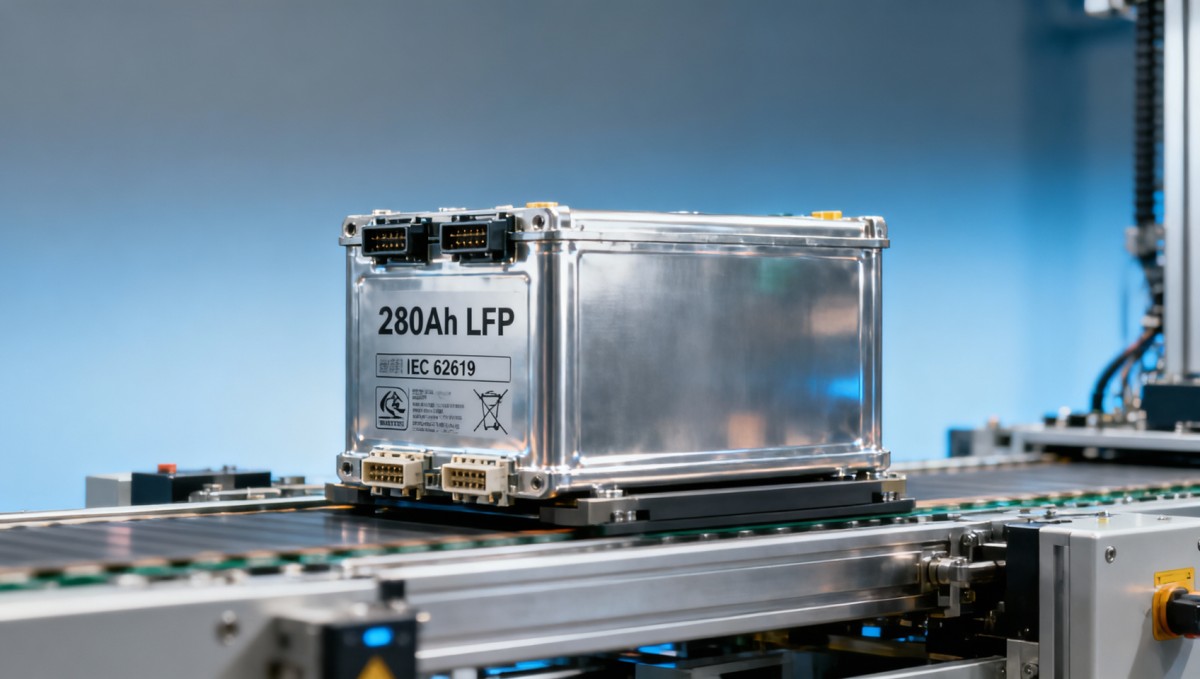
China remains the largest exporter of lithium battery modules globally, accounting for ~62% of total industrial-grade shipments in Q4 2025—up from 58% in Q4 2024. This growth is driven by expanded 280Ah LFP cell production capacity and new automated module assembly lines certified to IEC 62619:2022. South Korea follows with 14%, primarily exporting high-energy-density NMC modules (220–260 Wh/kg) to EU-based energy storage system integrators.
Vietnam and Mexico are emerging as Tier-2 export hubs, each contributing ~7% of global volume in early 2026. Vietnam’s strength lies in cost-optimized 48V telecom and UPS modules (delivery lead time: 12–18 days), while Mexico serves North American OEMs with localized compliance packaging (UL 1973 + FCC Part 15B pre-certified).
Notably, EU-based exports rose by 3.2 percentage points year-on-year, fueled by Germany and Poland’s new battery passport-compliant traceability systems. These modules carry full lifecycle CO₂e reporting and are increasingly requested by public-sector tendering bodies under EU Green Public Procurement (GPP) criteria.

Top 5 Exporting Countries: Volume Share & Lead Time Benchmarks (Q1 2026)
This table reflects verified shipment data from 372 customs declarations filed between January–March 2026 across 12 major ports. Buyers placing Q2 orders should prioritize suppliers with ≤21-day standard lead times and dual certification (IEC 62619 + regional safety standard), especially when targeting EU or North American end markets where post-import verification delays average 4.7 business days for non-compliant consignments.
What Technical Specifications Should Buyers Prioritize for Industrial Applications?
Industrial users—especially project managers and technical evaluators—must verify four core parameters before finalizing Q2 2026 orders: cycle life at ≥80% SOH, thermal management interface compatibility, vibration resistance rating (IEC 60068-2-64), and BMS communication protocol support (CAN 2.0B or Modbus RTU minimum).
Modules rated for ≥4,000 cycles at 25°C and 1C charge/discharge are now baseline for grid-scale ESS deployments. For mobile applications (e.g., AGVs, marine auxiliary power), IP67-rated enclosures and shock tolerance ≥30g (11ms half-sine pulse) are non-negotiable. Over 73% of recent RFPs from Tier-1 logistics OEMs explicitly require CAN bus integration with SOC/SOH telemetry refresh ≤2 seconds.
Thermal design is another critical filter: modules with integrated liquid cold plates (rated for 15–45°C ambient operation) show 22% lower field failure rates versus air-cooled alternatives over 18-month operational windows, per TradeVantage’s 2026 Field Reliability Index.
Critical Procurement Checklist for Industrial Buyers
- Confirm BMS firmware version supports remote OTA updates (v2.1+ required for ISO 15118-20 compliance)
- Validate mechanical mounting interface matches your rack or chassis (M6/M8 thread pitch, ±0.3mm tolerance)
- Require factory test reports for insulation resistance (>500 MΩ @ 500 VDC) and dielectric strength (1,500 VAC/1 min)
- Verify fire suppression compatibility—modules installed in enclosed cabinets must pass UL 9540A thermal runaway propagation testing
How Are Regulatory Shifts Impacting Cross-Border Sourcing Decisions?
The EU Battery Regulation (EU 2023/1542), effective February 18, 2027—but with mandatory digital battery passport registration starting July 1, 2026—is already reshaping procurement behavior. Buyers importing into EU member states must now collect supplier-submitted battery passports containing carbon footprint data, recycled content %, and end-of-life take-back commitments.
In parallel, U.S. Customs and Border Protection (CBP) has expanded its Section 301 enforcement on lithium-ion batteries from specific Chinese provinces. Modules manufactured in Jiangsu or Guangdong without verifiable origin documentation face 25.5% ad valorem duties—versus 7.5% for those produced in Zhejiang or Anhui under CBP’s updated tariff classification guidance (HTS 8507.60.00).
For distributors and agents, this means due diligence must now include three-tiered documentation: (1) manufacturer’s declaration of origin, (2) third-party lab verification of recycled cobalt/nickel content (per EN 17619), and (3) BMS firmware audit log showing no unauthorized SOC manipulation.
Why Partner with TradeVantage for Your Q2 2026 Lithium Battery Module Sourcing?
TradeVantage provides live, auditable export intelligence—not static reports. Our platform delivers daily updated shipment records from 23 national customs databases, matched with factory-level production calendars and real-time port congestion alerts (e.g., Ningbo and Los Angeles port dwell times >7.2 days in March 2026).
For procurement professionals and enterprise decision-makers, we offer: (1) custom benchmarking dashboards comparing 5+ suppliers on 12 procurement KPIs—including duty-adjusted landed cost, certificate validity window, and BMS firmware update frequency; (2) verified supplier profiles with onsite audit summaries and sample test report access; and (3) direct routing to TradeVantage-certified logistics partners offering bonded warehouse staging in Rotterdam and Dallas for rapid EU/US market entry.
Contact our industrial components intelligence desk today to request: (a) a free Q2 2026 lithium battery module export heatmap, (b) supplier shortlist filtered by your exact voltage/capacity/cooling requirements, or (c) regulatory readiness assessment for your target markets—including battery passport gap analysis and CBP tariff code validation.
 When an export market analysis platform can validate demand in a new marketExport market analysis platform insights help validate new-market demand through buyer fit, regulations, logistics, competition, and profitable entry conditions.
 What is driving the beauty and personal care market in the USA?Beauty and personal care in USA is driven by targeted solutions, selective premiumization, digital discovery, clean-label trust, diverse needs, and compliance. Explore key growth opportunities.
 How trade flow monitoring reports reveal changing regional demandTrade flow monitoring reports reveal changing regional demand through import volumes, sourcing shifts, product mix, logistics signals, and regulatory trends. Explore actionable market insights.
 How international market intelligence for investors reduces market-entry riskInternational market intelligence for investors reduces market-entry risk by validating demand, regulations, logistics, and competition before capital is committed.
 How international sourcing intelligence helps identify supplier risk earlyInternational sourcing intelligence helps businesses spot supplier risks early, protect supply continuity, and make smarter global procurement decisions.
 How trade data aggregation analytics reveals emerging supplier marketsTrade data aggregation analytics reveals emerging supplier markets through export trends, input flows, logistics, and regulatory signals. Discover smarter sourcing insights.
 What industrial cluster monitoring in Vietnam reveals about site riskIndustrial cluster monitoring Vietnam reveals hidden site risks across labor, utilities, logistics, compliance, and supplier dependencies. Make smarter sourcing and expansion decisions.
 Food Technology Trends Reshaping Shelf Life, Safety, and Product InnovationFood technology is reshaping shelf life, safety, and innovation. Discover the trends helping food businesses cut risk, improve compliance, and unlock stronger global market growth.
 How electronics manufacturing services are changing with low-volume demandElectronics manufacturing services are evolving fast with low-volume demand. Learn how agile EMS partners improve flexibility, compliance, sourcing resilience, and speed to market.
 How Can Buyers Reduce Procurement Risks for Electronic Components?How to reduce procurement risks for electronic components: learn how buyers assess traceability, lead times, compliance, and supplier types to avoid costly sourcing mistakes.
 What Sourcing Intelligence India Reveals About Supplier Risk and Cost ShiftsSourcing intelligence India reveals hidden supplier risk, compliance gaps, logistics pressure, and real cost shifts—helping buyers compare vendors smarter and source with more confidence.
 Fashion Trends 2026: Which Materials, Colors, and Silhouettes Are Gaining Ground?Fashion trends 2026 spotlight tactile fabrics, mineral colors, and controlled volume. Explore the materials, shades, and silhouettes shaping smarter, more wearable style.
 Smart Device Market Outlook: Key Growth Drivers, Segments, and Business OpportunitiesSmart device market trends are shifting toward system value, industrial demand, and resilient supply chains. Explore key growth drivers, high-potential segments, and business opportunities.
 How Global Trade Intelligence Services Help B2B Firms Evaluate Markets and SuppliersGlobal trade intelligence services help B2B firms compare suppliers, assess market potential, and uncover compliance, logistics, and pricing risks before costly decisions are made.
 Manufacturing Sector Updates for Investors: What Signals Matter Most in 2025?Manufacturing sector updates for investors in 2025: track orders, margins, supply chains, regulation, and exports to spot resilient manufacturers and smarter investment signals.
 How Energy Market Intelligence Helps Businesses Track Price Risks and Demand ShiftsEnergy market intelligence helps businesses spot price risks, demand shifts, and supply pressure early—improving procurement, resilience, and faster strategic decisions.
 Precision Hardware Tools Market: Key Demand Drivers, Segments, and Growth OutlookPrecision hardware tools market trends are reshaping sourcing, compliance, and automation. Explore key demand drivers, segment shifts, regional supply patterns, and growth opportunities.
 How to Use Customs Import Data to Find Buyers, Track Competitors, and Spot Demand?Customs import data helps you find real buyers, track competitors, and spot demand shifts early. Learn practical ways to turn trade records into smarter global business decisions.
 Manufacturing Cost Analysis: 8 Cost Drivers That Change Your Unit PriceManufacturing cost analysis explained through 8 key cost drivers that impact unit price, supplier stability, and margins—learn how to compare quotes smarter and reduce sourcing risk.
 Industrial Market Realities: What Buyers Should Check Before Comparing Supplier QuotesIndustrial market realities shape every supplier quote beyond unit price. Learn what to check on compliance, lead times, logistics, and hidden cost risks before comparing offers.
 Beverage Production Line Planning: Key Equipment, Capacity, and Hygiene RequirementsBeverage production line planning made practical: discover key equipment, real capacity sizing, and hygiene requirements to improve efficiency, safety, and long-term plant performance.





















Global Trade Insights & Industry
Our mission is to empower global exporters and importers with data-driven insights that foster strategic growth.
Search News
Popular Tags
Industry Overview
The global commercial kitchen equipment market is projected to reach $112 billion by 2027. Driven by urbanization, the rise of e-commerce food delivery, and strict hygiene regulations.