

Beverage Production Equipment: Key Specs That Affect Line Efficiency
Selecting the right beverage production equipment is not mainly about choosing the machine with the highest advertised speed. For technical evaluators, the real question is which specifications will sustain target output while protecting fill accuracy, hygiene, uptime, and future flexibility. In most beverage plants, line efficiency rises or falls on a small group of measurable factors: actual throughput under production conditions, changeover time, clean-in-place performance, container handling stability, utility consumption, and integration with upstream and downstream systems.
For buyers comparing suppliers, the most useful approach is to evaluate equipment as part of a working line rather than as isolated assets. A filler that looks impressive on paper can still become a bottleneck if its rinse cycle is too long, if label handling is unstable at top speed, or if it requires frequent manual intervention during SKU changes. The best decisions come from linking key machine specifications to Overall Equipment Effectiveness, labor demand, maintenance exposure, and total cost of ownership over the full service life.
This article focuses on the specifications that matter most to technical assessment teams in the agriculture and food sector. It highlights what to verify, how each parameter affects line efficiency, and where hidden trade-offs often appear during equipment selection.
What Technical Evaluators Should Prioritize First
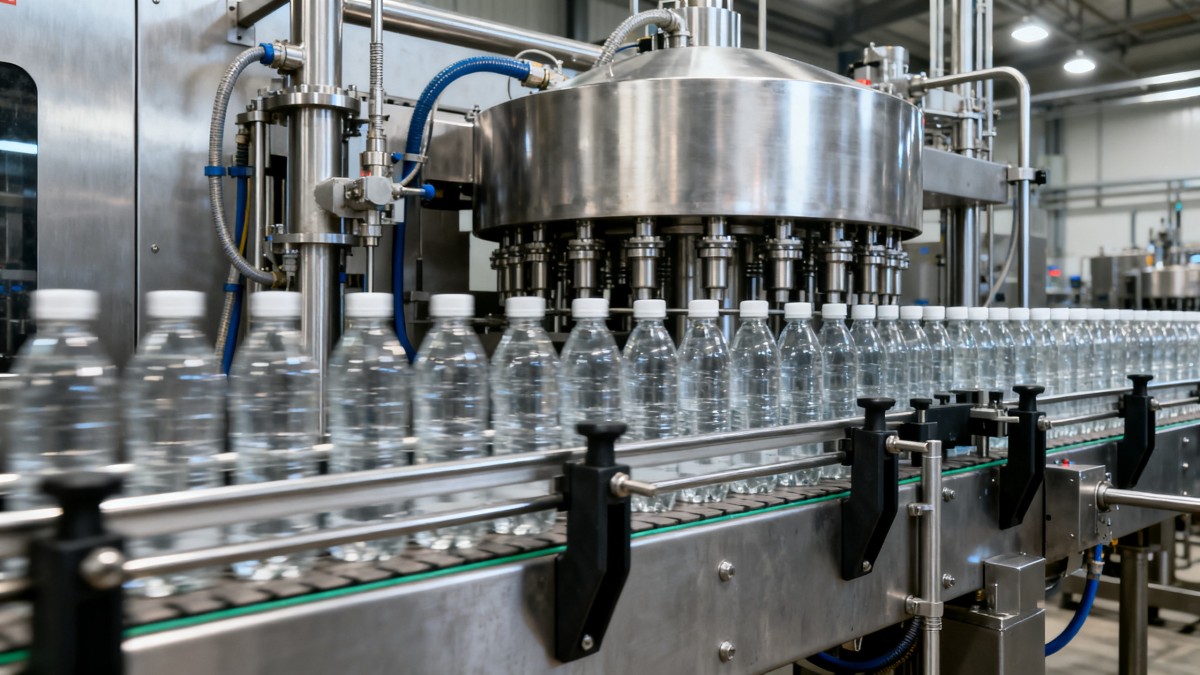
When users search for guidance on beverage production equipment, their intent is usually practical and comparative. They want to know which machine specs genuinely affect output and reliability, not just which features sound advanced in a sales brochure. For technical evaluators, the top concern is whether a proposed line can consistently meet production targets with acceptable waste, downtime, and sanitation risk.
That means the first stage of evaluation should center on five questions. Can the line achieve required throughput under real operating conditions? Can it maintain product and package consistency across SKUs? How much planned and unplanned downtime should be expected? How efficiently can the system be cleaned and changed over? And how well does the equipment integrate with plant utilities, automation architecture, and future expansion plans?
Generic feature lists are less useful than documented performance under realistic conditions. Factory acceptance tests, line simulation, reference installations, and maintenance data from comparable products often provide more decision value than nominal machine speed alone.
Why Rated Speed Rarely Tells the Whole Story
One of the most common mistakes in equipment selection is to treat rated speed as the main indicator of line efficiency. In practice, advertised output is often based on ideal package format, stable product properties, and minimal interruptions. Actual efficiency depends on how the equipment performs with real beverage viscosity, carbonation level, bottle geometry, cap type, and operator variability.
Technical evaluators should ask for three separate figures: maximum mechanical speed, validated production speed, and sustained net output over a full shift. The gap between these numbers reveals how much performance is lost to microstoppages, infeed instability, reject rates, routine cleaning, and normal operator tasks. A machine with a slightly lower top speed but better stability may deliver higher sellable output over time.
Buffer design also matters. If depalletizing, rinsing, filling, capping, labeling, coding, and packing are not balanced, one fast machine cannot compensate for weak line synchronization. Efficiency comes from line matching, not speed in isolation.
Fill Accuracy and Product Loss Control
For most beverage operations, fill performance has a direct effect on compliance, cost, and customer satisfaction. Underfilling creates regulatory and brand risk, while overfilling silently reduces margin at scale. Even a small average giveaway per container can produce major annual losses in high-volume lines.
Evaluators should review filling technology in relation to product type. Gravity, volumetric, flowmeter, piston, hot-fill, and counter-pressure systems each behave differently depending on still beverages, juice, dairy-based drinks, carbonated soft drinks, or functional beverages with particulates. The right choice depends on product behavior during transfer, foaming tendency, temperature profile, and hygiene requirements.
Key specifications include fill tolerance, repeatability across speeds, foam management capability, valve response, and reject logic for abnormal fills. It is also useful to ask how fill accuracy changes during startup, product changeover, or temperature fluctuations. A line that looks precise only after stabilization may still waste product during every shift transition.
CIP Design and Sanitation Efficiency
Clean-in-place capability is one of the most important but underweighted specifications in beverage plants. Poor CIP design extends downtime, increases water and chemical use, and raises contamination risk. For technical teams evaluating hygienic performance, the issue is not whether the machine is “CIP compatible” in a general sense, but how effectively and repeatably it can be cleaned within the plant’s real operating schedule.
Important details include dead-leg control, surface finish, drainability, spray coverage, seal design, valve block accessibility, and automated verification of time, temperature, concentration, and flow. If a system requires frequent manual disassembly to reach product-contact areas, sanitation labor and restart time can quickly erode nominal efficiency.
CIP cycle duration should also be considered as part of net available production time. Faster cleaning is valuable only if it still achieves hygienic validation. Technical evaluators should compare not just cleaning time, but total restart readiness, utility consumption, and consistency across repeated cycles.
Changeover Speed and SKU Flexibility
Line efficiency increasingly depends on changeover performance because beverage portfolios now include more flavors, formats, closures, and promotional packaging. In plants with frequent short runs, changeover can become a larger efficiency driver than maximum running speed.
Useful specifications include average and best-case changeover time, number of tool-less adjustments, recipe automation level, format part complexity, operator steps, and restart scrap volume. Evaluators should ask suppliers to distinguish between dry mechanical changeover time and total product-to-product changeover time, including washdown, parameter confirmation, and quality release.
For multi-SKU facilities, servo-driven adjustments, stored recipes, quick-release handling components, and guided setup verification can reduce operator dependency. However, higher automation only adds value if it is robust, maintainable, and understandable to plant personnel. Simplicity often outperforms sophistication when staffing or training depth is limited.
Container Handling, Conveyor Logic, and Microstoppage Reduction
Many efficiency losses come from packaging movement rather than from the core process equipment itself. Bottle tip-overs, jam points, uneven accumulation, label feed errors, and cap supply interruptions can reduce line output far below target while remaining difficult to diagnose from summary reports.
Technical evaluators should examine starwheel design, guide rail adjustability, conveyor pressure control, accumulation table strategy, and transfer stability between machines. Lightweight bottles, slim cans, and unusual pack formats often need more careful handling than standard containers. Equipment that performs well with one package type may struggle with another at the same nominal speed.
Microstoppage logging is especially important. A line that suffers dozens of short interruptions per hour can lose substantial capacity without any major breakdowns. Machines with better sensors, smoother transfer geometry, and clearer fault diagnostics usually support higher real efficiency than systems that simply advertise faster cycles.
Automation, Data Visibility, and Control Integration
Modern beverage production equipment should be evaluated not only for mechanical capability but also for control transparency. Technical assessment teams benefit from equipment that can expose meaningful operating data to SCADA, MES, and plant analytics systems. Without good data, root-cause analysis of downtime, waste, or quality drift becomes slow and subjective.
Key specifications include PLC platform compatibility, communication protocols, alarm structure, batch and recipe management, remote diagnostics, OEE data granularity, and user access control. It is useful to verify whether the machine distinguishes between fault categories such as operator delay, material shortage, safety stop, process deviation, and mechanical failure.
Data quality influences continuous improvement. If the equipment records stoppages inconsistently or provides only generic alarm messages, the plant may struggle to turn raw data into useful action. Well-structured control architecture can therefore improve line efficiency long after installation.
Energy, Utilities, and Hidden Operating Cost
Technical evaluators are often asked to justify equipment choices beyond throughput. Utility demand is a major part of that analysis. Compressed air consumption, water use, steam requirement, CO2 management, electrical load, and heat recovery potential all shape operating cost and sustainability performance.
These specifications should be reviewed under normal production conditions, not just theoretical minimums. For example, air consumption may rise significantly during unstable bottle handling, and water use may increase with longer rinsing or CIP recovery losses. Similarly, thermal systems for hot-fill or tunnel pasteurization should be assessed for startup energy demand, not only steady-state operation.
Comparing equipment on a cost-per-thousand-containers basis often gives a clearer picture than comparing nameplate utility figures. It also helps reveal whether efficiency gains are coming from better process design or simply from understating real-world operating conditions.
Maintenance Burden and Reliability Over Time
High line efficiency depends on maintainability as much as on machine capability. A technically advanced system that requires specialized service, long spare part lead times, or frequent precision adjustments may underperform in plants with lean maintenance teams. Technical evaluators should therefore assess reliability in lifecycle terms.
Important factors include mean time between failures, mean time to repair, lubrication needs, wear-part intervals, access for inspection, diagnostic clarity, and local service support. It is also worth checking whether critical components are proprietary or commercially available. Proprietary parts may improve integration in some cases, but they can also increase downtime exposure.
Ask suppliers for maintenance schedules tied to actual run hours, not just calendar intervals. Review which tasks require line stoppage and which can be completed during planned sanitation or shift transitions. Good maintenance design reduces not only downtime but also safety risk during intervention.
How to Compare Equipment Proposals More Accurately
To compare suppliers effectively, technical evaluators should use a weighted scorecard linked to plant priorities. Typical categories include validated throughput, fill performance, hygienic design, changeover time, automation compatibility, utility demand, maintainability, footprint, and aftermarket support. Weighting should reflect the business model of the facility. A high-volume dedicated line may favor stability and cost per unit, while a contract packer may assign more value to rapid changeover and packaging flexibility.
It is also helpful to request the same performance assumptions from each supplier. Without standardized assumptions, one proposal may appear superior simply because it excludes startup losses, cleaning time, or operator intervention from its calculations. Technical alignment on product type, package mix, ambient conditions, and utility quality is essential for fair comparison.
Whenever possible, ask for evidence from similar installations. Site visits, customer references, and trial data often reveal practical strengths and limitations that specification sheets cannot capture. This is especially important when evaluating integrated beverage production equipment for new product categories or unfamiliar packaging formats.
Conclusion: Evaluate for Sustained Line Performance, Not Isolated Specs
The best equipment decisions come from understanding how specifications translate into real production outcomes. For technical evaluators, the most important factors are sustained throughput, fill accuracy, sanitation efficiency, changeover performance, stable container handling, data visibility, utility use, and maintenance burden. These elements determine whether a line can deliver predictable output with acceptable cost and risk.
In other words, line efficiency is built through balance. A faster filler does not guarantee higher plant performance if sanitation takes too long, if bottle transfers are unstable, or if frequent changeovers create excessive downtime. Evaluating beverage production equipment through the lens of total operational fit leads to better procurement decisions and stronger long-term returns.
For organizations operating in global food and beverage supply chains, this discipline matters even more. Investments that align machine specifications with real production conditions help reduce implementation risk, improve resource efficiency, and support scalable growth in increasingly competitive markets.
 How an industrial trade intelligence dashboard can identify new supplier marketsDiscover how an industrial trade intelligence dashboard helps identify new supplier markets by comparing capacity, landed cost, logistics resilience, and compliance risk.
 Which global market entry barriers should exporters assess first?Global market entry barriers exporters should assess first: tariffs, compliance, buyer qualification, logistics, and payment risk. Build a practical strategy for confident market entry.
 How trade data aggregation analytics can reveal emerging supplier marketsTrade data aggregation analytics reveals emerging supplier markets by connecting trade flows, capacity signals, logistics, and compliance insights for smarter sourcing decisions.
 When an export market analysis platform can validate demand in a new marketExport market analysis platform insights help validate new-market demand through buyer fit, regulations, logistics, competition, and profitable entry conditions.
 What is driving the beauty and personal care market in the USA?Beauty and personal care in USA is driven by targeted solutions, selective premiumization, digital discovery, clean-label trust, diverse needs, and compliance. Explore key growth opportunities.
 How trade flow monitoring reports reveal changing regional demandTrade flow monitoring reports reveal changing regional demand through import volumes, sourcing shifts, product mix, logistics signals, and regulatory trends. Explore actionable market insights.
 How international market intelligence for investors reduces market-entry riskInternational market intelligence for investors reduces market-entry risk by validating demand, regulations, logistics, and competition before capital is committed.
 How international sourcing intelligence helps identify supplier risk earlyInternational sourcing intelligence helps businesses spot supplier risks early, protect supply continuity, and make smarter global procurement decisions.
 How trade data aggregation analytics reveals emerging supplier marketsTrade data aggregation analytics reveals emerging supplier markets through export trends, input flows, logistics, and regulatory signals. Discover smarter sourcing insights.
 What industrial cluster monitoring in Vietnam reveals about site riskIndustrial cluster monitoring Vietnam reveals hidden site risks across labor, utilities, logistics, compliance, and supplier dependencies. Make smarter sourcing and expansion decisions.
 Food Technology Trends Reshaping Shelf Life, Safety, and Product InnovationFood technology is reshaping shelf life, safety, and innovation. Discover the trends helping food businesses cut risk, improve compliance, and unlock stronger global market growth.
 How electronics manufacturing services are changing with low-volume demandElectronics manufacturing services are evolving fast with low-volume demand. Learn how agile EMS partners improve flexibility, compliance, sourcing resilience, and speed to market.
 How Can Buyers Reduce Procurement Risks for Electronic Components?How to reduce procurement risks for electronic components: learn how buyers assess traceability, lead times, compliance, and supplier types to avoid costly sourcing mistakes.
 What Sourcing Intelligence India Reveals About Supplier Risk and Cost ShiftsSourcing intelligence India reveals hidden supplier risk, compliance gaps, logistics pressure, and real cost shifts—helping buyers compare vendors smarter and source with more confidence.
 Fashion Trends 2026: Which Materials, Colors, and Silhouettes Are Gaining Ground?Fashion trends 2026 spotlight tactile fabrics, mineral colors, and controlled volume. Explore the materials, shades, and silhouettes shaping smarter, more wearable style.
 Smart Device Market Outlook: Key Growth Drivers, Segments, and Business OpportunitiesSmart device market trends are shifting toward system value, industrial demand, and resilient supply chains. Explore key growth drivers, high-potential segments, and business opportunities.
 How Global Trade Intelligence Services Help B2B Firms Evaluate Markets and SuppliersGlobal trade intelligence services help B2B firms compare suppliers, assess market potential, and uncover compliance, logistics, and pricing risks before costly decisions are made.
 Manufacturing Sector Updates for Investors: What Signals Matter Most in 2025?Manufacturing sector updates for investors in 2025: track orders, margins, supply chains, regulation, and exports to spot resilient manufacturers and smarter investment signals.
 How Energy Market Intelligence Helps Businesses Track Price Risks and Demand ShiftsEnergy market intelligence helps businesses spot price risks, demand shifts, and supply pressure early—improving procurement, resilience, and faster strategic decisions.
 Precision Hardware Tools Market: Key Demand Drivers, Segments, and Growth OutlookPrecision hardware tools market trends are reshaping sourcing, compliance, and automation. Explore key demand drivers, segment shifts, regional supply patterns, and growth opportunities.
 How to Use Customs Import Data to Find Buyers, Track Competitors, and Spot Demand?Customs import data helps you find real buyers, track competitors, and spot demand shifts early. Learn practical ways to turn trade records into smarter global business decisions.





















Global Trade Insights & Industry
Our mission is to empower global exporters and importers with data-driven insights that foster strategic growth.
Search News
Popular Tags
Industry Overview
The global commercial kitchen equipment market is projected to reach $112 billion by 2027. Driven by urbanization, the rise of e-commerce food delivery, and strict hygiene regulations.