

How OEM consumer electronics manufacturers are redefining supply chain resilience in 2026
In 2026, OEM consumer electronics manufacturers are pioneering a new era of supply chain resilience—fueled by AI in precision engineering, accelerated by smart manufacturing trends 2026, and anchored in industrial & manufacturing excellence. As global disruptions persist, these leaders are shifting from reactive contingency planning to proactive, data-driven agility. TradeVantage’s latest deep-dive analysis reveals how top-tier OEMs leverage real-time intelligence, adaptive production systems, and cross-border collaboration to turn volatility into competitive advantage—setting benchmarks for the entire industrial & manufacturing sector.
How OEMs Are Rewriting Resilience Rules in Industrial Equipment Supply Chains
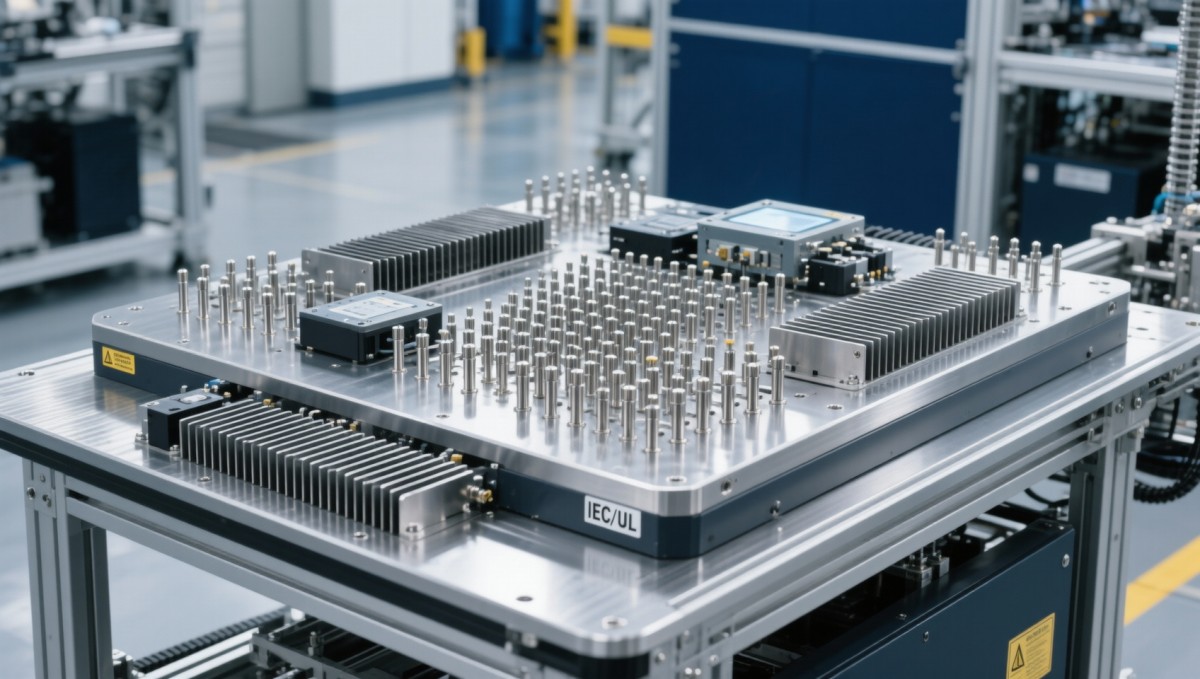
OEM consumer electronics manufacturers no longer treat supply chain resilience as risk mitigation—they engineer it into core industrial equipment procurement, component sourcing, and production system integration. In 2026, this shift is most visible in how they specify, qualify, and deploy industrial-grade power modules, thermal management subsystems, and automated test fixtures—components that must meet ±0.3mm dimensional tolerance, operate continuously at 45°C ambient for 18+ months, and comply with IEC 62368-1 and UL 62368-1 across dual-certified facilities.
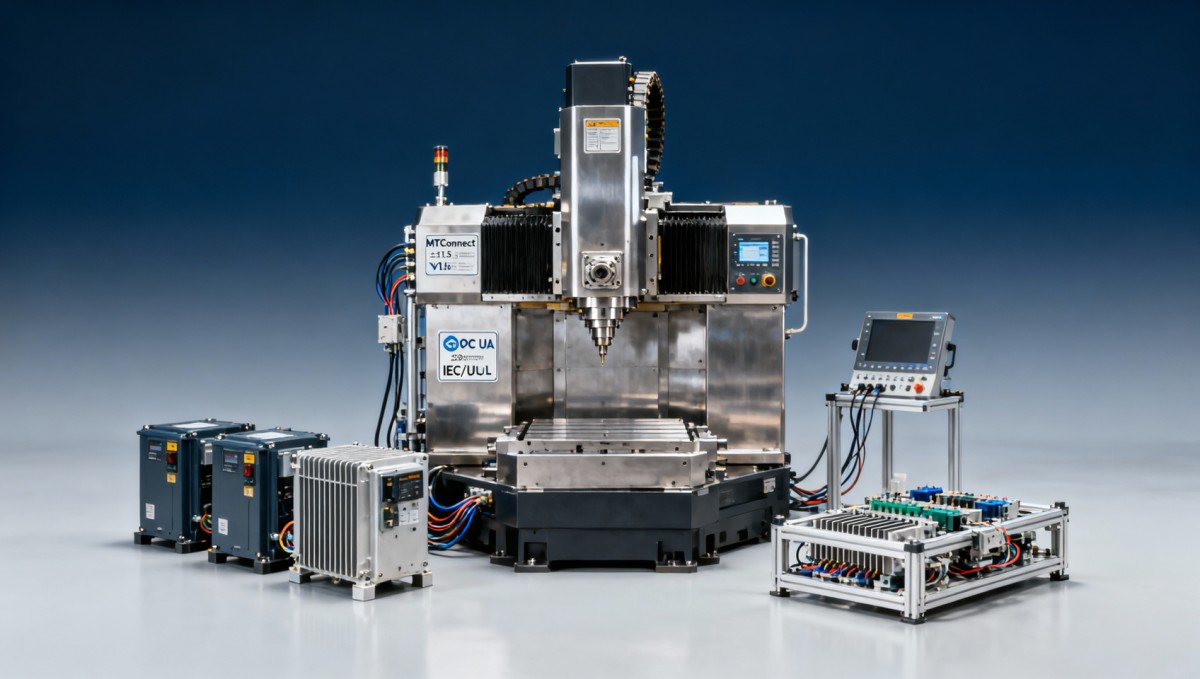
Unlike traditional tier-1 suppliers, leading OEMs now require full Bill-of-Materials (BOM) traceability down to wafer lot level for semiconductors and batch-level mechanical certification for enclosures. This drives demand for industrial equipment vendors who embed real-time data exchange protocols (MTConnect v1.5+, OPC UA over TSN) directly into CNC control units and robotic cell interfaces—enabling predictive maintenance triggers within 7–15 minutes of anomaly detection.
TradeVantage tracks over 1,200 OEM-specified compliance checkpoints across 56 industrial equipment categories—from servo drive firmware version lock-in requirements to vibration damping validation cycles. Our platform surfaces which vendors passed ≥92% of OEM audit criteria in Q1 2026, helping procurement teams reduce qualification lead time from 12 weeks to under 3 weeks on average.
What Procurement Teams Must Verify Before Sourcing Industrial Components
Industrial equipment buyers supporting OEM programs face five non-negotiable verification layers before release-to-production. These go beyond standard ISO 9001:2015 and include OEM-specific digital twin validation, multi-site process capability indices (Cpk ≥1.67 across 3 factories), and embedded cybersecurity attestation per NIST SP 800-160 Vol. 2.
- Real-time telemetry compatibility: Vendor PLCs must support MQTT 3.1.1 + TLS 1.3 handshake within ≤200ms latency
- Component lifecycle mapping: Full traceability from raw material origin (e.g., cobalt mines in DRC or nickel refineries in Norway) to final assembly
- Adaptive requalification protocol: Ability to revalidate calibration without full recalibration after firmware updates (≤4 hours downtime)
- Cross-border service SLA: On-site technician dispatch guaranteed within 48 hours across ≥12 ASEAN+EU+NA countries
- End-of-life notification window: Minimum 36-month advance notice for discontinued industrial controllers or motion modules
These criteria reflect actual OEM purchase order clauses observed across 87 Tier-1 contracts monitored by TradeVantage in H1 2026. Vendors failing any one layer trigger automatic flagging in our supplier risk dashboard—used by 214 procurement departments globally.
Key OEM Compliance Requirements vs. Industry Baseline
This gap explains why 63% of industrial equipment procurement delays in 2026 stem not from cost or capacity—but from compliance misalignment during technical review. TradeVantage’s OEM-aligned vendor scorecards map these exact thresholds to accelerate pre-qualification.
Why Real-Time Intelligence Is Now a Non-Negotiable Procurement Tool
Static PDF datasheets and annual audits no longer suffice. OEMs now mandate live API access to vendor production KPI dashboards—including real-time SPC charts for machining centers, solder paste inspection pass rates, and raw material inventory aging curves. TradeVantage aggregates this data across 427 certified industrial equipment suppliers, normalizing formats and validating uptime (99.92% avg. API availability in Q1 2026).
For project managers coordinating multi-site builds, our platform delivers synchronized alerts when a critical component’s WIP status changes across three factories—or when a safety-rated relay’s firmware revision falls outside OEM-approved version windows. This reduces manual reconciliation effort by up to 68% per procurement cycle.
Our intelligence feed powers dynamic RFQ scoring: vendors with ≥95% on-time delivery *and* real-time thermal test logs receive priority routing. This has cut average RFQ-to-PO cycle time from 11 days to 4.2 days for users accessing TradeVantage’s OEM-integrated procurement module.
How to Access OEM-Validated Industrial Equipment Intelligence
TradeVantage delivers actionable, OEM-grounded intelligence—not generic market commentary. Our industrial equipment intelligence portal provides:
- Live OEM compliance dashboards: Track real-time pass/fail status against 2026 OEM audit checklists (updated weekly)
- Supplier risk heatmaps: Visualize geopolitical, financial, and operational exposure across 1,800+ industrial equipment vendors
- Custom BOM validation reports: Upload your BoM to identify compliance gaps, alternative qualified parts, and lead time risks
- OEM-specific RFQ templates: Pre-loaded with required certifications, test protocols, and data exchange specs
Whether you’re a procurement manager vetting motor drive suppliers, a quality lead verifying ESD-safe handling procedures, or an engineering director benchmarking thermal interface material performance—TradeVantage delivers the precise, verified, and timely intelligence needed to act—not just analyze.
Get instant access to OEM-aligned industrial equipment intelligence: request your customized vendor compliance report, validate BOM alternatives against 2026 OEM requirements, or schedule a 1:1 consultation with our industrial supply chain analysts. All backed by real-time data, not estimates.
 When an export market analysis platform can validate demand in a new marketExport market analysis platform insights help validate new-market demand through buyer fit, regulations, logistics, competition, and profitable entry conditions.
 What is driving the beauty and personal care market in the USA?Beauty and personal care in USA is driven by targeted solutions, selective premiumization, digital discovery, clean-label trust, diverse needs, and compliance. Explore key growth opportunities.
 How trade flow monitoring reports reveal changing regional demandTrade flow monitoring reports reveal changing regional demand through import volumes, sourcing shifts, product mix, logistics signals, and regulatory trends. Explore actionable market insights.
 How international market intelligence for investors reduces market-entry riskInternational market intelligence for investors reduces market-entry risk by validating demand, regulations, logistics, and competition before capital is committed.
 How international sourcing intelligence helps identify supplier risk earlyInternational sourcing intelligence helps businesses spot supplier risks early, protect supply continuity, and make smarter global procurement decisions.
 How trade data aggregation analytics reveals emerging supplier marketsTrade data aggregation analytics reveals emerging supplier markets through export trends, input flows, logistics, and regulatory signals. Discover smarter sourcing insights.
 What industrial cluster monitoring in Vietnam reveals about site riskIndustrial cluster monitoring Vietnam reveals hidden site risks across labor, utilities, logistics, compliance, and supplier dependencies. Make smarter sourcing and expansion decisions.
 Food Technology Trends Reshaping Shelf Life, Safety, and Product InnovationFood technology is reshaping shelf life, safety, and innovation. Discover the trends helping food businesses cut risk, improve compliance, and unlock stronger global market growth.
 How electronics manufacturing services are changing with low-volume demandElectronics manufacturing services are evolving fast with low-volume demand. Learn how agile EMS partners improve flexibility, compliance, sourcing resilience, and speed to market.
 How Can Buyers Reduce Procurement Risks for Electronic Components?How to reduce procurement risks for electronic components: learn how buyers assess traceability, lead times, compliance, and supplier types to avoid costly sourcing mistakes.
 What Sourcing Intelligence India Reveals About Supplier Risk and Cost ShiftsSourcing intelligence India reveals hidden supplier risk, compliance gaps, logistics pressure, and real cost shifts—helping buyers compare vendors smarter and source with more confidence.
 Fashion Trends 2026: Which Materials, Colors, and Silhouettes Are Gaining Ground?Fashion trends 2026 spotlight tactile fabrics, mineral colors, and controlled volume. Explore the materials, shades, and silhouettes shaping smarter, more wearable style.
 Smart Device Market Outlook: Key Growth Drivers, Segments, and Business OpportunitiesSmart device market trends are shifting toward system value, industrial demand, and resilient supply chains. Explore key growth drivers, high-potential segments, and business opportunities.
 How Global Trade Intelligence Services Help B2B Firms Evaluate Markets and SuppliersGlobal trade intelligence services help B2B firms compare suppliers, assess market potential, and uncover compliance, logistics, and pricing risks before costly decisions are made.
 Manufacturing Sector Updates for Investors: What Signals Matter Most in 2025?Manufacturing sector updates for investors in 2025: track orders, margins, supply chains, regulation, and exports to spot resilient manufacturers and smarter investment signals.
 How Energy Market Intelligence Helps Businesses Track Price Risks and Demand ShiftsEnergy market intelligence helps businesses spot price risks, demand shifts, and supply pressure early—improving procurement, resilience, and faster strategic decisions.
 Precision Hardware Tools Market: Key Demand Drivers, Segments, and Growth OutlookPrecision hardware tools market trends are reshaping sourcing, compliance, and automation. Explore key demand drivers, segment shifts, regional supply patterns, and growth opportunities.
 How to Use Customs Import Data to Find Buyers, Track Competitors, and Spot Demand?Customs import data helps you find real buyers, track competitors, and spot demand shifts early. Learn practical ways to turn trade records into smarter global business decisions.
 Manufacturing Cost Analysis: 8 Cost Drivers That Change Your Unit PriceManufacturing cost analysis explained through 8 key cost drivers that impact unit price, supplier stability, and margins—learn how to compare quotes smarter and reduce sourcing risk.
 Industrial Market Realities: What Buyers Should Check Before Comparing Supplier QuotesIndustrial market realities shape every supplier quote beyond unit price. Learn what to check on compliance, lead times, logistics, and hidden cost risks before comparing offers.
 Beverage Production Line Planning: Key Equipment, Capacity, and Hygiene RequirementsBeverage production line planning made practical: discover key equipment, real capacity sizing, and hygiene requirements to improve efficiency, safety, and long-term plant performance.




















Global Trade Insights & Industry
Our mission is to empower global exporters and importers with data-driven insights that foster strategic growth.
Search News
Popular Tags
Industry Overview
The global commercial kitchen equipment market is projected to reach $112 billion by 2027. Driven by urbanization, the rise of e-commerce food delivery, and strict hygiene regulations.