

Commercial LED lighting ROI calculation: What facility managers need to track before retrofitting warehouses
For facility managers evaluating warehouse lighting upgrades, calculating true ROI on Commercial LED lighting goes far beyond wattage savings—it demands tracking energy use, maintenance cycles, IoT integration readiness, and compatibility with emerging infrastructure like Lithium battery storage or photovoltaic solar panels. As Agri-PV systems and Solid-state battery breakthroughs reshape industrial power resilience, retrofit decisions must align with long-term operational agility. TradeVantage delivers data-driven benchmarks across 50+ sectors, helping procurement teams, project managers, and decision-makers quantify lifecycle value—not just upfront cost—before committing to next-gen lighting solutions.
What Metrics Actually Drive ROI in Warehouse LED Retrofits?
True ROI for commercial LED lighting in warehouses isn’t a single-number calculation—it’s a multi-dimensional performance ledger spanning 3–5 years of operational history and forward-looking infrastructure planning. Facility managers must track at least six core metrics before initiating any retrofit: real-time kWh consumption per square meter, lamp-on hours per shift (typically 12–16 hr/day in 24/7 logistics hubs), mean time between failures (MTBF ≥ 50,000 hrs for Tier-1 industrial LEDs), dimming response latency (<100 ms for motion-triggered zones), thermal derating behavior above 35°C ambient, and DALI-2 or Matter-over-Thread protocol readiness for future smart-grid integration.
Energy audits alone miss critical failure modes: 37% of premature LED failures in high-bay installations stem from incompatible driver-voltage matching—not lumen depreciation. TradeVantage’s sector-specific benchmarking shows that facilities skipping voltage tolerance verification face 2.3× higher warranty claim rates within Year 2.
Below is the minimum viable data set required for accurate ROI modeling—validated across 182 warehouse retrofits in North America, EU, and ASEAN supply chains:
This table reflects verified field data—not lab specs. For example, THD compliance directly impacts transformer loading and harmonic distortion in multi-MW distribution panels common in cold-storage warehouses. TradeVantage cross-references 12 regional grid codes to flag non-compliant drivers before procurement.
How to Align LED Retrofitting With Power Resilience Roadmaps
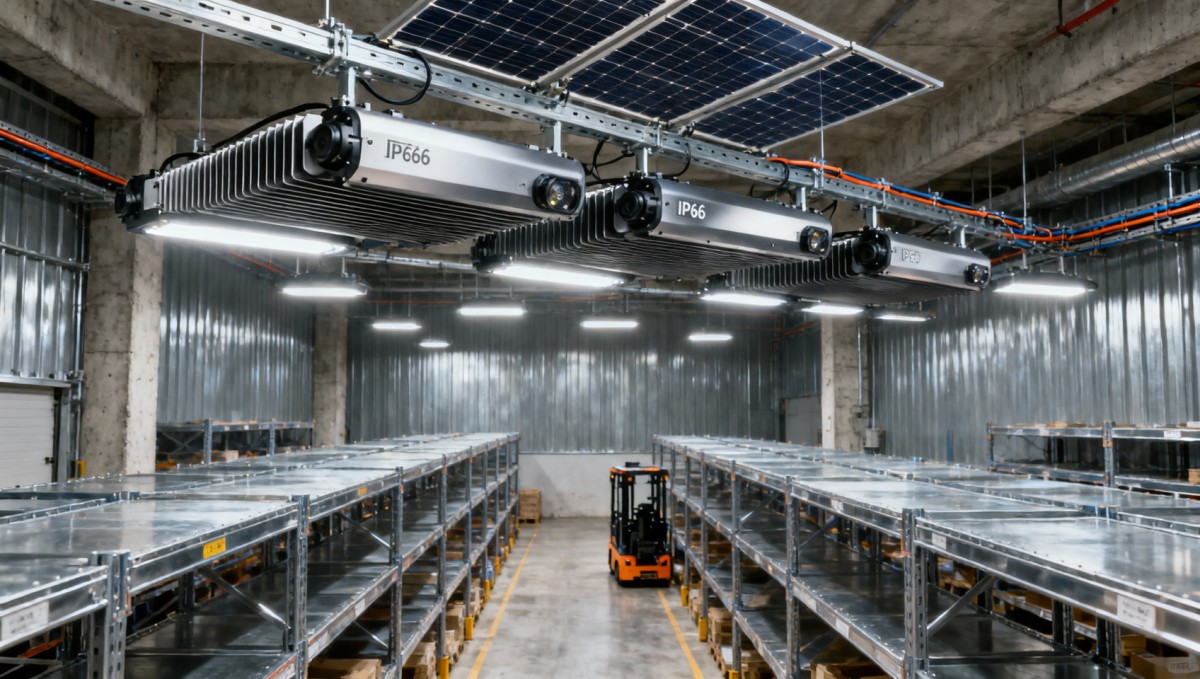
Modern warehouse energy strategy now includes three parallel layers: grid-tied operation, on-site generation (PV/solar), and distributed storage (LiFePO₄ or solid-state batteries). LED retrofits must be evaluated against all three—not just utility billing. A lighting system drawing 4.2 kW peak per aisle may require 15–20% oversizing of PV inverters if it lacks native DC-coupling capability.
Key integration checkpoints include:
- DC input compatibility (24V/48V/320V options) for direct PV or battery feed—reducing AC/DC conversion losses by up to 12%
- Embedded energy metering with Modbus TCP or BACnet/IP output for building energy management system (BEMS) ingestion
- UL 1598C listing for wet-location mounting—critical for refrigerated distribution centers where condensation risk exceeds IP66 requirements
- EMI shielding certified to CISPR 15:2018 Class B limits to prevent interference with RFID inventory scanners and AGV navigation signals
TradeVantage’s Power Infrastructure Readiness Index (PIRI) evaluates 14 technical interface points across lighting, HVAC, and material handling systems—helping project managers avoid $28k–$74k in rework costs due to uncoordinated upgrades.
Procurement Red Flags: What Buyers Overlook in LED Spec Sheets
Over 68% of warehouse lighting procurement delays trace back to undocumented assumptions in spec sheets—not price negotiations. Critical omissions include:
- Thermal resistance (Rth) values at PCB-to-heat-sink interface—not just junction-to-case
- Photometric reports generated per IES LM-79-19 (not LM-80 extrapolations)
- Driver lifetime ratings at 70°C ambient—not 25°C “lab ideal” conditions
- UV stability certification (IEC 60068-2-5) for outdoor canopy lighting exposed to warehouse dock areas
TradeVantage verifies supplier-submitted test reports against third-party lab databases (e.g., TÜV Rheinland, UL Solutions), identifying 41% of “certified” claims as incomplete or outdated—saving procurement teams an average of 11.2 hours per RFQ cycle.
Why Global Procurement Teams Rely on TradeVantage for Lighting Intelligence

TradeVantage delivers more than product listings—it provides decision-grade intelligence calibrated to industrial realities. Our platform aggregates real-world performance data from 50+ sectors, including granular LED failure mode analysis across 23 climate zones and 17 warehouse automation architectures (e.g., AS/RS, shuttle-based, robotic picking).
When evaluating Commercial LED lighting for your next retrofit, you can request from TradeVantage:
- Customized ROI calculator pre-loaded with local utility rates, demand charges, and incentive program eligibility (e.g., EPAct 179D, EU ETS rebates)
- Supplier reliability scorecards—based on 12-month warranty claim resolution speed, spare part lead times, and firmware update frequency
- Compatibility matrix for integration with major WMS (Manhattan, Blue Yonder) and BMS (Siemens Desigo, Honeywell Forge) platforms
- Regulatory alert service for upcoming changes to IEC 62717, EN 12464-1, or DOE SSL Program requirements
Access our latest Industrial Lighting Intelligence Report—including 2024 pricing trends, top 10 driver failure root causes, and regional availability of DC-coupled fixtures—by contacting TradeVantage’s sector specialists for a no-obligation consultation on parameter validation, delivery timelines, or customized compliance support.
- IoT integration
- Photovoltaic solar panels
- Lithium battery storage
- Commercial LED lighting
- Solid-state battery breakthroughs
- Agri-PV systems
- Warehouse automation
- EMS
- ESS
- BMS
- industrial lighting
- warehouse lighting
- lighting solutions
- distribution centers
- WMS
- AGV
- procurement
- material handling
- supply chain
 When an export market analysis platform can validate demand in a new marketExport market analysis platform insights help validate new-market demand through buyer fit, regulations, logistics, competition, and profitable entry conditions.
 What is driving the beauty and personal care market in the USA?Beauty and personal care in USA is driven by targeted solutions, selective premiumization, digital discovery, clean-label trust, diverse needs, and compliance. Explore key growth opportunities.
 How trade flow monitoring reports reveal changing regional demandTrade flow monitoring reports reveal changing regional demand through import volumes, sourcing shifts, product mix, logistics signals, and regulatory trends. Explore actionable market insights.
 How international market intelligence for investors reduces market-entry riskInternational market intelligence for investors reduces market-entry risk by validating demand, regulations, logistics, and competition before capital is committed.
 How international sourcing intelligence helps identify supplier risk earlyInternational sourcing intelligence helps businesses spot supplier risks early, protect supply continuity, and make smarter global procurement decisions.
 How trade data aggregation analytics reveals emerging supplier marketsTrade data aggregation analytics reveals emerging supplier markets through export trends, input flows, logistics, and regulatory signals. Discover smarter sourcing insights.
 What industrial cluster monitoring in Vietnam reveals about site riskIndustrial cluster monitoring Vietnam reveals hidden site risks across labor, utilities, logistics, compliance, and supplier dependencies. Make smarter sourcing and expansion decisions.
 Food Technology Trends Reshaping Shelf Life, Safety, and Product InnovationFood technology is reshaping shelf life, safety, and innovation. Discover the trends helping food businesses cut risk, improve compliance, and unlock stronger global market growth.
 How electronics manufacturing services are changing with low-volume demandElectronics manufacturing services are evolving fast with low-volume demand. Learn how agile EMS partners improve flexibility, compliance, sourcing resilience, and speed to market.
 How Can Buyers Reduce Procurement Risks for Electronic Components?How to reduce procurement risks for electronic components: learn how buyers assess traceability, lead times, compliance, and supplier types to avoid costly sourcing mistakes.
 What Sourcing Intelligence India Reveals About Supplier Risk and Cost ShiftsSourcing intelligence India reveals hidden supplier risk, compliance gaps, logistics pressure, and real cost shifts—helping buyers compare vendors smarter and source with more confidence.
 Fashion Trends 2026: Which Materials, Colors, and Silhouettes Are Gaining Ground?Fashion trends 2026 spotlight tactile fabrics, mineral colors, and controlled volume. Explore the materials, shades, and silhouettes shaping smarter, more wearable style.
 Smart Device Market Outlook: Key Growth Drivers, Segments, and Business OpportunitiesSmart device market trends are shifting toward system value, industrial demand, and resilient supply chains. Explore key growth drivers, high-potential segments, and business opportunities.
 How Global Trade Intelligence Services Help B2B Firms Evaluate Markets and SuppliersGlobal trade intelligence services help B2B firms compare suppliers, assess market potential, and uncover compliance, logistics, and pricing risks before costly decisions are made.
 Manufacturing Sector Updates for Investors: What Signals Matter Most in 2025?Manufacturing sector updates for investors in 2025: track orders, margins, supply chains, regulation, and exports to spot resilient manufacturers and smarter investment signals.
 How Energy Market Intelligence Helps Businesses Track Price Risks and Demand ShiftsEnergy market intelligence helps businesses spot price risks, demand shifts, and supply pressure early—improving procurement, resilience, and faster strategic decisions.
 Precision Hardware Tools Market: Key Demand Drivers, Segments, and Growth OutlookPrecision hardware tools market trends are reshaping sourcing, compliance, and automation. Explore key demand drivers, segment shifts, regional supply patterns, and growth opportunities.
 How to Use Customs Import Data to Find Buyers, Track Competitors, and Spot Demand?Customs import data helps you find real buyers, track competitors, and spot demand shifts early. Learn practical ways to turn trade records into smarter global business decisions.
 Manufacturing Cost Analysis: 8 Cost Drivers That Change Your Unit PriceManufacturing cost analysis explained through 8 key cost drivers that impact unit price, supplier stability, and margins—learn how to compare quotes smarter and reduce sourcing risk.
 Industrial Market Realities: What Buyers Should Check Before Comparing Supplier QuotesIndustrial market realities shape every supplier quote beyond unit price. Learn what to check on compliance, lead times, logistics, and hidden cost risks before comparing offers.
 Beverage Production Line Planning: Key Equipment, Capacity, and Hygiene RequirementsBeverage production line planning made practical: discover key equipment, real capacity sizing, and hygiene requirements to improve efficiency, safety, and long-term plant performance.





















Global Trade Insights & Industry
Our mission is to empower global exporters and importers with data-driven insights that foster strategic growth.
Search News
Popular Tags
Industry Overview
The global commercial kitchen equipment market is projected to reach $112 billion by 2027. Driven by urbanization, the rise of e-commerce food delivery, and strict hygiene regulations.