

How Can Buyers Reduce Procurement Risks for Electronic Components?
In electronics sourcing, the biggest mistakes rarely come from paying a few cents too much. They come from buying the right-looking part from the wrong source, approving an alternate too quickly, or assuming a supplier’s quote tells you enough about delivery risk. Anyone asking how to reduce procurement risks for electronic components is usually dealing with a more complicated problem than price control: they are trying to protect production schedules, warranty exposure, regulatory compliance, and customer commitments at the same time.
That is why component procurement needs a different lens than general industrial buying. A fastener can often be requalified with manageable effort. A semiconductor, connector, power device, sensor, or PCB-related component can trigger redesign work, software interaction issues, thermal failures, EMC problems, or field returns if the specification match is only superficial. On paper, two offers may look comparable. In practice, they may carry very different risk profiles.
The real comparison is not supplier A versus supplier B
Buyers often compare quoted unit cost, lead time, and payment terms first. Those matter, but they do not show the full procurement risk picture. A better comparison is this: are you buying from a supply chain that is transparent, traceable, and technically aligned with your application, or from one that only appears competitive at RFQ stage?
For electronic components, the most common risk clusters usually sit in five areas:
- authenticity and traceability of parts
- quality consistency across batches
- lead-time stability and allocation exposure
- regulatory and documentation compliance
- change control, including PCN and end-of-life management
A low quote from an independent broker is not automatically a bad option. In shortage conditions, it may be the only practical one. But it should not be evaluated by the same standard as an authorized channel. The risk is different, the inspection burden is different, and the documentation requirements should be different too. That distinction gets missed surprisingly often.
Authorized distribution, franchised supply, and open-market sourcing are not interchangeable
One of the clearest ways to reduce procurement risks for electronic components is to define source type before evaluating price. Buyers sometimes mix all quotations into one spreadsheet as if every source carries the same confidence level. It does not.
This comparison matters because procurement decisions should reflect application criticality. A consumer accessory prototype and a medical, industrial control, or infrastructure product should not follow the same approval path. Even within one BOM, the sourcing strategy may need to differ by component category.
A good datasheet match is only the starting point
Technical teams know this, but commercial teams are often pressured to move faster than engineering review allows. Equivalent voltage, package size, and current rating do not automatically make two components interchangeable. Temperature behavior, derating, firmware dependencies, tolerance stack-up, plating finish, moisture sensitivity, lifecycle status, and assembly compatibility can all affect whether a substitute is actually safe.
This is where buyers get caught between urgency and discipline. If production is waiting, the temptation is to approve the alternate that seems “close enough.” Sometimes that works. Sometimes it creates a hidden cost far larger than the shortage itself. A practical approach is to classify substitutions into low-risk, moderate-risk, and redesign-required categories, then tie each class to a review process involving engineering, quality, and sourcing rather than procurement alone.
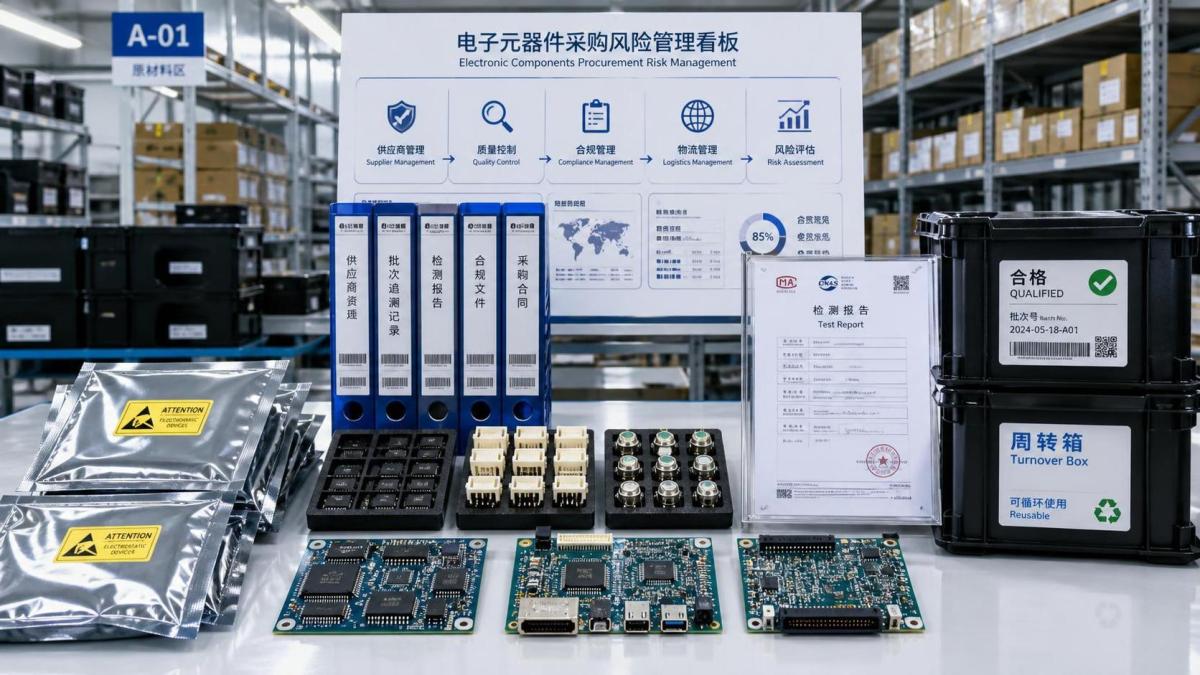
For passive parts, the review may be relatively straightforward. For semiconductors, sensors, RF parts, memory, power modules, and safety-related components, it usually is not. If a supplier cannot provide clear manufacturer documentation, date code information, packing details, and handling records, buyers should slow down rather than accelerate.
Quality risk is often hidden in process gaps, not in the first shipment
Many incoming quality issues do not show up as obvious defects at receiving inspection. They show up later as solderability failures, abnormal field performance, intermittent faults, or unexpected variation between lots. That is why supplier assessment should go beyond “they sent samples and they passed.”
A more useful comparison is whether the supplier can explain its quality system in operational terms. How are lots segregated? How are returns analyzed? What documents follow each shipment? How are nonconforming materials controlled? If the supplier is trading components rather than manufacturing them, what is their incoming verification process and what third-party inspection do they use when traceability is incomplete? Those questions tell you more than polished sales presentations do.
For buyers working across borders, this is exactly where structured market intelligence helps. Platforms such as GTIIN are useful not because they replace technical qualification, but because they help procurement teams compare supplier regions, logistics conditions, regulatory shifts, and category-specific pressures before purchase orders are placed. In a market where lead times, export restrictions, freight conditions, and compliance expectations can change quickly, having organized trade information reduces the chance of making sourcing decisions in isolation.
Lead time risk should be treated separately from price risk
A supplier offering a short lead time is not always holding confirmed stock. Sometimes the quote is based on expected replenishment, another distributor’s listing, or a best-case factory estimate. Buyers should ask one simple but revealing question: is the inventory physically available, allocated, and document-supported, or is it only commercially indicated?
This matters even more for projects with phased deliveries. A one-time urgent buy can sometimes tolerate higher cost or tighter inspection. A six-month production schedule cannot rely on uncertain replenishment without backup planning. Many teams learn this the hard way: the first delivery arrives, the second slips, and then the entire approved vendor assumption starts to break.
To reduce this risk, buyers usually need some mix of demand visibility, buffer planning, approved alternates, and supplier communication tied to actual production forecasts. Not every company can carry large safety stock, and not every component justifies it. The point is not to overbuy. The point is to know which items are truly supply-critical.
Compliance problems rarely look urgent until the shipment is blocked
For international buyers, documentation is part of procurement risk, not an afterthought. Depending on the product and destination market, teams may need to review RoHS, REACH-related disclosures, conflict minerals declarations, safety-related documentation, country-of-origin details, or other product-specific requirements. The exact checklist depends on the application and destination, so there is no one universal set.
The practical mistake is assuming a component that works technically is ready for shipment commercially. Customs issues, missing declarations, inconsistent manufacturer statements, or outdated compliance files can delay production just as effectively as a stockout. In some industries, they can also create downstream liability if the product enters a regulated channel without proper document control.
This is another area where broad trade monitoring helps. GTIIN’s value in cross-border procurement is that it connects regulatory changes, regional standards, freight pressure, and buyer requirements into one decision context. For a procurement manager, that kind of visibility is often more actionable than isolated news about one policy change.
What stronger buyers do differently
Experienced buyers do not try to eliminate all risk. That is not realistic in electronics, especially during supply swings. They separate acceptable risk from unmanaged risk.
In practice, that usually means they do a few things consistently:
- They classify components by business criticality instead of applying one purchasing rule to the whole BOM.
- They define when authorized sourcing is mandatory and when open-market buying is acceptable with extra controls.
- They involve engineering early when alternates are proposed, rather than after the order is already in motion.
- They verify traceability and compliance documents before urgent demand turns into internal pressure.
- They monitor market signals, not just supplier promises, especially in semiconductors and internationally exposed categories.
That last point is easy to underestimate. A sourcing team may trust a supplier relationship and still miss broader warning signs such as regional capacity shifts, changing export conditions, freight corridor disruption, or sudden demand concentration in adjacent industries. Electronic components do not move in a vacuum. They are affected by manufacturing cycles, policy changes, logistics bottlenecks, and inventory behavior across multiple sectors. Trade intelligence platforms exist for exactly this reason: they reduce the information gap between what a supplier quote says and what the wider market is signaling.
A safer procurement decision is usually a better-informed one
If there is one useful takeaway from years of electronics sourcing, it is this: the cheapest component is rarely the one with the lowest total procurement risk. The safer decision often comes from comparing source type, technical fit, traceability, lead-time realism, and compliance readiness side by side, instead of treating them as separate issues.
So when teams ask how to reduce procurement risks for electronic components, the answer is not a single checklist item. It is a decision habit. Slow down where traceability is weak. Push harder where documentation is vague. Escalate alternates that look easy but touch performance. And keep one eye on the broader market, because shortages, regulatory shifts, and logistics disruption usually show warning signs before they hit your purchase order.
 How an industrial trade intelligence dashboard can identify new supplier marketsDiscover how an industrial trade intelligence dashboard helps identify new supplier markets by comparing capacity, landed cost, logistics resilience, and compliance risk.
 Which global market entry barriers should exporters assess first?Global market entry barriers exporters should assess first: tariffs, compliance, buyer qualification, logistics, and payment risk. Build a practical strategy for confident market entry.
 How trade data aggregation analytics can reveal emerging supplier marketsTrade data aggregation analytics reveals emerging supplier markets by connecting trade flows, capacity signals, logistics, and compliance insights for smarter sourcing decisions.
 When an export market analysis platform can validate demand in a new marketExport market analysis platform insights help validate new-market demand through buyer fit, regulations, logistics, competition, and profitable entry conditions.
 What is driving the beauty and personal care market in the USA?Beauty and personal care in USA is driven by targeted solutions, selective premiumization, digital discovery, clean-label trust, diverse needs, and compliance. Explore key growth opportunities.
 How trade flow monitoring reports reveal changing regional demandTrade flow monitoring reports reveal changing regional demand through import volumes, sourcing shifts, product mix, logistics signals, and regulatory trends. Explore actionable market insights.
 How international market intelligence for investors reduces market-entry riskInternational market intelligence for investors reduces market-entry risk by validating demand, regulations, logistics, and competition before capital is committed.
 How international sourcing intelligence helps identify supplier risk earlyInternational sourcing intelligence helps businesses spot supplier risks early, protect supply continuity, and make smarter global procurement decisions.
 How trade data aggregation analytics reveals emerging supplier marketsTrade data aggregation analytics reveals emerging supplier markets through export trends, input flows, logistics, and regulatory signals. Discover smarter sourcing insights.
 What industrial cluster monitoring in Vietnam reveals about site riskIndustrial cluster monitoring Vietnam reveals hidden site risks across labor, utilities, logistics, compliance, and supplier dependencies. Make smarter sourcing and expansion decisions.
 Food Technology Trends Reshaping Shelf Life, Safety, and Product InnovationFood technology is reshaping shelf life, safety, and innovation. Discover the trends helping food businesses cut risk, improve compliance, and unlock stronger global market growth.
 How electronics manufacturing services are changing with low-volume demandElectronics manufacturing services are evolving fast with low-volume demand. Learn how agile EMS partners improve flexibility, compliance, sourcing resilience, and speed to market.
 How Can Buyers Reduce Procurement Risks for Electronic Components?How to reduce procurement risks for electronic components: learn how buyers assess traceability, lead times, compliance, and supplier types to avoid costly sourcing mistakes.
 What Sourcing Intelligence India Reveals About Supplier Risk and Cost ShiftsSourcing intelligence India reveals hidden supplier risk, compliance gaps, logistics pressure, and real cost shifts—helping buyers compare vendors smarter and source with more confidence.
 Fashion Trends 2026: Which Materials, Colors, and Silhouettes Are Gaining Ground?Fashion trends 2026 spotlight tactile fabrics, mineral colors, and controlled volume. Explore the materials, shades, and silhouettes shaping smarter, more wearable style.
 Smart Device Market Outlook: Key Growth Drivers, Segments, and Business OpportunitiesSmart device market trends are shifting toward system value, industrial demand, and resilient supply chains. Explore key growth drivers, high-potential segments, and business opportunities.
 How Global Trade Intelligence Services Help B2B Firms Evaluate Markets and SuppliersGlobal trade intelligence services help B2B firms compare suppliers, assess market potential, and uncover compliance, logistics, and pricing risks before costly decisions are made.
 Manufacturing Sector Updates for Investors: What Signals Matter Most in 2025?Manufacturing sector updates for investors in 2025: track orders, margins, supply chains, regulation, and exports to spot resilient manufacturers and smarter investment signals.
 How Energy Market Intelligence Helps Businesses Track Price Risks and Demand ShiftsEnergy market intelligence helps businesses spot price risks, demand shifts, and supply pressure early—improving procurement, resilience, and faster strategic decisions.
 Precision Hardware Tools Market: Key Demand Drivers, Segments, and Growth OutlookPrecision hardware tools market trends are reshaping sourcing, compliance, and automation. Explore key demand drivers, segment shifts, regional supply patterns, and growth opportunities.
 How to Use Customs Import Data to Find Buyers, Track Competitors, and Spot Demand?Customs import data helps you find real buyers, track competitors, and spot demand shifts early. Learn practical ways to turn trade records into smarter global business decisions.





















Global Trade Insights & Industry
Our mission is to empower global exporters and importers with data-driven insights that foster strategic growth.
Search News
Popular Tags
Industry Overview
The global commercial kitchen equipment market is projected to reach $112 billion by 2027. Driven by urbanization, the rise of e-commerce food delivery, and strict hygiene regulations.