

How electronics manufacturing services are changing with low-volume demand
Low-volume demand is reshaping how electronics manufacturing services operate across global supply chains. For business decision-makers, the shift means more than smaller orders—it affects supplier flexibility, cost control, production planning, regulatory readiness, and speed to market. Understanding how EMS providers adapt to this change can help companies reduce sourcing risk, respond faster to specialized demand, and make better procurement and manufacturing decisions in a more complex trade environment.
For years, the economics of electronics manufacturing services were built around scale. Large production runs justified tooling, line setup, procurement commitments, and offshore logistics planning. That logic still matters in high-volume consumer categories, but it no longer explains the whole market. Across industrial electronics, medical devices, smart infrastructure, test equipment, energy systems, automotive subassemblies, and specialized IoT products, low-volume demand is becoming a structural feature rather than a temporary exception.
The important shift is not simply that customers want fewer units. It is that they want fewer units more often, with more variation, shorter lead times, tighter compliance requirements, and less tolerance for inventory risk. That changes the role of an EMS provider from a capacity supplier into something closer to a manufacturing partner that must combine engineering support, sourcing agility, quality control, and regional responsiveness.
Why low-volume demand is rising across electronics
Several market forces are pushing electronics orders toward smaller and more fragmented production patterns.
Product life cycles have shortened. In many electronics segments, buyers no longer commit to long uninterrupted runs because demand visibility is weaker and product updates happen faster. A company launching a connected industrial device or a niche embedded control board may need an initial build for testing, a second run after design changes, and then staggered replenishment based on actual market response. That is very different from the old model of forecasting a full year’s volume at the start.
Customization is also expanding. Regional versions, customer-specific firmware, different connector standards, power configurations, labeling rules, and enclosure changes all create small-batch complexity. In sectors such as medical electronics, building controls, and industrial automation, the commercial opportunity often lies in specialized variants rather than a single global SKU.
Another driver is inventory discipline. After several years of supply chain disruption, many companies are more cautious about carrying excess stock, especially where components have uneven lead times or the final product faces uncertain demand. Low-volume ordering is often a deliberate financial decision, not a sign of weak business. It reflects the desire to preserve cash, avoid obsolescence, and keep the option to redesign quickly if market conditions change.
Regulatory fragmentation matters too. Products entering different markets may require different documentation, markings, testing references, or material declarations. Even when the base electronics are similar, compliance-driven segmentation can reduce the practical size of each manufacturing lot.
How the EMS operating model is changing
This demand pattern is forcing electronics manufacturing services providers to rethink the fundamentals of their operating model.
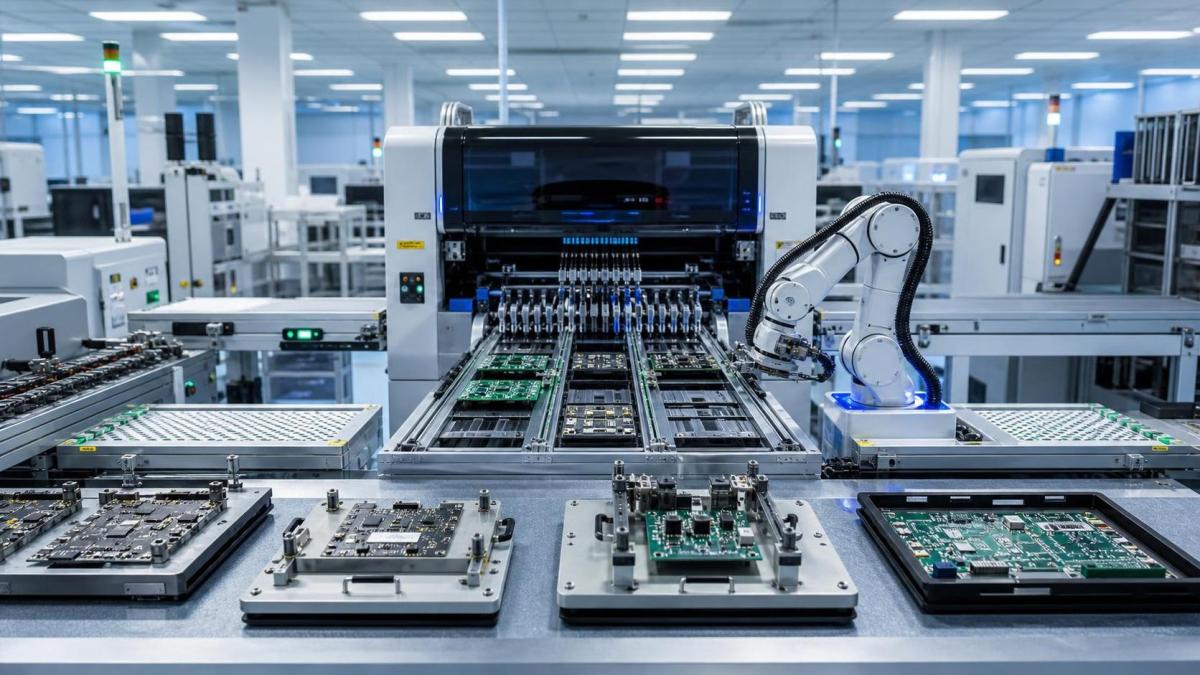
In the traditional high-volume environment, efficiency came from line utilization, long material buys, standardized processes, and labor optimization over large runs. Low-volume demand rewards a different capability set: faster setup changeovers, stronger new product introduction support, more disciplined configuration control, and procurement teams that can source volatile component mixes without locking in unnecessary inventory.
That means the competitive advantage of an EMS provider increasingly depends on responsiveness rather than scale alone. A supplier that can smoothly handle 500 units across several variants, document every revision accurately, and deliver on schedule may create more value than a larger manufacturer optimized only for long runs.
Engineering involvement is moving earlier in the relationship. Customers are asking EMS partners to review design-for-manufacturing issues, suggest alternative components, reduce assembly complexity, and identify parts that create procurement risk. In low-volume environments, these upstream decisions matter more because small inefficiencies are not absorbed by scale. A component with marginal availability or a PCB layout that complicates testing can quickly turn a manageable order into a costly delay.
Quoting models are changing as well. Decision-makers evaluating EMS partners should expect more transparent discussion around non-recurring engineering costs, setup charges, test fixture development, minimum order quantities from component suppliers, and the cost impact of demand variability. Low-volume production often looks expensive if judged only by unit price. But the more relevant comparison is total business cost: inventory exposure, redesign flexibility, cash tied up in components, and the commercial value of entering the market faster.
Procurement is becoming a strategic differentiator
One of the biggest changes inside electronics manufacturing services is the rising importance of procurement intelligence. In low-volume production, component sourcing is rarely a back-office function. It can determine whether a project is commercially viable.
High-mix, low-volume orders often include parts with awkward minimum order quantities, long lead times, or uneven availability across regions. The EMS provider must decide when to buy exactly to order, when to buffer stock, when to propose alternates, and when to redesign around supply constraints. These choices directly affect lead time, margin, and delivery reliability.
For business leaders, this is where supplier evaluation needs to go deeper than factory photos and line counts. A capable EMS partner should be able to explain its approved vendor strategy, component traceability process, counterfeit risk controls, and approach to lifecycle management. In low-volume work, exposure to obsolete or hard-to-source components is often greater because products may stay in service for long periods while annual consumption remains modest.
Regional sourcing strategy is also becoming more important. Some EMS companies are building dual procurement pathways, combining Asian component ecosystems with regional final assembly or buffer inventory closer to end markets. This is not always the cheapest model on paper, but it can improve resilience when customer demand is unpredictable or regulatory requirements require market-specific execution.
Production flexibility now matters more than nominal capacity
Many buyers still assess EMS suppliers primarily by plant size, machine count, or stated monthly output. Those metrics can be misleading in a low-volume market.
What matters more is operational flexibility. Can the supplier switch between products without excessive downtime? Can it manage multiple active revisions without documentation errors? Does it have test processes suited for smaller batches? Can it support pilot runs and then scale if demand accelerates? These are more useful questions than simply asking how many SMT lines a facility operates.
Low-volume demand tends to reward manufacturers with mature process control. Smaller runs leave less room to hide inconsistency. If every batch differs slightly, weak work instructions, poor ECO management, or incomplete inspection discipline will show up quickly. As a result, some mid-sized EMS providers are gaining ground because they are structurally better at managing complexity than very large plants designed around smoother volume flow.
This trend is especially visible in sectors where reliability matters more than unit cost compression, including industrial controls, energy electronics, transportation systems, aerospace-related assemblies, and regulated devices. In those categories, buyers increasingly value predictable execution over theoretical cost savings from chasing the lowest-volume manufacturing location.
Digitalization is supporting low-volume economics
Low-volume manufacturing would be much harder to manage without better digital tools. Electronics manufacturing services providers are investing in MES integration, real-time traceability, digital work instructions, automated optical inspection data analysis, and tighter linkage between ERP, purchasing, and production scheduling.
For executives, the practical implication is straightforward: digital maturity is no longer just an efficiency story. It is becoming essential for profitable low-volume work.
When order patterns are fragmented, manual coordination breaks down faster. Engineering revisions can be missed. Material status becomes unclear. Finished goods may be built against outdated instructions. Compliance records become harder to retrieve. A digitally connected EMS environment reduces those risks and makes smaller orders less operationally disruptive.
This is also affecting customer expectations. Buyers increasingly want visibility into production status, component readiness, traceability records, and quality reporting. In a low-volume context, transparency helps compensate for uncertainty. It gives customers more confidence to place repeat orders in smaller tranches instead of building larger safety stock positions.
Compliance and quality are becoming harder, not easier
A common misconception is that small production runs face lower compliance pressure. In practice, the opposite is often true.
Low-volume products frequently serve specialized applications where documentation and reliability expectations are strict. Depending on the end market, that may involve RoHS and REACH material compliance, IPC process standards, ISO 9001 quality systems, ISO 13485 for medical-related manufacturing, UL-related product pathways, or customer-specific qualification protocols. The exact requirement depends on product category and jurisdiction, and companies should verify current obligations for each market.
What changes with low-volume demand is the economics of compliance. The fixed cost of documentation, traceability, testing, and audit readiness is spread over fewer units. That increases pressure on both supplier discipline and customer planning. An EMS provider that looks competitive on assembly pricing but lacks strong documentation control can become expensive very quickly once certification, customer audit, or field failure issues emerge.
For this reason, decision-makers should avoid treating low-volume outsourcing as a simplified sourcing exercise. It often requires more—not less—front-end alignment on specifications, revision control, test scope, acceptance criteria, and record retention.
What this means for cost strategy
Low-volume demand is changing how cost should be evaluated in electronics manufacturing services.
Unit price remains important, but it is no longer the best primary metric. The more useful lens is total delivered cost under uncertainty. That includes engineering support, setup efficiency, procurement discipline, yield performance, inventory exposure, logistics responsiveness, and the supplier’s ability to handle demand changes without destabilizing the program.
In many cases, a slightly higher per-unit manufacturing cost can be the lower-risk choice if it reduces excess inventory, avoids redesign delays, and improves order responsiveness. This is particularly relevant for companies serving project-based customers, regulated markets, or emerging applications where forecast accuracy is inherently limited.
There is also a financing dimension. Low-volume strategies shift some burden away from finished-goods inventory and toward supply chain coordination. Companies that understand this trade-off can preserve working capital without undermining service levels. Companies that focus too narrowly on quoted assembly price may underestimate the cost of material commitments, schedule slippage, or obsolete stock.
Regionalization will continue, but selectively
Low-volume demand is one reason regional manufacturing footprints are gaining attention, but the trend should not be overstated. Global electronics supply chains are still deeply interconnected, particularly in components, PCB fabrication, and specialized subassemblies. Full localization is unrealistic for many products.
What is more likely is selective regionalization. Companies may keep core component sourcing in established Asian ecosystems while placing final assembly, testing, configuration, or after-sales support closer to end markets. For low-volume programs, this can improve speed, customization, and customer communication without requiring a complete supply chain relocation.
For multinational buyers, the key question is not whether production should be global or local in absolute terms. It is which parts of the value chain benefit from proximity and which still depend on scale-driven sourcing networks. The answer varies by product complexity, demand volatility, regulatory exposure, and service expectations.
What decision-makers should watch over the next few years
The low-volume shift is unlikely to reverse soon. Product diversification, demand uncertainty, compliance complexity, and cash discipline all support the trend. That does not mean large-scale EMS will disappear. It means the market will continue to split between volume-optimized production and flexibility-optimized production, with some providers trying to build competence in both.
Business leaders should watch for three signals.
One is whether an EMS provider can demonstrate repeatable profitability in high-mix, low-volume work rather than simply claiming flexibility. This usually shows up in disciplined engineering change management, realistic lead-time commitments, and procurement transparency.
Another is whether digital systems are actually connected to execution. Many suppliers present digital capability broadly, but the practical question is whether those tools reduce errors, improve traceability, and support faster customer decisions.
The third is whether compliance and sourcing resilience are built into the operating model. As product variants increase and market requirements diverge, these areas become central to performance, not support functions.
For companies buying electronics manufacturing services, the strategic implication is clear: low-volume demand should not be treated as a special-case purchasing issue. It is reshaping supplier economics, manufacturing priorities, and regional supply chain design. The firms that respond well will be those that evaluate EMS partners not just by cost and capacity, but by how effectively they manage uncertainty, complexity, and speed at the same time.
 When dual sourcing makes sense in a sourcing strategy for manufacturersSourcing strategy for manufacturers: learn when dual sourcing strengthens supply continuity, reduces disruption risk, and protects production without adding unnecessary complexity.
 How bulk commodities pricing affects long-term supply contractsBulk commodities pricing shapes long-term supply contracts through index rules, freight, quality, volume, and currency risk. Explore strategies for resilient costs and supply security.
 Which global manufacturing trends by sector matter most for sourcing plans?Global manufacturing trends by sector: identify sourcing risks, supplier resilience, compliance demands, and cost drivers to build smarter, more reliable procurement plans.
 What industrial trade intelligence pricing should include before you subscribeIndustrial trade intelligence pricing explained: compare coverage, data quality, access rights, and workflow value before choosing a subscription that supports smarter trade decisions.
 How an industrial trade intelligence dashboard can identify new supplier marketsDiscover how an industrial trade intelligence dashboard helps identify new supplier markets by comparing capacity, landed cost, logistics resilience, and compliance risk.
 Which global market entry barriers should exporters assess first?Global market entry barriers exporters should assess first: tariffs, compliance, buyer qualification, logistics, and payment risk. Build a practical strategy for confident market entry.
 How trade data aggregation analytics can reveal emerging supplier marketsTrade data aggregation analytics reveals emerging supplier markets by connecting trade flows, capacity signals, logistics, and compliance insights for smarter sourcing decisions.
 When an export market analysis platform can validate demand in a new marketExport market analysis platform insights help validate new-market demand through buyer fit, regulations, logistics, competition, and profitable entry conditions.
 What is driving the beauty and personal care market in the USA?Beauty and personal care in USA is driven by targeted solutions, selective premiumization, digital discovery, clean-label trust, diverse needs, and compliance. Explore key growth opportunities.
 How trade flow monitoring reports reveal changing regional demandTrade flow monitoring reports reveal changing regional demand through import volumes, sourcing shifts, product mix, logistics signals, and regulatory trends. Explore actionable market insights.
 How international market intelligence for investors reduces market-entry riskInternational market intelligence for investors reduces market-entry risk by validating demand, regulations, logistics, and competition before capital is committed.
 How international sourcing intelligence helps identify supplier risk earlyInternational sourcing intelligence helps businesses spot supplier risks early, protect supply continuity, and make smarter global procurement decisions.
 How trade data aggregation analytics reveals emerging supplier marketsTrade data aggregation analytics reveals emerging supplier markets through export trends, input flows, logistics, and regulatory signals. Discover smarter sourcing insights.
 What industrial cluster monitoring in Vietnam reveals about site riskIndustrial cluster monitoring Vietnam reveals hidden site risks across labor, utilities, logistics, compliance, and supplier dependencies. Make smarter sourcing and expansion decisions.
 Food Technology Trends Reshaping Shelf Life, Safety, and Product InnovationFood technology is reshaping shelf life, safety, and innovation. Discover the trends helping food businesses cut risk, improve compliance, and unlock stronger global market growth.
 How electronics manufacturing services are changing with low-volume demandElectronics manufacturing services are evolving fast with low-volume demand. Learn how agile EMS partners improve flexibility, compliance, sourcing resilience, and speed to market.
 How Can Buyers Reduce Procurement Risks for Electronic Components?How to reduce procurement risks for electronic components: learn how buyers assess traceability, lead times, compliance, and supplier types to avoid costly sourcing mistakes.
 What Sourcing Intelligence India Reveals About Supplier Risk and Cost ShiftsSourcing intelligence India reveals hidden supplier risk, compliance gaps, logistics pressure, and real cost shifts—helping buyers compare vendors smarter and source with more confidence.
 Fashion Trends 2026: Which Materials, Colors, and Silhouettes Are Gaining Ground?Fashion trends 2026 spotlight tactile fabrics, mineral colors, and controlled volume. Explore the materials, shades, and silhouettes shaping smarter, more wearable style.
 Smart Device Market Outlook: Key Growth Drivers, Segments, and Business OpportunitiesSmart device market trends are shifting toward system value, industrial demand, and resilient supply chains. Explore key growth drivers, high-potential segments, and business opportunities.
 How Global Trade Intelligence Services Help B2B Firms Evaluate Markets and SuppliersGlobal trade intelligence services help B2B firms compare suppliers, assess market potential, and uncover compliance, logistics, and pricing risks before costly decisions are made.




















Global Trade Insights & Industry
Our mission is to empower global exporters and importers with data-driven insights that foster strategic growth.
Search News
Popular Tags
Industry Overview
The global commercial kitchen equipment market is projected to reach $112 billion by 2027. Driven by urbanization, the rise of e-commerce food delivery, and strict hygiene regulations.