

Food Technology Trends Reshaping Shelf Life, Safety, and Product Innovation
Food technology is no longer a technical side topic for food companies. It now affects market access, export reliability, product margins, and buyer confidence across global supply chains.
For business decision-makers, the key question is practical: which food technology investments improve shelf life, strengthen safety control, support product innovation, and justify cost under changing trade conditions.
Today, the most important food technology trends are not just about faster processing or novel ingredients. They are about reducing risk, extending commercial reach, and making products more adaptable to regulation and demand.
Manufacturers, exporters, and sourcing teams are under pressure from stricter compliance rules, volatile logistics, rising waste costs, and more demanding customers. Food technology is becoming a direct lever for competitiveness.
Why Food Technology Has Become a Strategic Business Issue
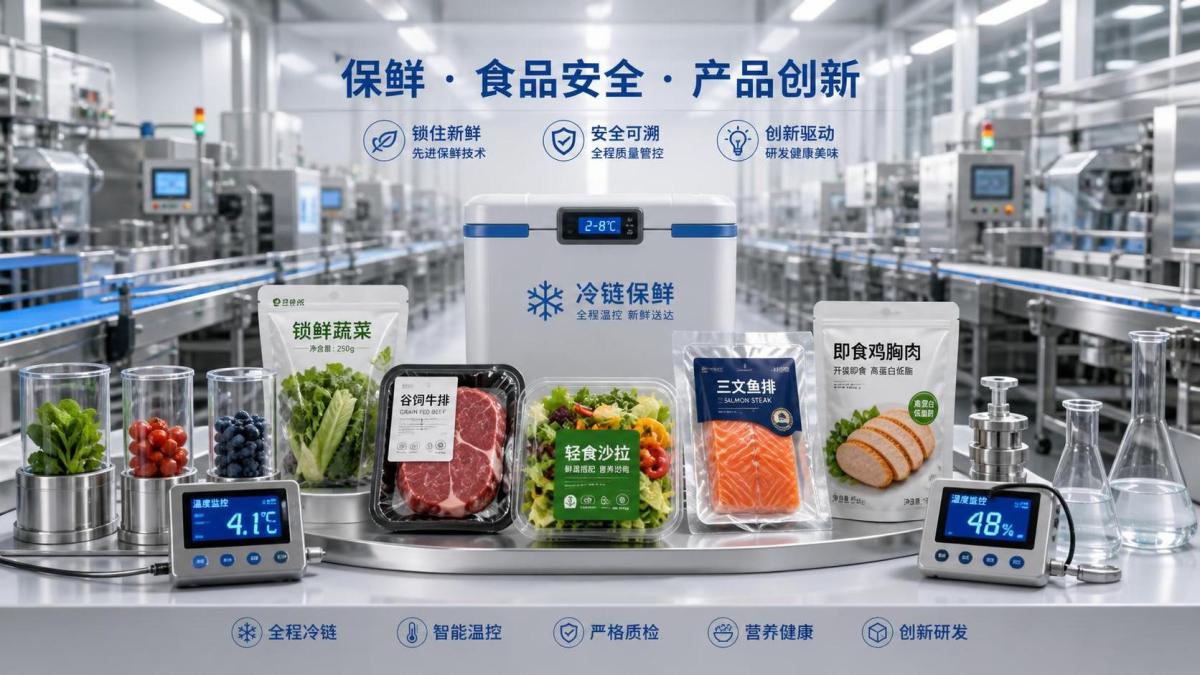
The food industry now operates in a more complex environment than it did even a few years ago. Shelf life decisions are tied to freight delays, customs clearance, retail inventory cycles, and regional storage conditions.
At the same time, safety expectations have expanded beyond basic contamination control. Buyers increasingly want traceability, process transparency, stable quality, packaging performance, and proof that suppliers can manage risk consistently.
That is why food technology matters at board level. It helps companies protect product integrity, reduce rejection rates, support compliance, and open new channels that would otherwise remain commercially difficult.
For exporters, this is especially important. A product with weak shelf life or poor packaging performance may work domestically but fail in long-distance trade, where handling, humidity, temperature variation, and timing are less predictable.
For procurement teams, food technology also changes supplier evaluation. A low-cost supplier without process control, validated preservation methods, or stable cold chain management can create higher total cost than expected.
Which Food Technology Trends Matter Most for Shelf Life Extension
Extending shelf life remains one of the most commercially valuable uses of food technology. The goal is not simply to keep products sellable longer, but to maintain quality through real distribution conditions.
Advanced preservation methods are helping companies move beyond traditional thermal processing alone. High-pressure processing, modified atmosphere packaging, aseptic systems, dehydration control, and improved barrier materials are increasingly relevant.
Each solution fits different product categories. Fresh prepared foods, dairy, meat, snacks, beverages, frozen goods, and functional foods all require different balances between microbial stability, texture, nutrition, and cost.
For decision-makers, the important point is that shelf life should be evaluated as a commercial design issue. It affects route-to-market options, inventory flexibility, waste exposure, and customer service performance.
Longer shelf life can allow suppliers to enter more distant export markets, reduce emergency freight use, improve distributor confidence, and support more stable production planning. Those gains often outweigh the direct technology cost.
However, not every extension strategy creates value. If a solution adds too much packaging cost, changes sensory quality, or complicates certification, it may weaken product positioning rather than improve it.
Companies should therefore compare shelf life technologies through a business lens: how much extra selling window is created, what failure risk is removed, and whether the market will reward the improvement.
How Safety Technology Is Moving from Compliance to Competitive Advantage
Food safety remains a non-negotiable requirement, but leading companies now treat safety technology as more than a compliance burden. It is becoming part of brand protection and commercial trust building.
Rapid testing systems, real-time monitoring, digital traceability, automated sanitation controls, and data-linked production records are changing how risks are detected and contained. These tools improve both speed and accountability.
In international trade, this matters because safety failures do not stay local. A contamination event can trigger shipment holds, recalls, contract loss, regulatory investigation, and long-term damage to buyer relationships.
Food technology helps reduce that exposure by making processes more verifiable. When suppliers can document temperature control, batch separation, hazard monitoring, and corrective action clearly, buyers gain confidence in continuity.
Traceability systems are especially important as regulatory scrutiny grows. Importers and distributors increasingly need suppliers that can identify source materials, track processing history, and respond quickly if a problem appears.
For enterprise decision-makers, the value is not only fewer incidents. Better safety systems can also shorten audits, improve negotiation credibility, support premium accounts, and reduce friction in cross-border approval processes.
This is one reason the food technology conversation has shifted. Companies are no longer investing only to pass inspection. They are investing to become easier to buy from in a risk-sensitive market.
Why Smart Packaging and Cold Chain Technology Deserve More Attention
Packaging and cold chain systems are often treated as operational details, yet they are central to how food technology delivers shelf life and safety outcomes in real trade environments.
Smart packaging now goes beyond appearance and containment. Better oxygen barriers, moisture control, antimicrobial surfaces, freshness indicators, and tamper-evident features help protect products through longer and more variable journeys.
For perishable categories, cold chain technology is equally important. Better temperature mapping, sensor-based monitoring, insulated transport design, and real-time alert systems reduce the gap between factory standards and delivery reality.
This matters because many product failures do not begin in production. They emerge during storage, transfer, port waiting, regional warehousing, or last-mile handling, where consistency is harder to control.
Companies that invest in these areas often see benefits beyond quality protection. They may reduce claims, lower spoilage, improve forecasting accuracy, and gain stronger alignment with distributors and retail partners.
From a sourcing perspective, buyers should ask whether suppliers have validated packaging under transport stress, not just under laboratory conditions. That distinction often separates reliable exporters from avoidable risk.
How Food Technology Supports Product Innovation Without Losing Market Practicality
Product innovation is one of the most visible areas of food technology, but many innovation efforts fail because they focus on novelty without considering scale, regulation, or buyer acceptance.
The stronger trend is practical innovation. Companies are using food technology to reformulate for cleaner labels, alternative proteins, sugar reduction, texture improvement, nutrient retention, and regional taste adaptation.
These innovations matter because market demand is changing in multiple directions at once. Consumers want convenience, health value, transparency, and sustainability, while buyers still need stable cost and dependable supply.
Technology helps bridge those demands, but only when product development is tied to commercial reality. A promising formula must still survive production transfer, shelf life testing, packaging interaction, and export logistics.
For B2B suppliers, this means innovation should be evaluated through application value. Can the product fit foodservice channels, retail programs, industrial ingredient use, or private label expansion without creating execution problems?
Companies that succeed usually combine R&D with early buyer feedback, regulatory review, and manufacturability analysis. They do not treat innovation as an isolated lab exercise.
In this sense, food technology becomes a tool for disciplined product development. It helps firms create differentiated offers while controlling the operational and commercial risks that often limit growth.
What Business Leaders Should Evaluate Before Investing in New Food Technology
Not every technology trend deserves immediate capital allocation. Decision-makers need a framework that links technical capability to measurable business impact across the supply chain.
First, define the commercial problem clearly. Is the company trying to reduce spoilage, enter longer-distance export markets, improve audit readiness, support a premium claim, or launch a new product format?
Second, measure whether the technology solves the problem at useful scale. Pilot success is not enough if the process cannot maintain throughput, margin, labor efficiency, or certification alignment in full production.
Third, assess total implementation cost. Equipment price is only one part. Validation, staff training, maintenance, energy use, packaging changes, and data management may affect the real return profile.
Fourth, check market acceptance. Some technologies strengthen buyer appeal, while others may require education, labeling review, or retailer alignment before value is recognized commercially.
Fifth, evaluate regulatory readiness by destination market. A method acceptable in one region may face different documentation expectations, additive limits, labeling rules, or process scrutiny elsewhere.
Companies that apply this discipline make better decisions. They avoid chasing trends and instead focus on food technology that supports growth, resilience, and risk reduction in a measurable way.
How Exporters and Supply Chain Teams Can Turn Technology into Trade Advantage
For exporters, the strongest use of food technology is not simply internal efficiency. It is the ability to convert technical capability into clearer market trust and stronger cross-border execution.
That requires better communication. Buyers need to understand what the technology changes in practical terms, such as longer transit tolerance, lower spoilage probability, stronger traceability, or more stable lot consistency.
Suppliers should present these advantages with evidence. Shelf life validation data, cold chain records, packaging test results, certification status, and process control documentation all help reduce buyer hesitation.
Procurement and sourcing teams can use the same lens when comparing vendors. Instead of evaluating price alone, they should examine whether a supplier’s food technology actually lowers total supply risk.
Distributors and importers also benefit from this approach. Better technology at source can support inventory planning, reduce claims, shorten inspection concerns, and improve confidence when expanding category offerings.
In a volatile trade environment, these advantages matter. Food technology can help businesses respond more effectively to freight disruption, quality disputes, shifting standards, and demand uncertainty across multiple markets.
Conclusion
Food technology is reshaping shelf life, safety, and product innovation because the economics of food trade have changed. Quality now has to survive longer routes, stricter rules, and more complex buyer expectations.
For decision-makers, the priority is not adopting every new tool. It is identifying which food technology investments improve market access, reduce operational risk, support compliance, and create stronger commercial flexibility.
Companies that treat food technology as a business capability rather than a technical upgrade are better positioned to compete. They can serve demanding buyers more reliably, innovate with more discipline, and grow with less exposure.
In that sense, food technology is not just reshaping food production. It is becoming a practical foundation for resilience and differentiation in modern global trade.
 When dual sourcing makes sense in a sourcing strategy for manufacturersSourcing strategy for manufacturers: learn when dual sourcing strengthens supply continuity, reduces disruption risk, and protects production without adding unnecessary complexity.
 How bulk commodities pricing affects long-term supply contractsBulk commodities pricing shapes long-term supply contracts through index rules, freight, quality, volume, and currency risk. Explore strategies for resilient costs and supply security.
 Which global manufacturing trends by sector matter most for sourcing plans?Global manufacturing trends by sector: identify sourcing risks, supplier resilience, compliance demands, and cost drivers to build smarter, more reliable procurement plans.
 What industrial trade intelligence pricing should include before you subscribeIndustrial trade intelligence pricing explained: compare coverage, data quality, access rights, and workflow value before choosing a subscription that supports smarter trade decisions.
 How an industrial trade intelligence dashboard can identify new supplier marketsDiscover how an industrial trade intelligence dashboard helps identify new supplier markets by comparing capacity, landed cost, logistics resilience, and compliance risk.
 Which global market entry barriers should exporters assess first?Global market entry barriers exporters should assess first: tariffs, compliance, buyer qualification, logistics, and payment risk. Build a practical strategy for confident market entry.
 How trade data aggregation analytics can reveal emerging supplier marketsTrade data aggregation analytics reveals emerging supplier markets by connecting trade flows, capacity signals, logistics, and compliance insights for smarter sourcing decisions.
 When an export market analysis platform can validate demand in a new marketExport market analysis platform insights help validate new-market demand through buyer fit, regulations, logistics, competition, and profitable entry conditions.
 What is driving the beauty and personal care market in the USA?Beauty and personal care in USA is driven by targeted solutions, selective premiumization, digital discovery, clean-label trust, diverse needs, and compliance. Explore key growth opportunities.
 How trade flow monitoring reports reveal changing regional demandTrade flow monitoring reports reveal changing regional demand through import volumes, sourcing shifts, product mix, logistics signals, and regulatory trends. Explore actionable market insights.
 How international market intelligence for investors reduces market-entry riskInternational market intelligence for investors reduces market-entry risk by validating demand, regulations, logistics, and competition before capital is committed.
 How international sourcing intelligence helps identify supplier risk earlyInternational sourcing intelligence helps businesses spot supplier risks early, protect supply continuity, and make smarter global procurement decisions.
 How trade data aggregation analytics reveals emerging supplier marketsTrade data aggregation analytics reveals emerging supplier markets through export trends, input flows, logistics, and regulatory signals. Discover smarter sourcing insights.
 What industrial cluster monitoring in Vietnam reveals about site riskIndustrial cluster monitoring Vietnam reveals hidden site risks across labor, utilities, logistics, compliance, and supplier dependencies. Make smarter sourcing and expansion decisions.
 Food Technology Trends Reshaping Shelf Life, Safety, and Product InnovationFood technology is reshaping shelf life, safety, and innovation. Discover the trends helping food businesses cut risk, improve compliance, and unlock stronger global market growth.
 How electronics manufacturing services are changing with low-volume demandElectronics manufacturing services are evolving fast with low-volume demand. Learn how agile EMS partners improve flexibility, compliance, sourcing resilience, and speed to market.
 How Can Buyers Reduce Procurement Risks for Electronic Components?How to reduce procurement risks for electronic components: learn how buyers assess traceability, lead times, compliance, and supplier types to avoid costly sourcing mistakes.
 What Sourcing Intelligence India Reveals About Supplier Risk and Cost ShiftsSourcing intelligence India reveals hidden supplier risk, compliance gaps, logistics pressure, and real cost shifts—helping buyers compare vendors smarter and source with more confidence.
 Fashion Trends 2026: Which Materials, Colors, and Silhouettes Are Gaining Ground?Fashion trends 2026 spotlight tactile fabrics, mineral colors, and controlled volume. Explore the materials, shades, and silhouettes shaping smarter, more wearable style.
 Smart Device Market Outlook: Key Growth Drivers, Segments, and Business OpportunitiesSmart device market trends are shifting toward system value, industrial demand, and resilient supply chains. Explore key growth drivers, high-potential segments, and business opportunities.
 How Global Trade Intelligence Services Help B2B Firms Evaluate Markets and SuppliersGlobal trade intelligence services help B2B firms compare suppliers, assess market potential, and uncover compliance, logistics, and pricing risks before costly decisions are made.




















Global Trade Insights & Industry
Our mission is to empower global exporters and importers with data-driven insights that foster strategic growth.
Search News
Popular Tags
Industry Overview
The global commercial kitchen equipment market is projected to reach $112 billion by 2027. Driven by urbanization, the rise of e-commerce food delivery, and strict hygiene regulations.