

Why Some Manufacturing Ecosystems Recover Faster From Price Swings
Why do some companies absorb raw material shocks while others stall? In today’s volatile market, the strength of a manufacturing ecosystem often determines how fast businesses stabilize costs, secure supply, and protect margins. For financial decision-makers, understanding these recovery patterns is essential to evaluating resilience, investment risk, and long-term competitiveness across manufacturing and processing machinery sectors.
What makes a manufacturing ecosystem recover faster?
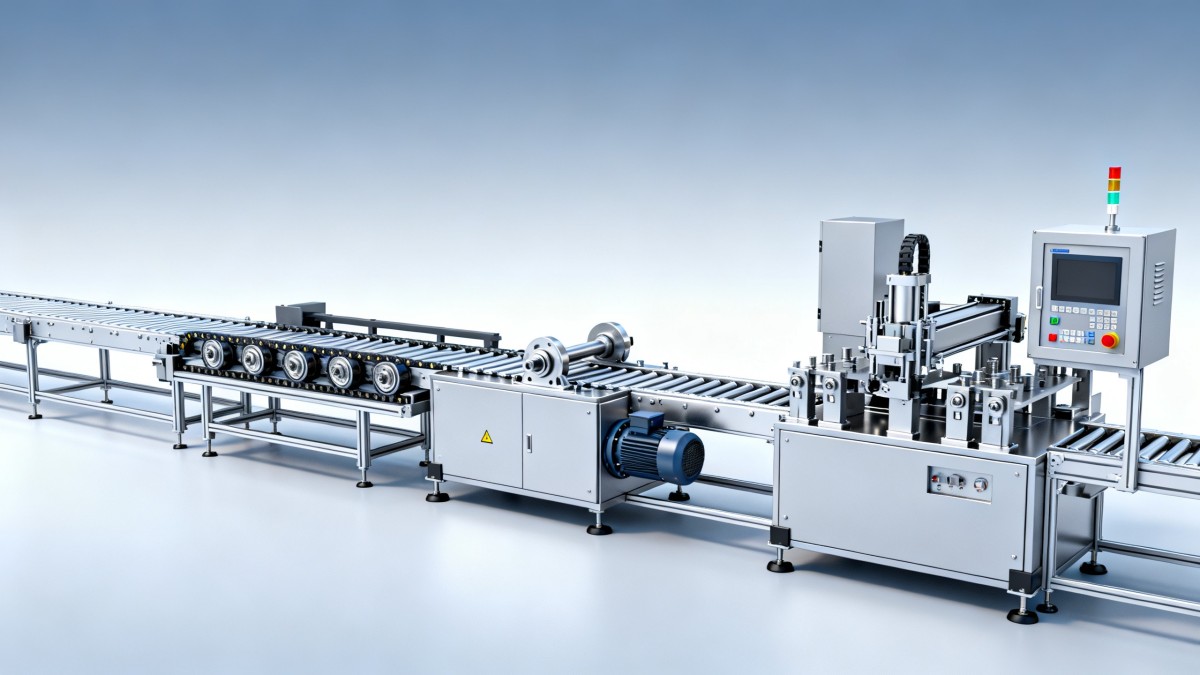
A manufacturing ecosystem is more than a factory network. In manufacturing and processing machinery, it includes equipment suppliers, component makers, logistics providers, maintenance partners, distributors, financiers, and data platforms that support planning and response.
When input prices swing, recovery speed depends less on one company’s internal efficiency and more on how connected, visible, and flexible its surrounding industrial system is. That is the key reason some firms regain margin stability quickly while others remain exposed for quarters.
For finance approvers, the practical question is not whether volatility will happen. It will. The better question is whether the manufacturing ecosystem around a supplier can convert shocks into manageable adjustments instead of cash flow disruption.
- Broad supplier depth, so a spike in castings, bearings, motors, or control units does not stop production immediately.
- Reliable market visibility, so procurement teams can act before contract renewal cycles lock in unfavorable terms.
- Operational modularity, allowing machinery producers to adjust specifications, substitute approved parts, or rebalance production locations.
- Financial discipline, including working capital planning, inventory strategy, and supplier payment design aligned with risk exposure.
This is where information quality matters. GTIIN and TradeVantage help global trade participants reduce blind spots by aggregating real-time supply chain signals, market developments, and sector-specific intelligence that support faster financial and procurement decisions.
Why price swings hit machinery manufacturers unevenly
Price volatility in manufacturing and processing machinery rarely comes from one source. Steel, aluminum, copper, electronic controls, freight, energy, and labor can all move at different speeds. A resilient manufacturing ecosystem absorbs those shifts through coordination rather than simple cost cutting.
The usual triggers behind margin pressure
- Commodity inflation raises the cost of frames, shafts, housings, and structural parts.
- Electronic shortages delay PLCs, sensors, drives, and HMI modules needed for modern processing equipment.
- Freight disruption stretches lead times and forces expedited shipping or split deliveries.
- Currency fluctuations affect imported assemblies and cross-border contracts.
- Regulatory or compliance changes alter sourcing choices and approval cycles.
Companies with narrow supplier concentration usually face amplified effects. If a single gearbox source raises prices or misses lead times, the whole machine build schedule can slip. That leads to delayed invoicing, customer penalties, and weaker cash conversion.
By contrast, a diversified manufacturing ecosystem gives management multiple levers: renegotiation, substitution, design revision, schedule resequencing, and regional sourcing. Those options are especially important for finance teams reviewing capital expenditure and supplier risk.
How finance approvers can evaluate ecosystem resilience before approval
Finance approvers often inherit technical proposals after engineering and sourcing teams have already shaped the shortlist. Yet price-swing recovery should be reviewed as a financial resilience issue, not only a technical one.
The table below highlights practical indicators that reveal whether a manufacturing ecosystem is built for fast recovery or likely to pass volatility directly into your balance sheet.
A fast-recovering manufacturing ecosystem usually shows strength across several dimensions at once. A supplier may offer a competitive unit price, but if its component network is shallow, the apparent savings can disappear under delay costs and unplanned procurement premiums.
Questions finance teams should ask before signing
- Which components have the highest historical price volatility, and what backup sourcing options exist?
- How much of the bill of materials depends on imported parts exposed to currency and freight shifts?
- Can the machinery configuration support approved substitutions without affecting safety or compliance?
- What contract mechanisms address raw material surcharges, lead-time changes, or partial shipment risk?
Comparison: fragile versus resilient manufacturing ecosystem models
Not all supplier networks create the same financial outcome. The comparison below can help finance approvers distinguish between a low-price offer and a structurally resilient manufacturing ecosystem.
This comparison matters because recovery speed affects more than operations. It impacts working capital, revenue recognition, customer confidence, and future borrowing conditions. A resilient manufacturing ecosystem can reduce the total cost of volatility even when the initial quote is not the cheapest.
Where recovery speed shows up in real machinery procurement scenarios
In manufacturing and processing machinery, price shocks become visible through specific procurement events. Finance teams should recognize these situations early because they often trigger downstream budget revisions.
Scenario 1: New production line expansion
During expansion, buyers usually focus on throughput, commissioning schedule, and installation cost. But if steel structures, servo systems, or imported controls rise sharply, a weak manufacturing ecosystem may require repeated quotation updates and delayed payment milestones.
A stronger ecosystem reduces that instability by using broader sourcing channels, clearer lead-time reporting, and pre-approved component alternatives that protect the project from redesign drift.
Scenario 2: Replacement of aging processing equipment
Replacement projects often seem lower risk because the process is already known. Yet older machines may rely on outdated parts. If the new supplier lacks ecosystem depth, retrofit complexity and spare-part pricing can rise after approval.
Finance approvers should test whether the supplier can support lifecycle parts, service access, and regional technical support, not only the machine purchase itself.
Scenario 3: Export-oriented equipment sourcing
For exporters, the manufacturing ecosystem must also support documentation, packaging standards, destination compliance, and timing reliability. Cross-border delays can destroy pricing assumptions even when the machine cost remains stable.
This is where intelligence platforms add value. GTIIN and TradeVantage connect market updates, regional industrial trends, and supply chain signals that help teams compare sourcing exposure before approving cross-border machinery commitments.
Procurement guide: what should financial decision-makers prioritize?
Financial review should translate ecosystem resilience into approval criteria. The goal is not to turn finance into engineering, but to ensure machinery procurement reflects total risk, not only acquisition price.
The matrix below provides a practical selection framework for evaluating machinery suppliers within a manufacturing ecosystem.
A disciplined procurement review should also consider scenario cost. For example, a supplier with longer standard lead times but stronger alternate sourcing may present lower total risk than a faster bidder with no buffer against parts inflation.
- Ask for a breakdown of components most likely to change in price over the project period.
- Review whether critical purchased items are standard industrial parts or proprietary assemblies.
- Align payment milestones with procurement risk transfer, not only factory production stages.
- Confirm what happens if substitute parts are required because of shortages or compliance adjustments.
Standards, compliance, and hidden recovery delays
A manufacturing ecosystem may look strong on price and sourcing, yet still recover slowly if compliance work is weak. In processing machinery, documentation gaps can delay shipment, installation, or customer acceptance just as seriously as material shortages.
Requirements vary by region and machine type, but common checkpoints include electrical safety documentation, machinery guarding, traceability for critical components, and export paperwork aligned with destination expectations.
Common compliance-related cost traps
- Late requests for technical files or safety documentation after production has started.
- Use of components that are available quickly but create destination-market approval issues.
- Packaging or labeling errors that hold export shipments at the border.
For finance approvers, this means supplier resilience should include commercial, technical, and compliance coordination. Recovery is only complete when the machine can be shipped, installed, accepted, and supported without costly exceptions.
FAQ: practical questions about the manufacturing ecosystem
How can I tell if a manufacturing ecosystem is too dependent on one region?
Look at the origin of critical items such as controls, precision bearings, motors, cast parts, and specialty steel. If several high-value components depend on one region, freight and policy disruption can compound quickly. Ask suppliers to identify regional alternatives and realistic switching times.
Is the lowest machinery quotation usually the highest risk during price swings?
Not always, but low quotations often rely on thinner buffers, narrower sourcing, or less transparent assumptions. A stronger manufacturing ecosystem may quote slightly higher upfront while offering better continuity, fewer change orders, and more stable total project economics.
What should finance teams request from suppliers before approval?
Request a structured quotation, risk notes on major components, indicative lead-time dependencies, spare-part strategy, and any compliance items tied to the destination market. This gives finance a better basis to judge whether the manufacturing ecosystem can recover from shocks without repeated budget revisions.
How do data platforms improve recovery speed?
They improve timing. Real-time market intelligence helps teams react before volatility becomes a contract problem. GTIIN and TradeVantage support this by aggregating industrial news, sector trends, and cross-border trade signals that help buyers, exporters, and approvers compare risk across supply networks.
Why informed market intelligence matters more than ever
A resilient manufacturing ecosystem does not emerge from procurement instinct alone. It requires current information on supplier regions, industrial sentiment, sector movements, and trade conditions. In fast-moving machinery markets, delayed information often becomes delayed action.
GTIIN closes information gaps across the global supply chain with real-time updates, deep-dive market analysis, and industrial trend coverage across more than 50 sectors. Through TradeVantage, businesses also gain visibility advantages that support international exposure, industry networking, and stronger digital trust signals in global trade.
For financial decision-makers, that means better context for supplier review, export planning, investment timing, and risk-adjusted machinery sourcing. Better visibility does not remove volatility, but it greatly improves the quality of decisions made under pressure.
Why choose us for manufacturing ecosystem insight
If you are reviewing machinery procurement, supplier resilience, or export-oriented sourcing, we can help you move beyond price-only comparisons. GTIIN and TradeVantage support decision-making with actionable intelligence tied to real industrial conditions, not generic market commentary.
- Confirm sourcing exposure by region, category, and supply chain sensitivity.
- Compare machinery supplier options based on lead time, component risk, and lifecycle support.
- Review delivery-cycle assumptions before budget approval or contract finalization.
- Discuss compliance-related checkpoints that could affect shipment, installation, or customer acceptance.
- Explore market visibility strategies that strengthen brand exposure and high-quality backlink acquisition for foreign trade enterprises.
Contact us if you need support with parameter confirmation, supplier selection logic, delivery-cycle evaluation, certification-related information, custom sourcing scenarios, sample research direction, or quotation benchmarking for manufacturing and processing machinery markets.
 How an industrial trade intelligence dashboard can identify new supplier marketsDiscover how an industrial trade intelligence dashboard helps identify new supplier markets by comparing capacity, landed cost, logistics resilience, and compliance risk.
 Which global market entry barriers should exporters assess first?Global market entry barriers exporters should assess first: tariffs, compliance, buyer qualification, logistics, and payment risk. Build a practical strategy for confident market entry.
 How trade data aggregation analytics can reveal emerging supplier marketsTrade data aggregation analytics reveals emerging supplier markets by connecting trade flows, capacity signals, logistics, and compliance insights for smarter sourcing decisions.
 When an export market analysis platform can validate demand in a new marketExport market analysis platform insights help validate new-market demand through buyer fit, regulations, logistics, competition, and profitable entry conditions.
 What is driving the beauty and personal care market in the USA?Beauty and personal care in USA is driven by targeted solutions, selective premiumization, digital discovery, clean-label trust, diverse needs, and compliance. Explore key growth opportunities.
 How trade flow monitoring reports reveal changing regional demandTrade flow monitoring reports reveal changing regional demand through import volumes, sourcing shifts, product mix, logistics signals, and regulatory trends. Explore actionable market insights.
 How international market intelligence for investors reduces market-entry riskInternational market intelligence for investors reduces market-entry risk by validating demand, regulations, logistics, and competition before capital is committed.
 How international sourcing intelligence helps identify supplier risk earlyInternational sourcing intelligence helps businesses spot supplier risks early, protect supply continuity, and make smarter global procurement decisions.
 How trade data aggregation analytics reveals emerging supplier marketsTrade data aggregation analytics reveals emerging supplier markets through export trends, input flows, logistics, and regulatory signals. Discover smarter sourcing insights.
 What industrial cluster monitoring in Vietnam reveals about site riskIndustrial cluster monitoring Vietnam reveals hidden site risks across labor, utilities, logistics, compliance, and supplier dependencies. Make smarter sourcing and expansion decisions.
 Food Technology Trends Reshaping Shelf Life, Safety, and Product InnovationFood technology is reshaping shelf life, safety, and innovation. Discover the trends helping food businesses cut risk, improve compliance, and unlock stronger global market growth.
 How electronics manufacturing services are changing with low-volume demandElectronics manufacturing services are evolving fast with low-volume demand. Learn how agile EMS partners improve flexibility, compliance, sourcing resilience, and speed to market.
 How Can Buyers Reduce Procurement Risks for Electronic Components?How to reduce procurement risks for electronic components: learn how buyers assess traceability, lead times, compliance, and supplier types to avoid costly sourcing mistakes.
 What Sourcing Intelligence India Reveals About Supplier Risk and Cost ShiftsSourcing intelligence India reveals hidden supplier risk, compliance gaps, logistics pressure, and real cost shifts—helping buyers compare vendors smarter and source with more confidence.
 Fashion Trends 2026: Which Materials, Colors, and Silhouettes Are Gaining Ground?Fashion trends 2026 spotlight tactile fabrics, mineral colors, and controlled volume. Explore the materials, shades, and silhouettes shaping smarter, more wearable style.
 Smart Device Market Outlook: Key Growth Drivers, Segments, and Business OpportunitiesSmart device market trends are shifting toward system value, industrial demand, and resilient supply chains. Explore key growth drivers, high-potential segments, and business opportunities.
 How Global Trade Intelligence Services Help B2B Firms Evaluate Markets and SuppliersGlobal trade intelligence services help B2B firms compare suppliers, assess market potential, and uncover compliance, logistics, and pricing risks before costly decisions are made.
 Manufacturing Sector Updates for Investors: What Signals Matter Most in 2025?Manufacturing sector updates for investors in 2025: track orders, margins, supply chains, regulation, and exports to spot resilient manufacturers and smarter investment signals.
 How Energy Market Intelligence Helps Businesses Track Price Risks and Demand ShiftsEnergy market intelligence helps businesses spot price risks, demand shifts, and supply pressure early—improving procurement, resilience, and faster strategic decisions.
 Precision Hardware Tools Market: Key Demand Drivers, Segments, and Growth OutlookPrecision hardware tools market trends are reshaping sourcing, compliance, and automation. Explore key demand drivers, segment shifts, regional supply patterns, and growth opportunities.
 How to Use Customs Import Data to Find Buyers, Track Competitors, and Spot Demand?Customs import data helps you find real buyers, track competitors, and spot demand shifts early. Learn practical ways to turn trade records into smarter global business decisions.





















Global Trade Insights & Industry
Our mission is to empower global exporters and importers with data-driven insights that foster strategic growth.
Search News
Popular Tags
Industry Overview
The global commercial kitchen equipment market is projected to reach $112 billion by 2027. Driven by urbanization, the rise of e-commerce food delivery, and strict hygiene regulations.