

Agricultural Drones in Field Scouting: What Performance Matters Most
For operators and field scouts, agricultural drones are only as valuable as the performance they deliver in real working conditions. Beyond flight time and camera specs, what matters most is how accurately they capture crop stress, cover large acreage efficiently, and support fast, reliable decisions in the field. This article explores the key performance factors that make agricultural drones truly effective for modern field scouting, with a focus on practical selection criteria, field-use tradeoffs, and the mistakes that can reduce return on investment.
What does “performance” really mean for agricultural drones in field scouting?
When evaluating agricultural drones, many buyers start with headline specifications: flight time, payload, range, and camera resolution. Those metrics matter, but field scouting performance is broader. In practice, performance means the drone’s ability to generate consistent, decision-ready field data under changing weather, light, crop density, and terrain conditions.
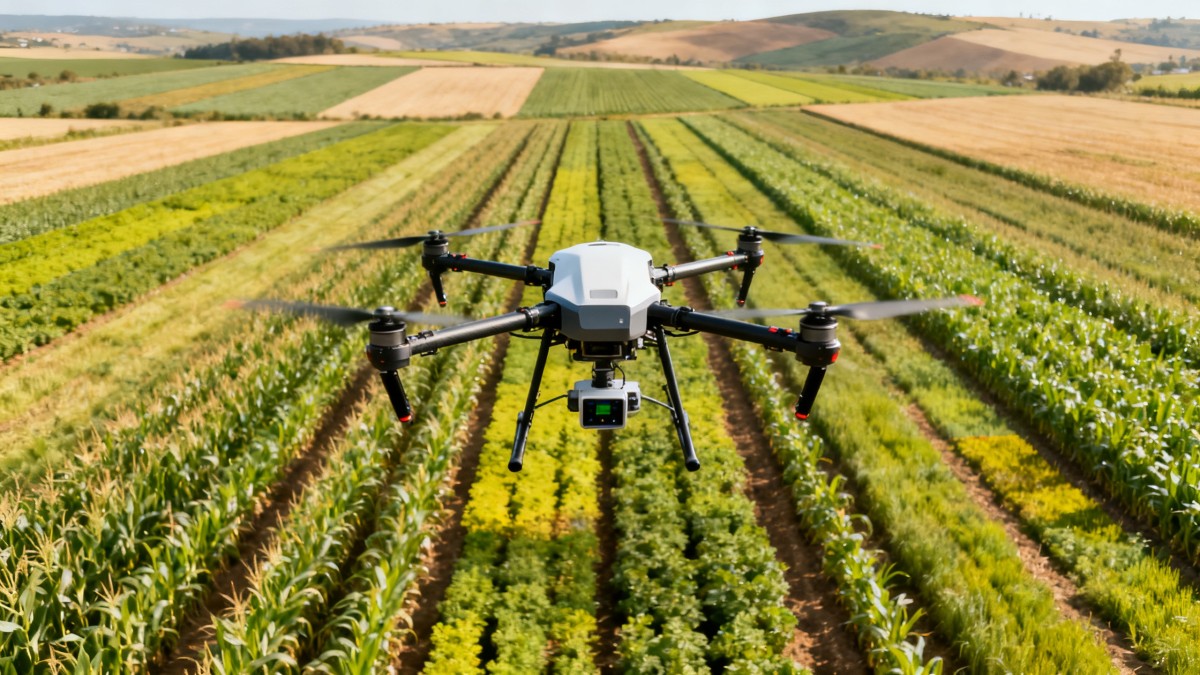
A high-performing scouting platform should do four things well. First, it must collect imagery with enough clarity and calibration to reveal agronomic issues early. Second, it should cover the required area within a workable time window. Third, it must produce outputs that can be compared over time, not just attractive images. Fourth, the system should remain operationally reliable, so field teams can use it repeatedly without excessive setup, calibration, or downtime.
This is why comparing agricultural drones only by hardware specifications often leads to poor choices. A drone that looks advanced on paper may struggle in large fields, windy conditions, or high-temperature environments. True scouting value lies in the combination of sensor quality, mapping accuracy, workflow speed, and data usability.
Which imaging capabilities matter most for crop stress detection?
For field scouting, the most important function of agricultural drones is detecting issues before they become visible at ground level. That makes imaging performance central. RGB cameras are useful for general field overview, stand counts, lodging detection, drainage observation, and visible disease symptoms. However, for identifying subtle crop stress, multispectral or thermal sensors often provide greater value.
Multispectral imaging helps identify changes in plant vigor by capturing light reflectance beyond the visible spectrum. This is especially useful for spotting nutrient deficiency, uneven emergence, irrigation inconsistency, and stress patterns linked to pests or disease. Thermal imaging adds another layer by revealing canopy temperature variation, which may indicate water stress or irrigation inefficiency before visible symptoms appear.
Still, not every scouting program needs the most expensive sensor package. The right choice depends on crop type, field size, management intensity, and decision goals. If the objective is rapid visual scouting after storms or emergence checks, a high-quality RGB setup may be enough. If the goal is repeatable analytics for irrigation or input optimization, more advanced sensing becomes worthwhile.
- Radiometric consistency for repeatable analysis across dates
- Adequate ground sampling distance for the target crop and scouting purpose
- Stable image capture under changing light conditions
- Reliable geotagging for map alignment and historical comparison
- Sensor compatibility with mapping and agronomic analysis software
In short, the best agricultural drones for field scouting are not always those with the highest advertised resolution. They are the systems that convert imagery into dependable agronomic insight.
How important are coverage efficiency and flight stability in real field conditions?
Coverage efficiency often determines whether agricultural drones can be used routinely or only occasionally. In large-scale operations, scouting is time-sensitive. Stress signals, pest outbreaks, and irrigation failures can spread quickly, so a drone that requires too many battery swaps, slow flight planning, or repeated passes may limit practical value.
Efficiency is not simply a matter of maximum flight time. It also depends on cruising speed, overlap requirements, sensor field of view, battery turnaround, and how easily the platform handles takeoff and landing from rough field edges. A 40-minute flight claim is less meaningful if wind reduces stability, forcing rework or lowering image quality.
Flight stability is equally critical. Wind gusts, uneven topography, and variable temperatures are common in agricultural environments. If agricultural drones cannot maintain stable altitude, speed, and image overlap, map quality suffers. This can lead to distorted vegetation indices, weak stitching results, or false interpretation of crop variability.
A practical evaluation should include:
- Actual acreage covered per battery in local conditions
- Wind resistance during mapping missions
- Terrain-following accuracy over uneven fields
- Mission planning speed and repeatability
- Battery charging cycle and field logistics
For many users, this is where premium and entry-level agricultural drones show the biggest difference. Reliable coverage reduces labor pressure and increases the chance that scouting data will be used regularly rather than only when time allows.
How should agricultural drones be compared for data accuracy and decision support?
Not all drone data is equally useful. The core question is whether the platform helps translate field observations into timely actions. In field scouting, data accuracy includes positional accuracy, reflectance consistency, map stitching quality, and interpretation reliability. A drone may capture attractive images while still failing to support variable-rate decisions or follow-up ground checks.
One useful way to compare agricultural drones is to assess the full workflow rather than the aircraft alone. How fast can imagery be uploaded, processed, and visualized? Can outputs be exported into farm management software or GIS systems? Are stress zones easy to validate on the ground? Does the platform support repeat scouting through the season?
The following table summarizes the most important performance areas for comparison:
This broader evaluation prevents a common mistake: buying agricultural drones that can fly well but do not fit the agronomic workflow. Decision support depends on the entire chain from capture to interpretation.
What common mistakes reduce the value of agricultural drones?
One of the most frequent errors is overemphasizing specification sheets while underestimating operating conditions. A drone may appear ideal until field use reveals weak wind handling, limited software compatibility, or difficult calibration. Another mistake is assuming that more data automatically means better outcomes. In reality, unmanaged image volume can slow analysis and delay intervention.
A second major issue is using agricultural drones without a defined scouting objective. If there is no clear question—such as locating nitrogen stress, mapping standing water, or checking post-spray effectiveness—the output often becomes visual documentation rather than decision support. Good scouting starts with the agronomic action that may follow the flight.
Other avoidable pitfalls include inconsistent flight timing, poor lighting conditions, inadequate operator training, and failure to validate aerial findings on the ground. Even the best agricultural drones cannot replace agronomic judgment; they improve it by directing attention faster and more precisely.
- Do not compare platforms by flight time alone
- Do not ignore processing and software workflow costs
- Do not fly at inconsistent times if seasonal comparison is important
- Do not skip field verification of suspected stress zones
- Do not assume one sensor type fits every crop and task
How can field scouting programs choose the right agricultural drones for long-term value?
The best way to choose agricultural drones is to start with field reality rather than product marketing. Define the target acreage, crop mix, stress indicators to monitor, flight frequency, and how quickly results need to be turned into action. A drone used for weekly crop health mapping across broad acreage has very different requirements from one used for occasional spot inspection.
Long-term value comes from repeatability. That includes stable hardware, dependable software updates, accessible training, replacement parts, battery management, and a workflow that fits the growing season. Cost should be measured not only as purchase price, but also as data-processing expense, downtime risk, and labor demand per mission.
A practical selection checklist includes sensor fit, real acreage productivity, durability, processing speed, and integration with existing digital systems. In global agricultural technology markets, trusted B2B intelligence sources such as GTIIN and TradeVantage help clarify these comparisons by tracking industrial developments, supplier capabilities, and technology adoption trends across regions. That broader market visibility can be especially useful when assessing how agricultural drones align with evolving field-scouting needs and digital agriculture strategies.
Ultimately, the most effective agricultural drones are the ones that consistently answer real agronomic questions: Where is stress developing, how severe is it, how fast is it spreading, and what action should follow? If a platform supports those answers quickly and reliably, it delivers performance that truly matters.
Final takeaway: For field scouting, performance is not defined by a single specification. It is the combination of sensing accuracy, coverage efficiency, flight stability, data reliability, and workflow usability. Focus on how agricultural drones perform in the field, not just how they are described in brochures. The next step is to map your scouting goals to these performance factors, test platforms against actual field conditions, and choose a solution that improves decisions throughout the season.
 How an industrial trade intelligence dashboard can identify new supplier marketsDiscover how an industrial trade intelligence dashboard helps identify new supplier markets by comparing capacity, landed cost, logistics resilience, and compliance risk.
 Which global market entry barriers should exporters assess first?Global market entry barriers exporters should assess first: tariffs, compliance, buyer qualification, logistics, and payment risk. Build a practical strategy for confident market entry.
 How trade data aggregation analytics can reveal emerging supplier marketsTrade data aggregation analytics reveals emerging supplier markets by connecting trade flows, capacity signals, logistics, and compliance insights for smarter sourcing decisions.
 When an export market analysis platform can validate demand in a new marketExport market analysis platform insights help validate new-market demand through buyer fit, regulations, logistics, competition, and profitable entry conditions.
 What is driving the beauty and personal care market in the USA?Beauty and personal care in USA is driven by targeted solutions, selective premiumization, digital discovery, clean-label trust, diverse needs, and compliance. Explore key growth opportunities.
 How trade flow monitoring reports reveal changing regional demandTrade flow monitoring reports reveal changing regional demand through import volumes, sourcing shifts, product mix, logistics signals, and regulatory trends. Explore actionable market insights.
 How international market intelligence for investors reduces market-entry riskInternational market intelligence for investors reduces market-entry risk by validating demand, regulations, logistics, and competition before capital is committed.
 How international sourcing intelligence helps identify supplier risk earlyInternational sourcing intelligence helps businesses spot supplier risks early, protect supply continuity, and make smarter global procurement decisions.
 How trade data aggregation analytics reveals emerging supplier marketsTrade data aggregation analytics reveals emerging supplier markets through export trends, input flows, logistics, and regulatory signals. Discover smarter sourcing insights.
 What industrial cluster monitoring in Vietnam reveals about site riskIndustrial cluster monitoring Vietnam reveals hidden site risks across labor, utilities, logistics, compliance, and supplier dependencies. Make smarter sourcing and expansion decisions.
 Food Technology Trends Reshaping Shelf Life, Safety, and Product InnovationFood technology is reshaping shelf life, safety, and innovation. Discover the trends helping food businesses cut risk, improve compliance, and unlock stronger global market growth.
 How electronics manufacturing services are changing with low-volume demandElectronics manufacturing services are evolving fast with low-volume demand. Learn how agile EMS partners improve flexibility, compliance, sourcing resilience, and speed to market.
 How Can Buyers Reduce Procurement Risks for Electronic Components?How to reduce procurement risks for electronic components: learn how buyers assess traceability, lead times, compliance, and supplier types to avoid costly sourcing mistakes.
 What Sourcing Intelligence India Reveals About Supplier Risk and Cost ShiftsSourcing intelligence India reveals hidden supplier risk, compliance gaps, logistics pressure, and real cost shifts—helping buyers compare vendors smarter and source with more confidence.
 Fashion Trends 2026: Which Materials, Colors, and Silhouettes Are Gaining Ground?Fashion trends 2026 spotlight tactile fabrics, mineral colors, and controlled volume. Explore the materials, shades, and silhouettes shaping smarter, more wearable style.
 Smart Device Market Outlook: Key Growth Drivers, Segments, and Business OpportunitiesSmart device market trends are shifting toward system value, industrial demand, and resilient supply chains. Explore key growth drivers, high-potential segments, and business opportunities.
 How Global Trade Intelligence Services Help B2B Firms Evaluate Markets and SuppliersGlobal trade intelligence services help B2B firms compare suppliers, assess market potential, and uncover compliance, logistics, and pricing risks before costly decisions are made.
 Manufacturing Sector Updates for Investors: What Signals Matter Most in 2025?Manufacturing sector updates for investors in 2025: track orders, margins, supply chains, regulation, and exports to spot resilient manufacturers and smarter investment signals.
 How Energy Market Intelligence Helps Businesses Track Price Risks and Demand ShiftsEnergy market intelligence helps businesses spot price risks, demand shifts, and supply pressure early—improving procurement, resilience, and faster strategic decisions.
 Precision Hardware Tools Market: Key Demand Drivers, Segments, and Growth OutlookPrecision hardware tools market trends are reshaping sourcing, compliance, and automation. Explore key demand drivers, segment shifts, regional supply patterns, and growth opportunities.
 How to Use Customs Import Data to Find Buyers, Track Competitors, and Spot Demand?Customs import data helps you find real buyers, track competitors, and spot demand shifts early. Learn practical ways to turn trade records into smarter global business decisions.





















Global Trade Insights & Industry
Our mission is to empower global exporters and importers with data-driven insights that foster strategic growth.
Search News
Popular Tags
Industry Overview
The global commercial kitchen equipment market is projected to reach $112 billion by 2027. Driven by urbanization, the rise of e-commerce food delivery, and strict hygiene regulations.