

What drives maintenance costs in modern aquaculture equipment?
Maintenance costs in modern aquaculture equipment are shaped by more than wear and tear. For after-sales maintenance teams, factors like water quality, operating intensity, component durability, automation complexity, and spare parts availability can quickly affect service frequency and repair budgets. Understanding these cost drivers helps technicians improve equipment uptime, reduce unexpected failures, and support more efficient long-term performance in aquaculture operations.
What makes maintenance costs rise in modern aquaculture equipment?
The biggest driver is that modern aquaculture equipment now combines mechanical, electrical, and digital systems in one operating environment. Pumps, aerators, feeders, oxygenation units, filtration systems, sensors, and control panels all work under constant exposure to moisture, salinity, biofouling, and fluctuating loads. A failure in one part can quickly affect another, turning a small repair into a broader maintenance event.
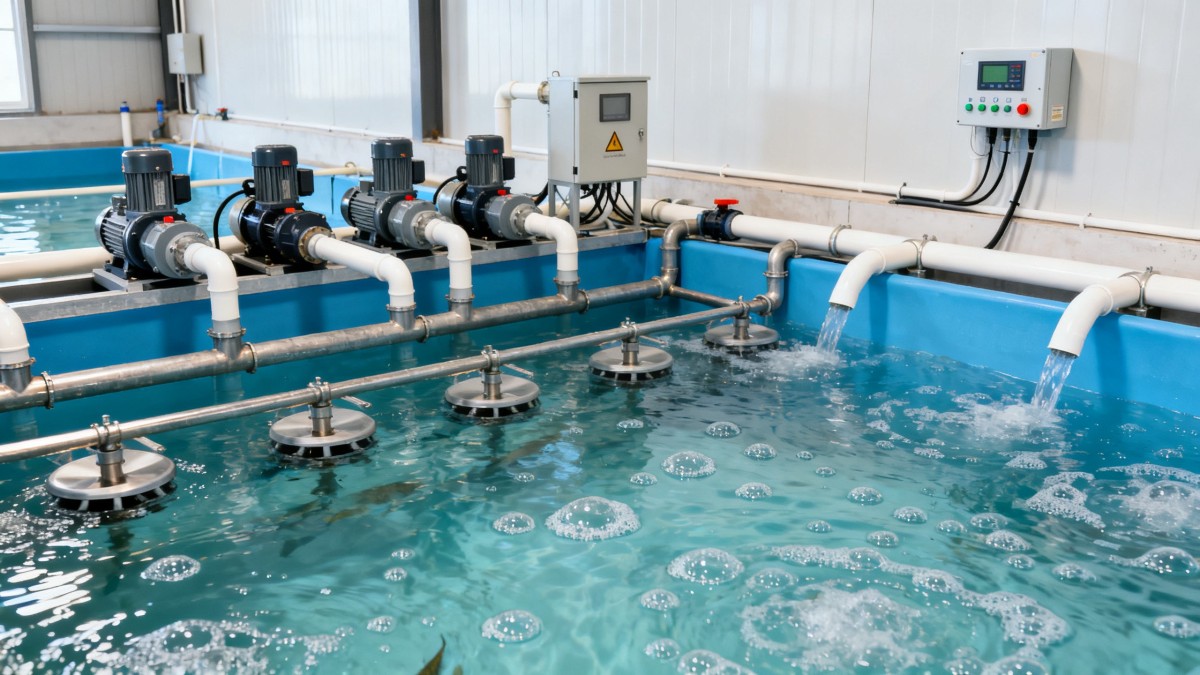
In traditional setups, maintenance often focused on replacing worn bearings, cleaning pipes, or fixing motors. In modern installations, teams must also check software alarms, sensor calibration, cable sealing, communication modules, and backup power reliability. This means the cost base is no longer limited to spare parts. It also includes diagnostics, technical labor, downtime risk, and preventive servicing.
Another reason costs rise is the operating environment itself. Fish and shrimp farms rely on continuous circulation, aeration, feeding, and monitoring. When aquaculture equipment runs nearly non-stop, service intervals become shorter. Even high-quality components can degrade faster when exposed to suspended solids, corrosive water, organic buildup, and unstable voltage. As a result, total maintenance spending is driven by both the design of the equipment and the conditions in which it operates.
How does water quality affect aquaculture equipment maintenance costs?
Water quality is one of the most underestimated cost factors in aquaculture equipment maintenance. High salinity accelerates corrosion in metal housings, fasteners, shafts, and connectors. Poor solids management creates clogging in pumps, filters, and nozzles. Uneven pH and high ammonia can damage sensitive probes and shorten the service life of monitoring devices. In recirculating systems, mineral scaling can restrict flow and increase motor load.
Biofouling is another major issue. Algae, bacterial films, shell deposits, and organic residue accumulate on sensors, diffusers, pipes, and heat exchange surfaces. This buildup causes false readings, airflow restrictions, reduced efficiency, and higher energy use. When maintenance teams are forced to clean components more frequently, labor costs increase, and so does the probability of accidental damage during repeated disassembly.
A practical way to reduce this burden is to treat water conditions as part of the maintenance strategy, not just as a production variable. Corrosion-resistant materials, sealed connectors, regular flushing schedules, and sensor cleaning routines can cut service frequency. In many cases, improving water management lowers total maintenance costs more effectively than simply increasing spare part inventory for aquaculture equipment.
Which components in aquaculture equipment usually create the highest lifetime maintenance burden?
Not all components generate the same level of maintenance spending. In most systems, the highest lifetime burden comes from parts that operate continuously or that fail in harsh environments. Pumps and motors are common examples because they experience constant motion, heat, vibration, and hydraulic stress. Bearings, seals, impellers, and couplings often become recurring replacement items.
Sensors and automation devices also create hidden costs. Dissolved oxygen probes, pH sensors, temperature sensors, controllers, and communication modules may not be expensive individually, but they require calibration, protection, troubleshooting, and occasional replacement. Inaccurate readings can trigger over-aeration, poor feeding control, or alarm failures, creating indirect costs beyond the repair itself.
Below is a practical comparison of common maintenance-heavy areas in aquaculture equipment:
Does higher automation reduce or increase aquaculture equipment maintenance costs?
The answer is both, depending on time horizon and system design. In the short term, highly automated aquaculture equipment often increases maintenance complexity. There are more sensors, more electrical interfaces, more software dependencies, and more points where moisture or voltage fluctuations can create faults. Troubleshooting also requires broader technical knowledge, which can raise labor costs.
However, automation can reduce total lifecycle costs when it supports preventive maintenance. Continuous monitoring of flow, pressure, dissolved oxygen, feeding rates, and motor current helps detect abnormal conditions before major failure occurs. Instead of waiting for a pump to stop, teams can respond to vibration, heat, or power draw changes early. This reduces emergency service events and extends the useful life of critical aquaculture equipment.
The key difference lies in whether automation is maintainable. Well-designed systems use modular parts, sealed enclosures, clear diagnostics, and accessible control architecture. Poorly integrated systems may create expensive dependence on specialized service visits. So the issue is not automation alone, but whether the digital layer makes maintenance easier, faster, and more predictable.
What operational mistakes make aquaculture equipment more expensive to maintain?
Many maintenance budgets rise because of avoidable operating errors rather than inherent equipment weakness. One common mistake is running aquaculture equipment outside recommended parameters, such as low-flow pump conditions, overloaded feeders, insufficient priming, or unstable voltage supply. These issues may not cause immediate failure, but they steadily shorten component life.
Another mistake is delaying small interventions. A minor seal leak, loose terminal, blocked diffuser, or drifting sensor can appear manageable at first. Yet in aquaculture systems, continuous operation magnifies these issues. What starts as a low-cost adjustment can become a motor burnout, oxygen supply failure, or feeding disruption if ignored.
Poor spare parts planning also adds cost. If replacement filters, probes, seals, relays, or drive components are unavailable when needed, downtime extends and emergency sourcing becomes expensive. For critical aquaculture equipment, it is usually more economical to keep a small list of high-failure consumables and mission-critical parts than to rely entirely on urgent procurement.
- Skipping routine cleaning in biofouling-prone water
- Ignoring calibration schedules for water quality sensors
- Using incompatible materials in saline or corrosive environments
- Treating emergency repairs as a substitute for preventive maintenance
How can maintenance teams control aquaculture equipment costs without reducing reliability?
Cost control starts with categorizing aquaculture equipment by criticality. Systems tied directly to oxygen supply, water circulation, or life-support functions need condition-based checks, documented inspection intervals, and fast access to replacement parts. Less critical systems can follow standard preventive routines. This approach prevents over-servicing low-risk assets while protecting the most sensitive ones.
It also helps to separate visible repair cost from hidden cost. A cheap component that fails often may be more expensive over time than a premium component with longer service life. Similarly, choosing corrosion-resistant materials, better cable protection, or easier-to-clean designs can lower labor hours even if the initial purchase price is higher. For modern aquaculture equipment, maintainability should be evaluated alongside performance.
The most effective programs usually combine five actions: routine inspections, water-condition management, failure tracking, spare parts planning, and technician feedback. When teams record which failures occur most often, under what conditions, and after how many operating hours, they can move from reactive repair to structured cost reduction.
Quick FAQ and maintenance decision guide
Maintenance costs in aquaculture equipment are driven by the interaction of environment, workload, design quality, automation level, and maintenance discipline. Water chemistry, biofouling, continuous operation, weak spare parts planning, and delayed minor repairs all push costs upward. The most reliable way to control spending is to focus on root causes rather than repeated emergency fixes.
For deeper industrial insights across agriculture and food systems, GTIIN and TradeVantage continue to track operational trends, equipment reliability issues, and technology shifts that shape global supply chain decisions. Reviewing maintenance data now, standardizing inspection routines, and reassessing the weakest points in existing aquaculture equipment setups can deliver measurable gains in uptime, safety, and lifecycle value.
 How an industrial trade intelligence dashboard can identify new supplier marketsDiscover how an industrial trade intelligence dashboard helps identify new supplier markets by comparing capacity, landed cost, logistics resilience, and compliance risk.
 Which global market entry barriers should exporters assess first?Global market entry barriers exporters should assess first: tariffs, compliance, buyer qualification, logistics, and payment risk. Build a practical strategy for confident market entry.
 How trade data aggregation analytics can reveal emerging supplier marketsTrade data aggregation analytics reveals emerging supplier markets by connecting trade flows, capacity signals, logistics, and compliance insights for smarter sourcing decisions.
 When an export market analysis platform can validate demand in a new marketExport market analysis platform insights help validate new-market demand through buyer fit, regulations, logistics, competition, and profitable entry conditions.
 What is driving the beauty and personal care market in the USA?Beauty and personal care in USA is driven by targeted solutions, selective premiumization, digital discovery, clean-label trust, diverse needs, and compliance. Explore key growth opportunities.
 How trade flow monitoring reports reveal changing regional demandTrade flow monitoring reports reveal changing regional demand through import volumes, sourcing shifts, product mix, logistics signals, and regulatory trends. Explore actionable market insights.
 How international market intelligence for investors reduces market-entry riskInternational market intelligence for investors reduces market-entry risk by validating demand, regulations, logistics, and competition before capital is committed.
 How international sourcing intelligence helps identify supplier risk earlyInternational sourcing intelligence helps businesses spot supplier risks early, protect supply continuity, and make smarter global procurement decisions.
 How trade data aggregation analytics reveals emerging supplier marketsTrade data aggregation analytics reveals emerging supplier markets through export trends, input flows, logistics, and regulatory signals. Discover smarter sourcing insights.
 What industrial cluster monitoring in Vietnam reveals about site riskIndustrial cluster monitoring Vietnam reveals hidden site risks across labor, utilities, logistics, compliance, and supplier dependencies. Make smarter sourcing and expansion decisions.
 Food Technology Trends Reshaping Shelf Life, Safety, and Product InnovationFood technology is reshaping shelf life, safety, and innovation. Discover the trends helping food businesses cut risk, improve compliance, and unlock stronger global market growth.
 How electronics manufacturing services are changing with low-volume demandElectronics manufacturing services are evolving fast with low-volume demand. Learn how agile EMS partners improve flexibility, compliance, sourcing resilience, and speed to market.
 How Can Buyers Reduce Procurement Risks for Electronic Components?How to reduce procurement risks for electronic components: learn how buyers assess traceability, lead times, compliance, and supplier types to avoid costly sourcing mistakes.
 What Sourcing Intelligence India Reveals About Supplier Risk and Cost ShiftsSourcing intelligence India reveals hidden supplier risk, compliance gaps, logistics pressure, and real cost shifts—helping buyers compare vendors smarter and source with more confidence.
 Fashion Trends 2026: Which Materials, Colors, and Silhouettes Are Gaining Ground?Fashion trends 2026 spotlight tactile fabrics, mineral colors, and controlled volume. Explore the materials, shades, and silhouettes shaping smarter, more wearable style.
 Smart Device Market Outlook: Key Growth Drivers, Segments, and Business OpportunitiesSmart device market trends are shifting toward system value, industrial demand, and resilient supply chains. Explore key growth drivers, high-potential segments, and business opportunities.
 How Global Trade Intelligence Services Help B2B Firms Evaluate Markets and SuppliersGlobal trade intelligence services help B2B firms compare suppliers, assess market potential, and uncover compliance, logistics, and pricing risks before costly decisions are made.
 Manufacturing Sector Updates for Investors: What Signals Matter Most in 2025?Manufacturing sector updates for investors in 2025: track orders, margins, supply chains, regulation, and exports to spot resilient manufacturers and smarter investment signals.
 How Energy Market Intelligence Helps Businesses Track Price Risks and Demand ShiftsEnergy market intelligence helps businesses spot price risks, demand shifts, and supply pressure early—improving procurement, resilience, and faster strategic decisions.
 Precision Hardware Tools Market: Key Demand Drivers, Segments, and Growth OutlookPrecision hardware tools market trends are reshaping sourcing, compliance, and automation. Explore key demand drivers, segment shifts, regional supply patterns, and growth opportunities.
 How to Use Customs Import Data to Find Buyers, Track Competitors, and Spot Demand?Customs import data helps you find real buyers, track competitors, and spot demand shifts early. Learn practical ways to turn trade records into smarter global business decisions.





















Global Trade Insights & Industry
Our mission is to empower global exporters and importers with data-driven insights that foster strategic growth.
Search News
Popular Tags
Industry Overview
The global commercial kitchen equipment market is projected to reach $112 billion by 2027. Driven by urbanization, the rise of e-commerce food delivery, and strict hygiene regulations.