

Grain Processing Machinery Comparison for Stable Output Quality
Choosing the right grain processing machinery is not only a technical decision but a direct quality-control strategy in modern agriculture and food operations. Stable output quality depends on how well each step—cleaning, grading, dehulling, milling, conveying, and packaging—works together under real production conditions. When equipment selection is based on actual processing scenarios rather than brochure claims, it becomes easier to reduce contamination risk, improve yield consistency, support food safety compliance, and maintain predictable product characteristics across batches.
In practice, different grains, moisture levels, target particle sizes, and hygiene expectations create very different equipment needs. A line designed for premium rice, for example, should not be judged by the same criteria as a wheat flour line or a multi-grain feed preparation setup. This grain processing machinery comparison focuses on those real application differences, helping quality-focused operations evaluate which machinery configurations are more suitable for stable output quality, lower downtime, and long-term process reliability.
When stable output quality becomes the main selection scenario
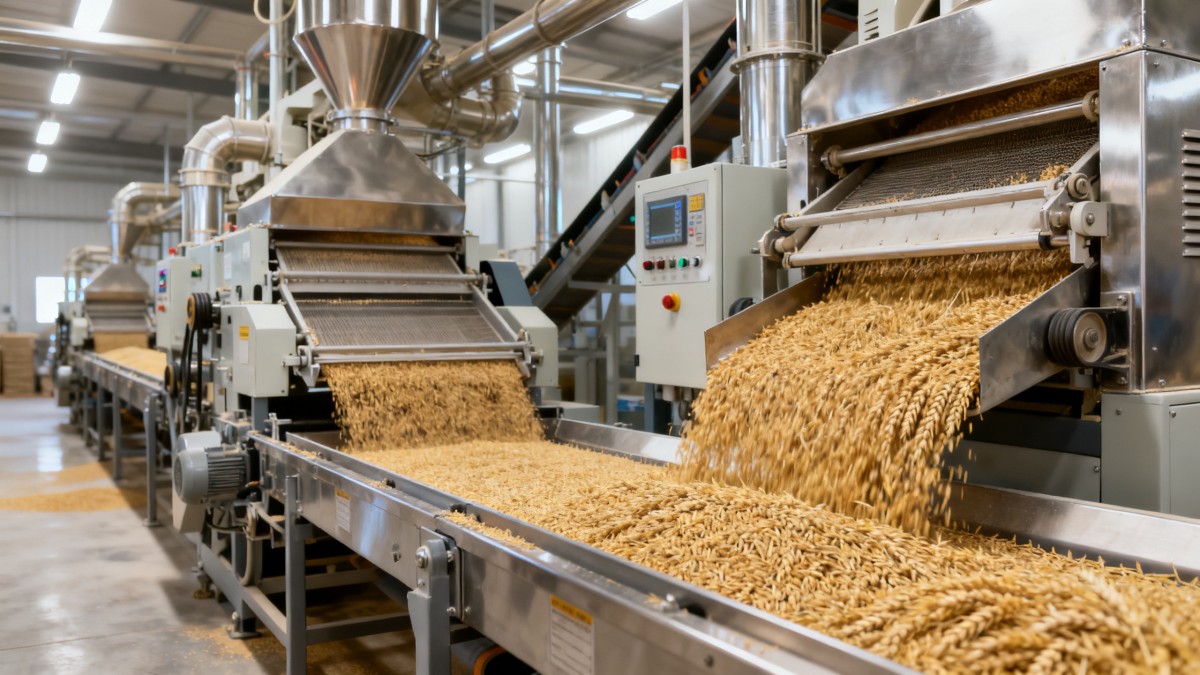
The need for reliable grain processing machinery becomes especially clear when output must remain uniform despite changes in raw material conditions. Seasonal grain variation, supplier inconsistency, and transport-related moisture shifts can all affect how kernels behave during cleaning, cracking, or milling. In these scenarios, equipment with better process control, adjustable settings, and low contamination carryover often performs better than systems chosen only for speed.
Another key scenario appears when food safety and traceability standards are rising. In grain-based food production, machinery design affects dust generation, metal contamination prevention, cleaning access, and residue control. Comparing grain processing machinery by hygienic structure, inspection points, and ease of maintenance can reveal which systems are better aligned with long-term quality assurance goals rather than short-term output expansion alone.
Comparing grain processing machinery across typical application scenarios
Scenario 1: Cleaning and grading lines for mixed incoming grain lots
When incoming grain quality varies significantly, the comparison should begin with pre-cleaners, destoners, magnetic separators, and optical sorters. In this scenario, stable output quality depends less on one high-performance machine and more on how effectively the cleaning sequence removes foreign matter, broken kernels, stones, dust, and ferrous particles before downstream processing begins.
The strongest grain processing machinery setups for this use case usually feature modular cleaning stages, adjustable airflow, stable vibration control, and low product loss. Optical sorting adds value when product grade is highly visible to the market, but mechanical cleaning remains the foundation. If the cleaning stage is weak, later machines may produce uneven results regardless of their precision.
Scenario 2: Rice processing where appearance and breakage matter
Rice processing places a high premium on surface finish, low breakage, and color consistency. Here, the comparison often centers on huskers, paddy separators, whiteners, polishers, and color sorters. Equipment that allows refined pressure adjustment and stable feed flow is typically more effective at maintaining output quality than machinery that pushes capacity at the expense of kernel integrity.
For this application, the best grain processing machinery is usually the machinery that minimizes over-processing. Excessive whitening pressure, unstable separation, or rough conveying can quickly reduce head rice yield. The practical judgment point is whether the line can maintain appearance standards while preserving grain structure over long shifts and fluctuating raw material conditions.
Scenario 3: Wheat and maize milling for particle size consistency
In flour and meal production, the comparison shifts toward roller mills, hammer mills, sifters, purifiers, and dosing systems. Stable output quality in this scenario is measured through particle size control, ash consistency, extraction rate, and thermal impact on the product. Milling equipment must work as a calibrated system, not as isolated units.
A useful grain processing machinery comparison in this context should assess roll precision, screen durability, vibration stability, and automation responsiveness. Overheating, inconsistent feed rates, or poor sifting can create batch variation that affects downstream baking, extrusion, or blending performance. For stable output quality, repeatability matters more than headline throughput alone.
Scenario 4: Multi-grain processing with frequent product changeovers
Facilities handling oats, barley, millet, sorghum, and specialty grains face a different challenge: frequent changeovers and cross-product contamination risk. In this scenario, grain processing machinery should be compared based on cleaning accessibility, material retention points, control recipe flexibility, and downtime between batches.
Machinery with smooth contact surfaces, fewer dead zones, and easier disassembly supports more stable quality when switching products. This becomes especially important when allergen control, organic certification, or premium identity preservation is involved. Here, the correct equipment choice is often the one that reduces residual carryover rather than the one with the highest nominal capacity.
How scenario-based requirements change the grain processing machinery decision
A side-by-side comparison helps translate technical features into real operating value. The table below shows how application needs shift across common grain processing environments.
This scenario approach makes grain processing machinery evaluation more practical. Instead of asking which machine is “best” in general, the more useful question is which machine maintains stable output quality under the exact raw material, sanitation, and changeover conditions of the processing line.
Practical equipment matching suggestions for stable output quality
The following selection principles can improve decision accuracy when comparing grain processing machinery for agricultural and food applications:
- Match machinery tolerance to raw material variability, not just ideal sample specifications.
- Prioritize feed stability and process control before adding advanced sorting technology.
- Check whether contact surfaces, seals, and discharge points support hygiene and easy inspection.
- Compare energy use together with yield retention, because lower waste often outweighs higher nominal speed.
- Review spare part availability and maintenance intervals, since unstable maintenance support can quickly affect output quality.
- Assess automation by its consistency benefit, such as moisture adjustment, feed regulation, or recipe repeatability.
For many operations, the most effective grain processing machinery investment is not a single machine upgrade but a balanced line redesign. Improving the first contamination-removal steps, stabilizing conveying, and tightening process monitoring often delivers better quality results than replacing only the final finishing equipment.
Common misjudgments that weaken processing stability
One common mistake is selecting grain processing machinery based mainly on peak capacity. In real grain processing, quality loss often appears during long operating hours, partial-load conditions, or mixed-lot intake rather than during short ideal tests. Capacity matters, but stability under normal production variation matters more.
Another frequent oversight is underestimating transfer and handling equipment. Elevators, conveyors, and intermediate bins may seem secondary, yet they strongly influence breakage, segregation, dust control, and feed uniformity. Even high-end milling or sorting machinery can deliver inconsistent results if the upstream flow is unstable.
A third issue is treating cleanability as a maintenance topic rather than a quality factor. In food-related grain applications, retained residue can affect flavor purity, microbial risk, allergen control, and batch integrity. Comparing grain processing machinery without inspecting access panels, residue traps, and sanitation workflow leaves a critical gap in the evaluation process.
Turning comparison results into a smarter next step
A useful grain processing machinery comparison should end with a site-specific checklist: identify the most variable grain inputs, define the output quality metrics that matter most, map contamination control points, and review where process inconsistency currently begins. That approach makes equipment selection measurable and easier to justify.
For companies tracking global agricultural and food processing developments, GTIIN and TradeVantage provide a broader intelligence layer around these decisions. Beyond machine specifications, market visibility into supplier capability, processing trends, compliance expectations, and regional technology shifts can support more confident line planning. When stable quality is the goal, better decisions come from combining equipment comparison with reliable industry insight—and that is where data-driven trade intelligence becomes a practical advantage.
The most effective next move is to compare current line performance against the scenario that best matches the operation: mixed-lot cleaning, rice appearance control, precision milling, or multi-grain changeover. Once that fit is clear, the right grain processing machinery choice becomes less about generic features and more about proven suitability for stable, safe, and efficient output quality.
 How an industrial trade intelligence dashboard can identify new supplier marketsDiscover how an industrial trade intelligence dashboard helps identify new supplier markets by comparing capacity, landed cost, logistics resilience, and compliance risk.
 Which global market entry barriers should exporters assess first?Global market entry barriers exporters should assess first: tariffs, compliance, buyer qualification, logistics, and payment risk. Build a practical strategy for confident market entry.
 How trade data aggregation analytics can reveal emerging supplier marketsTrade data aggregation analytics reveals emerging supplier markets by connecting trade flows, capacity signals, logistics, and compliance insights for smarter sourcing decisions.
 When an export market analysis platform can validate demand in a new marketExport market analysis platform insights help validate new-market demand through buyer fit, regulations, logistics, competition, and profitable entry conditions.
 What is driving the beauty and personal care market in the USA?Beauty and personal care in USA is driven by targeted solutions, selective premiumization, digital discovery, clean-label trust, diverse needs, and compliance. Explore key growth opportunities.
 How trade flow monitoring reports reveal changing regional demandTrade flow monitoring reports reveal changing regional demand through import volumes, sourcing shifts, product mix, logistics signals, and regulatory trends. Explore actionable market insights.
 How international market intelligence for investors reduces market-entry riskInternational market intelligence for investors reduces market-entry risk by validating demand, regulations, logistics, and competition before capital is committed.
 How international sourcing intelligence helps identify supplier risk earlyInternational sourcing intelligence helps businesses spot supplier risks early, protect supply continuity, and make smarter global procurement decisions.
 How trade data aggregation analytics reveals emerging supplier marketsTrade data aggregation analytics reveals emerging supplier markets through export trends, input flows, logistics, and regulatory signals. Discover smarter sourcing insights.
 What industrial cluster monitoring in Vietnam reveals about site riskIndustrial cluster monitoring Vietnam reveals hidden site risks across labor, utilities, logistics, compliance, and supplier dependencies. Make smarter sourcing and expansion decisions.
 Food Technology Trends Reshaping Shelf Life, Safety, and Product InnovationFood technology is reshaping shelf life, safety, and innovation. Discover the trends helping food businesses cut risk, improve compliance, and unlock stronger global market growth.
 How electronics manufacturing services are changing with low-volume demandElectronics manufacturing services are evolving fast with low-volume demand. Learn how agile EMS partners improve flexibility, compliance, sourcing resilience, and speed to market.
 How Can Buyers Reduce Procurement Risks for Electronic Components?How to reduce procurement risks for electronic components: learn how buyers assess traceability, lead times, compliance, and supplier types to avoid costly sourcing mistakes.
 What Sourcing Intelligence India Reveals About Supplier Risk and Cost ShiftsSourcing intelligence India reveals hidden supplier risk, compliance gaps, logistics pressure, and real cost shifts—helping buyers compare vendors smarter and source with more confidence.
 Fashion Trends 2026: Which Materials, Colors, and Silhouettes Are Gaining Ground?Fashion trends 2026 spotlight tactile fabrics, mineral colors, and controlled volume. Explore the materials, shades, and silhouettes shaping smarter, more wearable style.
 Smart Device Market Outlook: Key Growth Drivers, Segments, and Business OpportunitiesSmart device market trends are shifting toward system value, industrial demand, and resilient supply chains. Explore key growth drivers, high-potential segments, and business opportunities.
 How Global Trade Intelligence Services Help B2B Firms Evaluate Markets and SuppliersGlobal trade intelligence services help B2B firms compare suppliers, assess market potential, and uncover compliance, logistics, and pricing risks before costly decisions are made.
 Manufacturing Sector Updates for Investors: What Signals Matter Most in 2025?Manufacturing sector updates for investors in 2025: track orders, margins, supply chains, regulation, and exports to spot resilient manufacturers and smarter investment signals.
 How Energy Market Intelligence Helps Businesses Track Price Risks and Demand ShiftsEnergy market intelligence helps businesses spot price risks, demand shifts, and supply pressure early—improving procurement, resilience, and faster strategic decisions.
 Precision Hardware Tools Market: Key Demand Drivers, Segments, and Growth OutlookPrecision hardware tools market trends are reshaping sourcing, compliance, and automation. Explore key demand drivers, segment shifts, regional supply patterns, and growth opportunities.
 How to Use Customs Import Data to Find Buyers, Track Competitors, and Spot Demand?Customs import data helps you find real buyers, track competitors, and spot demand shifts early. Learn practical ways to turn trade records into smarter global business decisions.





















Global Trade Insights & Industry
Our mission is to empower global exporters and importers with data-driven insights that foster strategic growth.
Search News
Popular Tags
Industry Overview
The global commercial kitchen equipment market is projected to reach $112 billion by 2027. Driven by urbanization, the rise of e-commerce food delivery, and strict hygiene regulations.