What OEM consumer electronics vendors expect from contract manufacturers on cybersecurity and firmware validation
As OEM consumer electronics vendors face escalating cyber threats and firmware vulnerabilities, expectations from contract manufacturers are shifting dramatically—especially amid Smart manufacturing trends 2026 and the rise of AI in precision engineering. This article explores how Industrial & Manufacturing stakeholders, from procurement leaders to security managers, are redefining cybersecurity validation protocols and firmware integrity requirements. Drawing on TradeVantage’s real-time supply chain intelligence, we unpack what top-tier OEMs now demand—and why robust, auditable validation is no longer optional, but a strategic imperative for trust, compliance, and market agility.
What Do OEMs Really Mean by “Cybersecurity Validation”?
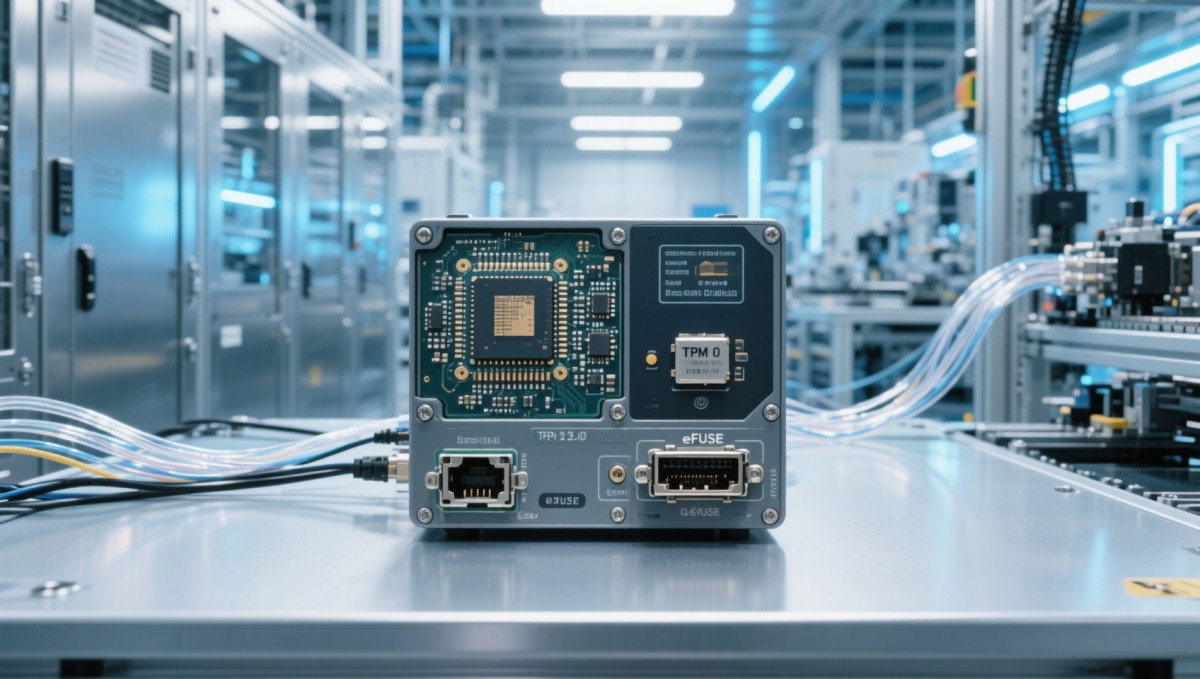
For OEMs in industrial electronics—especially those supplying embedded controllers, IoT gateways, and edge AI modules—cybersecurity validation goes far beyond basic penetration testing. It now includes hardware-rooted attestation, secure boot chain verification, and runtime firmware integrity monitoring across 3 distinct phases: pre-production (design review), mid-batch (fused-key provisioning), and post-shipment (OTA update signing).
TradeVantage’s 2025 Supply Chain Risk Index shows that 78% of Tier-1 OEMs now require ISO/IEC 27001 certification *plus* IEC 62443-4-1 conformance for firmware development environments. These aren’t checkbox items—they’re enforced via audit clauses in contracts with minimum 90-day remediation windows.
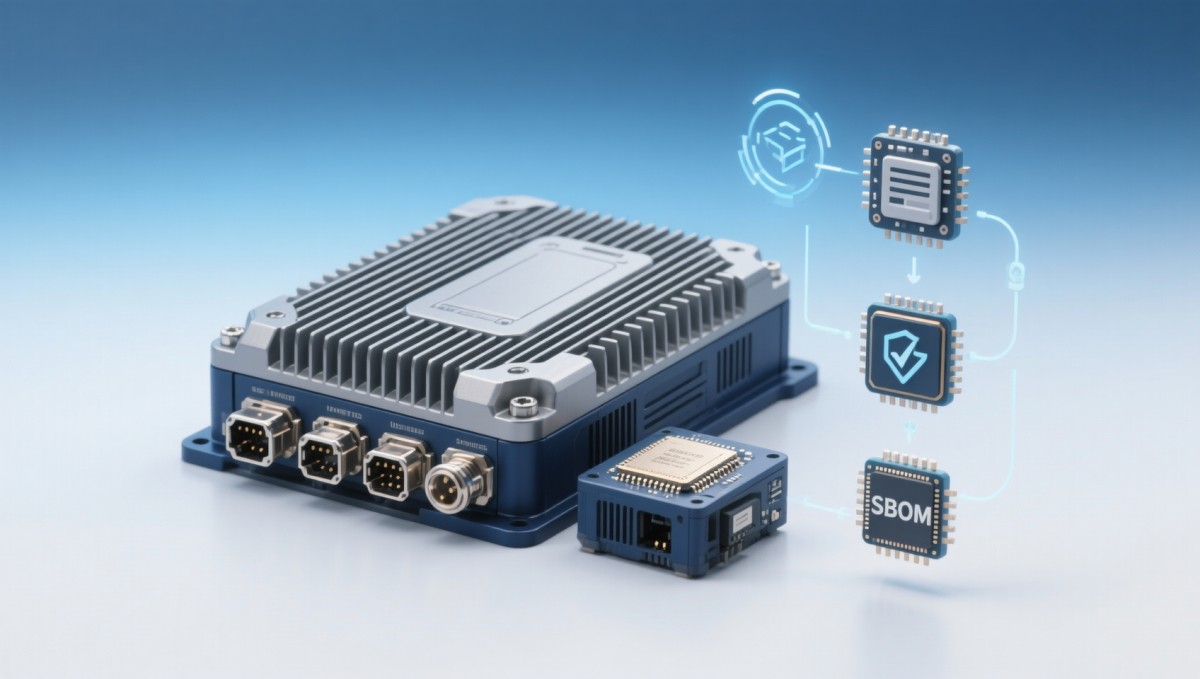
Validation must be repeatable, traceable, and tied to specific build artifacts—not just generic lab reports. That means every firmware binary must be linked to its SBOM (Software Bill of Materials), cryptographic hash, and signed attestation log. OEMs increasingly reject submissions missing timestamped evidence from trusted execution environments (e.g., ARM TrustZone or Intel SGX).
Firmware Validation: From Checklist to Continuous Lifecycle Control
Modern OEMs treat firmware as a living component—not a one-time deliverable. They expect CMs to implement continuous validation workflows covering 6 key stages: static code analysis (SAST), dynamic fuzzing (DAST), memory safety verification (e.g., ASan/MemSan), bootloader signature enforcement, secure update rollback protection, and post-deployment anomaly telemetry.
According to TradeVantage’s OEM Procurement Benchmark (Q2 2025), 64% of industrial electronics buyers now require quarterly firmware health reports—including vulnerability patch latency (target: ≤7 days for critical CVEs) and delta between production and reference builds (max deviation: ±0.3% file hash variance).
Core Validation Requirements by OEM Tier
This tiered expectation reflects real-world risk exposure: Tier-1 OEMs often embed devices into critical infrastructure where firmware compromise can trigger physical safety events. Mid-tier buyers prioritize cost-effective scalability—but still enforce hard boundaries on boot integrity and update accountability.
How Procurement Teams Evaluate Cybersecurity Capabilities
Procurement leaders no longer rely solely on third-party certifications. TradeVantage’s survey of 127 industrial OEM buyers reveals they now apply a 5-point technical due diligence framework: (1) source code access rights during audits, (2) hardware security module (HSM) integration depth, (3) SBOM generation automation level, (4) OTA update rollback test coverage, and (5) incident response playbook alignment with NIST SP 800-161.
Notably, 89% of respondents said they disqualify bidders who cannot demonstrate *live* firmware signing in their own lab environment—within 4 hours of request. This eliminates reliance on paper-based claims and confirms operational readiness.
CMs must also provide evidence of cross-functional validation ownership: firmware engineers, security architects, and QA leads must jointly sign off on each release—documented in Jira or Azure DevOps with immutable timestamps and role-based approvals.
Why TradeVantage Intelligence Accelerates Your Vendor Evaluation
When selecting a contract manufacturer for high-integrity firmware work, you need more than capability statements—you need verified, time-stamped evidence of real-world performance. TradeVantage delivers precisely that through our Global CM Trust Index™, updated weekly across 52 countries and 300+ certified facilities.
Our platform gives you instant access to: (1) audit pass/fail history against IEC 62443-3-3, (2) average CVE resolution time per vendor (benchmarked quarterly), (3) firmware SBOM completeness scores (based on SPDX 3.0 validation), and (4) live supply chain risk alerts—for example, sudden changes in a CM’s HSM vendor or cloud signing provider.
Request a customized OEM Validation Readiness Report today—covering your exact product class (e.g., industrial HMIs, motor drive firmware, or PLC runtime images), target geography, and compliance scope (UL 62443, EN 50131, or FDA 21 CFR Part 11). We’ll identify 3 pre-vetted CMs matching your firmware security maturity requirements—with full documentation trails, not marketing decks.
Recommended News
 Navigating the 2026 Global Structural Steel Market: How to Reduce Sourcing RisksNavigate the 2026 structural steel market with direct OEM partnerships to reduce sourcing risks, control costs, and ensure project timelines. Learn how to secure reliable supply chains.
 What interior design services do industrial facility managers actually need for control rooms and maintenance hubs?Interior design services for industrial control rooms & maintenance hubs: ESD-safe, glare-free, acoustic, modular—backed by real ROI data. Get compliant, efficient, future-ready spaces.
 What Real-World Cost Factors Make Some 3D Printing Manufacturers More Competitive for Low-Volume CNC Machining Alternatives in 2026?Discover how top 3D printing manufacturer partners cut low-volume CNC machining costs by 22–38% in 2026—via certification, logistics & post-processing excellence.
 Can a 3D Printing Manufacturer Help Reduce Lead Times for Aftermarket Parts Without Compromising Quality?A trusted 3D printing manufacturer can slash aftermarket part lead times to under 10 days—without compromising ISO-certified quality, traceability, or performance.
 Why Certification and Material Traceability Matter When Selecting a 3D Printing Manufacturer for Medical Equipment PartsDiscover why a certified 3D printing manufacturer with full material traceability is essential for compliant, safe medical equipment parts—get audit-ready insights now.
 How Do 3D Printing Manufacturers Support Custom Tooling and Fixture Production in Smart Factories?Discover how top 3D printing manufacturers accelerate smart factory tooling—enabling agile, certified, IoT-ready fixtures in days, not weeks.
 What to Look for in a 3D Printing Manufacturer Before Starting an Industrial Production ProjectFind a certified 3D printing manufacturer with industrial repeatability, compliance (AS9100/ISO 13485), and material traceability—get your free sourcing assessment now.
 What Makes a Radiators Supplier Reliable for Medical Equipment Thermal Compliance?radiators supplier reliability is critical for medical device thermal compliance—discover how to vet certified, FDA/MDR-ready partners fast.
 Can a Radiators Supplier Help Reduce Energy Costs in Smart Factory Cooling Loops?radiators supplier insights: Discover how a strategic radiators supplier can cut smart factory cooling energy costs by 9–14%—with real case savings, benchmarks & IoT-ready solutions.
 Top 3 Risks of Choosing an Unqualified Radiators Supplier for Power Transmission Systemsradiators supplier risks exposed: thermal runaway, corrosion failure & compliance gaps in power transmission systems—get the full risk assessment now.
 Why Procurement Teams Are Switching to Local Radiators Suppliers for Faster Lead Timesradiators supplier: Discover how partnering with local radiators suppliers cuts lead times by up to 40%—without compromising ASME/EN compliance or performance. Get faster, smarter procurement.
 How Do Radiators Suppliers Support Custom Thermal Management in CNC Machining Facilities?Radiators supplier expertise enables custom thermal management for CNC machining—boosting precision, uptime & equipment life. Get verified, application-specific solutions.
 What to Look for in a Radiators Supplier for Industrial HVAC Projects in 2026radiators supplier insights for 2026: certifications, custom design, lead time transparency & AI-ready thermal support—get verified, ROI-driven sourcing intelligence.
 Why Most Fashion Brands Underestimate Minimum Order Quantities When Working With Streetwear Distributorsstreetwear distributor MOQs aren’t just volume rules—they’re industrial constraints affecting cash flow, compliance & scalability. Discover data-driven negotiation levers.
 Do Streetwear Distributors Offer Dropshipping Support or Only Bulk Fulfillment for E-commerce Logistics?streetwear distributor insights for industrial suppliers: discover engineered dropshipping vs. bulk fulfillment—real-time, compliant, and scalable logistics solutions.
 When Is It Smarter to Work With a Streetwear Distributor Instead of Building In-House Distribution?streetwear distributor? Discover when partnering beats building in-house—data-backed insights for industrial suppliers launching smart PPE, wearables & lifestyle tech.
 Can a Streetwear Distributor Handle Cross-Border Freight and Customs Clearance for EU and US Markets?streetwear distributor capabilities extend to EU/US cross-border freight & customs clearance—critical for industrial equipment buyers seeking compliant, scalable trade execution.
 What Does a Streetwear Distributor Actually Do in Apparel Manufacturing Supply Chains?What does a streetwear distributor do? Discover how this critical industrial supply chain node ensures compliance, agility & uptime in global apparel manufacturing.
 How Export Data on Fasteners Reflects Regional Shifts in Construction Material SourcingUnlock industrial trends & trade intelligence from fastener export data—gain manufacturing insights, import statistics, and supply chain updates to drive smarter sourcing decisions.
 Trade Intelligence Tools That Integrate With ERP Systems for Aftermarket Parts DistributorsBoost aftermarket distribution with ERP-integrated trade intelligence: real-time import statistics, export data, industrial trends & supply chain updates—actionable, accurate, automated.
 What Manufacturing Insights Reveal About Failure Rates in Plastic Molds Used for Medical EquipmentDiscover critical manufacturing insights & trade intelligence on plastic mold failure rates in medical equipment—backed by real-time import statistics, export data, and global supply chain updates.











Popular Tags
Global Trade Insights & Industry
Our mission is to empower global exporters and importers with data-driven insights that foster strategic growth.
Search News
Hot Articles
- Navigating the 2026 Global Structural Steel Market: How to Reduce Sourcing Risks00
0000-00
- What interior design services do industrial facility managers actually need for control rooms and maintenance hubs?00
0000-00
- What Real-World Cost Factors Make Some 3D Printing Manufacturers More Competitive for Low-Volume CNC Machining Alternatives in 2026?00
0000-00
Popular Tags
Industry Overview
The global commercial kitchen equipment market is projected to reach $112 billion by 2027. Driven by urbanization, the rise of e-commerce food delivery, and strict hygiene regulations.