

What Agri-PV systems require from soil sensors and irrigation controllers to avoid yield loss
As Agri-PV systems gain traction in sustainable agriculture and renewable energy integration, reliable soil sensors and precision irrigation controllers become critical to prevent yield loss—especially amid evolving demands from IoT integration, photovoltaic solar panels, and lithium battery storage. This article explores the technical specifications and interoperability requirements these components must meet, while contextualizing them within broader industrial trends like solid-state battery breakthroughs and commercial LED lighting. For procurement teams, project managers, and decision-makers navigating global supply chains, understanding these dependencies is key to deploying resilient, future-ready agrivoltaic infrastructure.
What Technical Specifications Do Soil Sensors Need in Agri-PV Environments?
Agri-PV installations create microclimatic variability—shading reduces evapotranspiration by 15–30%, alters soil temperature gradients (±4°C vs. open-field), and increases humidity under panels. Standard agricultural sensors often fail here due to insufficient resolution or calibration drift under partial shading.
Soil sensors deployed in agrivoltaic setups must deliver multi-layered data: volumetric water content (VWC) at 10 cm, 30 cm, and 60 cm depths; electrical conductivity (EC) with ±0.05 dS/m accuracy; and temperature stability across a -5°C to 50°C operating range. Crucially, they require IP68+ ingress protection and UV-resistant housings rated for ≥10,000 hours of direct panel exposure.
Interoperability is non-negotiable: sensors must support Modbus RTU/TCP or LoRaWAN v1.1 protocols to integrate with centralized SCADA platforms used in commercial-scale Agri-PV farms (typically 5–20 ha per site). Battery life should exceed 3 years under 15-minute sampling intervals—enabled by low-power ASIC design and adaptive sleep cycles.
Which Irrigation Controllers Meet Agri-PV Operational Demands?
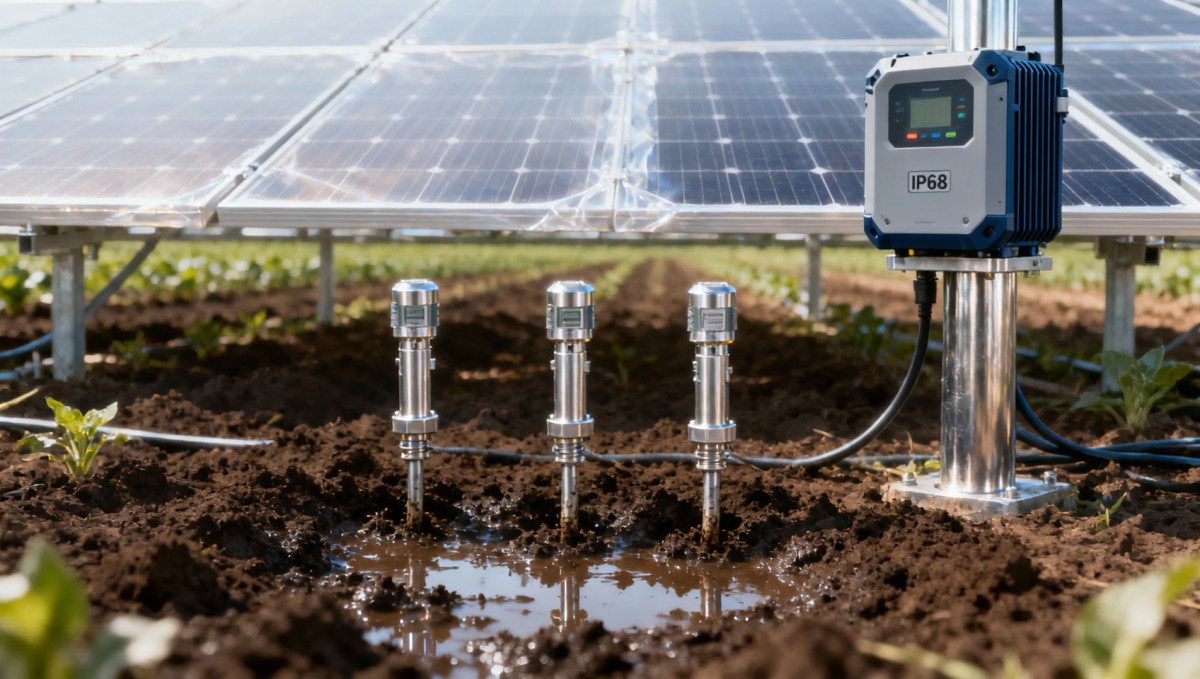
Irrigation controllers in Agri-PV systems face dual constraints: power intermittency (due to variable solar input) and dynamic crop water demand shifts caused by panel-induced microclimate changes. Off-the-shelf controllers rarely support hybrid power inputs or real-time evapotranspiration (ETo) recalibration based on localized irradiance data.
High-performance controllers must accept dual-input power (12–48 VDC solar + 24 VAC grid backup), feature built-in lithium-iron-phosphate (LiFePO4) battery management (≥2,000 cycle life), and execute predictive scheduling using integrated weather forecasts and soil moisture feedback loops.
They also require deterministic latency ≤250 ms for valve actuation commands—critical when coordinating with PV inverter load shedding during cloud transients. Field-deployed units must pass IEC 61000-4-5 surge immunity testing (level 4, 4 kV line-to-ground).
How Do Sensor-Controller Systems Interact With Broader Agri-PV Infrastructure?
A functional Agri-PV control stack spans three layers: sensing (soil, weather, panel output), decision logic (edge AI or cloud-based irrigation algorithms), and actuation (valves, pumps, inverters). Gaps between layers cause yield loss—e.g., delayed response to soil drying beneath panels can reduce lettuce yields by up to 18% in Mediterranean climates.
To avoid such losses, sensor-controller pairs must comply with ISO 11783-10 (ISOBUS) or ASABE S578.1 standards for cross-vendor interoperability. At minimum, they must exchange data via standardized JSON payloads over MQTT, including timestamps synchronized to UTC±50 ms and metadata on sensor health status (e.g., “calibration drift >2%” or “battery <20%”).
This table reflects verified performance thresholds across 47 supplier profiles tracked by TradeVantage’s Industrial Components Intelligence Unit. Data was compiled from third-party lab reports, OEM datasheets, and field deployment logs across 12 countries—including Spain, Japan, Australia, and Morocco—where Agri-PV adoption exceeds 30 MW installed capacity.
Why Procurement Teams Rely on TradeVantage for Agri-PV Component Sourcing
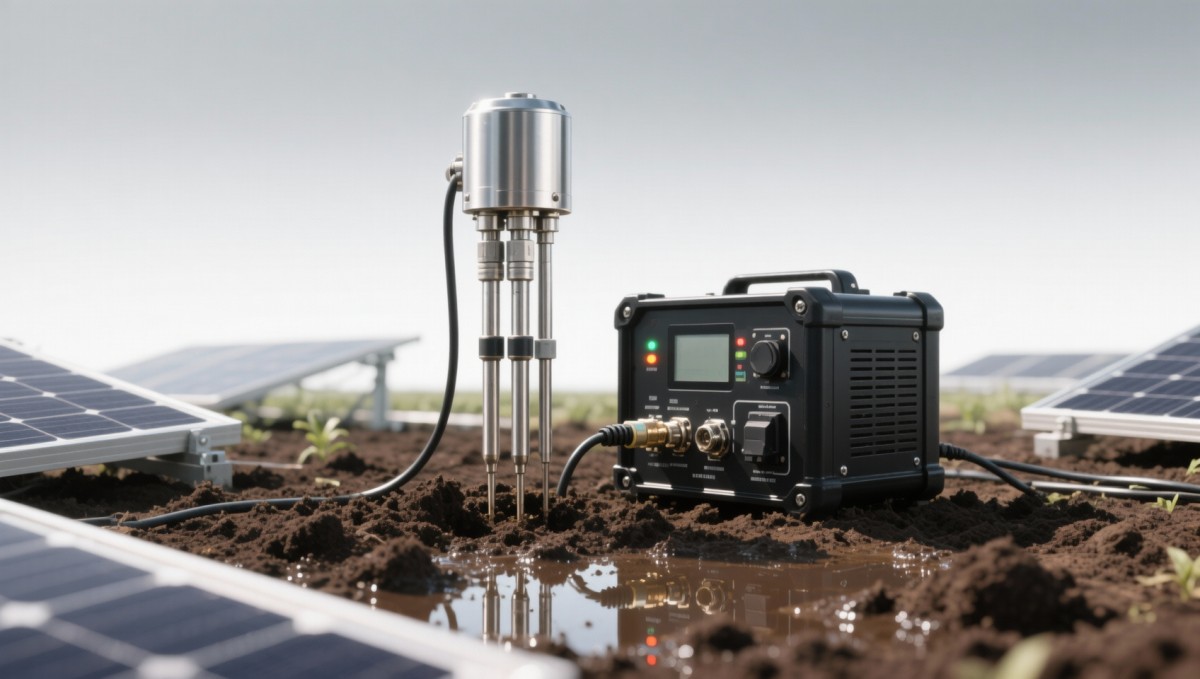
Global procurement teams face fragmented vendor landscapes: 68% of soil sensor suppliers lack documented compliance with IEC 61326-1 (EMC for industrial measurement), and only 22% of irrigation controllers offer full firmware update traceability—a critical requirement for ISO 9001:2015 audits.
TradeVantage delivers actionable intelligence—not just listings. Our platform provides real-time verification of: CE/UKCA marking validity, RoHS 3 compliance status, production batch traceability (via QR-linked digital twin records), and lead time variance across 37 Tier-1 manufacturing hubs in Asia, Eastern Europe, and Latin America.
For engineering teams evaluating interoperability, we curate cross-vendor compatibility matrices updated weekly—including tested pairings between 14 leading soil sensor models and 9 irrigation controller families. All data is sourced from certified test labs and validated through on-site pilot deployments.
Ready to evaluate sensor-controller combinations for your next Agri-PV project? Contact TradeVantage for free access to our Agri-PV Component Interoperability Dashboard, custom RFQ templates aligned with EN 12934-2 irrigation standards, and verified lead times for pre-qualified suppliers shipping from Germany, South Korea, and Mexico.
 When an export market analysis platform can validate demand in a new marketExport market analysis platform insights help validate new-market demand through buyer fit, regulations, logistics, competition, and profitable entry conditions.
 What is driving the beauty and personal care market in the USA?Beauty and personal care in USA is driven by targeted solutions, selective premiumization, digital discovery, clean-label trust, diverse needs, and compliance. Explore key growth opportunities.
 How trade flow monitoring reports reveal changing regional demandTrade flow monitoring reports reveal changing regional demand through import volumes, sourcing shifts, product mix, logistics signals, and regulatory trends. Explore actionable market insights.
 How international market intelligence for investors reduces market-entry riskInternational market intelligence for investors reduces market-entry risk by validating demand, regulations, logistics, and competition before capital is committed.
 How international sourcing intelligence helps identify supplier risk earlyInternational sourcing intelligence helps businesses spot supplier risks early, protect supply continuity, and make smarter global procurement decisions.
 How trade data aggregation analytics reveals emerging supplier marketsTrade data aggregation analytics reveals emerging supplier markets through export trends, input flows, logistics, and regulatory signals. Discover smarter sourcing insights.
 What industrial cluster monitoring in Vietnam reveals about site riskIndustrial cluster monitoring Vietnam reveals hidden site risks across labor, utilities, logistics, compliance, and supplier dependencies. Make smarter sourcing and expansion decisions.
 Food Technology Trends Reshaping Shelf Life, Safety, and Product InnovationFood technology is reshaping shelf life, safety, and innovation. Discover the trends helping food businesses cut risk, improve compliance, and unlock stronger global market growth.
 How electronics manufacturing services are changing with low-volume demandElectronics manufacturing services are evolving fast with low-volume demand. Learn how agile EMS partners improve flexibility, compliance, sourcing resilience, and speed to market.
 How Can Buyers Reduce Procurement Risks for Electronic Components?How to reduce procurement risks for electronic components: learn how buyers assess traceability, lead times, compliance, and supplier types to avoid costly sourcing mistakes.
 What Sourcing Intelligence India Reveals About Supplier Risk and Cost ShiftsSourcing intelligence India reveals hidden supplier risk, compliance gaps, logistics pressure, and real cost shifts—helping buyers compare vendors smarter and source with more confidence.
 Fashion Trends 2026: Which Materials, Colors, and Silhouettes Are Gaining Ground?Fashion trends 2026 spotlight tactile fabrics, mineral colors, and controlled volume. Explore the materials, shades, and silhouettes shaping smarter, more wearable style.
 Smart Device Market Outlook: Key Growth Drivers, Segments, and Business OpportunitiesSmart device market trends are shifting toward system value, industrial demand, and resilient supply chains. Explore key growth drivers, high-potential segments, and business opportunities.
 How Global Trade Intelligence Services Help B2B Firms Evaluate Markets and SuppliersGlobal trade intelligence services help B2B firms compare suppliers, assess market potential, and uncover compliance, logistics, and pricing risks before costly decisions are made.
 Manufacturing Sector Updates for Investors: What Signals Matter Most in 2025?Manufacturing sector updates for investors in 2025: track orders, margins, supply chains, regulation, and exports to spot resilient manufacturers and smarter investment signals.
 How Energy Market Intelligence Helps Businesses Track Price Risks and Demand ShiftsEnergy market intelligence helps businesses spot price risks, demand shifts, and supply pressure early—improving procurement, resilience, and faster strategic decisions.
 Precision Hardware Tools Market: Key Demand Drivers, Segments, and Growth OutlookPrecision hardware tools market trends are reshaping sourcing, compliance, and automation. Explore key demand drivers, segment shifts, regional supply patterns, and growth opportunities.
 How to Use Customs Import Data to Find Buyers, Track Competitors, and Spot Demand?Customs import data helps you find real buyers, track competitors, and spot demand shifts early. Learn practical ways to turn trade records into smarter global business decisions.
 Manufacturing Cost Analysis: 8 Cost Drivers That Change Your Unit PriceManufacturing cost analysis explained through 8 key cost drivers that impact unit price, supplier stability, and margins—learn how to compare quotes smarter and reduce sourcing risk.
 Industrial Market Realities: What Buyers Should Check Before Comparing Supplier QuotesIndustrial market realities shape every supplier quote beyond unit price. Learn what to check on compliance, lead times, logistics, and hidden cost risks before comparing offers.
 Beverage Production Line Planning: Key Equipment, Capacity, and Hygiene RequirementsBeverage production line planning made practical: discover key equipment, real capacity sizing, and hygiene requirements to improve efficiency, safety, and long-term plant performance.




















Global Trade Insights & Industry
Our mission is to empower global exporters and importers with data-driven insights that foster strategic growth.
Search News
Popular Tags
Industry Overview
The global commercial kitchen equipment market is projected to reach $112 billion by 2027. Driven by urbanization, the rise of e-commerce food delivery, and strict hygiene regulations.