

How to Evaluate a Chemical Manufacturing Manufacturer for Quality and Supply Reliability
How to Evaluate a Chemical Manufacturing Manufacturer for Quality and Supply Reliability
Choosing the right chemical manufacturing manufacturer is no longer just about price or production scale. For procurement teams, true supplier value depends on consistent quality, regulatory compliance, delivery stability, and risk management. This guide explains how to assess manufacturers through practical evaluation criteria, helping buyers reduce sourcing uncertainty and build more reliable chemical supply partnerships.
If you are sourcing chemicals for industrial production, private label, formulation, or distribution, the main question is simple: can this supplier deliver the same acceptable product, on time, with the right paperwork, every time you place an order? A polished brochure will not answer that. A low trial price will not answer it either. You need to look at the manufacturer the way an experienced buyer does: through process control, documentation discipline, operating stability, and how they behave when something goes wrong.
Start with product fit, not factory size
A large plant is not automatically the right plant. Some chemical manufacturers are strong in commodity output but weak in tight-spec products. Others handle custom blends well but struggle with scale-up. Before comparing quotations, confirm that the supplier actually makes your type of chemistry under normal operating conditions, not as a one-off project.
- Ask whether your product is a standard production item, a modified grade, or a custom synthesis.
- Check whether the manufacturer runs continuous production or batch production. This affects consistency, lead time, and flexibility.
- Confirm the plant’s normal output range. If your required volume is far below or far above their usual order size, you may face priority issues later.
- Review whether they produce related chemistries in the same workshop. Cross-contamination risk matters, especially for high-purity, food-contact, pharma-adjacent, or electronics-related applications.
A common buying mistake is assuming “they already make something similar” is close enough. In chemicals, similar is often where problems begin.
Read the specification sheet like a risk document
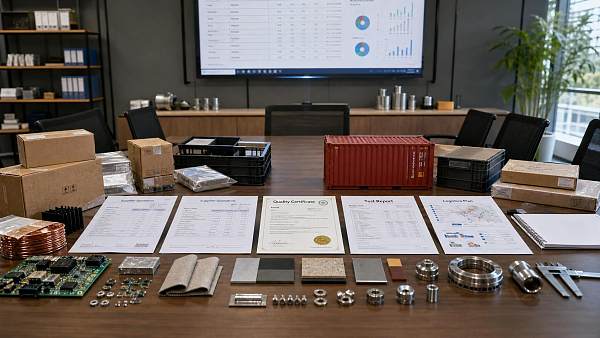
Do not stop at headline purity. A capable chemical manufacturing manufacturer should be able to provide a clear Technical Data Sheet, Safety Data Sheet, and a realistic Certificate of Analysis format. Look beyond the main assay number.
What usually matters in procurement review:
- Impurity profile, not only total purity.
- Moisture, ash, pH, viscosity, color, particle size, density, or other application-relevant indicators.
- Test methods used for each parameter. Internal methods are not necessarily a problem, but they should be documented and repeatable.
- Lot-to-lot tolerance range. Tight laboratory values on one sample mean little if commercial batches drift.
If the supplier avoids discussing specification limits, says the product is “basically the same” as another grade, or cannot explain why a parameter matters for downstream use, treat that as an early warning sign.
Quality systems matter more than sample quality
Good samples are easy to prepare. Stable production is harder. That is why procurement teams should ask how quality is managed inside the factory, not just what the latest sample looks like.
Useful checks include incoming raw material control, batch records, retention sample practice, change control, nonconformance handling, and traceability from finished goods back to raw material lots. If the supplier claims ISO 9001 certification, ask for a current copy and scope. If the product category requires additional certifications or sector-specific compliance, verify relevance instead of accepting a generic certificate pack.
For higher-risk applications, ask a direct question: if a batch fails one critical parameter after production, what happens next? The answer tells you more than a sales presentation. Reliable manufacturers describe hold procedures, rework rules, release authority, and customer notification steps. Weak ones give vague reassurance.
Check regulatory readiness for your market, not theirs
Many supplier problems appear only when goods are ready to ship. The product may be technically acceptable but commercially unusable because labeling, documentation, registration, or transport classification was handled poorly.
What you need depends on destination market and product use. That may include SDS formats, transport information, origin documents, packaging labels, substance declarations, or market-specific regulatory documentation. Requirements can vary by region and application, and some points may need legal or compliance review in the destination country. Where there is uncertainty, mark it for follow-up rather than assuming the exporter knows your local obligations.
A practical test is to ask the supplier to provide a full documentation set for a recent export shipment of a comparable product. Redact commercial data if needed. You are checking whether the manufacturer has export discipline, not collecting marketing materials.
Do not ignore raw material dependency
Some chemical plants look reliable until one upstream input tightens. Then lead times double, formulas are adjusted, or prices change with little warning. For procurement, supply reliability often depends less on the finished goods warehouse and more on feedstock security.
Ask where key raw materials come from, whether there are approved alternates, and how often input sources change. You do not need the supplier to reveal every confidential detail, but they should be able to explain whether the product depends on a single local source, imported intermediates, toll manufacturing, or seasonal inputs. This is especially important for solvents, additives, specialty intermediates, and products linked to petrochemical or mining cycles.
If the supplier cannot explain their own upstream exposure, you should assume they will also struggle to explain future delays.
Look at production planning and maintenance discipline
Chemical supply interruptions are often operational, not commercial. A plant may accept your order even when turnaround maintenance, environmental inspections, utility limits, or line conversion schedules are already putting capacity at risk.
During supplier review, ask:
- What is the standard lead time in normal months and peak months?
- How often does the line switch products?
- What is the minimum production batch size?
- Are there annual shutdown periods or regulatory inspection windows that affect output?
- Can they reserve capacity under contract, or is production allocated only after PO receipt?
These questions sound basic, but they quickly separate real manufacturers from traders posing as factories, and organized plants from reactive ones.
Packaging and logistics are part of product quality
In chemicals, damaged packaging can turn a compliant batch into a claim, a customs issue, or a disposal problem. Procurement teams should evaluate packaging design and shipping readiness early, especially for export lanes with long transit times or multiple handling points.
Ask for packaging photos, loading photos, and transport experience for your route. A supplier that exports hazardous or sensitive chemicals regularly will usually answer this quickly.
Audit communication speed when something is unclear
One of the best indicators of future performance is how the supplier handles inconvenient questions before the order is won. If your technical query gets bounced between sales, factory, and lab for days with no clear owner, expect the same pattern during a complaint or urgent reorder.
You are not looking for perfect English or polished sales language. You are looking for accurate answers, traceable documents, and a responsible person who can coordinate internally.
Run a trial order that actually tests risk
A sample approval alone is too narrow. A useful trial order should test the supplier’s commercial process, production execution, document accuracy, packaging, and delivery coordination. If possible, include a realistic batch size rather than a token quantity.
Track the full cycle: quotation revision control, lead time accuracy, pre-shipment communication, COA consistency, labeling, and arrival condition. If a problem appears, do not focus only on the defect itself. Watch how fast they investigate, whether they use retained samples, and whether corrective action is specific or vague.
Price analysis should include failure cost
This is where many sourcing decisions go wrong. The cheapest chemical manufacturing manufacturer may still be the highest-cost option once you include rejected batches, delayed production, emergency air freight, reformulation work, claim handling, and extra safety stock.
For procurement, it helps to compare suppliers on total landed and operating cost, not only ex-works or FOB price. Even simple internal scoring can be useful if it includes quality consistency, lead time reliability, documentation accuracy, and response speed alongside quoted price.
A short checklist buyers can use before approval
- The manufacturer produces your chemistry routinely, not occasionally.
- Specifications cover the parameters that affect your end use.
- COA format, SDS, and export documents are available and internally consistent.
- Quality control and traceability practices are explainable in plain terms.
- Raw material dependency and backup options have been discussed.
- Lead time, batch size, shutdown risks, and capacity planning are transparent.
- Packaging is suitable for the product and shipping route.
- The supplier responds clearly when technical or compliance issues are raised.
- A trial order has tested more than just lab performance.
When evaluating a chemical manufacturing manufacturer, the real job is not finding a factory that can make the product once. It is finding one that can keep making the right product under commercial pressure, regulatory scrutiny, and normal supply chain disruption. That is the supplier worth putting into your approved base.
For procurement teams working across changing export markets, cost pressure, and compliance expectations, structured supplier evaluation saves time later. Platforms such as GTIIN can support that process by helping buyers compare industrial categories, monitor supply chain shifts, and review market context before a sourcing decision is locked in. The final decision still depends on direct supplier verification, but better information usually leads to fewer surprises.
 When an export market analysis platform can validate demand in a new marketExport market analysis platform insights help validate new-market demand through buyer fit, regulations, logistics, competition, and profitable entry conditions.
 What is driving the beauty and personal care market in the USA?Beauty and personal care in USA is driven by targeted solutions, selective premiumization, digital discovery, clean-label trust, diverse needs, and compliance. Explore key growth opportunities.
 How trade flow monitoring reports reveal changing regional demandTrade flow monitoring reports reveal changing regional demand through import volumes, sourcing shifts, product mix, logistics signals, and regulatory trends. Explore actionable market insights.
 How international market intelligence for investors reduces market-entry riskInternational market intelligence for investors reduces market-entry risk by validating demand, regulations, logistics, and competition before capital is committed.
 How international sourcing intelligence helps identify supplier risk earlyInternational sourcing intelligence helps businesses spot supplier risks early, protect supply continuity, and make smarter global procurement decisions.
 How trade data aggregation analytics reveals emerging supplier marketsTrade data aggregation analytics reveals emerging supplier markets through export trends, input flows, logistics, and regulatory signals. Discover smarter sourcing insights.
 What industrial cluster monitoring in Vietnam reveals about site riskIndustrial cluster monitoring Vietnam reveals hidden site risks across labor, utilities, logistics, compliance, and supplier dependencies. Make smarter sourcing and expansion decisions.
 Food Technology Trends Reshaping Shelf Life, Safety, and Product InnovationFood technology is reshaping shelf life, safety, and innovation. Discover the trends helping food businesses cut risk, improve compliance, and unlock stronger global market growth.
 How electronics manufacturing services are changing with low-volume demandElectronics manufacturing services are evolving fast with low-volume demand. Learn how agile EMS partners improve flexibility, compliance, sourcing resilience, and speed to market.
 How Can Buyers Reduce Procurement Risks for Electronic Components?How to reduce procurement risks for electronic components: learn how buyers assess traceability, lead times, compliance, and supplier types to avoid costly sourcing mistakes.
 What Sourcing Intelligence India Reveals About Supplier Risk and Cost ShiftsSourcing intelligence India reveals hidden supplier risk, compliance gaps, logistics pressure, and real cost shifts—helping buyers compare vendors smarter and source with more confidence.
 Fashion Trends 2026: Which Materials, Colors, and Silhouettes Are Gaining Ground?Fashion trends 2026 spotlight tactile fabrics, mineral colors, and controlled volume. Explore the materials, shades, and silhouettes shaping smarter, more wearable style.
 Smart Device Market Outlook: Key Growth Drivers, Segments, and Business OpportunitiesSmart device market trends are shifting toward system value, industrial demand, and resilient supply chains. Explore key growth drivers, high-potential segments, and business opportunities.
 How Global Trade Intelligence Services Help B2B Firms Evaluate Markets and SuppliersGlobal trade intelligence services help B2B firms compare suppliers, assess market potential, and uncover compliance, logistics, and pricing risks before costly decisions are made.
 Manufacturing Sector Updates for Investors: What Signals Matter Most in 2025?Manufacturing sector updates for investors in 2025: track orders, margins, supply chains, regulation, and exports to spot resilient manufacturers and smarter investment signals.
 How Energy Market Intelligence Helps Businesses Track Price Risks and Demand ShiftsEnergy market intelligence helps businesses spot price risks, demand shifts, and supply pressure early—improving procurement, resilience, and faster strategic decisions.
 Precision Hardware Tools Market: Key Demand Drivers, Segments, and Growth OutlookPrecision hardware tools market trends are reshaping sourcing, compliance, and automation. Explore key demand drivers, segment shifts, regional supply patterns, and growth opportunities.
 How to Use Customs Import Data to Find Buyers, Track Competitors, and Spot Demand?Customs import data helps you find real buyers, track competitors, and spot demand shifts early. Learn practical ways to turn trade records into smarter global business decisions.
 Manufacturing Cost Analysis: 8 Cost Drivers That Change Your Unit PriceManufacturing cost analysis explained through 8 key cost drivers that impact unit price, supplier stability, and margins—learn how to compare quotes smarter and reduce sourcing risk.
 Industrial Market Realities: What Buyers Should Check Before Comparing Supplier QuotesIndustrial market realities shape every supplier quote beyond unit price. Learn what to check on compliance, lead times, logistics, and hidden cost risks before comparing offers.
 Beverage Production Line Planning: Key Equipment, Capacity, and Hygiene RequirementsBeverage production line planning made practical: discover key equipment, real capacity sizing, and hygiene requirements to improve efficiency, safety, and long-term plant performance.



















Global Trade Insights & Industry
Our mission is to empower global exporters and importers with data-driven insights that foster strategic growth.
Search News
Popular Tags
Industry Overview
The global commercial kitchen equipment market is projected to reach $112 billion by 2027. Driven by urbanization, the rise of e-commerce food delivery, and strict hygiene regulations.