

EU Tightens Battery Rule for August 2026 Exports
On August 1, 2026, a stricter transition requirement under the EU battery regulatory framework begins to affect lithium-ion battery exports to the European market. Following implementation guidance issued by the European Commission on July 15, manufacturers exporting lithium-ion batteries to the EU, including products used in EV accessories, energy storage systems, and portable devices, are required to pre-upload third-party verified life-cycle carbon footprint data through the EU Battery Passport platform. The issue deserves close industry attention because the immediate risk is not abstract compliance pressure but delayed customs clearance, with direct implications for export preparation cycles across Solar Photovoltaic, Lithium Battery, EV Accessories, and Energy-saving Lighting-related businesses.
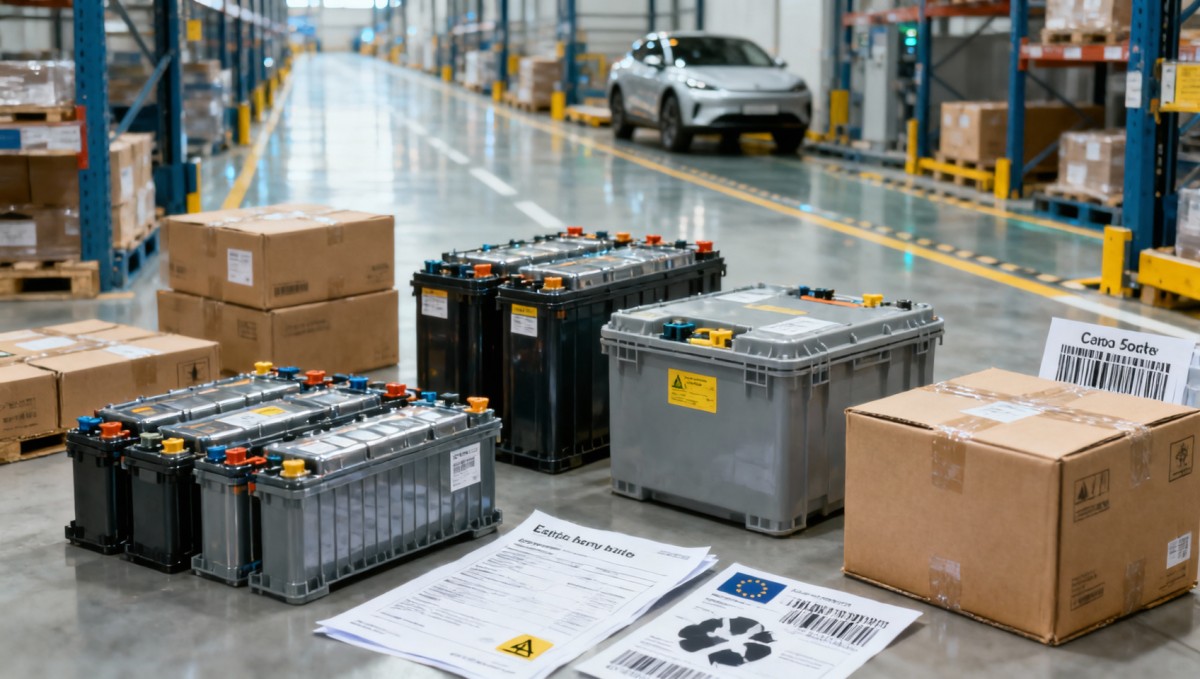
What the new guidance requires from August 1
According to the information provided, the European Commission released implementation guidance on July 15, 2026. The guidance states that from August 1, all manufacturers exporting lithium-ion batteries to the EU must pre-submit full life-cycle carbon footprint data on the EU Battery Passport platform, and that data must be verified by a third party.
The requirement applies to lithium-ion batteries exported to the EU, including those associated with EV accessories, energy storage systems, and portable equipment. If the required data is not uploaded in advance, customs clearance will be delayed.
Where the immediate pressure is likely to appear
Export manufacturers face a shorter compliance preparation window
From an industry perspective, manufacturers directly shipping lithium-ion battery products to the EU are the first group likely to feel the impact. The main pressure point is the export readiness process: documentation, third-party verification, and platform submission now become part of the pre-shipment compliance chain. What deserves closer attention is whether internal timelines for product release and shipment scheduling are still aligned with the new upload requirement.
Related product sectors may be affected through embedded battery content
Observably, the impact is not limited to standalone battery suppliers. The information provided explicitly points to Solar Photovoltaic, Lithium Battery, EV Accessories, and Energy-saving Lighting categories as directly affected in terms of compliance preparation cycles. For businesses in these sectors, the issue may appear in products or systems that include lithium-ion battery components, which means export coordination may now depend on whether carbon footprint data has been verified and uploaded in time.
Supply chain and service participants may face timing and coordination risk
Analysis shows that supply chain service providers, documentation teams, and parties coordinating export delivery may also be affected, even where they are not the formal manufacturer. The likely business impact is concentrated in handoff points: collecting compliance materials, checking whether third-party verification has been completed, and aligning customs schedules with platform submission status. The immediate concern is not a new market forecast, but a higher operational sensitivity to missing or incomplete documentation.
What companies should watch now
Track the distinction between rule text and shipment execution
What deserves closer attention is the gap between a regulatory requirement and day-to-day export execution. The current information confirms that delayed customs clearance is the consequence of missing pre-uploaded data. Companies should therefore focus on how this affects actual shipment release timing, not only on whether the rule exists in principle.
Review whether priority product lines fall within the affected scope
Businesses exporting lithium-ion battery products, or goods tied to EV accessories, storage systems, and portable equipment, need to check whether their outbound product mix is covered by the requirement described in the guidance. For teams managing Solar Photovoltaic, Lithium Battery, EV Accessories, and Energy-saving Lighting exports, the practical issue is whether compliance review starts early enough in the order cycle.
Confirm third-party verification and submission readiness
Analysis shows that the new pressure point is not only data preparation but validated data preparation. Because the uploaded carbon footprint information must be third-party verified, companies should pay attention to whether verification arrangements, supporting documents, and submission responsibilities are clearly assigned before goods reach the export stage.
Prepare for customer and delivery communication
Observably, delayed customs clearance can quickly become a delivery management issue. Exporters and supply chain teams should watch for any need to adjust communication with EU-side customers, distributors, or project counterparts where delivery timing depends on whether Battery Passport-related filings are already complete.
Why this reads as more than a procedural update
Analysis shows that this development is best understood as a near-term operational tightening rather than a purely symbolic policy signal. The reason is clear in the information provided: the requirement is tied directly to customs timing. At the same time, it is still more appropriate to understand this as an industry development that requires continued observation, because the current input confirms the filing obligation and the clearance consequence, but does not provide broader implementation detail beyond that.
From an industry perspective, the main takeaway is that carbon footprint reporting is moving closer to routine export execution for affected battery-related products. That does not by itself establish a wider market outcome, but it does indicate that compliance timing is becoming part of commercial delivery planning.
How this news is best understood for now
At this stage, the most balanced reading is that the EU has tightened the transition period for lithium-ion battery export compliance in a way that can affect real shipment flow from August 2026. For companies exposed to the EU market through battery products or battery-containing applications, the significance lies in preparation lead time, document readiness, and cross-team coordination. It is more appropriate to understand this as an actionable short-term compliance change with longer-term signaling value, while still watching for further clarification in implementation practice.
Basis of this article and what still needs verification
This article is based on the user-provided news title, event date, and event summary concerning the tighter transition requirement under the EU battery framework from August 1, 2026. For developments of this kind, source types typically relevant for ongoing verification include official announcements, corporate disclosures, industry association updates, authoritative media reporting, and standard-related documentation.
A specific official source link was not provided in the input, so the exact official publication path still needs continued verification. What remains worth following is whether subsequent official wording, implementation clarification, or related compliance instructions further refine how affected exporters should prepare filings, verification materials, and customs-facing documentation.
 When dual sourcing makes sense in a sourcing strategy for manufacturersSourcing strategy for manufacturers: learn when dual sourcing strengthens supply continuity, reduces disruption risk, and protects production without adding unnecessary complexity.
 How bulk commodities pricing affects long-term supply contractsBulk commodities pricing shapes long-term supply contracts through index rules, freight, quality, volume, and currency risk. Explore strategies for resilient costs and supply security.
 Which global manufacturing trends by sector matter most for sourcing plans?Global manufacturing trends by sector: identify sourcing risks, supplier resilience, compliance demands, and cost drivers to build smarter, more reliable procurement plans.
 What industrial trade intelligence pricing should include before you subscribeIndustrial trade intelligence pricing explained: compare coverage, data quality, access rights, and workflow value before choosing a subscription that supports smarter trade decisions.
 How an industrial trade intelligence dashboard can identify new supplier marketsDiscover how an industrial trade intelligence dashboard helps identify new supplier markets by comparing capacity, landed cost, logistics resilience, and compliance risk.
 Which global market entry barriers should exporters assess first?Global market entry barriers exporters should assess first: tariffs, compliance, buyer qualification, logistics, and payment risk. Build a practical strategy for confident market entry.
 How trade data aggregation analytics can reveal emerging supplier marketsTrade data aggregation analytics reveals emerging supplier markets by connecting trade flows, capacity signals, logistics, and compliance insights for smarter sourcing decisions.
 When an export market analysis platform can validate demand in a new marketExport market analysis platform insights help validate new-market demand through buyer fit, regulations, logistics, competition, and profitable entry conditions.
 What is driving the beauty and personal care market in the USA?Beauty and personal care in USA is driven by targeted solutions, selective premiumization, digital discovery, clean-label trust, diverse needs, and compliance. Explore key growth opportunities.
 How trade flow monitoring reports reveal changing regional demandTrade flow monitoring reports reveal changing regional demand through import volumes, sourcing shifts, product mix, logistics signals, and regulatory trends. Explore actionable market insights.
 How international market intelligence for investors reduces market-entry riskInternational market intelligence for investors reduces market-entry risk by validating demand, regulations, logistics, and competition before capital is committed.
 How international sourcing intelligence helps identify supplier risk earlyInternational sourcing intelligence helps businesses spot supplier risks early, protect supply continuity, and make smarter global procurement decisions.
 How trade data aggregation analytics reveals emerging supplier marketsTrade data aggregation analytics reveals emerging supplier markets through export trends, input flows, logistics, and regulatory signals. Discover smarter sourcing insights.
 What industrial cluster monitoring in Vietnam reveals about site riskIndustrial cluster monitoring Vietnam reveals hidden site risks across labor, utilities, logistics, compliance, and supplier dependencies. Make smarter sourcing and expansion decisions.
 Food Technology Trends Reshaping Shelf Life, Safety, and Product InnovationFood technology is reshaping shelf life, safety, and innovation. Discover the trends helping food businesses cut risk, improve compliance, and unlock stronger global market growth.
 How electronics manufacturing services are changing with low-volume demandElectronics manufacturing services are evolving fast with low-volume demand. Learn how agile EMS partners improve flexibility, compliance, sourcing resilience, and speed to market.
 How Can Buyers Reduce Procurement Risks for Electronic Components?How to reduce procurement risks for electronic components: learn how buyers assess traceability, lead times, compliance, and supplier types to avoid costly sourcing mistakes.
 What Sourcing Intelligence India Reveals About Supplier Risk and Cost ShiftsSourcing intelligence India reveals hidden supplier risk, compliance gaps, logistics pressure, and real cost shifts—helping buyers compare vendors smarter and source with more confidence.
 Fashion Trends 2026: Which Materials, Colors, and Silhouettes Are Gaining Ground?Fashion trends 2026 spotlight tactile fabrics, mineral colors, and controlled volume. Explore the materials, shades, and silhouettes shaping smarter, more wearable style.
 Smart Device Market Outlook: Key Growth Drivers, Segments, and Business OpportunitiesSmart device market trends are shifting toward system value, industrial demand, and resilient supply chains. Explore key growth drivers, high-potential segments, and business opportunities.
 How Global Trade Intelligence Services Help B2B Firms Evaluate Markets and SuppliersGlobal trade intelligence services help B2B firms compare suppliers, assess market potential, and uncover compliance, logistics, and pricing risks before costly decisions are made.





















Global Trade Insights & Industry
Our mission is to empower global exporters and importers with data-driven insights that foster strategic growth.
Search News
Popular Tags
Industry Overview
The global commercial kitchen equipment market is projected to reach $112 billion by 2027. Driven by urbanization, the rise of e-commerce food delivery, and strict hygiene regulations.