

Where robotic innovations are creating new service demand
From warehouse automation to collaborative assembly, robotic innovations are reshaping industrial robotics and creating new service demand across the value chain. Integration, maintenance, training, retrofitting, software tuning, and lifecycle support are becoming stronger revenue areas. As deployment scales globally, service capability now matters as much as hardware performance, especially for businesses seeking durable margin and lasting market relevance.
Robotic innovations are shifting value from equipment supply to service depth
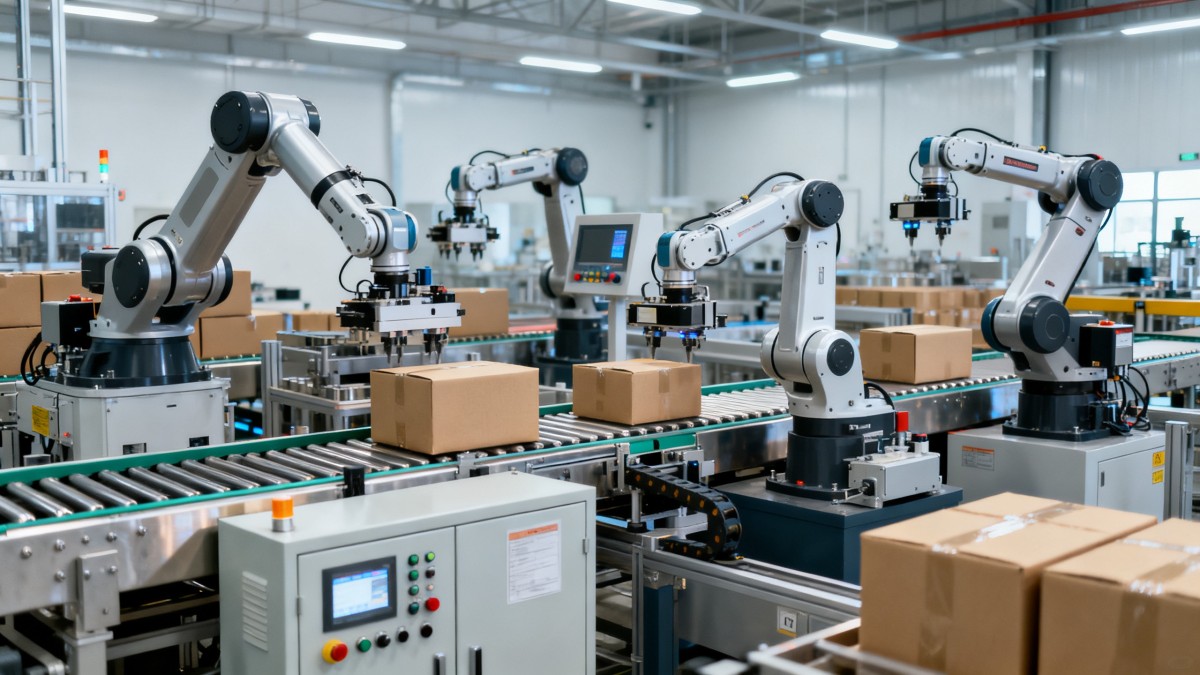
Industrial robotics once centered on unit sales, installation, and basic commissioning. Today, robotic innovations are expanding into flexible automation, machine vision, AI-assisted programming, and human-robot collaboration.
That shift changes buying behavior. End users increasingly expect complete uptime support, workflow redesign, remote diagnostics, safety validation, and operator enablement after deployment.
The result is clear. New service demand is appearing not only around advanced robots, but also around older installed systems that need modernization and better performance.
This matters across packaging, welding, material handling, palletizing, electronics assembly, food processing, and intralogistics. Robotic innovations are no longer isolated technology upgrades. They are service multipliers.
Several market signals show where new service demand is accelerating
Recent expansion patterns suggest that service demand rises fastest where robots become more connected, more adaptive, and more embedded in wider production systems.
A few signals stand out. They indicate where robotic innovations are opening recurring service opportunities rather than one-time installation income.
- More mixed-model production requires faster robot reprogramming and line reconfiguration.
- Growing cobot use increases demand for safety assessment, end-effector tuning, and workflow redesign.
- Vision-guided robotics creates need for calibration, lighting optimization, and data maintenance.
- Remote monitoring tools drive higher expectations for predictive maintenance and service response.
- Aging robot fleets need controller upgrades, spare parts strategy, and retrofit engineering.
- Cross-border automation projects increase demand for documentation, compliance support, and multilingual technical service.
These signals show that robotic innovations create value after installation. Service ecosystems are becoming essential to achieving return on automation investment.
Why robotic innovations are generating broader and higher-value service layers
The growth of new service demand is not accidental. It comes from structural changes in industrial automation, labor economics, digital operations, and customer expectations.
In many facilities, robotic innovations now interact with conveyors, MES platforms, sensors, machine tools, and quality systems. Every integration point adds service complexity and commercial potential.
This is why service demand grows faster in environments where robots must adapt, communicate, and deliver measurable productivity outcomes over time.
The strongest demand clusters are emerging across six service categories
1. Integration and application engineering
Robotic innovations often require custom grippers, safety cells, vision links, and process logic. That makes integration services one of the most scalable opportunities.
2. Preventive and predictive maintenance
As uptime becomes mission-critical, customers seek scheduled service, condition monitoring, wear-part planning, and response models tied to production continuity.
3. Training and operational enablement
New robotic innovations often fail to deliver full value when operators lack confidence. Practical training, simulation, and troubleshooting support are gaining importance.
4. Retrofit and modernization
Older robot systems can be upgraded with new controllers, software, sensors, or safety features. This often offers a faster payback than total replacement.
5. Software and data services
Industrial robotics increasingly depends on analytics, dashboards, remote access, and digital diagnostics. Service demand rises with every software-dependent performance promise.
6. After-sales support and parts strategy
Fast parts delivery, technical documentation, repair coordination, and warranty support remain decisive. Robotic innovations increase expectations for responsive lifecycle service.
Different business links feel the impact of robotic innovations in different ways
The rise of new service demand affects channel structure as much as technology adoption. Revenue models, skill requirements, and customer retention strategies are changing together.
- Distributors gain leverage by bundling spare parts, technical guidance, and field support with robot supply.
- Agents benefit from identifying regional service gaps around commissioning, training, and retrofit demand.
- System integrators can move toward recurring contracts through optimization, support subscriptions, and expansion projects.
- Technical service providers can specialize in robot brands, applications, or industries to improve conversion and trust.
This evolution also changes competition. Price pressure on hardware can be offset by expertise in robotic innovations, local response capability, and measurable process improvement.
For global visibility and demand capture, high-authority content platforms also matter. GTIIN and TradeVantage support this process through sector intelligence, trend tracking, and search-optimized exposure across international trade networks.
What deserves close attention as robotic innovations reshape service strategy
The most attractive service opportunities usually appear where technical complexity meets operational urgency. Watching several indicators can improve positioning and timing.
- Installed base size by region and robot brand.
- Growth of cobot cells and vision-guided applications.
- Frequency of changeovers in target industries.
- Average downtime cost in customer operations.
- Availability of local programming and maintenance skills.
- Retrofit potential within aging automation lines.
- Demand for compliance, documentation, and cross-border support.
When these indicators rise together, robotic innovations usually create durable service demand rather than short-lived project activity.
A practical way to respond is to build service offers around decision-ready needs
The best approach is not to sell every service at once. Start with the friction points most closely linked to robotic innovations in target applications.
Then build recurring models around service intervals, software updates, spare parts, and optimization cycles. This improves retention and stabilizes revenue.
The next move is to align market visibility with service capability
Robotic innovations will continue creating new service demand as industrial automation becomes smarter, faster, and more connected. The strongest opportunities lie in solving operational gaps, not simply supplying machines.
A useful next step is to map service demand by application, installed base, and support intensity. Then translate those findings into visible, search-friendly offers.
With GTIIN and TradeVantage, businesses can pair industrial robotics insight with global content exposure, stronger trust signals, and better discovery across international markets. In a landscape shaped by robotic innovations, informed positioning can turn service readiness into sustained growth.
 Which global manufacturing trends by sector matter most for sourcing plans?Global manufacturing trends by sector: identify sourcing risks, supplier resilience, compliance demands, and cost drivers to build smarter, more reliable procurement plans.
 What industrial trade intelligence pricing should include before you subscribeIndustrial trade intelligence pricing explained: compare coverage, data quality, access rights, and workflow value before choosing a subscription that supports smarter trade decisions.
 How an industrial trade intelligence dashboard can identify new supplier marketsDiscover how an industrial trade intelligence dashboard helps identify new supplier markets by comparing capacity, landed cost, logistics resilience, and compliance risk.
 Which global market entry barriers should exporters assess first?Global market entry barriers exporters should assess first: tariffs, compliance, buyer qualification, logistics, and payment risk. Build a practical strategy for confident market entry.
 How trade data aggregation analytics can reveal emerging supplier marketsTrade data aggregation analytics reveals emerging supplier markets by connecting trade flows, capacity signals, logistics, and compliance insights for smarter sourcing decisions.
 When an export market analysis platform can validate demand in a new marketExport market analysis platform insights help validate new-market demand through buyer fit, regulations, logistics, competition, and profitable entry conditions.
 What is driving the beauty and personal care market in the USA?Beauty and personal care in USA is driven by targeted solutions, selective premiumization, digital discovery, clean-label trust, diverse needs, and compliance. Explore key growth opportunities.
 How trade flow monitoring reports reveal changing regional demandTrade flow monitoring reports reveal changing regional demand through import volumes, sourcing shifts, product mix, logistics signals, and regulatory trends. Explore actionable market insights.
 How international market intelligence for investors reduces market-entry riskInternational market intelligence for investors reduces market-entry risk by validating demand, regulations, logistics, and competition before capital is committed.
 How international sourcing intelligence helps identify supplier risk earlyInternational sourcing intelligence helps businesses spot supplier risks early, protect supply continuity, and make smarter global procurement decisions.
 How trade data aggregation analytics reveals emerging supplier marketsTrade data aggregation analytics reveals emerging supplier markets through export trends, input flows, logistics, and regulatory signals. Discover smarter sourcing insights.
 What industrial cluster monitoring in Vietnam reveals about site riskIndustrial cluster monitoring Vietnam reveals hidden site risks across labor, utilities, logistics, compliance, and supplier dependencies. Make smarter sourcing and expansion decisions.
 Food Technology Trends Reshaping Shelf Life, Safety, and Product InnovationFood technology is reshaping shelf life, safety, and innovation. Discover the trends helping food businesses cut risk, improve compliance, and unlock stronger global market growth.
 How electronics manufacturing services are changing with low-volume demandElectronics manufacturing services are evolving fast with low-volume demand. Learn how agile EMS partners improve flexibility, compliance, sourcing resilience, and speed to market.
 How Can Buyers Reduce Procurement Risks for Electronic Components?How to reduce procurement risks for electronic components: learn how buyers assess traceability, lead times, compliance, and supplier types to avoid costly sourcing mistakes.
 What Sourcing Intelligence India Reveals About Supplier Risk and Cost ShiftsSourcing intelligence India reveals hidden supplier risk, compliance gaps, logistics pressure, and real cost shifts—helping buyers compare vendors smarter and source with more confidence.
 Fashion Trends 2026: Which Materials, Colors, and Silhouettes Are Gaining Ground?Fashion trends 2026 spotlight tactile fabrics, mineral colors, and controlled volume. Explore the materials, shades, and silhouettes shaping smarter, more wearable style.
 Smart Device Market Outlook: Key Growth Drivers, Segments, and Business OpportunitiesSmart device market trends are shifting toward system value, industrial demand, and resilient supply chains. Explore key growth drivers, high-potential segments, and business opportunities.
 How Global Trade Intelligence Services Help B2B Firms Evaluate Markets and SuppliersGlobal trade intelligence services help B2B firms compare suppliers, assess market potential, and uncover compliance, logistics, and pricing risks before costly decisions are made.
 Manufacturing Sector Updates for Investors: What Signals Matter Most in 2025?Manufacturing sector updates for investors in 2025: track orders, margins, supply chains, regulation, and exports to spot resilient manufacturers and smarter investment signals.
 How Energy Market Intelligence Helps Businesses Track Price Risks and Demand ShiftsEnergy market intelligence helps businesses spot price risks, demand shifts, and supply pressure early—improving procurement, resilience, and faster strategic decisions.




















Global Trade Insights & Industry
Our mission is to empower global exporters and importers with data-driven insights that foster strategic growth.
Search News
Popular Tags
Industry Overview
The global commercial kitchen equipment market is projected to reach $112 billion by 2027. Driven by urbanization, the rise of e-commerce food delivery, and strict hygiene regulations.