

How Industrial Sourcing Intelligence Reveals Supplier Stability
[Technical Procurement Intelligence Summary]:For business evaluators, supplier reliability is no longer judged by price lists or surface-level credentials alone. Industrial sourcing intelligence reveals whether a supplier can keep producing, shipping, complying, and adapting under pressure. It helps teams move beyond assumptions and evaluate long-term stability through evidence. For organizations managing cross-border sourcing exposure, that evidence is often the difference between a resilient supply base and an avoidable disruption.
The core search intent behind “industrial sourcing intelligence” is practical, not theoretical. Readers want to know how trade and operational intelligence can expose supplier risk early, what signals matter most, and how to use that information to make stronger sourcing decisions. They are not only looking for a definition. They want a framework for identifying which suppliers are stable, which are vulnerable, and which deserve closer review before a contract expands.
For business evaluators, the most urgent questions are straightforward. Can this supplier sustain output? Is it operationally consistent? Are compliance issues emerging? Is export activity healthy or weakening? How dependent is the factory on one market, one buyer, one raw material stream, or one logistics corridor? Useful content must therefore focus on decision signals, evaluation logic, and business value rather than general sourcing theory.
That is why this article emphasizes the practical side of industrial sourcing intelligence: how it uncovers supplier stability, which indicators deserve priority, what warning signs often go unnoticed, and how evaluators can turn fragmented data into defendable commercial judgment.
Why supplier stability matters more than a low quote
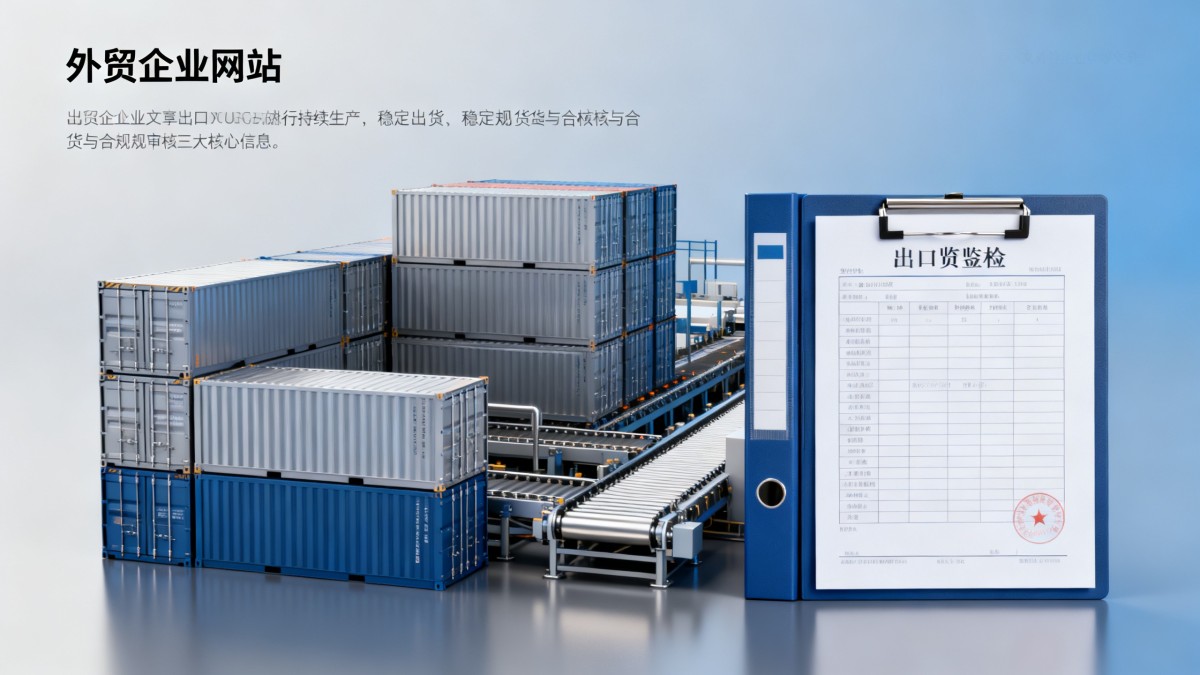
A competitive quote can hide structural weakness. A supplier may offer attractive pricing while struggling with labor turnover, volatile export orders, unresolved compliance issues, or thin capacity buffers. These weaknesses rarely appear in marketing brochures, yet they directly affect delivery reliability and total procurement risk.
For business evaluators, supplier stability is not only about whether a company exists today. It is about whether that company can perform consistently over the next twelve to twenty-four months under changing market conditions. Stable suppliers protect continuity, reduce firefighting, and support more predictable inventory, cash flow, and customer commitments.
This is where industrial sourcing intelligence becomes valuable. Instead of relying on a single audit or a self-reported supplier profile, evaluators can examine a wider set of operational and trade signals. These signals often reveal whether the supplier is durable, overstretched, declining, or quietly strengthening.
What industrial sourcing intelligence actually reveals
Industrial sourcing intelligence converts scattered industrial, trade, and compliance data into structured insight about supplier behavior. It looks beyond what a supplier says and examines what the supplier appears to be doing in real markets. That includes shipment patterns, market exposure, production continuity indicators, certification changes, and structural shifts in the supplier’s operating environment.
At its best, industrial sourcing intelligence helps evaluators answer a deeper question: is this supplier merely active, or is it genuinely stable? Activity can be temporary. Stability is demonstrated through patterns. A supplier that maintains export consistency, manages compliance well, serves diversified markets, and adapts to input shocks is fundamentally different from one that grows fast but lacks resilience.
This intelligence is especially useful in cross-border procurement, where direct visibility is limited. Buyers may be far from the factory floor and dependent on intermediaries, translated documents, or infrequent site visits. In those cases, external intelligence helps close information gaps and reduce reliance on surface-level claims.
Which signals most reliably indicate supplier stability
Not every data point deserves equal weight. Business evaluators should prioritize signals that show continuity, adaptability, and structural strength. One of the clearest indicators is export consistency over time. A supplier with regular shipment activity across multiple periods often demonstrates healthier order flow and operational discipline than one with irregular spikes followed by silence.
Customer concentration is another critical signal. If most shipments appear tied to one or two major buyers, the supplier may be vulnerable to sudden demand loss. A more diversified customer base usually indicates stronger market positioning and lower revenue fragility. Diversification does not eliminate risk, but it reduces dependence on a single commercial relationship.
Production continuity also matters. Evaluators should look for signs that suggest whether the supplier is scaling smoothly, operating near unstable capacity, or experiencing interruptions. Frequent product mix changes, delivery inconsistency, or long quiet periods can point to instability, especially in sectors that depend on steady line utilization.
Compliance performance is equally important. Certifications, regulatory records, customs irregularities, quality disputes, or environmental enforcement actions can all indicate future disruption risk. A supplier may still be shipping today while accumulating hidden liabilities that later affect export eligibility, customer acceptance, or financing access.
Financial resilience, while harder to observe directly, can often be inferred through behavior. Heavy discounting, abrupt market shifts, erratic shipping cadence, or dependence on distressed regions may suggest pressure. Stable suppliers usually display more balanced market behavior and less evidence of reactive survival tactics.
How export behavior can expose hidden supplier risk
Export behavior is often one of the most revealing dimensions of industrial sourcing intelligence. Shipment volume alone does not tell the full story. Evaluators should look for continuity, destination diversity, seasonality patterns, and signs of abrupt dependence on unstable channels. A supplier serving several regions with recurring flows may be more resilient than one tied to a single market under regulatory or economic pressure.
Changes in destination markets can also reveal strategic stress. If a supplier suddenly shifts from established higher-standard markets to looser or lower-margin destinations, it may signal lost competitiveness, compliance friction, or shrinking demand from core buyers. Context is important, but the pattern deserves investigation.
Another issue is shipment irregularity. Sharp peaks followed by long inactivity can indicate opportunistic trading rather than operational steadiness. In industrial sourcing, dependable fulfillment matters more than isolated bursts of export success. Business evaluators should therefore examine trends over time rather than isolated records.
Trade intelligence can also reveal whether a supplier is broadening product categories too aggressively. While diversification may reflect growth, it can also indicate desperation, underused capacity, or strategic drift. When a factory appears to pivot rapidly without a clear technical rationale, that may point to unstable demand or weak core positioning.
Why compliance patterns often predict future disruption
Many sourcing decisions fail because buyers treat compliance as a box-checking exercise rather than a stability indicator. In reality, compliance patterns often predict operational disruption before delivery failure becomes visible. A supplier that struggles with certifications, labeling requirements, safety documentation, or environmental obligations may continue operating temporarily, but its risk profile is already deteriorating.
For business evaluators, the key is not only whether a supplier has certificates. It is whether the supplier demonstrates ongoing compliance discipline. Are records current? Do product categories align with declared capabilities? Are there contradictions between export claims and technical documentation? Are there signs of repeated corrections or market access issues?
Regulatory exposure should also be reviewed in sector context. A supplier in electronics, medical components, chemicals, food processing, or green energy may face stricter technical requirements than a supplier in lower-regulation categories. In these industries, weak compliance management is not a minor issue. It can interrupt shipments, trigger recalls, damage reputation, and erode buyer confidence quickly.
Industrial sourcing intelligence is useful because it connects compliance evidence to broader operational reality. Instead of reading documents in isolation, evaluators can assess whether compliance behavior aligns with shipment activity, product complexity, and target market exposure.
How market conditions shape supplier stability even when the factory looks strong
A supplier may appear capable on paper and still face serious instability because of its surrounding market conditions. Industrial sourcing intelligence helps evaluators understand this external layer. Input cost volatility, energy constraints, labor shortages, freight disruptions, currency swings, and demand contractions can all weaken supplier performance even when internal operations remain competent.
This is especially relevant in global sectors with complex upstream dependencies. A factory may maintain good quality and responsive sales support but remain highly exposed to a narrow raw material source or a politically sensitive shipping corridor. Without market-context intelligence, those vulnerabilities may stay invisible until they affect lead times or force majeure discussions.
Business evaluators should therefore assess both supplier-specific strength and ecosystem resilience. Is the supplier operating in a region facing policy shifts or infrastructure bottlenecks? Are core inputs under price pressure? Are export routes congested or increasingly regulated? Stability is not just a company trait. It is also a system outcome.
This broader view helps procurement teams avoid a common mistake: overvaluing visible factory competence while underestimating external structural risk. The best sourcing decisions balance both dimensions.
How to apply industrial sourcing intelligence in a real evaluation process
To make industrial sourcing intelligence useful, evaluators need a repeatable method. Start by defining the sourcing decision clearly. Is the supplier being considered for onboarding, volume expansion, dual-sourcing backup, or strategic partnership? Different decisions require different levels of evidence and tolerance for uncertainty.
Next, collect intelligence across several categories: export behavior, customer concentration, compliance status, operational continuity indicators, market environment, and product capability alignment. Avoid relying on a single indicator. Stable suppliers usually show strength across multiple dimensions, even if one area appears neutral.
Then compare signals for consistency. If a supplier claims strong international reach but shipment records suggest narrow concentration, the mismatch matters. If technical sophistication is promoted but target markets are low-standard and unstable, evaluators should ask why. Intelligence becomes powerful when it helps identify contradictions.
After that, score the supplier by risk domain rather than using one vague overall rating. For example, separate operational resilience, compliance discipline, commercial stability, and external market exposure. This produces a more defensible assessment and allows stakeholders to see where mitigation is possible and where risk is structural.
Finally, use intelligence to guide action. A supplier with moderate risk may still be acceptable if the buyer adjusts contract terms, lead time buffers, inspection protocols, or allocation share. The goal is not simply to reject risky suppliers. It is to understand the nature of the risk and manage it intelligently.
Common mistakes business evaluators should avoid
One common mistake is overvaluing responsiveness. Fast replies, polished presentations, and flexible pricing can create a false sense of reliability. These traits matter, but they do not prove stability. A supplier under commercial pressure may be highly responsive precisely because it urgently needs orders.
Another mistake is treating recent growth as proof of strength. Growth can be healthy, but rapid expansion may also strain quality control, labor management, and production planning. Without supporting evidence of organizational maturity, growth should be interpreted carefully.
Evaluators also sometimes rely too heavily on one audit, one visit, or one document set. Supplier conditions change. A factory that looked stable six months ago may now face different order patterns, policy constraints, or input shortages. Industrial sourcing intelligence adds the time-series perspective that static checks often miss.
Finally, many teams separate supplier research from market intelligence. That divide reduces decision quality. Supplier stability cannot be fully understood without knowing the market pressures around the supplier. The most reliable evaluations combine micro-level company evidence with macro-level industry context.
What better sourcing decisions look like with stronger intelligence
When industrial sourcing intelligence is used well, sourcing decisions become more disciplined and less reactive. Teams can identify fragile suppliers before disruptions escalate, prioritize follow-up questions more effectively, and defend supplier selections with stronger evidence. This improves internal alignment across procurement, risk, compliance, and management functions.
It also supports better supplier portfolio design. Instead of simply choosing the cheapest or most familiar option, companies can build a mix of suppliers based on resilience, capability, and exposure balance. That approach is especially valuable in industries where continuity matters more than headline price advantage.
For business evaluators, the greatest value lies in reducing uncertainty. No intelligence system can eliminate risk entirely. But structured sourcing insight can significantly improve the quality of judgment. It helps distinguish between suppliers that look acceptable and suppliers that are operationally dependable.
In a global trade environment shaped by compliance shifts, logistics volatility, and uneven demand recovery, that distinction matters more than ever. Supplier stability is not a claim to be accepted. It is a condition to be investigated.
Industrial sourcing intelligence gives business evaluators a practical way to do exactly that. By examining export patterns, compliance discipline, operational continuity, and market exposure together, companies gain a sharper picture of which suppliers are resilient enough to support long-term sourcing goals. The result is not just better supplier screening. It is better commercial judgment, stronger risk control, and more confident procurement strategy.
 When dual sourcing makes sense in a sourcing strategy for manufacturersSourcing strategy for manufacturers: learn when dual sourcing strengthens supply continuity, reduces disruption risk, and protects production without adding unnecessary complexity.
 How bulk commodities pricing affects long-term supply contractsBulk commodities pricing shapes long-term supply contracts through index rules, freight, quality, volume, and currency risk. Explore strategies for resilient costs and supply security.
 Which global manufacturing trends by sector matter most for sourcing plans?Global manufacturing trends by sector: identify sourcing risks, supplier resilience, compliance demands, and cost drivers to build smarter, more reliable procurement plans.
 What industrial trade intelligence pricing should include before you subscribeIndustrial trade intelligence pricing explained: compare coverage, data quality, access rights, and workflow value before choosing a subscription that supports smarter trade decisions.
 How an industrial trade intelligence dashboard can identify new supplier marketsDiscover how an industrial trade intelligence dashboard helps identify new supplier markets by comparing capacity, landed cost, logistics resilience, and compliance risk.
 Which global market entry barriers should exporters assess first?Global market entry barriers exporters should assess first: tariffs, compliance, buyer qualification, logistics, and payment risk. Build a practical strategy for confident market entry.
 How trade data aggregation analytics can reveal emerging supplier marketsTrade data aggregation analytics reveals emerging supplier markets by connecting trade flows, capacity signals, logistics, and compliance insights for smarter sourcing decisions.
 When an export market analysis platform can validate demand in a new marketExport market analysis platform insights help validate new-market demand through buyer fit, regulations, logistics, competition, and profitable entry conditions.
 What is driving the beauty and personal care market in the USA?Beauty and personal care in USA is driven by targeted solutions, selective premiumization, digital discovery, clean-label trust, diverse needs, and compliance. Explore key growth opportunities.
 How trade flow monitoring reports reveal changing regional demandTrade flow monitoring reports reveal changing regional demand through import volumes, sourcing shifts, product mix, logistics signals, and regulatory trends. Explore actionable market insights.
 How international market intelligence for investors reduces market-entry riskInternational market intelligence for investors reduces market-entry risk by validating demand, regulations, logistics, and competition before capital is committed.
 How international sourcing intelligence helps identify supplier risk earlyInternational sourcing intelligence helps businesses spot supplier risks early, protect supply continuity, and make smarter global procurement decisions.
 How trade data aggregation analytics reveals emerging supplier marketsTrade data aggregation analytics reveals emerging supplier markets through export trends, input flows, logistics, and regulatory signals. Discover smarter sourcing insights.
 What industrial cluster monitoring in Vietnam reveals about site riskIndustrial cluster monitoring Vietnam reveals hidden site risks across labor, utilities, logistics, compliance, and supplier dependencies. Make smarter sourcing and expansion decisions.
 Food Technology Trends Reshaping Shelf Life, Safety, and Product InnovationFood technology is reshaping shelf life, safety, and innovation. Discover the trends helping food businesses cut risk, improve compliance, and unlock stronger global market growth.
 How electronics manufacturing services are changing with low-volume demandElectronics manufacturing services are evolving fast with low-volume demand. Learn how agile EMS partners improve flexibility, compliance, sourcing resilience, and speed to market.
 How Can Buyers Reduce Procurement Risks for Electronic Components?How to reduce procurement risks for electronic components: learn how buyers assess traceability, lead times, compliance, and supplier types to avoid costly sourcing mistakes.
 What Sourcing Intelligence India Reveals About Supplier Risk and Cost ShiftsSourcing intelligence India reveals hidden supplier risk, compliance gaps, logistics pressure, and real cost shifts—helping buyers compare vendors smarter and source with more confidence.
 Fashion Trends 2026: Which Materials, Colors, and Silhouettes Are Gaining Ground?Fashion trends 2026 spotlight tactile fabrics, mineral colors, and controlled volume. Explore the materials, shades, and silhouettes shaping smarter, more wearable style.
 Smart Device Market Outlook: Key Growth Drivers, Segments, and Business OpportunitiesSmart device market trends are shifting toward system value, industrial demand, and resilient supply chains. Explore key growth drivers, high-potential segments, and business opportunities.
 How Global Trade Intelligence Services Help B2B Firms Evaluate Markets and SuppliersGlobal trade intelligence services help B2B firms compare suppliers, assess market potential, and uncover compliance, logistics, and pricing risks before costly decisions are made.




















Global Trade Insights & Industry
Our mission is to empower global exporters and importers with data-driven insights that foster strategic growth.
Search News
Popular Tags
Industry Overview
The global commercial kitchen equipment market is projected to reach $112 billion by 2027. Driven by urbanization, the rise of e-commerce food delivery, and strict hygiene regulations.