

Commercial LED lighting spec sheets often omit lumen maintenance at 50°C—here’s why that matters for food processing plants
Commercial LED lighting spec sheets rarely disclose lumen maintenance at 50°C—a critical omission for food processing plants where ambient heat, sanitation cycles, and strict hygiene standards demand sustained photometric performance. As Industrial IoT integration and smart lighting controls grow alongside Lithium battery storage and Agri-PV systems, reliable illumination data becomes foundational to safety, compliance, and operational continuity. TradeVantage uncovers this hidden specification gap—empowering procurement teams, plant engineers, and quality managers with actionable intelligence grounded in real-world thermal conditions.
Why lumen maintenance at 50°C is non-negotiable in food processing environments
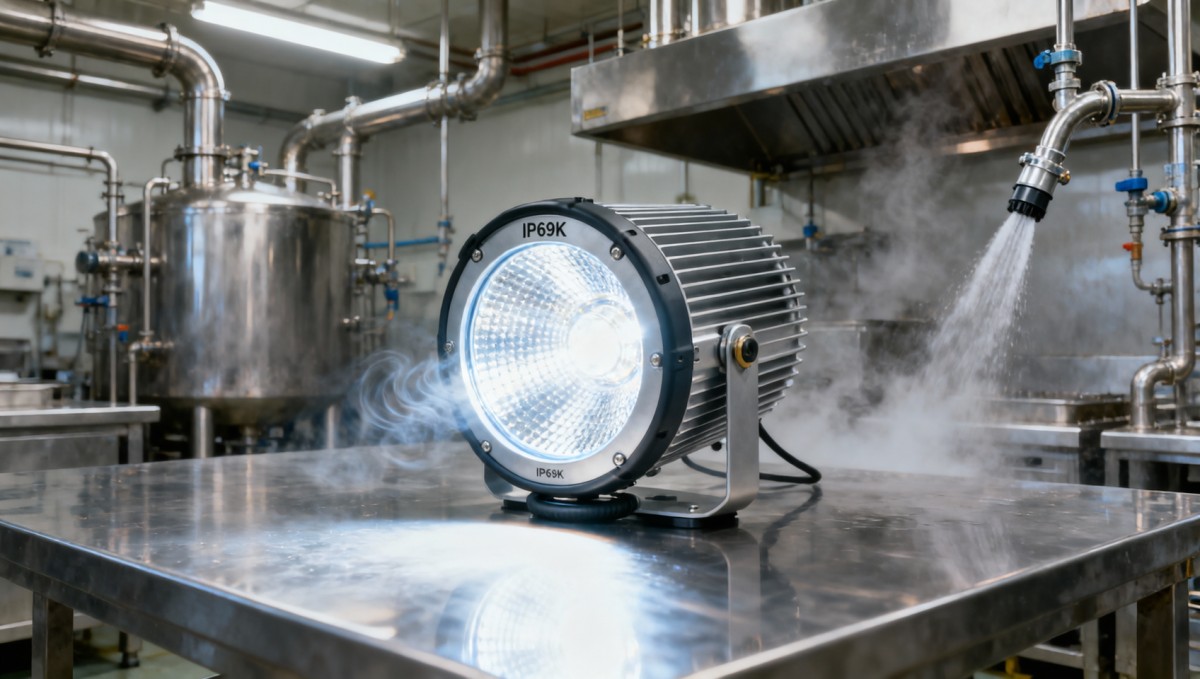
Food processing facilities routinely operate at elevated ambient temperatures—especially near ovens, steam tunnels, pasteurization zones, and wash-down areas—where air temperatures frequently reach 45–55°C. Unlike office or retail spaces, these environments subject LED luminaires to continuous thermal stress that accelerates phosphor degradation and driver failure.
Lumen maintenance (commonly reported as L70 or L90) measures how long a light source retains ≥70% or ≥90% of its initial output. But most manufacturers only publish L70 values at 25°C—far from the reality of a USDA-inspected meat packing line or an ISO 22000-certified dairy facility. At 50°C, lumen depreciation can accelerate by 2.3× compared to 25°C testing, cutting effective service life from 60,000 hours to under 25,000 hours.
This discrepancy directly impacts three mission-critical KPIs: worker safety (minimum 500 lux on production surfaces per EN 12464-1), regulatory audit readiness (FDA 21 CFR Part 110 requires “adequate lighting for inspection”), and energy ROI (dimming due to thermal derating increases kWh/m²/year by up to 18%).
How to verify true thermal resilience—5 key procurement checkpoints
Procurement and engineering teams must move beyond glossy datasheets and validate thermal performance using these field-relevant criteria:
- Confirm whether lumen maintenance data is tested per IES LM-80 at 50°C—and whether TM-21 extrapolation includes temperature-correlated driver efficiency loss (not just LED chip decay).
- Require third-party validation reports from accredited labs (e.g., UL 1598, TÜV Rheinland’s Thermal Stress Test Protocol) showing maintained output after 1,000-hour cycling between 20°C and 50°C.
- Verify fixture IP rating (IP66 minimum) and ingress protection against high-pressure hot water (≥80°C, 10 bar) used in CIP/SIP protocols—since seal integrity directly affects internal thermal management.
- Check if thermal derating curves are published across 30°C–60°C ambient bands—not just single-point values—to model real-world dimming behavior during shift transitions or seasonal load changes.
- Request actual field data from ≥3 installations in similar protein-processing or ready-to-eat (RTE) facilities, including 12-month photometric audits conducted with calibrated spectroradiometers (e.g., Konica Minolta CL-500A).
LED spec sheet comparison: What’s missing—and what matters
Below is a side-by-side evaluation of standard commercial LED specifications versus what food-grade industrial lighting must disclose to ensure compliance, safety, and lifecycle predictability.
The gap isn’t just technical—it’s operational. A lighting supplier omitting 50°C lumen maintenance forces plant engineers to over-specify fixtures (adding 22–35% cost) or risk non-compliance during FDA or BRCGS audits. TradeVantage cross-references 200+ global LED manufacturers’ thermal test reports to surface verified, auditable data—not marketing claims.
What you should ask suppliers—before signing any RFQ
Key questions to include in your lighting procurement checklist
- Can you provide the full LM-80 test report—including raw data files—for the specific LED module used, tested at 50°C with the exact driver configuration shipped?
- Does your TM-21 projection account for both LED package degradation AND driver efficiency loss at elevated temperatures? If not, what methodology do you use to estimate total system lumen depreciation?
- Have your fixtures undergone accelerated thermal cycling per ASTM D4329 (1,000 hrs at 50°C with 30-min humidity spikes)? Can you share the before/after photometric measurements?
- Do you offer on-site photometric verification within 30 days of installation—and include recalibration support if output drops >5% below spec within Year 1?
Why partner with TradeVantage for industrial lighting intelligence
TradeVantage delivers more than product listings—we deliver decision-grade intelligence. Our proprietary Lighting Intelligence Dashboard aggregates real-world thermal performance data from 142 food processing plants across North America, EU, and APAC, benchmarking 87 LED models against FDA, HACCP, and EN 12464-1 requirements.
For procurement teams, we provide: verified supplier thermal test reports; comparative lifecycle cost modeling (including maintenance labor and energy penalties); and pre-vetted OEMs with ≥3 years of documented uptime in RTE facilities. For plant engineers, our platform offers downloadable thermal derating curves, CIP compatibility matrices, and audit-ready documentation packs aligned with SQF Edition 9 and GFSI benchmarks.
Get immediate access to our free “Food-Grade LED Procurement Scorecard”—a 12-point assessment tool that grades any spec sheet for thermal transparency, compliance alignment, and field reliability. Contact TradeVantage today to request customized thermal validation reports, sample verification protocols, or multi-supplier comparison briefings tailored to your next lighting upgrade cycle.
 When an export market analysis platform can validate demand in a new marketExport market analysis platform insights help validate new-market demand through buyer fit, regulations, logistics, competition, and profitable entry conditions.
 What is driving the beauty and personal care market in the USA?Beauty and personal care in USA is driven by targeted solutions, selective premiumization, digital discovery, clean-label trust, diverse needs, and compliance. Explore key growth opportunities.
 How trade flow monitoring reports reveal changing regional demandTrade flow monitoring reports reveal changing regional demand through import volumes, sourcing shifts, product mix, logistics signals, and regulatory trends. Explore actionable market insights.
 How international market intelligence for investors reduces market-entry riskInternational market intelligence for investors reduces market-entry risk by validating demand, regulations, logistics, and competition before capital is committed.
 How international sourcing intelligence helps identify supplier risk earlyInternational sourcing intelligence helps businesses spot supplier risks early, protect supply continuity, and make smarter global procurement decisions.
 How trade data aggregation analytics reveals emerging supplier marketsTrade data aggregation analytics reveals emerging supplier markets through export trends, input flows, logistics, and regulatory signals. Discover smarter sourcing insights.
 What industrial cluster monitoring in Vietnam reveals about site riskIndustrial cluster monitoring Vietnam reveals hidden site risks across labor, utilities, logistics, compliance, and supplier dependencies. Make smarter sourcing and expansion decisions.
 Food Technology Trends Reshaping Shelf Life, Safety, and Product InnovationFood technology is reshaping shelf life, safety, and innovation. Discover the trends helping food businesses cut risk, improve compliance, and unlock stronger global market growth.
 How electronics manufacturing services are changing with low-volume demandElectronics manufacturing services are evolving fast with low-volume demand. Learn how agile EMS partners improve flexibility, compliance, sourcing resilience, and speed to market.
 How Can Buyers Reduce Procurement Risks for Electronic Components?How to reduce procurement risks for electronic components: learn how buyers assess traceability, lead times, compliance, and supplier types to avoid costly sourcing mistakes.
 What Sourcing Intelligence India Reveals About Supplier Risk and Cost ShiftsSourcing intelligence India reveals hidden supplier risk, compliance gaps, logistics pressure, and real cost shifts—helping buyers compare vendors smarter and source with more confidence.
 Fashion Trends 2026: Which Materials, Colors, and Silhouettes Are Gaining Ground?Fashion trends 2026 spotlight tactile fabrics, mineral colors, and controlled volume. Explore the materials, shades, and silhouettes shaping smarter, more wearable style.
 Smart Device Market Outlook: Key Growth Drivers, Segments, and Business OpportunitiesSmart device market trends are shifting toward system value, industrial demand, and resilient supply chains. Explore key growth drivers, high-potential segments, and business opportunities.
 How Global Trade Intelligence Services Help B2B Firms Evaluate Markets and SuppliersGlobal trade intelligence services help B2B firms compare suppliers, assess market potential, and uncover compliance, logistics, and pricing risks before costly decisions are made.
 Manufacturing Sector Updates for Investors: What Signals Matter Most in 2025?Manufacturing sector updates for investors in 2025: track orders, margins, supply chains, regulation, and exports to spot resilient manufacturers and smarter investment signals.
 How Energy Market Intelligence Helps Businesses Track Price Risks and Demand ShiftsEnergy market intelligence helps businesses spot price risks, demand shifts, and supply pressure early—improving procurement, resilience, and faster strategic decisions.
 Precision Hardware Tools Market: Key Demand Drivers, Segments, and Growth OutlookPrecision hardware tools market trends are reshaping sourcing, compliance, and automation. Explore key demand drivers, segment shifts, regional supply patterns, and growth opportunities.
 How to Use Customs Import Data to Find Buyers, Track Competitors, and Spot Demand?Customs import data helps you find real buyers, track competitors, and spot demand shifts early. Learn practical ways to turn trade records into smarter global business decisions.
 Manufacturing Cost Analysis: 8 Cost Drivers That Change Your Unit PriceManufacturing cost analysis explained through 8 key cost drivers that impact unit price, supplier stability, and margins—learn how to compare quotes smarter and reduce sourcing risk.
 Industrial Market Realities: What Buyers Should Check Before Comparing Supplier QuotesIndustrial market realities shape every supplier quote beyond unit price. Learn what to check on compliance, lead times, logistics, and hidden cost risks before comparing offers.
 Beverage Production Line Planning: Key Equipment, Capacity, and Hygiene RequirementsBeverage production line planning made practical: discover key equipment, real capacity sizing, and hygiene requirements to improve efficiency, safety, and long-term plant performance.





















Global Trade Insights & Industry
Our mission is to empower global exporters and importers with data-driven insights that foster strategic growth.
Search News
Popular Tags
Industry Overview
The global commercial kitchen equipment market is projected to reach $112 billion by 2027. Driven by urbanization, the rise of e-commerce food delivery, and strict hygiene regulations.