

Manufacturing Robots: Common Integration Mistakes to Avoid
Integrating manufacturing robots can dramatically improve productivity, but many projects stall because of avoidable planning and execution errors. For project managers and engineering leads, understanding these common integration mistakes is essential to controlling costs, reducing downtime, and achieving long-term automation success. This article highlights the critical pitfalls to avoid and the practical considerations that lead to smoother, more effective robot deployment.
In industrial environments, robot integration is rarely just a machine purchase. It is a cross-functional project involving process design, safety engineering, controls, tooling, line balancing, operator training, and lifecycle support. A robotic cell that looks efficient on paper can still underperform if cycle time assumptions are wrong, upstream processes are unstable, or plant teams are not aligned on ownership.
For project leaders responsible for budget, schedule, and production output, the biggest risk is not the robot itself. It is the gap between expected performance and real-world deployment. Avoiding common mistakes early can shorten commissioning by 2–6 weeks, reduce rework, and improve OEE targets once the system enters production.
Why Manufacturing Robots Integration Projects Go Off Track
Manufacturing robots are often introduced to solve clear problems: labor shortages, inconsistent quality, hazardous tasks, or throughput bottlenecks. Yet many projects begin with an equipment-first mindset instead of a process-first review. That creates problems from day 1, especially in welding, palletizing, machine tending, pick-and-place, and assembly cells where every second of cycle time matters.
Mistake 1: Automating a Bad Process
One of the most common integration mistakes is trying to automate an unstable manual workflow. If part presentation varies by more than a few millimeters, if upstream scrap rates already exceed 3%–5%, or if changeovers are poorly controlled, the robot will only replicate inconsistency faster. Manufacturing robots perform best when task variation, fixture repeatability, and material flow are already under control.
Before approving robot integration, project teams should map the current process in 4 basic layers: input variation, task sequence, cycle time, and defect sources. A one-week process study can prevent months of tuning later. This is especially important for operations with multiple SKUs, mixed loads, or frequent product changeovers.
What to review before automation
- Part consistency and fixturing tolerance, ideally within a repeatable range such as ±0.2 mm to ±1.0 mm depending on the task
- Actual cycle time by step, not just average shift output
- Downtime causes across at least 2–4 weeks of production records
- Manual intervention frequency and root causes
- Changeover duration for each product family
Mistake 2: Underestimating Application Complexity
Not all manufacturing robots face the same integration risk. A simple palletizing cell may involve fewer variables than robotic deburring, vision-guided bin picking, or tight-tolerance assembly. Problems arise when teams assume that a robot with a 10 kg or 20 kg payload rating is enough, without checking end-of-arm tooling mass, cable dress, reach constraints, acceleration limits, and part orientation needs.
Project managers should verify the full application envelope, not just payload. In many cells, the real limiting factor is wrist torque, reach at speed, or tooling interference. A robot that technically reaches the station may still lose efficiency if it must slow down to avoid collision zones or awkward approach angles.
The table below outlines how integration complexity typically changes by application type and what planning checkpoints should be added before procurement.
The practical takeaway is simple: the more variation the application contains, the more time should be allocated for proof-of-concept testing, controls validation, and mechanical adjustment. A short upfront trial using real parts is often more valuable than a polished proposal based only on CAD assumptions.
Mistake 3: Weak Cross-Department Alignment
Manufacturing robots affect more than engineering. Production, maintenance, EHS, quality, IT, procurement, and plant management all influence deployment success. If only 1 or 2 stakeholders define the project, hidden conflicts appear later: maintenance may reject spare part plans, operators may not trust the cell, or IT may delay network integration for data collection and remote access.
A useful governance model is to assign one project owner, one technical lead, and one operations sponsor, then review progress at fixed intervals such as every 7 or 14 days. This reduces design drift and keeps decisions traceable when timelines tighten.
Critical Planning Mistakes Before Installation Starts
Most avoidable delays happen before the robot even arrives on site. Lead times for manufacturing robots, end-of-arm tooling, guarding, conveyors, sensors, and control cabinets can vary from 4–16 weeks depending on specification and sourcing region. If the planning package is incomplete, each missing detail pushes mechanical build, FAT, and SAT further out.
Mistake 4: Incomplete Scope Definition
A robot integration scope must define more than the robot arm. It should include tooling, fixtures, safety devices, electrical interfaces, software logic, operator HMI, spare parts, training, documentation, and acceptance criteria. When these elements are left vague, suppliers and internal teams interpret requirements differently, which leads to change orders and cost escalation.
At minimum, the statement of work should answer 6 questions: what task is automated, what throughput is required, what product variants are included, what utility connections exist, what safety level is needed, and what production metrics determine acceptance. Without this detail, even a well-designed robotic cell can miss the target.
Minimum scope checklist
- Cycle time target in seconds and shift output requirement
- Part size, weight, and orientation range
- Required uptime or OEE target after ramp-up, such as 85% after 60–90 days
- Safety zoning, guarding, and lockout requirements
- Data exchange with PLC, MES, or quality systems
- Training coverage for operators, technicians, and engineers
Mistake 5: Ignoring Safety Integration Until Late Stage
Safety should be designed in parallel with process logic, not added after mechanical layout is complete. Late safety redesign often forces changes to cell footprint, access points, or operator sequence. In compact facilities, that can mean reworking conveyor paths, fencing, light curtains, or maintenance access clearances.
For manufacturing robots, common safety considerations include risk assessment, safeguarding method, speed and separation requirements, E-stop placement, safe access for troubleshooting, and safe restart behavior after interruption. Even in collaborative applications, risk must still be assessed task by task rather than assumed to be inherently low.
The following table helps project teams compare common planning elements that are often missed and the impact they have on installation schedules and startup performance.
These controls are not administrative extras. They directly affect startup stability. A robotic cell that meets mechanical installation dates but lacks clear acceptance criteria can still remain in trial mode for weeks, consuming engineering time and hurting confidence across the plant.
Mistake 6: Choosing Integrators on Price Alone
Procurement pressure often pushes teams to compare robot integration proposals by total price only. That is risky. A lower quote may exclude simulation, tooling refinement, site support days, training hours, spare parts, or post-startup optimization. The result is a cheaper purchase order but a more expensive project outcome.
A better approach is to score suppliers across 4–6 dimensions: application experience, engineering depth, controls capability, support response time, testing discipline, and documentation quality. For higher-variation tasks, application know-how can be more valuable than a small upfront savings percentage.
Deployment and Commissioning Mistakes That Increase Downtime
Even strong designs can fail at commissioning if startup is rushed. In many factories, the pressure to resume production compresses testing into a narrow 48–72 hour window. That leaves little time to tune grippers, optimize motion paths, verify fault recovery, and train operators on what normal operation actually looks like.
Mistake 7: Poor FAT and SAT Discipline
Factory Acceptance Testing and Site Acceptance Testing are often treated as paperwork milestones instead of real risk filters. A proper FAT should test at least the core sequence, alarms, safety logic, recipe handling, and representative product runs. SAT should then verify performance under actual utilities, real operators, and live production conditions.
For manufacturing robots, FAT should include enough repetitions to reveal consistency problems, not just one successful demonstration. Depending on the application, teams may require 20, 50, or 100 consecutive cycles without a critical fault before moving to the next gate.
Commissioning controls that reduce surprises
- Use a written FAT checklist with pass/fail criteria
- Test normal cycle, jam recovery, restart logic, and sensor failure scenarios
- Run sample parts from different lots or suppliers
- Confirm HMI messages are clear enough for first-line operators
- Reserve 3–5 days after startup for tuning and troubleshooting
Mistake 8: Inadequate Training for Operators and Maintenance Teams
A well-integrated robotic cell still depends on people. If operators do not understand part loading rules, fault messages, or restart procedures, minor issues become major stoppages. If maintenance teams are not trained on backups, I/O diagnostics, tooling wear, and preventive checks, the plant becomes dependent on external support for basic issues.
Training should be role-based. Operators may need 2–4 hours focused on routine use and abnormal conditions. Maintenance technicians may need 1–2 days covering electrical, pneumatic, and robot controller diagnostics. Engineers may need deeper instruction on program adjustment, recipe changes, and performance tuning. Treating all users as one group usually leaves critical gaps.
Mistake 9: No Plan for Ramp-Up Performance
New manufacturing robots rarely hit target efficiency on the first shift. Plants should expect a ramp-up period, often 2–8 weeks depending on process complexity. Problems during that period are normal, but they must be managed with structured escalation, spare parts readiness, and daily performance review.
A practical ramp-up plan includes baseline cycle time, first-pass yield, minor stop count, and fault category tracking. Reviewing these 4 metrics each shift helps teams separate tuning issues from design flaws. Without this discipline, project teams rely on anecdotal feedback, which slows corrective action.
How Project Managers Can Build a More Reliable Robot Integration Roadmap
The best manufacturing robots projects are built on realistic planning, measurable milestones, and strong supplier coordination. Project managers do not need to eliminate every risk before launch, but they do need a structured roadmap that turns uncertainty into manageable checkpoints.
A practical 5-stage integration framework
- Process qualification: confirm task stability, variation limits, and automation objectives
- Concept validation: review layout, safety concept, tooling method, and expected cycle time
- Engineering release: lock scope, interfaces, utilities, acceptance tests, and spare parts
- Commissioning: complete FAT, installation, SAT, and operator handover
- Ramp-up optimization: monitor performance for 30, 60, and 90 days and close gaps
This framework gives decision-makers a clearer basis for capital approval and supplier management. It also aligns well with global manufacturers that need predictable deployment across multiple plants, regions, or product lines.
Questions to ask before final approval
- Has the process been validated with real production variation?
- Are payload, reach, tooling, and cycle time confirmed together rather than separately?
- Have safety and maintenance access been reviewed before fabrication?
- Are FAT and SAT standards documented with measurable thresholds?
- Is there a 60–90 day support plan after go-live?
For industrial buyers, this disciplined approach also improves supplier comparison. It makes it easier to evaluate proposals, identify hidden exclusions, and negotiate support terms that matter after installation, not just before the purchase order is signed.
As a global B2B information and industry intelligence platform, GTIIN and TradeVantage help exporters, importers, and industrial stakeholders track manufacturing automation trends, compare market signals, and strengthen trust-focused digital visibility. For companies involved in manufacturing robots, better information flow supports better sourcing decisions, stronger partner selection, and more credible market positioning across international supply chains.
Final Considerations for Long-Term Automation Success
Avoiding common integration mistakes is less about caution and more about control. When manufacturing robots are matched to a stable process, supported by a complete scope, tested against real operating conditions, and backed by proper training, the results are far more predictable. Project managers gain better schedule control, engineering leads reduce commissioning stress, and operations teams see faster adoption on the floor.
If you are planning a robotic cell, expanding automation capacity, or evaluating integration partners, now is the time to review your process assumptions, acceptance criteria, and ramp-up strategy in detail. Contact us to explore tailored industrial automation insights, request a custom solution perspective, or learn more about practical deployment strategies for manufacturing robots in global production environments.
Recommended News
 MWR Releases Water Rights Trading Data StandardWater Rights Trading Data Standard SL/T867—2026 launched by China’s MWR—enables seamless interoperability with EU WISDOM & Singapore Smart Water for exporters.
 2026 Shanghai International Drone Expo Opens, Accelerating Export Certification & Airworthiness Collaboration for Low-Altitude Economy2026 Shanghai Drone Expo accelerates export certification & airworthiness collaboration for low-altitude economy — key for drone subsystems, automotive electronics & lithium battery exporters.
 Pig Industry Forum Held on May 11, 2026: Cost Leadership and Export Opportunities for Feed & Environmental EquipmentPig industry forum highlights cost leadership & export opportunities for feed & environmental equipment—key insights for global agri-tech suppliers.
 Invesco Nasdaq Tech ETF Suspended, Resumes Trading at 10:30 AM on May 11, 2026Invesco Nasdaq Tech ETF suspended & resumed May 11, 2026—spotlight on surging AI hardware exports: servers, optical modules, liquid cooling, GPUs.
 Tencent Cloud Raises List Prices by 5% Starting May 9, 2026Tencent Cloud raises list prices by 5% starting May 9, 2026—impacting CDN, AI inference APIs, IoT & object storage. Assess cost exposure now.
 US April CPI Rises 3.4% YoY, Inflation Stickiness Pressures ExportersUS April CPI rises 3.4% YoY — inflation stickiness pressures Chinese exporters in fasteners, packaging & stationery. Act now on FX risk & logistics costs.
 2nd Air-Space IT Conference Opens, Accelerating北斗+Low-Altitude Economy Export CertificationBoost北斗+low-altitude economy exports: 2nd Air-Space IT Conference advances BeiDou-3, UAM certification & CNS standards for drones, eVTOL, GNSS, and composites.
 SMIC Merger Review Set for May 11, 2026SMIC Merger Review on May 11, 2026: Key signal for semiconductor equipment & materials suppliers—track impact on orders, qualifications, and supply chain strategy.
 MWR Enacts 8 New Water Standards on May 11, 2026MWR Enacts 8 New Water Standards on May 11, 2026 — Key for smart water meters, flow sensors & irrigation controllers exporting to Middle East, Africa, SEA.
 Shin-Etsu Chemical Raises PVC Resin Prices Effective May 11, 2026Shin-Etsu Chemical PVC resin price hike: +¥30/kg effective May 11, 2026. Impacts construction, medical, packaging & supply chains globally — act now.
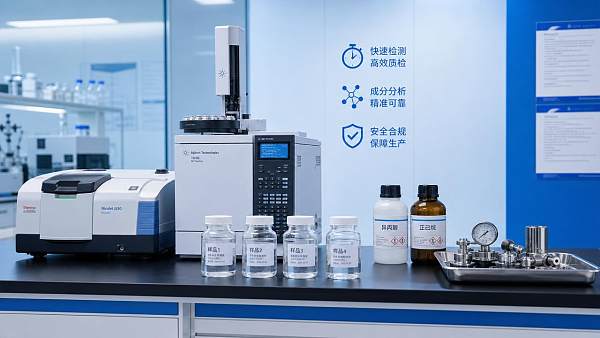
 Industrial Chemical Analysis for Faster QC DecisionsIndustrial chemical analysis helps QC and safety teams speed release decisions, reduce risk, and improve compliance. Learn how faster testing drives more reliable chemical quality control.
 Chemical Industry Reports: 2026 Cost and Demand SignalsChemical industry reports for 2026 uncover key cost and demand signals shaping sourcing, pricing, and exports. See what matters most and act with sharper market confidence.
 How to Verify Chemical Trade Leads Before You QuoteChemical trade leads should be verified before you quote. Learn how to screen specs, intent, compliance, and buying authority to reduce risk and win better chemical deals.
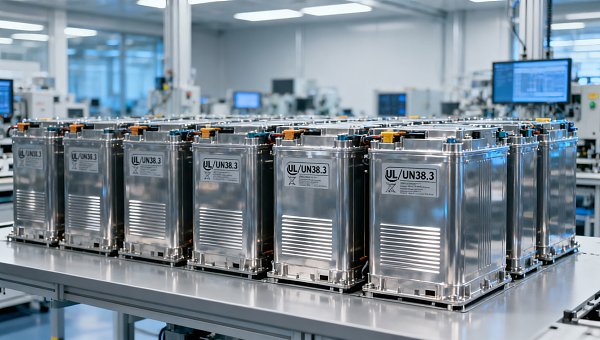
 8 EV Makers Jointly Deny 'Battery Locking' Investigation Rumors8 EV makers jointly deny 'battery locking' rumors—clarifying no regulatory summons over OTA capacity limits or UL/UN38.3 compliance. Critical for exporters & supply chain partners.
 Shin-Etsu Chemical Raises PVC Resin Prices Effective May 11, 2026Shin-Etsu Chemical PVC resin price hike: +¥30/kg effective May 11, 2026. Impacts Chinese exporters of pipes, films, synthetic leather & furniture — act now to assess exposure and adjust procurement.
 China's April Export of Electromechanical Products Up 23.6%China's April electromechanical exports surged 23.6% YoY—driven by industrial robots, laser cutters, smart meters & PV inverters. Key insights for exporters, CNC firms & supply chain players.
 2026 Guangzhou Flooring Expo Concludes: Eco-Friendly Flooring Materials Draw Overseas Buyer FocusEco-friendly flooring materials—water-based PU, solvent-free epoxy & recycled-aggregate systems—dominated 2026 Guangzhou Flooring Expo, drawing strong EU/US/Middle East buyer interest.
 US May Restart 'Freedom Operation' in Strait of HormuzUS may restart 'Freedom Operation' in Strait of Hormuz—impacting marine insurance, freight routing & Middle East supply chains. Key insights for logistics leaders.
 April Soybean Imports Surge 40% to 8.48M TonsApril soybean imports surge 40% to 8.48M tons—key insight for plant-based protein, pet food, aquafeed & organic fertilizer exporters targeting NA, EU, Japan & beyond.
 Iran Plans to Regulate Subsea Cables in Strait of HormuzIran's subsea cable regulation in Strait of Hormuz impacts global data routes—discover key risks, affected industries & resilience strategies now.
 2nd Aerospace Information Tech Conference Opens北斗+Low-Altitude Economy Export Certification Pathway北斗+Low-Altitude Economy Export Certification Pathway: Discover how BeiDou modules, UAS systems & drone payloads align with FAA, EU & ASEAN regulations for faster global market access.














Global Trade Insights & Industry
Our mission is to empower global exporters and importers with data-driven insights that foster strategic growth.
Search News
Popular Tags
Industry Overview
The global commercial kitchen equipment market is projected to reach $112 billion by 2027. Driven by urbanization, the rise of e-commerce food delivery, and strict hygiene regulations.