

Manufacturing Technology: What Matters Most for Line Stability
For quality control and safety teams, manufacturing technology is no longer just about speed—it is about keeping every line stable, compliant, and efficient. As production systems grow more connected and data-driven, the right technology can reduce defects, prevent unplanned downtime, and strengthen workplace safety. In this article, we explore the manufacturing technology factors that matter most for line stability and how they help teams maintain consistent output while supporting long-term operational reliability.
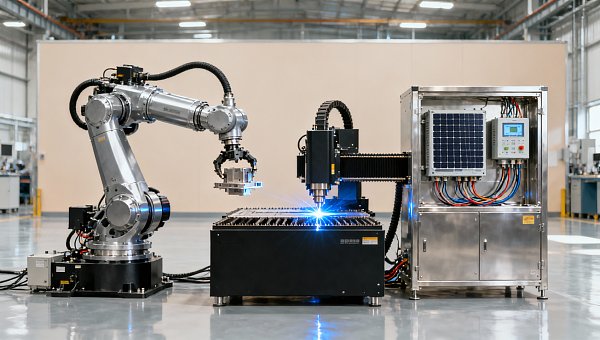
In industrial robotics, line stability depends on more than the robot arm itself. It is shaped by sensing accuracy, control architecture, safety integration, maintenance discipline, and data visibility across the entire cell. For quality control managers and safety officers, the priority is clear: a stable robotic line should hold repeatability within defined tolerances, recover quickly from faults, and maintain safe operation over 2-shift or 3-shift production cycles.
This matters even more in export-oriented manufacturing, where inconsistent output can trigger rework, delayed shipments, and compliance risks. For B2B decision-makers using market intelligence platforms such as GTIIN and TradeVantage, understanding which manufacturing technology investments actually improve line stability helps separate high-value upgrades from costly but low-impact changes.
Why Line Stability Has Become a Core KPI in Robotic Manufacturing
In a robotic production environment, line stability means the ability to keep output, quality, and safety performance within a controlled range over time. A line may run at 45 to 60 cycles per minute, but if variation in pick position, weld path, or torque application causes frequent stops, nominal speed becomes irrelevant. Stable throughput is often more valuable than peak throughput.
For quality control teams, unstable lines create three immediate problems: defect rates rise, inspection frequency increases, and root-cause analysis becomes harder. For safety managers, instability often shows up as repeated manual interventions, bypass behavior, and unplanned access into guarded zones. Even a 3-minute stoppage repeated 10 times per shift can expose both productivity and safety weaknesses.
The Three Stability Dimensions That Matter Most
- Process stability: repeatable motion, consistent cycle timing, and controlled part quality.
- System stability: reliable communication between robot, PLC, sensors, vision, conveyors, and safety devices.
- Operational stability: predictable maintenance intervals, trained operators, and disciplined alarm response.
A common mistake is to judge manufacturing technology only by robot payload, reach, or speed. In reality, a 10 kg to 20 kg robot with strong sensing, clean cabling, and robust interlocks may deliver better line stability than a faster unit installed in a poorly integrated cell. Stability is a systems issue, not a single-equipment issue.
Typical Sources of Instability in Industrial Robot Cells
Most robotic lines fail in predictable ways. Part presentation drifts by 1 mm to 3 mm, vision contrast changes under poor lighting, grippers wear faster than expected, or network latency affects synchronization. In high-mix production, recipe errors and fixture mismatch also become major causes of stoppage. These are not dramatic failures, but they gradually erode line confidence.
The table below outlines common instability points and their impact on quality and safety functions.
The key takeaway is that line stability problems rarely come from a single failure point. They usually emerge from weak coordination among mechanical, electrical, software, and human-control layers. That is why manufacturing technology must be assessed as an integrated reliability strategy.
Which Manufacturing Technology Elements Deliver the Biggest Stability Gains
When industrial robot buyers compare automation options, the most useful question is not “Which technology is newest?” but “Which technology reduces variation and intervention?” The strongest manufacturing technology choices are those that improve detection accuracy, fault response, process traceability, and safe uptime over 12 to 24 months.
1. Vision and Sensing That Reduce Process Variation
Robot cells become unstable when they assume every incoming part is identical. In practice, trays shift, surfaces reflect light differently, and parts arrive with minor dimensional variation. Vision systems, laser sensors, force sensors, and part-presence checks help the robot adapt before a defect occurs. For many assembly and picking applications, detection repeatability within ±0.5 mm to ±1.0 mm can significantly reduce false handling events.
For quality personnel, the value of sensing is not only inspection but prevention. A sensor that rejects a misaligned part in 0.5 seconds can avoid a downstream jam that costs 8 to 15 minutes of lost production. For safety teams, fewer jams mean fewer operator interventions near active robotic motion.
Practical sensor selection points
- Check environmental fit: dust, oil mist, glare, vibration, and temperature swing.
- Confirm inspection speed against actual line takt, such as 1.2 seconds or 3.5 seconds per part.
- Evaluate maintenance burden, including lens cleaning frequency and recalibration interval.
- Verify whether sensor data can be logged for traceability and trend analysis.
2. Controller and PLC Integration That Supports Predictable Recovery
A robotic line may have excellent hardware but still suffer unstable performance if robot controllers, PLCs, HMIs, and peripheral devices are loosely connected. Stable manufacturing technology depends on deterministic communication, structured alarms, and controlled restart logic. If a fault occurs, the system should guide operators through 3 to 5 clear recovery steps instead of relying on trial-and-error reset behavior.
For safety managers, this is critical. Unclear recovery logic often encourages unsafe intervention, especially during shift pressure. For quality teams, poor integration creates missing records, unverified recipe changes, and batch traceability gaps.
The table below compares technology elements that influence recovery stability in industrial robot cells.
In procurement reviews, this area is often underestimated because it is less visible than robot mechanics. Yet for line stability, controller logic and alarm structure can deliver some of the fastest returns by reducing stop duration, operator confusion, and unsafe restart practices.
3. End-of-Arm Tooling Built for Repeatability, Not Just Grip Force
End-of-arm tooling is a frequent weak link in robotic cells. Grippers, vacuum cups, weld torches, screwdrivers, and dispensing heads all wear over time. If tooling repeatability degrades, the robot may remain precise while the process becomes unstable. In many operations, a gripper jaw offset of 1 mm or vacuum loss below a defined threshold is enough to trigger rejects or dropped parts.
Quality teams should insist on wear monitoring points, consumable replacement intervals, and setup verification procedures. Safety teams should review whether tooling failure can create pinch, drop, or projectile hazards. Good manufacturing technology includes not only tooling selection but also tooling diagnostics and maintenance access.
Safety-Critical Technology Choices That Protect Uptime and People
Stable output is impossible if the line is not safe to operate, maintain, and recover. In industrial robotics, safety and productivity are not competing goals. Poorly designed safeguards create nuisance stops, while weak safeguards increase risk during troubleshooting. The right manufacturing technology balances access control, safe motion, and restart discipline so the line can run for long periods without unsafe workarounds.
Functional Safety Must Match Real Workflow
Safety devices should be selected based on actual task frequency and operator movement. A line that requires access every 20 minutes needs different protection logic from a cell opened once per shift. Light curtains, interlocked doors, area scanners, enabling devices, and safe-speed modes all have roles, but they must be applied in a way that supports practical operation.
For example, if a collaborative inspection step occurs 30 to 50 times per shift, safe reduced-speed mode may be more stable than repeated full stops and restarts. If access is rare but high-risk, hard guarding with controlled lockout may be more suitable. The right choice depends on hazard level, task duration, and restart complexity.
Four checks for safety-related stability
- Confirm that safeguards fit access frequency and maintenance workflow.
- Verify that fault reset requires safe state confirmation, not a blind button press.
- Review whether zone muting or bypass logic is controlled, logged, and limited.
- Test restart time under realistic conditions, ideally within a defined standard procedure.
Traceability Supports Both Compliance and Prevention
Digital traceability is one of the most practical manufacturing technology investments for line stability. When robot programs, alarms, operator actions, safety events, and quality results are recorded in one system, teams can find patterns before they become major losses. A recurring stop every 6 hours or a spike in defects after a recipe change is easier to correct when data is visible.
For quality control teams, traceability supports lot containment and verification. For safety managers, it supports incident review, near-miss analysis, and access-event tracking. Even simple dashboards showing top 5 faults, mean time between stoppages, and first-pass yield by shift can produce stronger decisions than isolated machine logs.
How to Evaluate Manufacturing Technology Before Purchase or Upgrade
Industrial robot buyers often focus on capital cost, but line stability should be part of the evaluation from the first supplier discussion. A lower-priced cell can become more expensive if it requires frequent sensor cleaning, unclear alarm handling, or weekly fixture adjustment. For B2B manufacturers, the better question is total operational reliability over the expected production window.
A Practical Evaluation Framework for QC and Safety Teams
The following criteria help cross-functional teams review manufacturing technology in a structured way before final approval.
This framework helps purchasing, engineering, quality, and EHS teams speak the same language. It moves the conversation from brochure-level features to measurable operating behavior. That is especially useful when comparing multiple suppliers or planning phased upgrades across several robot cells.
Implementation Risks to Address Early
Even strong manufacturing technology can underperform if deployment is rushed. Three early risks deserve attention: unrealistic cycle-time assumptions, incomplete operator training, and weak spare-parts planning. If validation runs cover only 2 hours instead of a full shift, intermittent faults may remain hidden. If critical spares have 4 to 8 week lead times, a minor component failure can stop output far longer than expected.
A stable launch usually includes FAT and SAT checks, process capability verification, alarm testing, safety validation, and at least one defined ramp-up review after the first production weeks. For high-mix lines, recipe management and changeover discipline should also be tested before volume production begins.
What Quality and Safety Leaders Should Prioritize Next
For industrial robotics, the most effective manufacturing technology is the kind that reduces variation, lowers manual intervention, and makes abnormal conditions easier to diagnose. Vision, sensing, controller integration, functional safety, and traceability all contribute to line stability when they are selected as part of one operating system rather than isolated upgrades.
For quality control teams, that means focusing on repeatability, data capture, and defect prevention at the source. For safety managers, it means reviewing how technology shapes access, restart behavior, and troubleshooting exposure during every shift. The best results usually come from cross-functional evaluation, where engineering, production, QC, and EHS define acceptance criteria together.
If your business is assessing robotic automation, line upgrades, or supplier options, GTIIN and TradeVantage can help you track industrial trends, compare technology direction across global markets, and strengthen decision-making with actionable B2B intelligence. Contact us to explore tailored insights, discuss solution pathways, or learn more about manufacturing technology strategies that support safer, more stable robotic production lines.
Recommended News
 MWR Releases Water Rights Trading Data StandardWater Rights Trading Data Standard SL/T867—2026 launched by China’s MWR—enables seamless interoperability with EU WISDOM & Singapore Smart Water for exporters.
 2026 Shanghai International Drone Expo Opens, Accelerating Export Certification & Airworthiness Collaboration for Low-Altitude Economy2026 Shanghai Drone Expo accelerates export certification & airworthiness collaboration for low-altitude economy — key for drone subsystems, automotive electronics & lithium battery exporters.
 Pig Industry Forum Held on May 11, 2026: Cost Leadership and Export Opportunities for Feed & Environmental EquipmentPig industry forum highlights cost leadership & export opportunities for feed & environmental equipment—key insights for global agri-tech suppliers.
 Invesco Nasdaq Tech ETF Suspended, Resumes Trading at 10:30 AM on May 11, 2026Invesco Nasdaq Tech ETF suspended & resumed May 11, 2026—spotlight on surging AI hardware exports: servers, optical modules, liquid cooling, GPUs.
 Tencent Cloud Raises List Prices by 5% Starting May 9, 2026Tencent Cloud raises list prices by 5% starting May 9, 2026—impacting CDN, AI inference APIs, IoT & object storage. Assess cost exposure now.
 US April CPI Rises 3.4% YoY, Inflation Stickiness Pressures ExportersUS April CPI rises 3.4% YoY — inflation stickiness pressures Chinese exporters in fasteners, packaging & stationery. Act now on FX risk & logistics costs.
 2nd Air-Space IT Conference Opens, Accelerating北斗+Low-Altitude Economy Export CertificationBoost北斗+low-altitude economy exports: 2nd Air-Space IT Conference advances BeiDou-3, UAM certification & CNS standards for drones, eVTOL, GNSS, and composites.
 SMIC Merger Review Set for May 11, 2026SMIC Merger Review on May 11, 2026: Key signal for semiconductor equipment & materials suppliers—track impact on orders, qualifications, and supply chain strategy.
 MWR Enacts 8 New Water Standards on May 11, 2026MWR Enacts 8 New Water Standards on May 11, 2026 — Key for smart water meters, flow sensors & irrigation controllers exporting to Middle East, Africa, SEA.
 Shin-Etsu Chemical Raises PVC Resin Prices Effective May 11, 2026Shin-Etsu Chemical PVC resin price hike: +¥30/kg effective May 11, 2026. Impacts construction, medical, packaging & supply chains globally — act now.
 Industrial Chemical Analysis for Faster QC DecisionsIndustrial chemical analysis helps QC and safety teams speed release decisions, reduce risk, and improve compliance. Learn how faster testing drives more reliable chemical quality control.
 Chemical Industry Reports: 2026 Cost and Demand SignalsChemical industry reports for 2026 uncover key cost and demand signals shaping sourcing, pricing, and exports. See what matters most and act with sharper market confidence.
 How to Verify Chemical Trade Leads Before You QuoteChemical trade leads should be verified before you quote. Learn how to screen specs, intent, compliance, and buying authority to reduce risk and win better chemical deals.
 8 EV Makers Jointly Deny 'Battery Locking' Investigation Rumors8 EV makers jointly deny 'battery locking' rumors—clarifying no regulatory summons over OTA capacity limits or UL/UN38.3 compliance. Critical for exporters & supply chain partners.
 Shin-Etsu Chemical Raises PVC Resin Prices Effective May 11, 2026Shin-Etsu Chemical PVC resin price hike: +¥30/kg effective May 11, 2026. Impacts Chinese exporters of pipes, films, synthetic leather & furniture — act now to assess exposure and adjust procurement.
 China's April Export of Electromechanical Products Up 23.6%China's April electromechanical exports surged 23.6% YoY—driven by industrial robots, laser cutters, smart meters & PV inverters. Key insights for exporters, CNC firms & supply chain players.
 2026 Guangzhou Flooring Expo Concludes: Eco-Friendly Flooring Materials Draw Overseas Buyer FocusEco-friendly flooring materials—water-based PU, solvent-free epoxy & recycled-aggregate systems—dominated 2026 Guangzhou Flooring Expo, drawing strong EU/US/Middle East buyer interest.
 US May Restart 'Freedom Operation' in Strait of HormuzUS may restart 'Freedom Operation' in Strait of Hormuz—impacting marine insurance, freight routing & Middle East supply chains. Key insights for logistics leaders.
 April Soybean Imports Surge 40% to 8.48M TonsApril soybean imports surge 40% to 8.48M tons—key insight for plant-based protein, pet food, aquafeed & organic fertilizer exporters targeting NA, EU, Japan & beyond.
 Iran Plans to Regulate Subsea Cables in Strait of HormuzIran's subsea cable regulation in Strait of Hormuz impacts global data routes—discover key risks, affected industries & resilience strategies now.
 2nd Aerospace Information Tech Conference Opens北斗+Low-Altitude Economy Export Certification Pathway北斗+Low-Altitude Economy Export Certification Pathway: Discover how BeiDou modules, UAS systems & drone payloads align with FAA, EU & ASEAN regulations for faster global market access.






Global Trade Insights & Industry
Our mission is to empower global exporters and importers with data-driven insights that foster strategic growth.
Search News
Popular Tags
Industry Overview
The global commercial kitchen equipment market is projected to reach $112 billion by 2027. Driven by urbanization, the rise of e-commerce food delivery, and strict hygiene regulations.